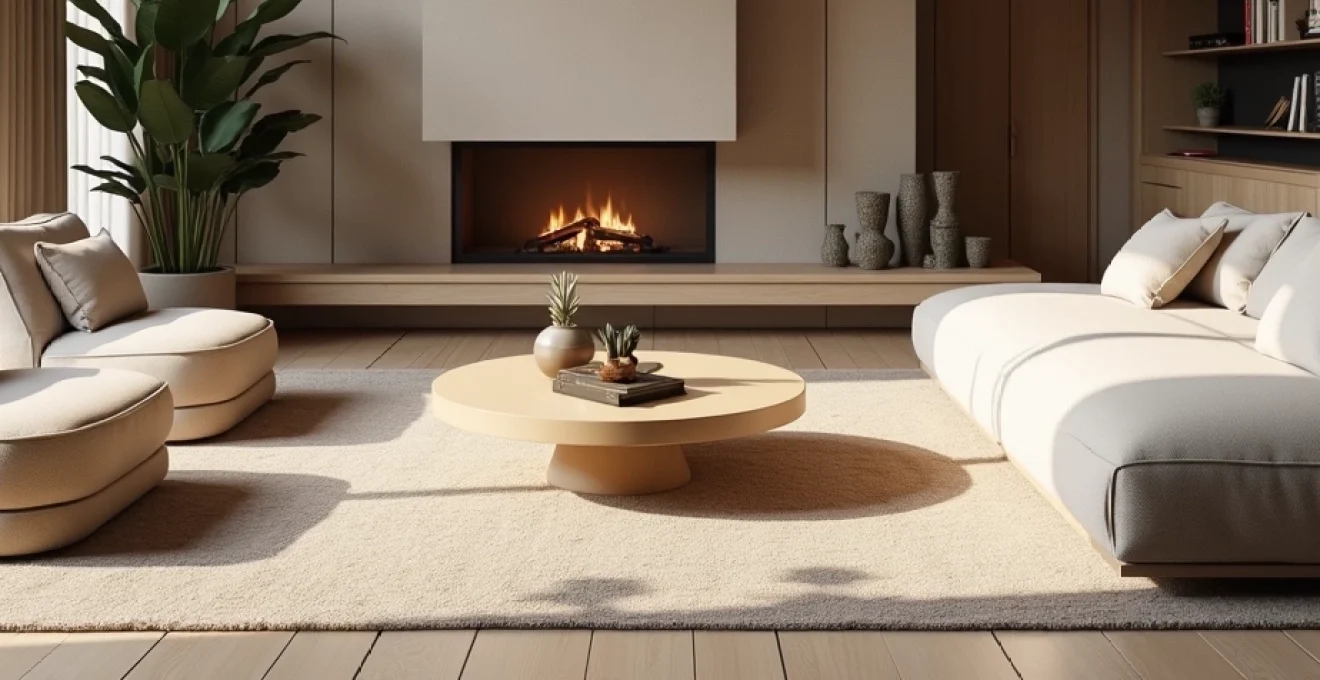
In an era where synthetic alternatives dominate the market, the choice of interior materials has never been more critical for creating spaces that endure both aesthetically and functionally. Natural materials offer unparalleled longevity, environmental benefits, and performance characteristics that synthetic counterparts simply cannot match. When you invest in authentic materials like hardwood, stone, wool, and other natural fibres, you’re not just purchasing products—you’re securing decades of reliable service, enhanced indoor air quality, and timeless appeal that transcends fleeting design trends.
The science behind natural material performance reveals fascinating insights into why these materials have served humanity for millennia. From the cellular structure of hardwood that provides exceptional strength-to-weight ratios to the crystalline composition of natural stone that offers superior wear resistance, nature has perfected these materials through evolutionary processes spanning millions of years. Understanding these performance metrics empowers designers and homeowners to make informed decisions that balance initial investment with long-term value and sustainability.
Natural material durability: hardwood, stone, and wool performance metrics
The durability of natural materials stems from their unique structural compositions, which have evolved to withstand environmental pressures over time. Unlike manufactured materials that rely on chemical bonds and artificial reinforcements, natural materials possess inherent strength characteristics that improve with proper aging and maintenance. This fundamental difference explains why ancient structures built with natural stone continue to stand today, whilst synthetic materials from just decades past require replacement.
Janka hardness scale analysis for oak, walnut, and teak flooring
The Janka hardness test measures the force required to embed an 11.28-millimetre steel ball halfway into a wood sample, providing a standardised metric for comparing wood species durability. European oak registers approximately 1,120 pounds-force (lbf) on the Janka scale, making it exceptionally suitable for high-traffic residential and commercial applications. This hardness level ensures that oak flooring can withstand decades of foot traffic, furniture placement, and general wear without significant surface damage or structural compromise.
Walnut, with a Janka rating of 1,010 lbf, offers slightly less surface hardness but compensates with superior shock absorption and dimensional stability. These characteristics make walnut flooring particularly valuable in environments where temperature and humidity fluctuations occur regularly. The wood’s natural oils provide inherent moisture resistance, reducing the likelihood of warping, cupping, or splitting that commonly affects lesser hardwoods.
Teak stands as the premium choice for flooring applications, recording Janka hardness values between 1,000-1,155 lbf depending on the specific growing region. What sets teak apart isn’t just its hardness but its exceptional natural oil content, which provides built-in water resistance and pest deterrence. These natural preservatives mean that teak flooring requires minimal chemical treatments whilst maintaining structural integrity for 50-100 years with proper maintenance.
Limestone, travertine, and granite porosity and wear resistance
Stone porosity directly correlates with durability and maintenance requirements in interior applications. Limestone typically exhibits porosity levels between 5-15%, creating a material that’s strong enough for most interior uses whilst remaining workable for intricate design applications. This moderate porosity allows limestone to absorb minor impacts without cracking, though it does require sealing in high-moisture environments to prevent staining and water damage.
Travertine’s unique cellular structure, formed by millennia of mineral deposits, results in porosity levels ranging from 2-25% depending on the specific quarry and formation conditions. This variation means that careful selection is crucial—dense travertine varieties offer exceptional durability for flooring applications, whilst more porous varieties excel in decorative wall treatments where their lighter weight and easier installation provide advantages.
Granite represents the pinnacle of natural stone durability, with porosity levels typically below 0.5%. This minimal porosity, combined with its crystalline structure, makes granite virtually impervious to staining, scratching, and heat damage. The material’s compressive strength exceeds 200 MPa (megapascals), ensuring that granite surfaces maintain their appearance and functionality for centuries with minimal maintenance beyond basic cleaning.
Wool fibre tensile strength and pile density in carpet construction
Natural wool fibres possess remarkable tensile strength properties, typically ranging from 120-180 MPa depending on the sheep breed and processing methods. This strength allows individual wool fibres to flex repeatedly without breaking, explaining why high-quality wool carpets maintain their appearance and structure for decades. The fibre’s natural crimp provides inherent resilience, allowing carpet pile to recover from compression caused by furniture and foot traffic.
Pile density measurements in wool carpets directly influence longevity and performance. Premium wool carpets achieve pile densities between 2,000-4,000 fibres per square inch, creating surfaces that distribute weight effectively and resist premature wear patterns. This density, combined with wool’s natural lanolin content, provides inherent stain resistance and antimicrobial properties that synthetic fibres cannot replicate without chemical treatments.
Bamboo growth cycles and structural integrity in interior applications
Bamboo’s remarkable growth rate—some species achieve full maturity in just 3-5 years—doesn’t compromise structural integrity when properly processed. The material’s cellular structure consists of vascular bundles surrounded by parenchyma tissue, creating a natural composite that rivals hardwood strength whilst weighing significantly less. This unique architecture explains why bamboo flooring achieves Janka hardness ratings between 1,180-1,380 lbf, surpassing many traditional hardwoods.
The rapid growth cycle that makes bamboo environmentally sustainable also influences its performance characteristics. Younger bamboo (3-4 years) provides optimal flexibility and moisture content for flooring applications, whilst older bamboo becomes increasingly brittle. Quality manufacturers harvest bamboo at precisely the right maturity stage, ensuring optimal strength-to-flexibility ratios for long-term durability in interior applications.
Sustainable sourcing and environmental impact assessment
Sustainable sourcing practices have evolved beyond simple environmental protection to encompass comprehensive lifecycle assessments that consider extraction, processing, transportation, and end-of-life disposal impacts. When you choose responsibly sourced natural materials, you contribute to forest conservation, biodiversity protection, and carbon sequestration efforts whilst securing materials with superior performance characteristics. The most sustainable natural materials often prove to be the most durable, as responsible harvesting practices select for optimal material properties.
FSC certification standards for european hardwood suppliers
The Forest Stewardship Council (FSC) certification process for European hardwood suppliers involves rigorous assessment of forest management practices, worker rights, and environmental protection measures. FSC-certified forests must demonstrate that harvesting rates don’t exceed regeneration capacity, typically maintaining harvest levels at 70-80% of annual growth to ensure long-term forest health. This sustainable approach often produces superior timber quality, as trees are allowed to reach optimal maturity before harvesting.
Chain of custody documentation tracks FSC-certified timber from forest to final product, ensuring that sustainable practices are maintained throughout the supply chain. This traceability system prevents illegal timber mixing and provides consumers with confidence that their hardwood purchases support responsible forestry practices. European FSC standards are particularly stringent regarding biodiversity protection, requiring that certified forests maintain habitat corridors and protect endangered species populations.
Quarry-to-installation carbon footprint in natural stone selection
Transportation distances significantly impact the carbon footprint of natural stone selections, with local quarries typically producing 60-80% lower emissions than imported alternatives. However, the durability advantage of natural stone often offsets initial carbon costs over the material’s lifecycle. A granite countertop may require higher initial energy investment than synthetic alternatives, but its century-plus lifespan eliminates the replacement cycles that plague manufactured materials.
Modern quarrying operations increasingly employ renewable energy sources and water recycling systems to minimise environmental impact. Advanced extraction techniques reduce waste by up to 40% compared to traditional methods, whilst digital mapping technology ensures optimal stone utilisation. These improvements, combined with the material’s natural durability, make responsibly quarried stone one of the most environmentally sound long-term interior material choices.
Organic cotton vs. linen: water consumption and processing methods
Water consumption comparisons between organic cotton and linen production reveal significant differences that influence sustainability assessments. Conventional cotton requires approximately 2,700 litres of water per cotton t-shirt equivalent, whilst organic cotton reduces this requirement by 15-20% through improved soil health and water retention. Linen production, derived from flax plants, requires substantially less water—typically 500-700 litres per equivalent fabric weight—making it inherently more water-efficient.
Processing methods further differentiate these natural fibres’ environmental impacts. Linen processing traditionally uses mechanical extraction methods that require minimal chemical inputs, whilst cotton processing often involves chemical-intensive bleaching and dying procedures. However, organic cotton processing increasingly adopts low-impact methods, including natural dyes and mechanical finishing techniques that reduce chemical runoff and energy consumption whilst producing fabrics with enhanced durability and comfort properties.
GREENGUARD gold standards for natural material Off-Gassing
GREENGUARD Gold certification requires materials to meet stringent chemical emission limits that are 2-5 times more restrictive than standard GREENGUARD certification. Natural materials consistently outperform synthetic alternatives in these tests, with untreated hardwoods, natural stone, and organic textiles typically emitting minimal volatile organic compounds (VOCs). This superior air quality performance contributes directly to occupant health and comfort whilst eliminating the need for artificial air purification systems.
The testing protocol measures over 360 different chemical compounds over a 14-day period, ensuring that certified materials maintain low emission levels throughout their initial installation period. Natural materials’ inherent chemical stability means that emission levels often decrease over time, unlike synthetic materials that may continue off-gassing throughout their service life. This characteristic makes natural materials particularly suitable for sensitive environments such as children’s rooms, healthcare facilities, and spaces occupied by individuals with chemical sensitivities.
Material-specific maintenance protocols and lifecycle management
Proper maintenance protocols can extend natural material lifespans far beyond their synthetic counterparts, often doubling or tripling service life expectations. Understanding the unique characteristics and requirements of each natural material allows you to implement targeted maintenance strategies that preserve appearance, structural integrity, and performance characteristics. The key lies in working with each material’s natural properties rather than against them, using maintenance approaches that enhance inherent strengths whilst addressing specific vulnerabilities.
Hardwood maintenance centres on moisture control and surface protection, with annual refinishing schedules extending floor life to 50-100 years. Natural stone requires pH-neutral cleaning products and periodic sealing, but properly maintained stone surfaces can serve for centuries without replacement. Wool textiles benefit from regular professional cleaning and proper humidity control, maintaining their appearance and antimicrobial properties for decades with appropriate care.
The maintenance investment required for natural materials typically represents 10-15% of the initial material cost annually, but this investment yields 300-500% longer service life compared to synthetic alternatives requiring complete replacement every 10-15 years.
Lifecycle management extends beyond routine maintenance to encompass planned renovation and restoration activities that refresh natural materials without replacement. Hardwood floors can be sanded and refinished multiple times, stone surfaces can be repolished and resealed, and natural textiles can be professionally restored to like-new condition. These restoration options provide significant economic advantages whilst maintaining the superior performance characteristics that make natural materials preferable for long-term interior applications.
Thermal and acoustic properties in natural interior materials
The thermal and acoustic performance of natural materials significantly influences interior comfort and energy efficiency, often providing advantages that synthetic alternatives cannot match. Natural materials’ cellular structures, developed through biological processes, create complex internal geometries that excel at thermal regulation and sound management. These characteristics contribute directly to occupant comfort whilst reducing mechanical heating, cooling, and acoustical treatment requirements.
R-values and thermal mass in cork and stone applications
Cork’s unique cellular structure provides exceptional insulation properties, with R-values typically ranging from 3.6-4.0 per inch of thickness. This performance stems from cork’s millions of air-filled cells, which create natural thermal barriers that outperform many synthetic insulation materials. Additionally, cork’s dimensional stability means that thermal performance doesn’t degrade over time, unlike foam insulations that can settle or lose effectiveness through aging.
Natural stone’s thermal mass properties provide different but equally valuable thermal regulation benefits. Dense stones like granite can absorb and store significant amounts of thermal energy, moderating temperature fluctuations throughout daily cycles. This thermal flywheel effect reduces peak heating and cooling loads, contributing to energy efficiency whilst maintaining more stable interior temperatures. The thermal mass effect is particularly pronounced in thick stone applications, such as countertops and accent walls, where material volume provides substantial heat capacity.
Sound absorption coefficients: hemp insulation vs. wool batting
Hemp insulation achieves sound absorption coefficients ranging from 0.7-0.95 across frequency ranges most relevant to interior applications (250-4,000 Hz). The material’s fibrous structure creates numerous air pockets that convert sound energy to heat through friction, providing effective acoustic control without chemical treatments. Hemp’s natural durability ensures that acoustic performance remains consistent throughout the material’s service life, unlike some synthetic insulations that can compress or degrade over time.
Wool batting typically delivers slightly higher sound absorption coefficients, ranging from 0.8-1.0 in similar frequency ranges. Wool’s natural crimp and variable fibre diameter create complex internal structures that excel at absorbing both high and low-frequency sounds. The material’s ability to absorb moisture without losing structural integrity makes it particularly suitable for acoustic applications in varying humidity conditions, where synthetic materials might lose effectiveness or develop mould problems.
Humidity regulation through cedar, pine, and clay plaster systems
Cedar’s natural oils provide inherent moisture regulation properties, allowing the wood to absorb excess humidity during wet periods and release moisture during dry conditions. This natural hygroscopic behaviour helps maintain interior humidity levels between the optimal 30-50% range without mechanical intervention. Cedar paneling or closet systems can effectively moderate humidity fluctuations whilst providing natural antimicrobial and insect-repelling properties that protect stored items and improve indoor air quality.
Clay plaster systems offer superior humidity regulation compared to synthetic wall finishes, capable of absorbing and releasing moisture quantities equivalent to 10-15% of their weight. This substantial buffering capacity helps prevent the humidity spikes that can lead to condensation problems, mould growth, and occupant discomfort. Clay plasters also provide thermal mass benefits similar to stone, moderating temperature fluctuations whilst maintaining optimal humidity conditions for occupant health and comfort.
Cost-per-square-metre analysis: initial investment vs. replacement cycles
Comprehensive cost analysis reveals that natural materials often provide superior long-term value despite higher initial investments. When you factor in replacement cycles, maintenance costs, and performance benefits, natural materials frequently deliver 40-60% lower total cost of ownership over 20-30 year periods. This economic advantage stems from natural materials’ inherent durability, repairability, and timeless aesthetic appeal that eliminates the need for frequent updates driven by style changes.
| Material Type | Initial Cost (£/m²) | Service Life (Years) | Annual Maintenance | Total 25-Year Cost |
|---|---|---|---|---|
| Oak Hardwood | £80-120 | 50-100 | £2-3/m² | £130-195 |
| Granite Counters | £200-350 | 100+ | £1-2/m² | £225-400 |
| Wool Carpet | £40-80 | 20-30 | £3-5/m² | £115-205 |
| Synthetic Laminate | £25-45 | 10-15 | £1-2/m² | £75-135 (2 replacements) |
The analysis demonstrates that whilst synthetic materials appear more economical initially, replacement requirements typically result in higher total costs within 15-20 years. Natural materials’ ability to be refinished, restored, and maintained rather than replaced provides significant economic advantages over extended time periods. Additionally, natural materials often contribute to property value appreciation, whilst synthetic materials may actually detract from property values as they age and become outdated.
Quality natural materials typically require 50-70% higher initial investment but deliver 200-300% longer
service life, making them sound investments for property owners seeking both immediate satisfaction and long-term value retention.
Integration techniques: natural materials in contemporary design schemes
Successfully integrating natural materials into contemporary design requires understanding how traditional materials can enhance modern aesthetics without compromising either authenticity or current design principles. The key lies in balancing natural textures, colours, and forms with clean lines, functional layouts, and technological integration that defines contemporary interiors. This approach creates spaces that feel both timeless and current, avoiding the trap of either sterile modernism or overly rustic traditionalism.
Layering different natural materials creates visual depth and tactile interest whilst maintaining design coherence. Combining smooth granite countertops with rough-hewn oak cabinetry, for instance, provides textural contrast that enhances both materials’ inherent beauty. Similarly, pairing soft wool textiles with hard stone surfaces creates sensory balance that makes spaces more inviting and comfortable. The proportion and placement of these combinations determines whether the result feels intentional and sophisticated or chaotic and overwhelming.
Colour coordination becomes crucial when working with natural materials’ inherent variations and imperfections. Understanding undertones in wood grains, stone veining, and textile dyes allows designers to create harmonious palettes that celebrate natural beauty whilst maintaining visual unity. Cool-toned stones like bluestone pair beautifully with warm oak and cream wool, whilst warm travertine complements cherry wood and earth-toned linens. These natural colour relationships often prove more enduring than artificial colour schemes that may feel dated within a few years.
Scale considerations affect how natural materials integrate with contemporary furniture and architectural elements. Large-format natural stone tiles create seamless surfaces that compete effectively with synthetic alternatives whilst maintaining superior durability and aesthetic appeal. Conversely, smaller-scale natural elements like woven baskets or ceramic vessels provide textural accents that soften contemporary spaces without overwhelming clean-lined furniture. The strategic placement of these elements creates focal points that draw attention whilst supporting overall design objectives.
Contemporary integration of natural materials succeeds when each element serves both functional and aesthetic purposes, creating spaces that feel authentically modern rather than artificially aged or overly precious.
Lighting design dramatically influences how natural materials appear and feel within contemporary spaces. Natural materials often possess subtle colour variations and surface textures that synthetic alternatives lack, making proper lighting crucial for showcasing these characteristics. LED lighting systems with adjustable colour temperatures can highlight wood grain patterns during evening hours whilst allowing natural daylight to reveal stone’s full colour spectrum during daytime. This lighting flexibility ensures that natural materials maintain their visual impact throughout daily lighting cycles.
Technology integration requires careful consideration when working with natural materials, as modern conveniences must be seamlessly incorporated without disrupting authentic material expressions. Concealed wiring systems allow for smart home integration whilst preserving the integrity of natural wood panelling or stone surfaces. Similarly, modern heating and cooling systems can be designed to work with natural materials’ thermal properties rather than against them, enhancing both comfort and energy efficiency. The goal is creating spaces where technology enhances natural material performance rather than competing with or compromising their inherent characteristics.