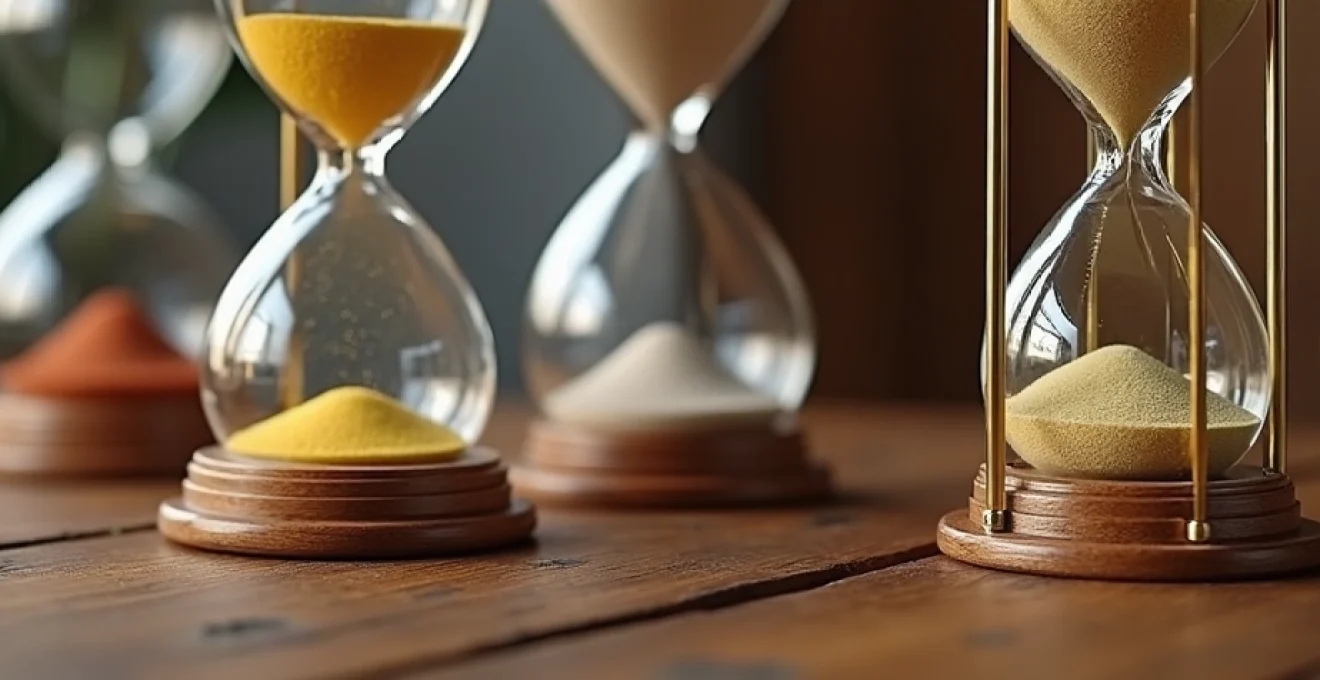
In an era dominated by digital timekeeping, decorative hourglasses stand as magnificent reminders of our enduring fascination with the passage of time. These mesmerising timepieces transcend their utilitarian origins to become sophisticated design elements that captivate viewers with their graceful sand cascades and elegant silhouettes. The allure of sand timers lies not merely in their aesthetic appeal, but in their profound ability to transform any space into a contemplative sanctuary where time becomes tangible and beautiful.
The renaissance of hourglasses as decorative accessories reflects a growing desire for mindful living and authentic craftsmanship in contemporary interiors. Unlike their digital counterparts, these temporal sculptures invite touch, observation, and reflection, creating intimate moments of connection with the fundamental rhythm of existence. Their timeless design language speaks to both historical reverence and modern sophistication, making them versatile additions to diverse decorative schemes.
Historical evolution of Sand-Filled timepieces in decorative arts
The transformation of hourglasses from purely functional instruments to cherished decorative objects spans centuries of artistic innovation and cultural refinement. This evolution reflects humanity’s perpetual quest to beautify essential tools, elevating practical necessity into aesthetic expression. The journey from crude sand vessels to ornate timepieces demonstrates how craftsmanship and artistry can transform even the most utilitarian objects into coveted decorative treasures.
Medieval monastery hourglasses and their ornamental craftsmanship
Medieval monasteries pioneered the decorative treatment of hourglasses, recognising their symbolic significance in spiritual practice. Monastic craftsmen adorned these timepieces with intricate metalwork, religious motifs, and precious materials that reflected their sacred purpose. The contemplative nature of monastic life naturally aligned with the meditative qualities of sand timers, leading to increasingly sophisticated designs that served both practical and spiritual functions.
These early decorative hourglasses featured elaborate brass frames engraved with biblical passages, zodiacal symbols, and geometric patterns that spoke to divine order. The sand itself became a metaphor for mortality and the fleeting nature of earthly existence, making these pieces powerful devotional objects. Monastery workshops developed specialised techniques for creating perfectly uniform sand grains, ensuring consistent timing while maintaining the visual appeal of flowing granules.
Renaissance venetian glass artisans and hourglass manufacturing techniques
Venice emerged as the epicentre of hourglass artistry during the Renaissance, with Murano glassblowers revolutionising the craft through innovative techniques and artistic vision. Venetian artisans introduced coloured glass, complex shapes, and decorative embellishments that transformed hourglasses into luxury objects coveted by nobility across Europe. Their mastery of glass manipulation enabled the creation of impossibly thin necks and perfectly symmetrical bulbs that enhanced both functionality and visual appeal.
The guild system in Venice fostered intense competition among craftsmen, driving continuous innovation in hourglass design and construction. These artisans developed secret techniques for creating multi-coloured sand combinations, embedded decorative elements, and intricate surface treatments that made each piece unique. The resulting timepieces became symbols of wealth and sophistication, often featuring elaborate stands crafted from precious metals and exotic woods.
Victorian era parlour timepieces and their aesthetic transformation
The Victorian era witnessed the complete transformation of hourglasses from maritime tools to parlour ornaments, reflecting the period’s obsession with domestic luxury and scientific curiosity. Victorian hourglasses embraced ornate aesthetics, featuring elaborate wooden cases, brass fittings, and decorative bases that complemented the era’s love of intricate detail. These pieces often incorporated multiple timing mechanisms, allowing for various durations suitable for different household activities and social rituals.
The Victorian hourglass became a symbol of refined domesticity, representing the era’s fascination with controlling and beautifying time within the home environment.
Manufacturing techniques advanced significantly during this period, with precision engineering enabling more accurate timing mechanisms and consistent sand flow. Victorian craftsmen experimented with exotic materials including ivory, tortoiseshell, and semi-precious stones, creating timepieces that served as conversation pieces in fashionable drawing rooms. The era’s scientific advances also influenced hourglass design, with some pieces incorporating barometric adjustments and temperature compensation mechanisms.
Art nouveau movement’s influence on hourglass design elements
The Art Nouveau movement brought organic forms and flowing lines to hourglass design, replacing Victorian ornamental excess with nature-inspired elegance. Artists like Louis Comfort Tiffany incorporated hourglasses into larger decorative schemes, using them as focal points in stained glass windows and interior installations. The movement’s emphasis on craftsmanship and natural beauty perfectly aligned with the inherent qualities of sand timers, resulting in pieces that celebrated both form and function.
Art Nouveau hourglasses featured sinuous curves, botanical motifs, and integrated lighting effects that enhanced the visual drama of falling sand. These pieces often incorporated multiple materials in harmonious combinations, with bronze, glass, and exotic woods working together to create unified aesthetic statements. The movement’s influence extended beyond individual pieces to encompass entire decorative systems where hourglasses played integral roles in larger artistic compositions.
Contemporary interior design applications for sand timer accessories
Modern interior design has embraced decorative hourglasses as versatile accessories that bridge historical authenticity with contemporary sophistication. Today’s designers appreciate these timepieces for their ability to add texture, movement, and philosophical depth to living spaces while maintaining aesthetic neutrality that complements various design schemes. The contemporary hourglass serves multiple functions simultaneously: sculptural object, conversation piece, meditation tool, and symbol of mindful living.
The integration of hourglasses into modern interiors reflects a growing appreciation for slow design principles and authentic craftsmanship in an increasingly digital world. These pieces offer visual relief from electronic devices while providing tactile experiences that ground occupants in physical reality. Their presence encourages contemplation and mindfulness, qualities particularly valued in contemporary wellness-focused design approaches.
Scandinavian minimalist aesthetics and natural wood hourglass frames
Scandinavian design philosophy perfectly accommodates the clean lines and natural materials characteristic of wooden-framed hourglasses. These pieces exemplify the Nordic appreciation for functional beauty, where every object must serve both practical and aesthetic purposes. Light woods like birch, beech, and ash create frames that complement the pale colour palettes and natural textures fundamental to Scandinavian interiors.
The hygge movement has particularly embraced hourglasses as instruments of mindful relaxation and cosy domesticity. Danish and Swedish designers create pieces that emphasise tactile pleasure, with smooth wooden surfaces inviting touch and manipulation. These hourglasses often feature simplified geometric forms that echo the clean architectural lines typical of Scandinavian homes, while their natural materials connect interior spaces with the outdoor environment.
Industrial loft styling with wrought iron and brass timepiece accents
Industrial design aesthetics find perfect expression in hourglasses featuring robust metal frameworks and utilitarian styling. These pieces embrace the raw materials and manufacturing processes that define industrial spaces, with exposed brass joints, weathered iron surfaces, and mechanical precision creating authentic industrial character. The contrast between delicate glass vessels and heavy metal frameworks mirrors the broader industrial design principle of combining refinement with ruggedness.
Brass and wrought iron hourglasses serve as focal points in loft conversions and industrial-style homes, where their substantial presence complements exposed brick walls, concrete floors, and steel structural elements. These pieces often incorporate adjustable mechanisms and modular components that reference manufacturing equipment while maintaining their decorative appeal. The warm patina that develops on brass and iron surfaces over time adds authentic character that cannot be artificially replicated.
Bohemian décor integration using coloured sand and macramé supports
Bohemian interior design celebrates the artistic potential of coloured sand hourglasses, which create dynamic visual displays that change continuously as different hues blend and separate. These pieces often feature vibrant colour combinations that reflect the eclectic spirit of boho style, with purple, turquoise, and amber sands creating mesmerising patterns during their descent. The unpredictable nature of colour mixing adds an element of surprise that appeals to the bohemian love of spontaneity and creativity.
Macramé supports and textile wrappings integrate hourglasses seamlessly into bohemian decorative schemes, while adding textural interest and artisanal character. These fabric elements can be customised to match specific colour schemes or seasonal themes, making hourglasses adaptable accessories that evolve with changing decorative preferences. The combination of flowing sand and organic textile forms creates compelling visual dialogues between different materials and movements.
Modern luxury interiors featuring crystal and precious metal hourglasses
High-end interior design has embraced hourglasses crafted from premium materials including crystal, platinum, and precious stones as ultimate luxury accessories. These pieces function as jewellery for interior spaces, combining exceptional craftsmanship with rare materials to create objects of extraordinary beauty and value. Crystal hourglasses particularly excel in luxury settings, where their optical properties create brilliant light displays that enhance their surroundings.
Precious metal frames elevate hourglasses to sculpture status, with gold and silver components adding weight and gravitas that commands attention. These pieces often incorporate gemstone accents, intricate engraving, and museum-quality finishing that justifies their premium positioning. The investment value of precious material hourglasses adds another dimension to their appeal, making them both decorative objects and store-of-value assets.
Artisanal Glass-Blowing techniques in hourglass construction
The creation of high-quality decorative hourglasses requires masterful glass-blowing techniques that have been refined over centuries of practice and innovation. Contemporary artisans continue to push the boundaries of what’s possible in glass manipulation, creating increasingly sophisticated forms that challenge traditional hourglass conventions. The process begins with careful selection of glass types, with different compositions offering varying optical properties, thermal characteristics, and workability that influence the final product’s performance and appearance.
Modern glass-blowing techniques enable the creation of incredibly thin neck openings that control sand flow with unprecedented precision. Artisans use specialised tools and heating techniques to achieve neck diameters measured in fractions of millimetres, ensuring consistent timing across multiple cycles. The symmetry required for proper hourglass function demands exceptional skill, with even minor imperfections affecting both aesthetic appeal and functional accuracy.
Advanced techniques include the incorporation of internal decorative elements, colour gradations, and surface textures that enhance visual interest without compromising structural integrity. Some artisans specialise in creating nested glass forms where inner and outer vessels create complex optical effects as sand flows between chambers. These sophisticated pieces represent the pinnacle of glass-blowing artistry, combining technical mastery with aesthetic vision to create truly exceptional decorative objects.
Temperature control throughout the glass-blowing process determines the final product’s durability and optical clarity. Master craftsmen manipulate flame temperatures, cooling rates, and annealing processes to eliminate internal stresses that could lead to cracking or distortion over time. The resulting pieces demonstrate remarkable longevity, with properly crafted hourglasses maintaining their beauty and functionality for decades or even centuries with appropriate care.
Psychological impact of temporal visualisation through sand movement
The human fascination with falling sand transcends mere aesthetic appreciation, tapping into fundamental psychological responses to rhythm, repetition, and temporal visualization. Research in environmental psychology demonstrates that observing natural patterns and movements reduces stress hormones while promoting cognitive restoration. Hourglasses provide accessible opportunities for these beneficial psychological interactions within domestic and professional environments.
The hypnotic quality of sand flow creates what psychologists term “soft fascination,” a state of relaxed attention that allows mental recovery from cognitive fatigue. Unlike “hard fascination” produced by digital screens and demanding tasks, soft fascination enables the mind to rest while remaining gently engaged. This psychological mechanism explains why many people find hourglasses naturally calming and conducive to creative thinking.
Meditative properties of granular flow observation
The meditation community has long recognised hourglasses as valuable tools for developing mindfulness and present-moment awareness. The visible countdown provided by descending sand creates natural meditation periods that require no external timekeeping devices. Practitioners often report that sand movement helps anchor wandering thoughts, providing a gentle focal point that supports sustained attention without being distracting or overwhelming.
Granular flow patterns create mesmerising visual textures that engage the mind’s pattern-recognition systems in subtle ways. The slight variations in sand cascades ensure that no two observation periods are identical, maintaining interest while avoiding the monotony that can undermine meditation practice. This dynamic stability makes hourglasses particularly effective for novice meditators who struggle with completely static focal objects.
Stress reduction mechanisms in contemplative timepiece interaction
Clinical studies indicate that interacting with hourglasses activates parasympathetic nervous system responses associated with relaxation and stress recovery. The act of turning an hourglass provides satisfying tactile feedback while initiating a period of enforced patience that counteracts modern urgency and time pressure. This physical interaction creates what therapists call “grounding moments” that help individuals reconnect with immediate sensory experience.
The simple act of watching sand fall can lower cortisol levels and reduce anxiety more effectively than many digital relaxation applications, demonstrating the power of analogue experiences in stress management.
The predictable duration of hourglass cycles helps establish healthy time boundaries in work and personal activities. Unlike digital timers that can feel harsh or intrusive, sand timers provide gentle time awareness that encourages natural task completion without creating pressure or anxiety. This temporal cushioning effect makes hourglasses valuable tools for time management approaches focused on well-being rather than productivity optimization.
Cognitive benefits of analogue time perception versus digital displays
Neuroscience research reveals significant differences between how human brains process analogue versus digital time representations. Hourglasses engage spatial and visual processing systems that create more intuitive time awareness than numerical displays. This embodied time perception helps individuals develop better internal timing mechanisms and more accurate duration estimation abilities.
The gradual nature of sand flow helps calibrate internal circadian rhythms and attention cycles in ways that sudden digital alerts cannot achieve. Regular exposure to hourglass timing supports the development of what chronobiologists call “temporal intelligence” – the ability to naturally gauge time passages and plan activities accordingly. This skill becomes increasingly valuable as digital devices disrupt natural time perception patterns.
Premium collectible hourglass brands and market positioning
The luxury hourglass market has experienced remarkable growth as collectors and interior designers recognise these pieces as legitimate art objects worthy of premium pricing. Established brands like Hermès, Cartier, and Baccarat have introduced hourglass collections that command prices comparable to fine jewellery, while artisanal makers create limited editions that appreciate significantly over time. This market evolution reflects growing appreciation for handcrafted objects that combine aesthetic beauty with philosophical significance.
Collectible hourglasses often feature unique design elements, limited production runs, and certification of authenticity that establish their value proposition. Premium brands emphasise heritage craftsmanship, rare materials, and innovative design approaches that differentiate their products from mass-market alternatives. The most sought-after pieces combine historical significance, artistic merit, and technical excellence in ways that justify substantial investment.
Market positioning strategies focus on lifestyle integration rather than pure timekeeping functionality, with brands emphasising the meditation, décor, and status aspects of ownership. High-end hourglasses are marketed as heirloom pieces suitable for generational transfer, with maintenance and repair services supporting long-term value retention. This approach has successfully established hourglasses as legitimate luxury goods that compete effectively with other premium decorative objects.
Investment potential varies significantly based on maker reputation, rarity, condition, and historical provenance. Antique hourglasses from renowned workshops can appreciate dramatically, particularly pieces with documented ownership histories or unique design features. Contemporary artisan pieces also show strong appreciation potential when creators achieve recognition in galleries and design publications. Collectors increasingly view premium hourglasses as alternative investments that provide both financial returns and aesthetic pleasure.
Strategic placement principles for maximum decorative impact
Effective hourglass placement requires understanding both lighting conditions and viewing angles that maximize visual impact while supporting the piece’s contemplative function. Natural light sources create the most dramatic effects with glass and sand, but positioning must account for temperature fluctuations that can affect sand flow characteristics. East or west-facing windows provide ideal lighting conditions that change throughout the day, creating dynamic displays that evolve with natural light patterns.
Height placement significantly influences viewing experience, with eye-level positioning optimal for detailed sand observation while elevated placement emphasises silhouette and overall form. Console tables, mantels, and dedicated display shelves offer stable platforms that showcase hourglasses effectively without risking damage from vibration or accidental contact. The surrounding décor should complement rather than compete with the hourglass, allowing its movement and form to serve as the primary visual focus.
Grouping multiple hourglasses creates compelling installations that explore themes of duration, rhythm, and temporal relationships. Different timing periods, sizes, and materials can
work together harmoniously to create complex visual compositions that reward extended viewing. The interaction between different sand speeds and colours generates ever-changing patterns that maintain visual interest throughout extended observation periods. Consider the ambient sound levels in the chosen location, as quiet environments enhance the meditative qualities that make hourglasses most effective as contemplative accessories.
Professional lighting design can dramatically enhance hourglass presentation through strategic illumination that emphasizes glass clarity, sand movement, and frame materials. LED spotlights with adjustable colour temperatures allow for customization based on time of day and mood requirements, while avoiding heat generation that could affect sand flow characteristics. Backlighting techniques create silhouette effects that emphasize form over detail, suitable for dramatic architectural installations where hourglasses serve as sculptural elements rather than intimate viewing objects.
The psychological impact of placement extends beyond mere visual considerations to encompass the hourglass’s role in establishing spatial rhythm and temporal awareness within living environments. Strategic positioning near seating areas, workspaces, or meditation corners integrates these timepieces into daily routines where their presence can provide maximum benefit. The key lies in balancing accessibility for interaction with protection from environmental factors that could compromise their delicate mechanisms or aesthetic appeal.
Seasonal placement adjustments acknowledge how natural light patterns, interior heating systems, and lifestyle changes affect both hourglass performance and decorative impact throughout the year. Winter positioning may emphasize warm artificial lighting and cozy interior groupings, while summer arrangements can take advantage of extended daylight hours and outdoor viewing opportunities. This dynamic approach to placement ensures that hourglasses remain engaging and relevant as integral components of evolving interior landscapes.
The culmination of effective placement strategy recognizes that decorative hourglasses function most successfully when they enhance rather than dominate their surroundings. These timeless accessories achieve their greatest impact through subtle integration that allows their inherent beauty and philosophical significance to emerge naturally through daily interaction and observation. Whether serving as meditation timers, conversation pieces, or pure aesthetic objects, properly placed hourglasses create lasting impressions that reward both casual viewers and dedicated contemplators with moments of beauty, reflection, and temporal awareness that enrich the human experience of inhabiting thoughtfully designed spaces.