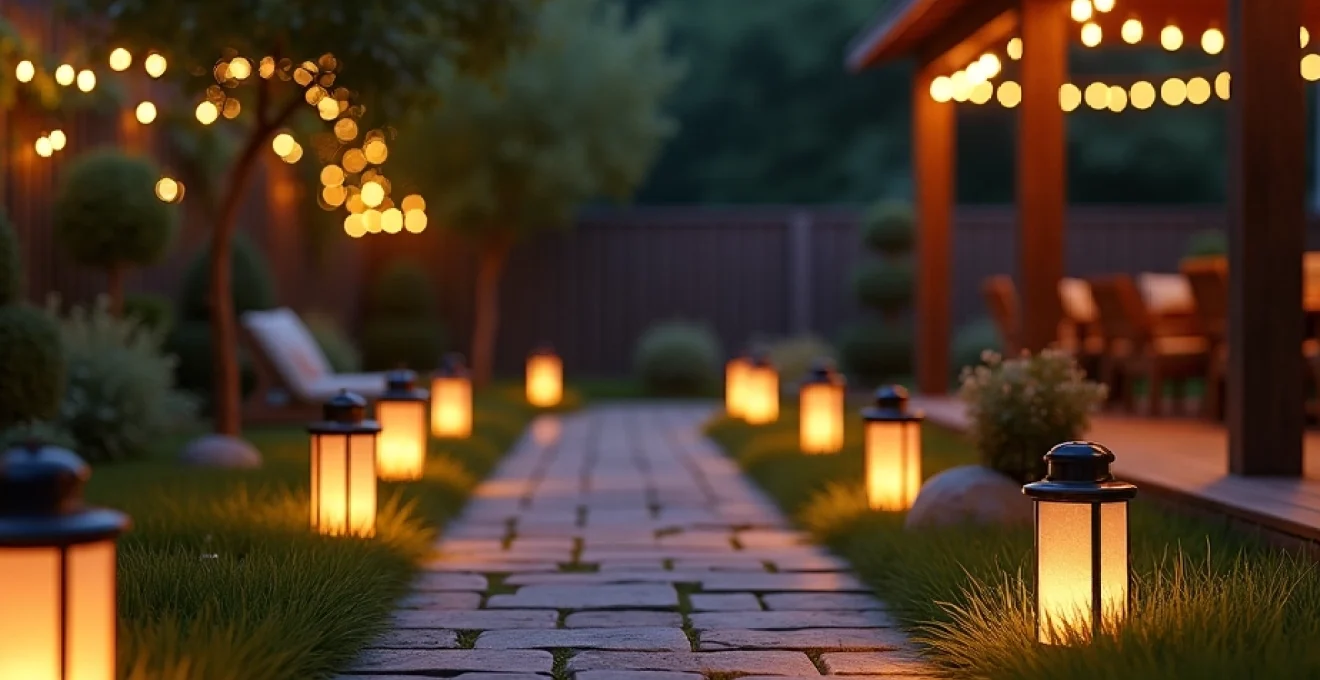
The transformation of outdoor spaces after sunset depends largely on the quality and placement of ambient lighting. Garden lanterns have evolved from simple flame-based illumination to sophisticated lighting solutions that combine aesthetic appeal with advanced technology. Whether you’re planning intimate dinner parties on your patio or creating a welcoming pathway through your garden, the strategic use of outdoor lanterns can dramatically enhance the atmosphere and functionality of your exterior spaces.
Modern outdoor lighting design encompasses everything from solar-powered LED systems to traditional candle-lit fixtures, each offering unique advantages for different applications. The key to creating truly magical evening ambiance lies in understanding how various lantern technologies work together with proper placement techniques to achieve optimal light distribution and visual impact.
Solar-powered LED lantern technologies for extended evening illumination
Solar-powered lanterns have revolutionised outdoor lighting by providing sustainable, maintenance-free illumination that operates independently of electrical infrastructure. These systems capture solar energy during daylight hours and convert it into electrical power stored in rechargeable batteries, automatically activating at dusk to provide hours of ambient lighting.
Monocrystalline vs polycrystalline solar panel efficiency in garden lanterns
The choice between monocrystalline and polycrystalline solar panels significantly impacts the performance of your outdoor lanterns. Monocrystalline panels achieve efficiency ratings of 18-22%, making them ideal for compact lantern designs where space constraints limit panel size. These panels perform exceptionally well in low-light conditions, ensuring reliable charging even on overcast days.
Polycrystalline panels, whilst slightly less efficient at 15-17%, offer excellent value for larger lantern installations where panel size isn’t constrained. The crystalline structure of polycrystalline panels makes them more tolerant of partial shading, which can be advantageous in gardens with overhanging foliage. For most residential applications, the efficiency difference becomes negligible when adequate panel sizing is maintained.
Lithium-ion battery capacity requirements for 8-hour runtime performance
Achieving consistent 8-hour runtime performance requires careful calculation of battery capacity relative to LED power consumption. Most quality solar lanterns utilise lithium-ion batteries with capacities ranging from 1200mAh to 3000mAh, depending on the LED array configuration and desired brightness levels.
For standard ambient lighting applications using 3-watt LED arrays, a 1800mAh lithium-ion battery typically provides 6-8 hours of continuous operation at full brightness. Higher-capacity 2600mAh batteries extend this to 10-12 hours, offering valuable buffer capacity for consecutive cloudy days when solar charging may be reduced. The key consideration is matching battery capacity to your specific lighting requirements whilst accounting for natural battery degradation over time.
IP65 weather resistance standards for Year-Round outdoor deployment
Weather resistance ratings determine the longevity and reliability of outdoor lantern installations. The IP65 standard provides comprehensive protection against dust ingress and water jets from any direction, making it the minimum acceptable rating for year-round outdoor use in the UK climate.
IP65-rated enclosures feature sealed gasket systems that prevent moisture penetration whilst maintaining ventilation for heat dissipation. The dust protection element ensures that fine particles cannot accumulate on solar panels or LED arrays, maintaining optimal performance throughout the operational lifespan. Premium lantern manufacturers often exceed IP65 standards, offering IP67 or IP68 ratings for installations in particularly challenging environments.
Automatic Dusk-to-Dawn sensor integration and photocell calibration
Modern solar lanterns incorporate sophisticated photocell sensors that automatically detect ambient light levels and trigger illumination at predetermined thresholds. These sensors typically activate when ambient light drops below 10-15 lux, ensuring lanterns illuminate precisely when needed without manual intervention.
Photocell calibration becomes critical in urban environments where artificial lighting can interfere with sensor accuracy. High-quality lanterns feature adjustable sensitivity settings that allow fine-tuning of activation thresholds to prevent premature activation from streetlights or neighbouring properties. Some advanced models incorporate timer functions that can override photocell operation, providing greater control over operating schedules.
Strategic lantern placement techniques for optimal light distribution
The positioning of outdoor lanterns requires careful consideration of both functional illumination requirements and aesthetic impact. Effective placement strategies balance practical lighting needs with visual appeal, creating layered illumination that guides movement whilst enhancing the natural beauty of outdoor spaces.
Pathway lighting spacing calculations using the 10-foot rule method
The 10-foot rule provides a reliable foundation for pathway lighting calculations, suggesting that lanterns should be positioned no more than 10 feet apart to ensure adequate illumination overlap. However, this spacing may require adjustment based on lantern output intensity, pathway width, and surrounding vegetation density.
For standard residential pathways measuring 3-4 feet in width, positioning 20-lumen lanterns every 8-10 feet creates uniform illumination without harsh shadows or dark spots. Wider pathways or areas with overhanging branches may require closer spacing or higher-output fixtures. The key principle involves maintaining consistent light levels whilst avoiding the “runway effect” created by overly uniform spacing.
Focal point illumination for water features and sculpture highlighting
Water features and garden sculptures serve as natural focal points that benefit from dedicated accent lighting. Positioning lanterns to create dramatic uplighting or cross-lighting effects transforms these features into stunning evening centerpieces that draw attention and create visual hierarchy within the landscape.
For water features, underwater lighting combined with perimeter lanterns creates mesmerising reflection effects that amplify the visual impact. Sculpture highlighting requires careful angle consideration to avoid harsh shadows whilst emphasising texture and form. Multiple light sources positioned at different angles typically produce more pleasing results than single-point illumination.
Canopy and pergola suspension systems for overhead ambient lighting
Overhead suspension systems create intimate dining and entertaining spaces by establishing defined zones of warm ambient lighting. Pergola-mounted lanterns require robust mounting hardware capable of withstanding wind loads whilst providing easy access for maintenance activities.
Chain or cable suspension systems offer flexibility in height adjustment and positioning, allowing seasonal modifications to accommodate changing vegetation or usage patterns. For permanent installations, consider integrated wiring systems that eliminate visible cables whilst providing reliable power distribution. The spacing between suspended lanterns should account for the desired light overlap and the specific beam angle of each fixture.
Strategic overhead lighting transforms ordinary outdoor spaces into magical evening retreats that invite extended use and memorable gatherings.
Ground-level accent positioning around seating areas and fire pits
Ground-level accent lighting around seating areas requires careful balance between functional illumination and ambient atmosphere. Positioning lanterns at varying heights and distances creates depth whilst avoiding glare that could interfere with conversation or relaxation activities.
Fire pit installations benefit from complementary lantern positioning that enhances rather than competes with the natural flame illumination. Consider placing medium-output lanterns at the perimeter of seating areas, approximately 6-8 feet from chairs or benches, to provide gentle background illumination that extends the useable space beyond the immediate fire circle.
Colour temperature selection and kelvin rating impact on ambiance
Colour temperature selection fundamentally influences the emotional response and perceived comfort of outdoor spaces. The Kelvin rating system provides standardised measurement of light colour characteristics, ranging from warm amber tones at 2200K to cool daylight whites at 5000K and beyond.
For evening ambiance creation, warm colour temperatures between 2200K and 3000K prove most effective at establishing inviting, comfortable atmospheres that encourage relaxation and social interaction. These warmer tones complement natural materials like wood and stone whilst creating flattering illumination for human skin tones. The psychological impact of warm lighting triggers associations with candlelight and sunset, naturally promoting feelings of comfort and intimacy.
Mid-range temperatures around 3500K-4000K offer versatility for mixed-use applications where both ambient and task lighting requirements must be satisfied. These neutral whites provide sufficient clarity for food preparation or reading whilst maintaining reasonable warmth for social activities. However, temperatures above 4000K can create harsh, clinical atmospheres that undermine the cosy ambiance most homeowners seek in their evening outdoor spaces.
The interaction between colour temperature and surrounding materials requires careful consideration during selection processes. Warm-toned lighting enhances the natural beauty of brick, timber, and earthy landscaping elements, whilst cooler temperatures may wash out these warm materials and create an artificially stark appearance. Garden foliage responds particularly well to warmer lighting temperatures, with the slight yellow-orange cast enhancing the natural green tones without creating unrealistic colour shifts.
Traditional Flame-Based lantern options and safety protocols
Traditional flame-based lanterns continue to offer unmatched ambiance quality that many homeowners find irreplaceable despite the maintenance requirements and safety considerations. Real flame illumination provides dynamic, flickering light quality that creates movement and visual interest impossible to replicate with static LED systems.
Candle-powered lanterns require regular wick maintenance and wax replacement but offer the most authentic traditional experience. Modern candle lanterns incorporate safety features like enclosed chambers with heat-resistant glass panels that prevent wind extinction whilst containing any wax spillage. Premium models feature adjustable airflow controls that allow flame size regulation and improved burn consistency.
Safety protocols for flame-based lanterns include establishing minimum clearances from combustible materials, typically 3-5 feet from vegetation and 10 feet from structures with overhanging elements. Never position flame lanterns on unstable surfaces or in areas with regular foot traffic where accidental contact could occur. Always extinguish flames before retiring for the evening and maintain adequate fire suppression materials nearby during operation.
The authentic charm of real flame lighting creates irreplaceable ambiance that transforms ordinary evenings into memorable experiences worth the additional safety considerations.
Wind considerations prove particularly important for flame-based systems, as excessive air movement can cause dangerous flare-ups or flame extinction that could result in gas accumulation. Many traditional lantern designs incorporate wind guards or baffles that maintain adequate airflow for combustion whilst preventing dangerous gusts from affecting flame stability. Regular cleaning of glass panels and ventilation systems ensures optimal performance and reduces fire hazards associated with residue buildup.
Smart lighting integration with philips hue and LIFX outdoor systems
Smart lighting integration revolutionises outdoor ambiance control by enabling precise colour temperature adjustment, brightness dimming, and automated scheduling through smartphone applications. Leading systems like Philips Hue and LIFX offer weather-resistant outdoor fixtures that seamlessly integrate with existing smart home ecosystems.
Philips Hue outdoor systems provide extensive colour customisation options with over 16 million available colours and precise white temperature control ranging from 2000K to 6500K. The system’s geofencing capabilities automatically adjust lighting based on sunset times and user location, ensuring optimal ambiance without manual intervention. Integration with voice assistants like Alexa and Google Home enables hands-free control that proves particularly convenient during entertaining activities.
LIFX outdoor solutions offer competitive functionality with enhanced brightness capabilities reaching up to 1100 lumens per fixture. The colour saturation and accuracy of LIFX systems often surpass competing products, making them ideal for applications requiring vivid accent colours or precise white temperature matching. Both systems support group control functionality that enables simultaneous adjustment of multiple fixtures for consistent ambiance across large outdoor areas.
Smart lighting scheduling proves invaluable for security and energy conservation purposes. Automated routines can simulate occupancy during travel periods whilst seasonal adjustment features account for changing daylight patterns throughout the year. The ability to create custom scenes for different activities—dinner parties, quiet evenings, or entertainment events—provides unprecedented flexibility in outdoor space utilisation.
Seasonal maintenance schedules for maximum lantern longevity
Comprehensive maintenance schedules ensure optimal performance and extend the operational lifespan of outdoor lantern investments. The UK climate presents particular challenges including moisture, temperature fluctuations, and debris accumulation that require systematic attention throughout the year.
Spring maintenance activities focus on post-winter restoration and preparation for increased usage periods. Solar panel cleaning removes accumulated grime and organic matter that reduces charging efficiency, whilst battery performance testing identifies units requiring replacement after winter stress. Gasket inspection and seal integrity checks prevent moisture ingress during spring rainfall periods. This is also the optimal time for firmware updates on smart lighting systems and calibration of photocell sensors.
Summer maintenance emphasises performance optimisation during peak usage periods. Regular cleaning of LED arrays and reflective surfaces maintains optimal light output whilst debris removal from ventilation systems prevents overheating issues. Battery performance monitoring becomes critical during extended daylight periods when charging cycles may be disrupted by irregular usage patterns. Vegetation management around ground-mounted fixtures prevents root damage and maintains proper clearances.
Autumn preparations focus on weatherproofing and protection against winter conditions. Comprehensive seal inspection and replacement prevents freeze damage from trapped moisture. Battery capacity testing identifies weak units that may fail during reduced daylight charging periods. Loose mounting hardware requires attention before winter wind loads create additional stress. This season also provides opportunity for system expansion or upgrade projects before winter installation challenges arise.
Systematic seasonal maintenance transforms outdoor lighting from a temporary installation into a long-term investment that enhances property value whilst providing reliable evening ambiance year after year.
Winter maintenance activities emphasise protection and monitoring rather than intensive servicing. Snow removal from solar panels ensures continued charging capability whilst ice prevention measures protect exposed wiring and connections. Reduced daylight hours require careful battery management and possible supplemental charging for critical lighting circuits. Temperature-related component monitoring identifies potential failures before they affect system reliability. Indoor storage of removable components during severe weather extends component lifespan significantly.