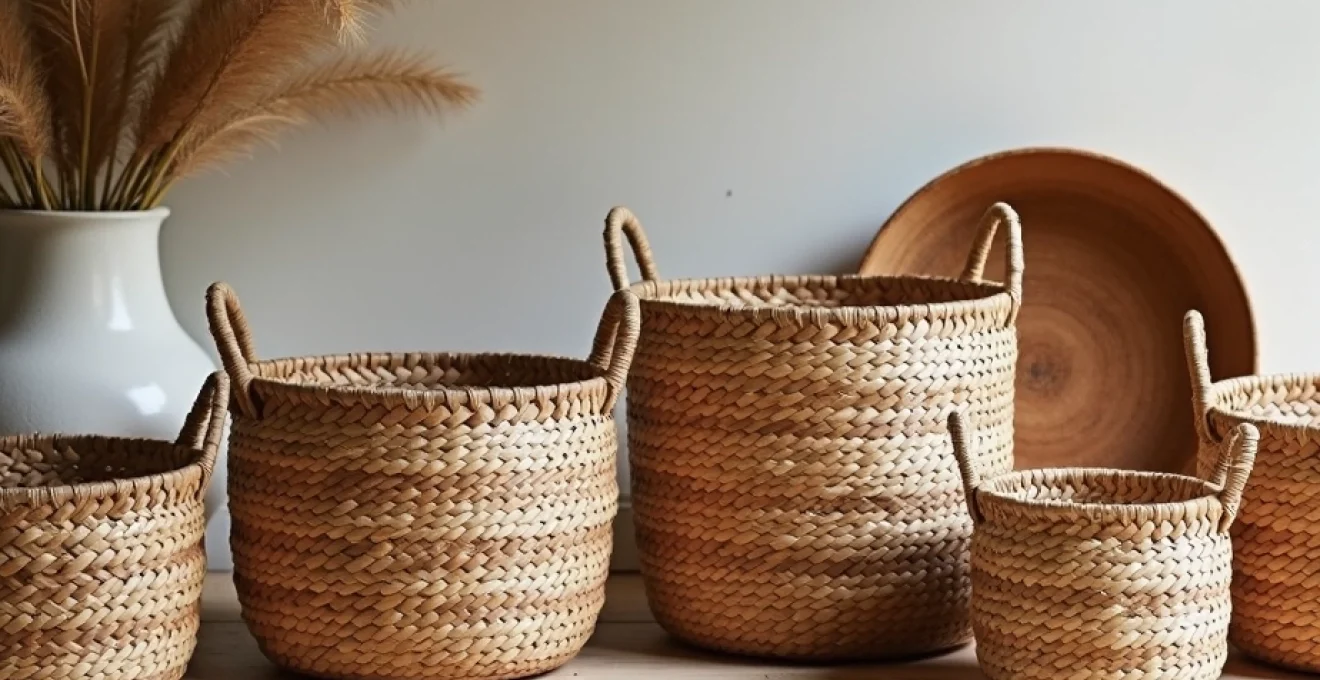
Artisanal baskets represent far more than simple storage solutions in contemporary interior design. These handcrafted vessels serve as sophisticated design elements that bridge traditional craftsmanship with modern aesthetic sensibilities. The resurgence of interest in sustainable, authentic décor has positioned artisanal basketry as a cornerstone of thoughtful interior design, offering both functional utility and compelling visual appeal.
The growing appreciation for handmade authenticity in home décor reflects a broader cultural shift towards valuing craftsmanship over mass production. Artisanal baskets embody this ethos perfectly, bringing centuries-old techniques into contemporary living spaces while addressing modern storage needs. Their natural materials, varied textures, and cultural heritage create layers of visual and tactile interest that synthetic alternatives simply cannot replicate.
Modern homeowners increasingly seek décor elements that tell stories and reflect personal values. Artisanal baskets fulfill this desire magnificently, offering pieces that carry the imprint of their makers’ hands and the traditions of their origin cultures. Whether serving as striking wall displays, practical storage solutions, or architectural room dividers, these versatile pieces transform ordinary spaces into environments rich with character and meaning.
Handwoven rattan and seagrass basket construction techniques for interior design
The construction methodology of artisanal baskets directly influences their suitability for various interior applications. Understanding these techniques enables you to select pieces that will perform optimally in your specific design context while maintaining their structural integrity over time.
French willow weaving patterns and their structural properties
French willow basketry employs sophisticated weaving patterns that create remarkable structural stability while maintaining elegant proportions. The traditional pairing technique involves weaving two weavers simultaneously around vertical stakes, creating a dense, durable structure ideal for load-bearing applications. This method produces baskets capable of supporting considerable weight without compromising their form, making them excellent choices for storage solutions in living areas.
The randing weave , another cornerstone of French willow technique, alternates single weavers over and under consecutive uprights. This creates a more flexible structure with inherent give, perfect for baskets that need to accommodate varying contents. The visual rhythm created by randing patterns adds subtle texture that complements both rustic and refined interior schemes.
Coiled pine needle basketry methods for contemporary spaces
Pine needle coiling represents one of the most sustainable basketry techniques, utilising naturally shed materials that would otherwise decompose. The coiling process creates remarkably uniform surfaces with subtle textural variations that reflect the natural characteristics of the needles. These baskets excel in contemporary minimalist settings where clean lines and organic textures create visual harmony.
The binding technique used in pine needle basketry, typically employing sinew or modern synthetic threads, determines both the basket’s durability and aesthetic character. Tight bindings create smooth, almost ceramic-like surfaces, while looser bindings allow the pine needles’ natural colours and textures to remain prominent. This versatility makes pine needle baskets adaptable to various design contexts, from Scandinavian-inspired interiors to southwestern décor schemes.
Ash splint basketmaking and Load-Bearing considerations
Ash splint basketry produces some of the strongest and most durable baskets available, making them ideal for heavy-duty storage applications. The process begins with pounding ash logs to separate growth rings into thin, flexible splints that retain remarkable tensile strength. These splints create baskets capable of supporting substantial weight while maintaining their structural integrity for decades.
The checkerboard weave common in ash splint construction distributes load evenly across the basket’s structure, preventing stress concentrations that could lead to failure. This makes ash splint baskets particularly suitable for storing books, linens, or other heavy household items. Their clean, geometric patterns complement modern and transitional interior styles while providing unmatched functionality.
Natural fibre treatment processes for longevity in indoor environments
Proper treatment of natural fibres significantly extends the lifespan of artisanal baskets in indoor environments. Traditional treatments often involve soaking materials in natural solutions that enhance flexibility while providing protection against insects and moisture damage. Understanding these processes helps you appreciate the quality differences between various basketry pieces and their suitability for different interior applications.
Modern conservation techniques have refined traditional methods, incorporating controlled drying processes that prevent cracking while maintaining the material’s natural characteristics. Steam treatment of rattan and willow enhances their pliability during weaving while creating more stable finished products. These treated materials resist the dimensional changes that can occur in centrally heated homes, ensuring your investment in quality basketry remains sound.
Strategic basket placement for architectural flow and visual weight distribution
The strategic positioning of artisanal baskets within interior spaces requires careful consideration of architectural elements, traffic patterns, and visual balance. Proper placement transforms these functional objects into integral components of your room’s design narrative.
Ceiling height calculations and vertical storage solutions
Ceiling height dramatically influences how baskets function within a space’s visual hierarchy. In rooms with standard eight-foot ceilings, large floor baskets should not exceed 24 inches in height to maintain proper proportional relationships. This guideline prevents the space from feeling cramped while ensuring the baskets remain accessible for practical use.
For higher ceilings, you can employ graduated sizing strategies that draw the eye upward, creating the illusion of even greater height. Arranging baskets in ascending size order, with the largest pieces at floor level and progressively smaller ones elevated on shelves or pedestals, establishes vertical rhythm that enhances the room’s architectural character. This approach works particularly well in great rooms or loft spaces where dramatic height variations can be exploited for visual impact.
Corner alcove utilisation with curved basket geometries
Curved basket forms naturally complement the angular geometry of architectural corners, softening harsh transitions while maximising storage potential in often-underutilised spaces. Round and oval baskets work particularly well in corner placements, as their organic shapes create pleasing contrast against rectilinear room elements.
The scale relationship between corner baskets and surrounding furniture requires careful consideration. A general rule suggests that corner baskets should be approximately one-third the width of adjacent furniture pieces to maintain visual balance. This proportion ensures the baskets feel intentionally placed rather than merely filling empty space. Clustered arrangements of varying-sized baskets can create dynamic corner vignettes that serve both storage and display functions.
Open plan living integration through basket room dividers
Large artisanal baskets serve as effective space definers in open plan environments, creating subtle boundaries without blocking light or sight lines. Tall, cylindrical baskets positioned strategically between functional areas provide psychological separation while maintaining the open feel that makes these layouts desirable.
The key to successful basket room division lies in creating visual continuity through repetition and rhythm. Using baskets of similar materials but varying heights and diameters establishes a cohesive dividing element that feels natural rather than forced. This approach works particularly well when separating living and dining areas or defining workspace boundaries within larger rooms.
Focal point creation using statement baskets as sculptural elements
Exceptional artisanal baskets can function as sculptural focal points, commanding attention through their craftsmanship, scale, or cultural significance. These statement pieces require careful positioning to maximise their visual impact without overwhelming surrounding elements.
The rule of thirds applies effectively to basket placement, with optimal positioning occurring at intersection points of imaginary grid lines drawn across wall surfaces. This creates natural visual anchors that feel balanced and intentional. Lighting plays a crucial role in showcasing statement baskets, with carefully directed illumination revealing the intricate details of their construction while creating dramatic shadow patterns that enhance their three-dimensional qualities.
The most successful interior applications of artisanal basketry occur when these functional objects are treated with the same design consideration typically reserved for fine art or sculptural elements.
Traditional craft origins: regional basket styles and their modern applications
Understanding the cultural and regional origins of different basketry traditions enriches your appreciation of these craftworks while informing appropriate design applications. Each tradition carries distinct aesthetic characteristics that align with specific interior design philosophies.
Shaker basket design principles in minimalist interiors
Shaker basketry exemplifies the principle that form should follow function, creating objects of extraordinary beauty through pure utility. The clean lines, precise proportions, and honest construction methods of Shaker baskets align perfectly with contemporary minimalist design principles. Their restrained aesthetic and superior functionality make them ideal choices for modern interiors seeking authentic simplicity.
The oval form favoured by Shaker craftspeople provides maximum capacity within minimal footprint, making these baskets particularly suitable for urban living spaces where efficiency is paramount. The traditional ash and maple construction creates a warm, natural presence that softens the potentially stark character of minimalist environments while providing essential storage functionality.
African bolga basketry colour patterns for eclectic décor schemes
Bolga baskets from northern Ghana introduce vibrant colour and bold geometric patterns that energise eclectic interior schemes. The traditional dyeing techniques using local plants and minerals create colour palettes that range from subtle earth tones to brilliant primaries, offering options for various design contexts.
The coiled construction technique used in Bolga basketry creates remarkably durable structures capable of withstanding heavy use while maintaining their decorative appeal. The incorporation of leather trim adds textural contrast and enhances durability, making these baskets excellent choices for high-traffic areas where both beauty and function are essential. Their distinctive patterns can serve as inspiration for broader colour schemes, connecting various design elements throughout a space.
Japanese bamboo craftsmanship in Zen-Inspired room layouts
Japanese bamboo basketry represents the pinnacle of material refinement and technical precision. The traditional techniques of splitting, shaping, and weaving bamboo create objects of extraordinary delicacy and strength. These baskets embody the Japanese aesthetic principles of simplicity, natural beauty, and functional perfection that define zen-inspired interiors.
The natural aging process of bamboo adds to its appeal, with the material developing rich golden patinas that deepen over time. This evolution makes Japanese bamboo baskets ideal for spaces designed to develop character and meaning through use and age. Their clean, architectural forms complement contemporary furniture while adding essential organic elements that prevent sterile modernism.
Scandinavian birchbark techniques for nordic interior aesthetics
Scandinavian birchbark basketry utilises the unique properties of birch trees to create lightweight, water-resistant containers with distinctive visual characteristics. The natural markings and colour variations in birchbark create subtle decorative patterns that align perfectly with Nordic design principles emphasising natural beauty and functional elegance.
Traditional construction techniques involve folding and stitching bark sheets with root materials, creating seamless forms that showcase the material’s inherent beauty. These baskets work exceptionally well in contemporary Scandinavian-inspired interiors, where their clean forms and natural materials contribute to the overall aesthetic of unpretentious sophistication that defines this design philosophy.
Functional storage integration through basket typology
The diversity of basket forms allows for sophisticated storage solutions that address specific functional requirements while contributing to overall interior aesthetics. Understanding different basket typologies enables you to select appropriate forms for various storage challenges throughout your home.
Market baskets, with their open weaving and sturdy handles, excel in kitchen applications where ventilation and portability are essential. Their traditional role in food transport translates perfectly to modern produce storage, maintaining optimal conditions for fruits and vegetables while adding rustic charm to contemporary kitchens. The sturdy construction typical of market baskets also makes them suitable for transporting items between rooms, functioning as stylish alternatives to plastic storage bins.
Lidded storage baskets provide concealed storage solutions that maintain visual order in living spaces. The presence of lids transforms utilitarian storage into furniture-like elements that can support decorative objects or serve as impromptu seating. This dual functionality makes lidded baskets particularly valuable in smaller homes where every piece must serve multiple purposes. The variety of lid styles, from flat tops to domed forms, allows you to select pieces that complement your existing furniture profiles.
Nesting baskets offer scalable storage solutions that adapt to changing needs while minimising storage requirements when not in use. The graduated sizing typical of nesting sets creates pleasing visual compositions when displayed together, while individual pieces can be deployed throughout the home as needed. This flexibility makes nesting baskets ideal for seasonal storage transitions or temporary organisation projects.
Wall-mounted baskets capitalise on vertical space while creating dynamic wall treatments that combine storage with decoration. The three-dimensional quality of baskets adds depth and shadow play to wall surfaces, creating more engaging environments than flat artwork alone. Systematic arrangements of wall baskets can accommodate various storage needs while maintaining visual coherence through repetition of form and material.
| Basket Type | Optimal Applications | Size Range | Material Preferences |
|---|---|---|---|
| Market Baskets | Kitchen storage, transport | Medium to large | Willow, rattan |
| Lidded Storage | Living areas, bedrooms | Large | Ash, oak splint |
| Wall-mounted | Vertical display, small items | Small to medium | Seagrass, pine needle |
| Nesting Sets | Flexible storage, seasonal | Variable | Bamboo, rattan |
Colour theory application in natural basket materials
The natural colour palette of artisanal basket materials provides a sophisticated foundation for interior colour schemes while offering subtle variations that prevent monotony. Understanding how these natural tones interact with artificial lighting and surrounding colours enables more effective integration of basketry into existing décor schemes.
Natural rattan and willow possess warm undertones that complement earth-based colour palettes beautifully. These materials typically exhibit honey, amber, and golden hues that intensify under warm artificial lighting while appearing more neutral under natural daylight. This colour-shifting quality makes them versatile choices for rooms with varying lighting conditions throughout the day. The subtle colour variations within individual pieces add depth and interest without overwhelming accompanying design elements.
Darker materials such as walnut-stained splint or naturally aged bamboo provide grounding elements that anchor lighter colour schemes while adding sophisticated contrast. These deeper tones work particularly well in rooms with abundant natural light, where their rich colours can be fully appreciated. The natural patination process that occurs over time adds complexity to these darker materials, creating unique pieces that develop individual character through use and exposure.
The bleached or naturally pale materials used in some basketry traditions offer neutral backgrounds that complement virtually any colour scheme. Seagrass, pale willow, and treated pine needle baskets provide textural interest without competing with bold colours or patterns in surrounding décor. This neutrality makes them ideal choices for spaces where artwork or textile collections take precedence in the overall design hierarchy.
Contemporary dyeing techniques have expanded the colour possibilities for artisanal baskets while maintaining their handcrafted character. Natural dyes create subtle colour variations that mass-produced alternatives cannot replicate, offering the visual interest of colour without sacrificing the authentic character that makes these pieces valuable. The fading and aging characteristics of natural dyes create pieces that develop unique personalities over time, contributing to the overall narrative of a well-curated interior.
Natural materials possess inherent colour complexity that synthetic alternatives cannot replicate, creating visual depth that enriches any interior environment while aging gracefully over time.
Maintenance protocols and environmental considerations for artisanal basketwork
Proper care and maintenance of artisanal baskets ensures their longevity while preserving their aesthetic and functional qualities. Understanding the environmental factors that affect natural materials enables you to create optimal conditions for these investments while preventing common problems that can diminish their value and usefulness.
Humidity control represents the most critical environmental factor affecting basket longevity. Natural fibres expand and contract with moisture changes, potentially causing structural stress that leads to cracking or loosening of weaving elements. Maintaining consistent humidity levels between 30-50% prevents excessive dimensional changes while keeping materials supple enough to resist brittleness. This range works well for most basketry materials while remaining
comfortable for human occupancy in most climates.
Regular dusting with soft-bristled brushes removes accumulated particles that can abrade natural fibres over time. Weekly maintenance using vacuum attachments on low suction prevents deep-seated dirt accumulation while preserving the integrity of weaving patterns. For heavily used pieces, monthly conditioning with appropriate natural oils maintains fibre flexibility and prevents premature aging. Different materials require specific conditioning approaches, with rattan benefiting from light applications of lemon oil while willow responds well to periodic misting with distilled water.
Positioning baskets away from direct heat sources prevents rapid moisture loss that can cause cracking and structural failure. Radiators, heating vents, and fireplaces create localised environments that can damage natural materials through excessive temperature fluctuations. Similarly, direct sunlight exposure should be limited to prevent ultraviolet degradation of natural dyes and fibres. Strategic placement near north-facing windows provides gentle illumination without harmful UV exposure, maintaining both visibility and material integrity.
Professional restoration services can address significant damage while preserving the authentic character of valuable pieces. Understanding when to attempt home repairs versus seeking expert intervention prevents well-intentioned but potentially damaging amateur restoration efforts. Minor loosening of weaving elements can often be addressed through careful rewetting and gentle manipulation, while structural damage typically requires professional assessment and repair techniques that maintain the basket’s historical and aesthetic integrity.
Seasonal rotation of basketry collections prevents uneven wear patterns while allowing pieces to rest and recover from regular use. This practice, common among serious collectors, extends the useful life of entire collections while providing opportunities to refresh interior displays. Documentation of rotation schedules and maintenance activities creates valuable records that enhance the long-term value of quality basketry investments.
The relationship between proper care and basket longevity is exponential rather than linear – small investments in preventive maintenance yield disproportionately large returns in extended useful life and preserved aesthetic value.
Storage protocols for seasonal basketry require careful attention to environmental conditions and protective measures. Clean, breathable storage materials prevent moisture accumulation while protecting against dust and pest infiltration. Cedar-lined storage areas provide natural insect deterrence without chemical treatments that might affect sensitive natural materials. Proper support during storage prevents deformation while allowing natural materials to maintain their structural integrity during periods of non-use.
The environmental impact of maintaining artisanal baskets remains minimal compared to synthetic alternatives, with most care products being biodegradable and non-toxic. This sustainability advantage extends the appeal of natural basketry beyond aesthetic considerations to encompass broader environmental consciousness. The ability to repair and restore these pieces rather than replacing them further enhances their environmental credentials, making them intelligent choices for environmentally aware consumers seeking durable, beautiful storage solutions.