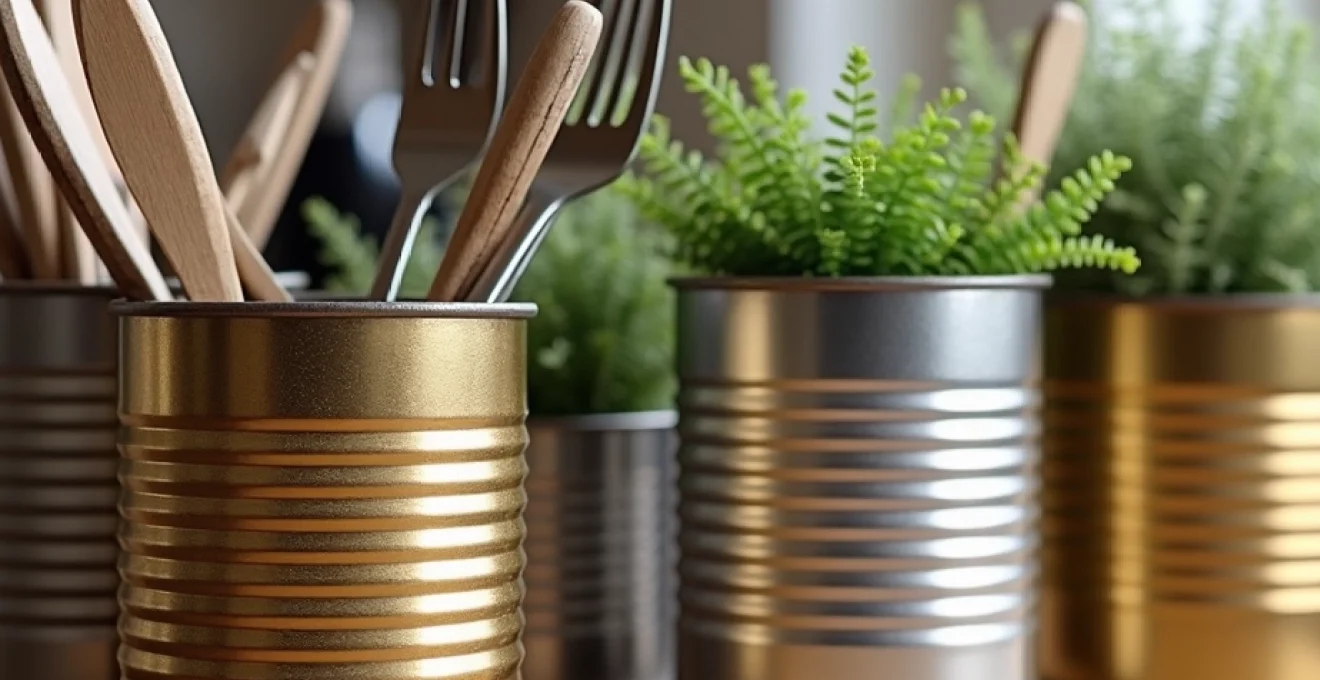
The art of transforming discarded tin cans into functional organisers represents a perfect marriage of environmental consciousness and creative ingenuity. With millions of tin cans reaching recycling facilities daily, crafting enthusiasts and eco-conscious homeowners are discovering the remarkable potential these humble containers hold for solving storage challenges throughout the home. From sleek kitchen utensil holders to sophisticated workshop tool organisers, professionally executed tin can upcycling projects deliver both aesthetic appeal and practical functionality. The process requires careful attention to material preparation, surface treatment, and finishing techniques to achieve results that rival commercially manufactured storage solutions. This comprehensive approach to tin can transformation ensures durability, visual appeal, and seamless integration into modern home décor schemes.
Essential tools and materials for professional tin can upcycling projects
Success in tin can upcycling projects begins with assembling the proper toolkit and understanding the specific requirements of metal crafting. Professional results demand precision tools, quality materials, and adherence to safety protocols that protect both the crafter and ensure project longevity. The investment in appropriate equipment pays dividends through enhanced project outcomes and expanded creative possibilities.
Metal cutting equipment: tin snips, dremel rotary tools, and safety protocols
Quality metal cutting equipment forms the foundation of any serious tin can upcycling endeavour. Aviation snips offer superior cutting power and precision for straight cuts, whilst curved snips excel at navigating rounded edges and intricate patterns. Dremel rotary tools equipped with cutting wheels provide unmatched versatility for creating decorative perforations, whilst maintaining clean edges that minimise post-cutting finishing work. The key lies in selecting the appropriate cutting method based on your specific project requirements and desired aesthetic outcomes.
Safety protocols during metal cutting operations cannot be overstated in importance. Sharp metal edges pose significant injury risks, particularly when working with thin gauge materials that can create razor-sharp fragments. Proper workspace setup includes adequate lighting, stable work surfaces, and immediate access to first aid supplies. Professional craftspeople recommend practising cutting techniques on test pieces before committing to final project materials.
Surface preparation materials: sandpaper grits, steel wool, and degreasing agents
Achieving professional-grade surface finishes requires systematic surface preparation using graduated abrasive materials. Beginning with coarse 80-grit sandpaper removes initial oxidation and surface irregularities, whilst progressive refinement through 220-grit and 400-grit papers creates the smooth foundation essential for paint adhesion. Steel wool grades from #0 to #0000 provide final surface polishing that eliminates micro-scratches and creates optimal conditions for primer application.
Chemical degreasing agents play a crucial role in removing manufacturing residues, adhesive remnants, and handling oils that can compromise paint adhesion. Acetone-based degreasers offer excellent cleaning power but require adequate ventilation and careful handling. Alternative citrus-based degreasers provide safer working conditions whilst maintaining effective cleaning capabilities for most applications.
Adhesive solutions: E6000 industrial strength, gorilla glue, and epoxy resins
Professional tin can upcycling projects demand adhesive solutions capable of withstanding thermal expansion, moisture exposure, and mechanical stress. E6000 industrial adhesive delivers exceptional flexibility and chemical resistance, making it ideal for outdoor applications and high-stress joint configurations. The cure time of 24-48 hours allows for positioning adjustments whilst providing ultimate bond strength that exceeds many mechanical fastening methods.
Two-part epoxy resins offer unparalleled strength for structural applications where maximum bond integrity is essential. These systems require precise mixing ratios and controlled working environments but deliver superior performance in demanding applications. Gorilla Glue polyurethane formulations provide excellent gap-filling properties and natural expansion characteristics that accommodate thermal cycling in varying environmental conditions.
Protective equipment: Cut-Resistant gloves, safety glasses, and dust masks
Personal protective equipment selection directly impacts both project safety and work quality. Level 5 cut-resistant gloves manufactured with high-performance polyethylene fibres provide maximum protection against sharp edges whilst maintaining dexterity for precision work. These gloves resist punctures and cuts that can occur when handling freshly cut tin surfaces or during aggressive sanding operations.
Safety glasses with side shields protect against metal particles generated during cutting and grinding operations. Anti-fog coatings ensure clear vision throughout extended work sessions, whilst scratch-resistant lenses maintain optical clarity over multiple projects. Dust mask selection depends on specific operations, with N95 ratings sufficient for standard sanding work and P100 ratings recommended when working with potentially hazardous surface coatings or older paint formulations.
Advanced surface treatment techniques for durable tin can transformations
Professional surface treatment protocols ensure tin can upcycling projects withstand environmental challenges whilst maintaining aesthetic appeal throughout their service life. These advanced techniques address the fundamental challenges of metal substrate preparation, corrosion prevention, and finish durability that separate amateur projects from professional-quality results.
Rust prevention methods: Rust-Oleum universal primer and corrosion inhibitors
Effective rust prevention begins with understanding the electrochemical processes that drive metal corrosion and implementing barrier systems that interrupt these reactions. Rust-Oleum Universal Metal Primer creates a sacrificial zinc-rich layer that provides galvanic protection whilst serving as an optimal foundation for topcoat adhesion. The flash rust inhibitors incorporated in premium primers prevent oxidation during the critical curing period when metal surfaces are most vulnerable.
Advanced corrosion inhibitors extend protection beyond basic primer systems through molecular-level surface modification. These treatments penetrate microscopic surface irregularities and create long-term protective barriers that resist moisture penetration and chemical attack. Application techniques significantly impact effectiveness, with thin, uniform coats providing superior protection compared to thick, uneven applications that can trap moisture and accelerate localised corrosion.
Paint application systems: chalk paint, spray primers, and powder coating alternatives
Modern paint application systems offer unprecedented versatility in achieving specific aesthetic and performance characteristics. Chalk paint formulations provide excellent adhesion to metal surfaces without extensive primer preparation whilst delivering the popular matte finish preferred in contemporary home décor. These water-based systems cure through coalescence rather than chemical cross-linking, resulting in finishes that can be easily modified or refreshed as style preferences evolve.
Professional spray primer systems deliver uniform coverage and superior surface penetration compared to brush-applied alternatives. Automotive-grade primers formulated for metal substrates provide exceptional durability and chemical resistance suitable for demanding applications. The controlled particle size and application pressure achievable with quality spray equipment eliminates brush marks and creates perfectly smooth surfaces for high-gloss topcoats.
Powder coating alternatives have revolutionised small-scale metal finishing through innovative brush-on formulations that cure at moderate temperatures achievable with standard home ovens.
Decorative finishing techniques: decoupage medium, textural spray paints, and metallic leafing
Creative finishing techniques transform functional organisers into decorative elements that enhance interior design schemes. Decoupage applications using acid-free papers and archival adhesives create permanent decorative treatments that resist fading and moisture damage. The key to professional decoupage results lies in proper surface preparation and graduated adhesive application that eliminates air bubbles and ensures complete adhesion across complex curved surfaces.
Textural spray paints containing ceramic microspheres or organic fillers add dimensional interest whilst providing enhanced grip surfaces for frequently handled items. These specialty coatings require specific application techniques to achieve uniform texture distribution and avoid drip formations. Metallic leafing applications create luxury finishes that rival expensive manufactured products when executed with proper sizing adhesives and protective sealers.
Sealant application: polyurethane topcoats and Marine-Grade protective finishes
Protective sealant systems provide the final barrier against environmental degradation and mechanical wear. Polyurethane topcoats formulated specifically for metal substrates offer excellent UV resistance and flexibility that accommodates thermal expansion without cracking or delamination. Water-based formulations provide low odour application and rapid cure times, whilst solvent-based systems deliver maximum durability and chemical resistance for demanding service conditions.
Marine-grade protective finishes incorporate advanced resin technology designed to withstand extreme environmental exposure including salt spray, UV radiation, and thermal cycling. These premium systems justify their higher cost through extended service life and reduced maintenance requirements. Application timing proves critical, as temperature and humidity conditions during curing significantly impact final performance characteristics.
Room-specific organiser design configurations and functional applications
Successful tin can organiser projects require careful consideration of specific functional requirements, environmental conditions, and aesthetic integration within targeted room environments. Each space presents unique challenges and opportunities that influence design decisions, material selection, and construction methodologies. Professional designers approach these projects by analysing traffic patterns, usage frequency, and maintenance accessibility to create solutions that enhance daily functionality whilst contributing positively to overall interior design schemes.
The modular nature of tin can construction allows for scalable systems that adapt to changing storage needs and spatial constraints. Vertical mounting systems maximise wall space utilisation whilst maintaining easy access to frequently used items. Horizontal configurations work exceptionally well for desktop applications where visual organisation and quick item identification take priority over space efficiency. The ability to mix different can sizes within unified design schemes creates visual interest whilst accommodating diverse storage requirements.
Kitchen storage solutions: herb gardens and utensil management systems
Kitchen environments present unique opportunities for tin can upcycling projects due to the abundance of appropriately sized containers generated through normal food preparation activities. Herb garden systems utilising large coffee tins or soup cans create attractive windowsill displays that provide fresh ingredients whilst reducing grocery costs. The drainage requirements for healthy plant growth necessitate careful perforation planning and waterproof saucer selection to protect surrounding surfaces from moisture damage.
Utensil management systems benefit from careful size gradation that accommodates everything from delicate measuring spoons to robust serving implements. Wall-mounted configurations free valuable counter space whilst maintaining convenient access during meal preparation. Magnetic mounting systems work exceptionally well with steel cans, allowing for flexible repositioning as kitchen workflows evolve. The key to successful kitchen organisers lies in selecting finishes that resist grease accumulation and facilitate easy cleaning through standard kitchen maintenance routines.
Professional kitchen designers increasingly specify custom organiser solutions that integrate seamlessly with existing cabinetry and appliance configurations. Tin can systems painted to match cabinet hardware create cohesive visual schemes that appear built-in rather than added-on. The cost advantages compared to manufactured organiser systems make these projects particularly attractive for budget-conscious renovations that require maximum impact with minimal investment.
Bathroom organisation: toiletry caddies and cosmetic storage arrays
Bathroom applications require careful attention to moisture resistance and easy cleaning capabilities due to the high humidity environment and frequent exposure to personal care products. Toiletry caddies constructed from medium-sized food cans provide excellent storage for items like toothbrushes, razors, and travel-sized containers. The vertical orientation maximises limited counter space whilst keeping frequently used items easily accessible. Proper sealing and drainage considerations prevent water accumulation that could lead to metal corrosion or bacterial growth.
Cosmetic storage arrays utilising various can sizes create organised display systems that transform cluttered vanity areas into efficiently organised spaces. Shallow tuna cans work particularly well for lip products and small accessories, whilst taller containers accommodate brushes and applicators. The ability to see all items at a glance reduces morning routine time and ensures products don’t expire unused in cluttered drawers.
The humid bathroom environment demands marine-grade finishes and proper ventilation planning to ensure long-term durability and prevent corrosion-related failures.
Counter-mounted lazy Susan configurations create rotating storage systems that maximise accessibility within limited bathroom footprints. These systems work particularly well in shared bathroom environments where multiple users maintain separate product collections. The smooth rotation mechanism requires quality bearing systems and regular maintenance to ensure continued smooth operation throughout the high-usage environment typical of family bathrooms.
Workshop and garage applications: hardware sorting and tool storage mechanisms
Workshop environments represent the ultimate testing ground for tin can organiser durability and functionality. Hardware sorting systems utilising various can sizes create efficient storage solutions for the countless small fasteners, fittings, and components that accumulate in active workshops. The transparent visibility provided by open containers significantly reduces time spent searching for specific items compared to closed drawer or bin systems. Size gradation strategies ensure optimal space utilisation whilst preventing small items from becoming lost in oversized containers.
Wall-mounted pegboard integration systems combine the flexibility of traditional pegboard layouts with the containment advantages of tin can organisers. Custom mounting brackets fabricated from metal stock create secure attachment points that withstand the vibration and impact typical of workshop environments. The ability to quickly reconfigure organiser layouts accommodates changing project requirements and tool collections without requiring permanent installation modifications.
Magnetic mounting solutions work exceptionally well in steel workshop buildings where attachment points are readily available throughout the workspace. Heavy-duty rare earth magnets provide secure mounting for loaded organisers whilst allowing instant repositioning as workflow patterns evolve. The combination of magnetic mounting and clearly labelled containers creates identification systems that remain functional even in the poor lighting conditions common in many workshop environments.
Tool storage mechanisms incorporating tin can components provide cost-effective alternatives to expensive commercial tool organisation systems. Custom-sized containers accommodate specific tool collections whilst protective foam inserts prevent damage during storage and transport. The modular construction approach allows for system expansion and modification as tool collections grow and change over time. Professional workshops increasingly adopt these custom solutions due to their superior functionality and significant cost advantages compared to manufactured alternatives.