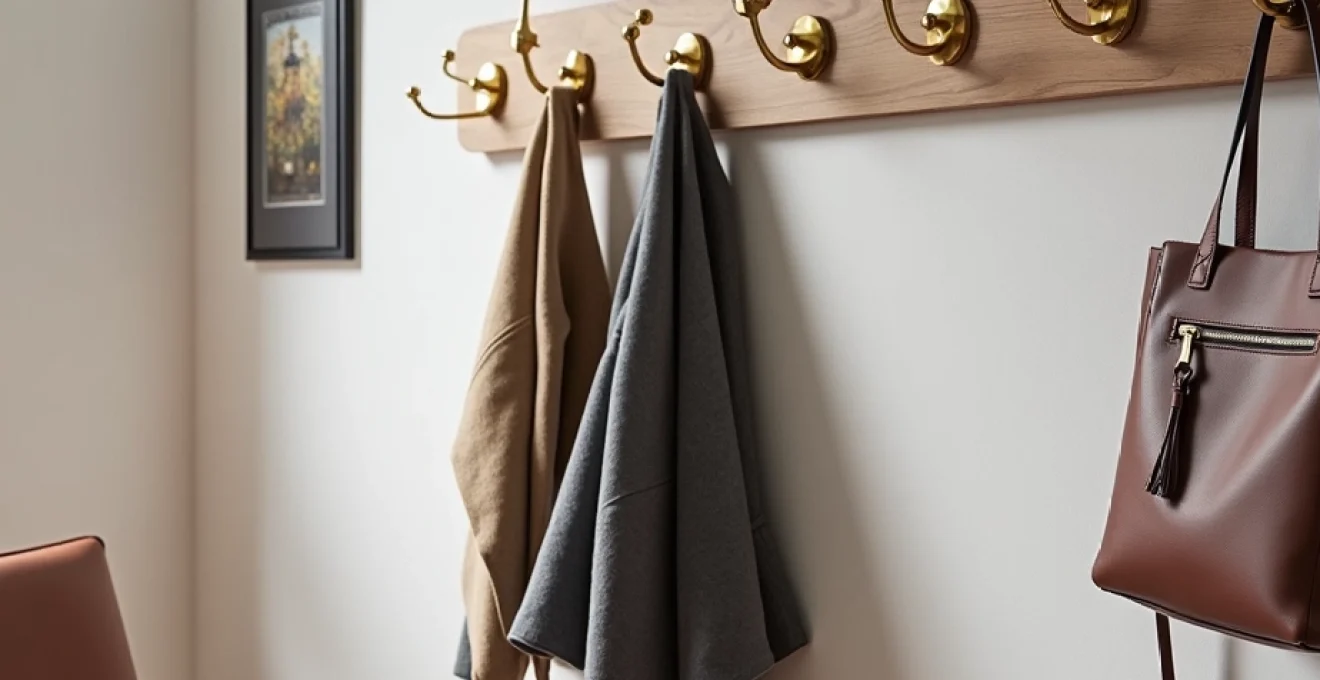
Statement wall hooks have revolutionized modern home organization, transforming mundane storage solutions into sophisticated design elements that enhance both functionality and aesthetic appeal. These architectural details have evolved far beyond their utilitarian origins, becoming focal points that define spaces whilst maintaining their primary purpose of efficient storage. The contemporary approach to wall hook design considers everything from material science to ergonomic principles, creating solutions that seamlessly integrate into diverse interior styles.
The growing emphasis on compact living and maximising space efficiency has elevated the importance of well-designed wall hooks in modern homes. Today’s homeowners seek storage solutions that don’t compromise on style, leading to innovations in hook design that blend cutting-edge engineering with artistic expression. This evolution has created a market where statement hooks serve as both functional necessities and decorative investments, capable of transforming entire rooms through strategic placement and thoughtful selection.
Material engineering and Load-Bearing capacity of statement wall hooks
The foundation of any effective wall hook system lies in its material composition and structural engineering. Modern statement hooks must balance aesthetic appeal with practical performance, requiring careful consideration of metallurgy, weight distribution, and environmental factors. The selection of appropriate materials directly impacts not only the hook’s visual impact but also its longevity and functional capacity.
Stainless steel vs brass construction in High-Traffic applications
Stainless steel construction offers superior durability for high-traffic environments, with grades 304 and 316 providing exceptional resistance to wear and corrosion. The material’s inherent strength allows for thinner profile designs without compromising load-bearing capacity, making it ideal for minimalist aesthetic approaches. Steel’s tensile strength of approximately 500-700 MPa enables hooks to support significant weight whilst maintaining their structural integrity over extended periods.
Brass construction presents a warmer aesthetic alternative, particularly suited to traditional and transitional interior styles. The material’s natural antimicrobial properties make it advantageous in high-touch applications, whilst its malleability allows for intricate decorative detailing. However, brass requires protective coating in moisture-prone environments to prevent tarnishing and maintain its lustrous appearance. The copper content in brass typically ranges from 60-70%, providing adequate strength for most residential applications whilst offering superior workability for detailed craftsmanship.
Weight distribution mechanics for heavy coats and bags
Effective weight distribution begins with understanding the mechanical forces acting upon wall-mounted hooks during use. The moment arm created by hanging items generates both vertical and horizontal stresses that must be accommodated through proper hook geometry and mounting systems. Professional installation considers these forces during placement, ensuring that hooks are positioned to minimise structural stress on both the mounting surface and the hook itself.
The curvature of hook designs significantly influences weight distribution patterns. Hooks with extended curved profiles spread load forces over larger surface areas, reducing stress concentration points that could lead to material failure. Research indicates that hooks with gradual radius curves distribute weight approximately 40% more effectively than sharp-angled alternatives. This principle becomes particularly important when accommodating heavy winter coats or loaded bags that can weigh upwards of 10-15 pounds per item.
Wall mounting systems: toggle bolts vs masonry anchors
Toggle bolt systems excel in hollow wall applications, distributing load across wider surface areas behind drywall or plaster surfaces. The expanding mechanism of quality toggle bolts can support loads of 50-75 pounds when properly installed, making them suitable for most statement hook applications. The key advantage lies in their ability to maintain holding power even when subjected to lateral forces, which commonly occur during normal hook usage.
Masonry anchors provide superior holding power in solid substrates, with expansion anchors capable of supporting loads exceeding 100 pounds per anchor point. The selection between wedge anchors, sleeve anchors, and chemical anchors depends on the specific masonry material and load requirements. Installation precision becomes critical with masonry systems, as improper drilling or anchor selection can compromise both performance and the integrity of the mounting surface.
Corrosion resistance standards for bathroom and kitchen installations
Bathroom and kitchen environments present unique challenges for wall hook materials due to elevated humidity levels and potential chemical exposure. The ASTM B117 salt spray test provides standardised corrosion resistance ratings, with statement hooks requiring minimum 240-hour resistance for bathroom applications and 480-hour resistance for coastal environments. These standards ensure that hooks maintain both structural integrity and aesthetic appeal under challenging conditions.
Advanced coating technologies such as PVD (Physical Vapour Deposition) and electroplating provide enhanced protection against moisture-related degradation. These coatings can extend hook lifespan by 300-500% compared to unprotected materials, whilst offering opportunities for unique colour and finish applications. The selection of appropriate protective systems depends on the specific environmental conditions and aesthetic requirements of each installation.
Ergonomic design principles in contemporary hook architecture
Modern hook design prioritises user comfort and functionality through application of established ergonomic principles. The integration of anthropometric data ensures that hooks accommodate diverse user populations whilst maintaining accessibility for individuals with varying physical capabilities. Contemporary designers recognise that ergonomic excellence enhances both user satisfaction and the overall success of organisational systems.
Anthropometric measurements for optimal hanging heights
Standard anthropometric data suggests optimal hook placement between 60-66 inches from floor level for adult users, accommodating the 5th to 95th percentile population range. However, statement hook installations often benefit from varied height arrangements that serve different functional purposes whilst creating visual interest. Research indicates that hooks positioned at 54-58 inches prove most accessible for children and shorter adults, whilst heights of 66-72 inches accommodate taller users and longer garments.
The consideration of reach zones becomes particularly important in narrow spaces such as hallways and entryways. Forward reach limitations of approximately 24 inches for average users must be considered when planning hook placement relative to walkways and furniture. This principle ensures that hooks remain functional without creating obstacles or requiring awkward body positioning during use.
Curved hook geometry and fabric preservation techniques
The curvature radius of hook profiles directly impacts fabric preservation and garment longevity. Sharp edges and tight curves can create stress concentration points that damage delicate fabrics over time. Optimal hook designs feature radius curves of 8-12mm, providing sufficient surface area to distribute garment weight whilst maintaining compact profiles suitable for contemporary aesthetics.
Surface finish quality plays a crucial role in fabric preservation, with smooth, polished surfaces reducing friction that can cause pilling or snagging. Advanced manufacturing techniques such as CNC machining and precision casting enable the production of seamlessly smooth hook surfaces that protect even the most delicate fabrics. The integration of soft-touch coatings or padding elements further enhances fabric compatibility without compromising the hook’s visual appeal.
Multi-directional loading considerations in hook positioning
Wall hooks experience forces from multiple directions during typical use, requiring designs that accommodate rotational and lateral stresses in addition to primary vertical loads. The positioning of hooks must consider these multi-directional forces, particularly in high-traffic areas where users might quickly hang or retrieve items without careful alignment. Strategic positioning accounts for natural user behaviour patterns to minimise stress on both hooks and mounting systems.
The angle of hook projection from the wall significantly influences loading characteristics. Hooks angled slightly upward (5-15 degrees) provide natural resistance to items sliding off whilst directing primary forces toward the strongest structural elements. This principle becomes particularly important for statement hooks that prioritise visual impact, as the geometric requirements for aesthetic appeal must be balanced with practical performance considerations.
Visual impact strategies through strategic hook placement
The placement of statement wall hooks extends beyond functional considerations to encompass sophisticated design strategies that enhance interior spaces. Contemporary approaches recognise hooks as architectural elements capable of defining spatial relationships and establishing visual hierarchies within rooms. The strategic positioning of these elements can transform mundane storage needs into compelling design features that contribute to the overall aesthetic narrative of a space.
Scandinavian minimalism: MUUTO and HAY hook integration methods
Scandinavian design principles emphasise functionality through restraint, with statement hooks serving as perfect embodiments of this philosophy. The integration of hooks from renowned brands like MUUTO and HAY demonstrates how minimalist aesthetics can enhance rather than compromise organisational efficiency. These designs typically feature clean lines, natural materials, and subtle colour palettes that complement rather than dominate interior spaces.
The spacing and arrangement of minimalist hooks follows mathematical principles that create visual harmony whilst maintaining practical functionality. Research suggests that arrangements following the golden ratio (1:1.618) create more pleasing visual compositions, with hook spacing reflecting these proportional relationships. Minimalist integration requires careful attention to negative space, ensuring that hooks contribute to the overall sense of calm and order that characterises Scandinavian interiors.
Industrial aesthetic: cast iron and wrought steel statement pieces
Industrial-style statement hooks celebrate raw materials and manufacturing processes, transforming functional hardware into bold design statements. Cast iron and wrought steel construction allows for substantial, sculptural forms that serve as focal points within industrial and contemporary loft spaces. The inherent strength of these materials enables larger, more dramatic designs that can support substantial loads whilst making powerful visual statements.
The patina and surface treatments of industrial hooks contribute significantly to their aesthetic impact. Natural oxidation processes create unique surface characteristics that evolve over time, whilst controlled patination techniques allow for consistent appearances across multiple installations. The integration of industrial hooks often involves grouping multiple pieces to create wall compositions that balance functional requirements with artistic expression.
Art deco revival: geometric patterns in luxury hook collections
Contemporary interpretations of Art Deco principles bring geometric sophistication to statement hook design, incorporating angular forms and metallic finishes that reference the glamour of the 1920s and 1930s. These designs often feature stepped profiles, chevron patterns, and sunburst motifs that create dramatic wall compositions. The precision required for effective Art Deco-inspired hooks demands advanced manufacturing techniques that can achieve the sharp lines and perfect symmetry characteristic of the style.
The integration of luxury materials such as polished brass, chrome, and exotic woods elevates Art Deco hooks beyond mere functional elements to become genuine decorative arts pieces. Geometric precision becomes paramount in these applications, with even minor deviations from intended proportions significantly impacting the overall aesthetic success. The installation of such hooks often requires professional expertise to ensure proper alignment and spacing that honours the mathematical principles underlying Art Deco design.
Biophilic design: natural wood and organic shape integration
Biophilic design principles recognise the human connection to natural forms and materials, making organic-shaped hooks powerful tools for creating harmonious interior environments. Natural wood construction offers infinite variety through grain patterns, colour variations, and species characteristics that ensure each hook possesses unique visual qualities. The integration of organic forms helps soften the geometric rigidity of modern architecture whilst maintaining functional effectiveness.
The selection of wood species significantly impacts both aesthetic and performance characteristics. Hardwoods such as oak, walnut, and maple provide superior durability for high-use applications, whilst their natural grain patterns create visual interest that synthetic materials cannot replicate. Advanced wood treatment techniques including thermal modification and natural oil finishes enhance durability whilst preserving the material’s organic character. The curvature of organic hook designs requires careful engineering to ensure that flowing forms don’t compromise structural integrity or functional performance.
Space optimisation algorithms for Multi-Hook configurations
The arrangement of multiple statement hooks requires sophisticated planning that balances functional requirements with aesthetic principles. Modern space optimisation approaches utilise both mathematical algorithms and design intuition to create configurations that maximise storage capacity whilst maintaining visual appeal. The complexity increases exponentially when accommodating diverse item types, user heights, and traffic patterns within the same installation.
Advanced planning software can model different configuration options, accounting for variables such as hook spacing, height variations, and load distribution patterns. These tools enable designers to optimise arrangements before installation, reducing costly modifications and ensuring optimal performance. Algorithmic approaches consider factors including reach zones, sight lines, and circulation patterns to create configurations that enhance rather than impede daily routines.
The integration of modular hook systems allows for future reconfiguration as needs change, providing flexibility that static installations cannot match. Modular approaches utilise standardised mounting systems that accommodate various hook styles and configurations, enabling users to adapt their storage solutions over time. This adaptability proves particularly valuable in dynamic environments such as family homes where storage needs evolve with changing lifestyles.
Professional installation of multi-hook configurations requires precise measurements and careful attention to structural considerations, particularly when accommodating heavy loads across multiple mounting points.
The vertical spacing of hooks in multi-level configurations must accommodate the longest items likely to be stored whilst preventing interference between adjacent pieces. Research suggests minimum vertical spacing of 12-15 inches for coat storage, with 8-10 inches sufficient for lighter items such as bags and scarves. These measurements must be adjusted based on the specific hook geometry and the types of items commonly stored in each location.
Smart technology integration in modern wall hook systems
The convergence of traditional storage solutions with smart home technology has created opportunities for enhanced functionality that extends far beyond simple hanging applications. Modern statement hooks can incorporate sensors, lighting, and connectivity features that transform passive storage into active home management systems. These technological integrations maintain aesthetic appeal whilst adding layers of convenience and functionality that appeal to tech-savvy homeowners.
Sensor-equipped hooks can track usage patterns, providing insights into daily routines and helping optimise organisation strategies. Weight sensors can alert users when hooks approach their load limits, whilst occupancy sensors can trigger automated lighting or home automation sequences. The integration of IoT connectivity enables hooks to communicate with broader home management systems, creating seamless interactions between storage and lifestyle management.
LED integration provides both functional and aesthetic benefits, illuminating stored items whilst creating ambient lighting effects that enhance interior atmospheres. Advanced LED systems can adjust colour temperature throughout the day, supporting circadian rhythm regulation whilst highlighting the architectural qualities of statement hook designs. Smart lighting integration requires careful consideration of power supply options, with battery-powered systems offering installation flexibility whilst hardwired solutions provide reliable long-term performance.
The integration of smart technology must enhance rather than compromise the fundamental aesthetic and functional qualities that define effective statement hooks.
Wireless charging capabilities built into hook mounting plates can provide convenient device charging for smartphones and other portable electronics. This integration proves particularly valuable in entryway applications where users frequently need to charge devices upon arriving home. The positioning of charging elements must accommodate various device sizes whilst maintaining the clean lines that characterise effective statement hook design.
Voice control integration enables hands-free operation of smart hook features, particularly beneficial when users’ hands are occupied with coats, bags, or other items. The integration with popular voice assistants allows hooks to participate in broader home automation routines, such as adjusting lighting when coats are hung or providing weather updates when items are retrieved. These features transform routine storage activities into opportunities for enhanced home interaction and information access.
The future development of smart hook technology will likely incorporate predictive analytics that anticipate user needs based on historical patterns and external factors such as weather conditions. Machine learning algorithms can suggest optimal hook usage based on seasonal patterns, family schedules, and lifestyle changes, ensuring that statement hooks continue to provide maximum value as household dynamics evolve over time.