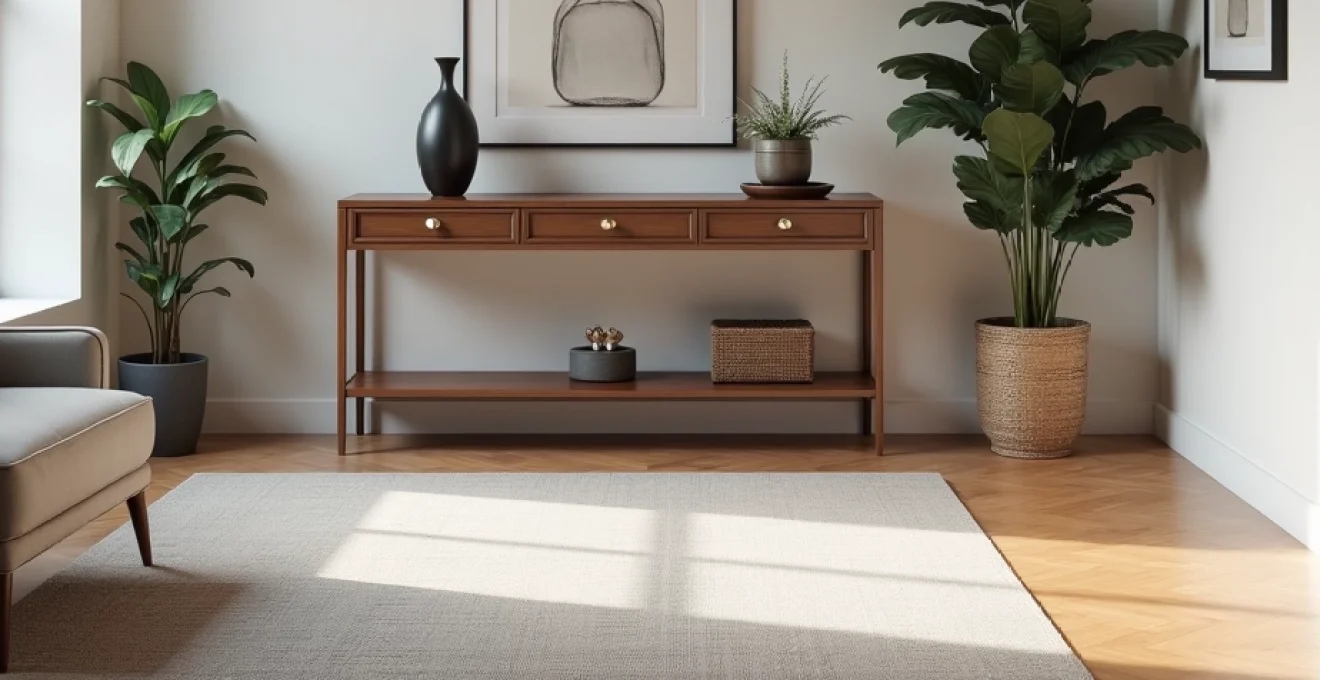
The entryway stands as your home’s opening statement, setting the tone for every visitor’s experience before they venture deeper into your living space. This transitional zone between the exterior world and your personal sanctuary deserves thoughtful consideration, as it serves both functional and aesthetic purposes. Creating an impactful entryway requires balancing practical storage solutions with sophisticated design elements that reflect your personal style. Whether you’re working with a compact hallway or an expansive foyer, the principles of effective entryway design remain consistent: maximise visual appeal whilst maintaining everyday functionality. The modern approach to entryway styling has evolved beyond simple coat storage, embracing opportunities to showcase personality through carefully curated design choices that welcome guests and residents alike.
Console table styling techniques for maximum visual impact
Console tables serve as the cornerstone of effective entryway design, offering both surface area for decorative displays and essential storage functionality. The key to successful console styling lies in understanding proportional relationships between objects and creating visual weight distribution that feels both intentional and effortless. Professional designers often emphasise the importance of selecting pieces that complement your home’s architectural features whilst providing practical benefits for daily use.
Implementing the rule of three in console display arrangements
The rule of three creates natural visual harmony by grouping objects in odd numbers, which the human eye finds inherently pleasing. When styling your console table, consider arranging accessories in triangular compositions that draw the eye across the surface. A tall lamp positioned at one end can balance a medium-height vase in the centre, with a small decorative object completing the grouping. This arrangement principle works particularly well when objects vary in texture, colour, and material, creating depth without overwhelming the space.
Successful three-object arrangements often incorporate different geometric shapes to maintain visual interest. Combine angular items like picture frames with curved elements such as ceramic bowls or sculptural pieces. The varying heights should create an imaginary triangle when viewed from the side, with the tallest piece anchoring one corner and shorter elements filling the composition. This technique prevents your console display from appearing static or museum-like, instead creating a lived-in atmosphere that feels both polished and approachable.
Creating height variation with layered accessories and lighting
Vertical dimension transforms flat console surfaces into dynamic focal points that command attention throughout the entryway. Layer objects of varying heights to create visual rhythm, using table lamps, candlesticks, and sculptural pieces to establish different elevation points. This approach prevents the common mistake of arranging items in a single horizontal line, which can appear monotonous and lack sophistication.
Lighting elements play a crucial role in creating height variation whilst serving practical purposes. Table lamps provide ambient illumination for evening arrivals, whilst their lampshades add softness to hard console surfaces. Consider incorporating battery-operated LED candles for additional warmth without the safety concerns of open flames. Books stacked horizontally can serve as pedestals for smaller decorative objects, effectively raising their visual prominence whilst adding intellectual appeal to the display.
Incorporating negative space principles for clean sightlines
Negative space, or the empty areas around and between objects, plays an equally important role as the items themselves in creating sophisticated console displays. Professional designers understand that overcrowding surfaces diminishes the impact of individual pieces and creates visual chaos in small entryway spaces. Allow each carefully chosen accessory room to breathe by maintaining generous spacing between grouped items.
The 60-40 rule suggests covering approximately 60% of your console surface whilst leaving 40% empty. This proportion ensures adequate display space without overwhelming the furniture piece or the surrounding area. Strategic placement of negative space also creates natural focal points, directing attention to your most prized decorative elements. Remember that empty space isn’t wasted space – it’s a design tool that enhances the perceived value and importance of your chosen accessories.
Selecting statement hardware: brass, matte black, and brushed nickel finishes
Hardware finishes significantly influence the overall aesthetic impact of console tables and should coordinate with other metallic elements throughout your entryway design scheme. Brass hardware brings warmth and traditional elegance, particularly effective in homes with classic or transitional design themes. This finish pairs beautifully with rich wood tones and creates inviting atmospheres that feel both timeless and sophisticated.
Matte black hardware offers contemporary edge and pairs exceptionally well with modern architectural features. This finish choice works particularly effectively in entryways with high contrast colour schemes or industrial design elements. Brushed nickel hardware provides versatility and subtle sophistication, complementing both warm and cool colour palettes without overwhelming other design elements. The key lies in maintaining consistency throughout your entryway’s metallic accents to create cohesive visual flow.
Flooring material selection and transition zone design
Entryway flooring must withstand the highest traffic levels in your home whilst maintaining aesthetic appeal that complements your interior design vision. The selection process involves balancing durability requirements with style preferences, considering factors such as maintenance needs, slip resistance, and visual compatibility with adjacent room flooring. Modern homeowners increasingly view entryway floors as design opportunities rather than purely functional surfaces, leading to innovative material combinations and creative pattern applications.
Natural stone options: travertine, marble, and slate installation considerations
Natural stone flooring creates luxurious first impressions whilst offering exceptional durability for high-traffic entryway applications. Travertine provides warm, earthy tones with natural variation that complements both traditional and contemporary design schemes. Its naturally slip-resistant surface makes it practical for entryways, though proper sealing remains essential to prevent staining from wet shoes and umbrellas. Professional installation ensures proper substrate preparation and drainage considerations that prevent long-term structural issues.
Marble flooring delivers unparalleled elegance but requires careful consideration of maintenance requirements and slip resistance factors. Honed marble surfaces offer better traction than polished varieties whilst maintaining sophisticated appearance. Slate flooring provides excellent durability with naturally occurring texture variations that enhance visual interest. Its dense composition resists water penetration and wear patterns, making it particularly suitable for climates with significant seasonal weather variations. Consider the long-term maintenance implications of each stone type when making your selection.
Engineered hardwood species: oak, walnut, and bamboo durability factors
Engineered hardwood offers the warmth and beauty of solid wood with enhanced stability and moisture resistance crucial for entryway applications. Oak engineered flooring provides exceptional durability with grain patterns that effectively disguise normal wear and tear from daily foot traffic. Its natural hardness rating makes it suitable for households with pets and children, whilst various stain options allow customisation to match existing décor elements.
Walnut engineered flooring brings rich chocolate tones and sophisticated grain patterns that elevate entryway aesthetics significantly. Though slightly softer than oak, proper protective finishes ensure long-lasting performance in residential applications. Bamboo engineered options offer environmental sustainability with comparable durability characteristics. The linear grain pattern creates clean, modern appearances that complement contemporary design themes whilst providing natural antimicrobial properties beneficial in high-traffic areas.
Threshold strip installation for seamless material transitions
Professional threshold strip installation creates smooth transitions between different flooring materials whilst addressing height variations that commonly occur at entryway boundaries. T-mouldings work effectively when flooring materials share similar thicknesses, providing clean separation lines that enhance the visual definition between spaces. Reducer strips accommodate height differences between materials, preventing trip hazards whilst maintaining aesthetic continuity throughout the transition zone.
Material selection for threshold strips should complement both adjoining floor surfaces without creating jarring visual interruptions. Wood strips match hardwood flooring whilst metal options coordinate with tile or stone surfaces. Consider traffic patterns when selecting threshold widths, as wider strips provide better durability in frequently traversed areas. Proper installation includes adequate expansion gaps and secure fastening methods that prevent future lifting or separation issues.
Anti-slip coating applications for High-Traffic entry areas
Safety considerations demand careful attention to slip resistance in entryway flooring, particularly during wet weather conditions when shoes track moisture indoors. Modern anti-slip coatings provide invisible protection that maintains the natural appearance of stone and tile surfaces whilst significantly improving traction. These applications work particularly well on naturally smooth materials like polished marble or glazed ceramic tiles that may become hazardous when wet.
Professional application ensures even coverage and proper adhesion for long-lasting effectiveness. Nano-technology coatings offer superior durability whilst remaining virtually undetectable on treated surfaces. Regular maintenance protocols help preserve anti-slip properties over time, typically involving gentle cleaning with pH-neutral products that won’t compromise the coating integrity. Consider seasonal reapplication schedules in climates with extreme weather conditions that may accelerate wear patterns.
Architectural lighting solutions for entryway ambience
Effective entryway lighting serves multiple purposes: ensuring safety during evening arrivals, creating welcoming atmospheres for guests, and highlighting architectural features or decorative elements. Modern lighting design embraces layered approaches that combine ambient, task, and accent lighting to create sophisticated illumination schemes. The strategic placement of fixtures can dramatically alter the perceived size and character of entryway spaces, making thoughtful selection and positioning crucial for achieving desired aesthetic outcomes.
Ceiling-mounted fixtures provide primary illumination whilst establishing visual focal points that draw attention upward, effectively increasing perceived ceiling height. Pendant lights work particularly well in entryways with higher ceilings, creating dramatic statements that immediately capture visitor attention. Consider fixtures with dimming capabilities to adjust lighting intensity based on time of day and seasonal variations in natural light availability. This flexibility allows you to create intimate evening atmospheres whilst maintaining bright, welcoming conditions during daylight hours.
Wall-mounted sconces offer supplemental lighting that reduces harsh shadows created by single overhead sources whilst adding architectural interest to plain wall surfaces. Symmetrical placement flanking doorways or artwork creates formal balance, whilst asymmetrical arrangements suit more relaxed design approaches. LED technology has revolutionised entryway lighting options, providing energy efficiency with exceptional longevity and minimal heat output. Smart lighting controls enable automated scheduling and remote adjustment capabilities that enhance both convenience and security features.
Natural light maximisation through strategic mirror placement and window treatments significantly impacts entryway ambience during daylight hours. Sheer window coverings maintain privacy whilst allowing maximum light penetration, creating bright, airy atmospheres that feel welcoming throughout the day. Consider the orientation of your entryway when selecting lighting solutions, as north-facing entries require different approaches than those receiving direct southern exposure. Professional lighting design consultation can help you achieve optimal illumination levels whilst avoiding common pitfalls such as glare or inadequate task lighting for practical activities.
Mirror placement strategies and optical illusion techniques
Strategic mirror placement transforms entryway spaces through optical illusions that expand perceived dimensions whilst enhancing natural light distribution. The reflective properties of mirrors serve practical purposes for last-minute appearance checks before departing, whilst simultaneously functioning as powerful design tools that can dramatically alter spatial perceptions. Understanding the principles of reflection and light behaviour enables you to maximise these benefits whilst avoiding potential drawbacks such as unwanted glare or confusing visual effects.
Convex mirror applications for space expansion effects
Convex mirrors create unique fish-eye reflections that capture wider viewing angles than traditional flat mirrors, making them particularly effective in compact entryway spaces. These curved surfaces reflect more of the surrounding area, creating impressions of expanded space that feel naturally integrated rather than artificially enhanced. The gentle distortion effect adds visual interest whilst maintaining functionality for practical grooming purposes. Professional installation ensures optimal positioning for maximum spatial benefits whilst avoiding disorienting effects that can occur with improper placement.
The positioning of convex mirrors requires careful consideration of viewing angles and reflected content. Placement opposite entryway openings captures incoming visitors in the reflection, creating welcoming visual connections that enhance social comfort. Consider the decorative frame style when selecting convex mirrors, as ornate options can serve as statement pieces whilst simple frames maintain focus on the spatial expansion effects. Multiple small convex mirrors can create gallery wall arrangements that multiply light reflection whilst adding artistic elements to otherwise plain wall surfaces.
Antique venetian glass integration with period properties
Authentic Venetian glass mirrors bring historical authenticity to period properties whilst providing the spatial enhancement benefits associated with reflective surfaces. The handcrafted quality of these pieces creates subtle imperfections and character marks that distinguish them from mass-produced alternatives. Mercury silvering techniques used in antique mirrors produce distinctive aging patterns and colour variations that complement traditional architectural features beautifully.
Integration requires understanding the scale and proportions appropriate for your specific entryway dimensions. Oversized antique mirrors can overwhelm smaller spaces, whilst undersized pieces may appear insignificant in grand foyers. Consider the existing architectural details when positioning Venetian mirrors, ensuring that ornate frames complement rather than compete with mouldings, wainscoting, or other decorative elements. Professional restoration may be necessary for antique pieces to ensure structural stability and optimal reflective quality.
Led-backlit mirror technology for modern installations
Contemporary LED-backlit mirrors combine functional illumination with sleek aesthetic appeal that suits modern entryway designs perfectly. The integrated lighting eliminates shadows typically created by overhead fixtures whilst providing consistent illumination for practical grooming activities. Energy-efficient LED technology offers customisable colour temperatures that can be adjusted to complement changing natural light conditions throughout the day.
Smart mirror options incorporate additional features such as digital displays, weather information, and voice control capabilities that enhance daily convenience. Touch-sensitive controls allow easy brightness adjustment and colour temperature modification without requiring separate switches or remotes. Consider installation requirements for electrical connections and ensure adequate ventilation for heat dissipation, though LED technology generates minimal thermal output compared to traditional lighting options. Professional installation ensures proper wiring and mounting security for these sophisticated fixtures.
Storage integration methods for Clutter-Free functionality
Effective entryway storage solutions address the practical needs of daily life whilst maintaining the aesthetic appeal essential for creating positive first impressions. Modern homeowners require organised spaces for coats, shoes, bags, keys, and seasonal accessories without compromising visual harmony. The challenge lies in integrating adequate storage capacity within often limited square footage whilst ensuring easy access and maintaining clean sightlines throughout the entry area.
Built-in storage maximises space efficiency through custom solutions tailored to your specific needs and architectural constraints. Floor-to-ceiling cabinets provide generous storage volume whilst maintaining streamlined appearances that don’t overwhelm compact entryways. Consider incorporating both open and closed storage options to balance display opportunities with concealed organisation. Open shelving works well for frequently used items and decorative accessories, whilst closed cabinets hide seasonal clothing and maintenance supplies.
Multifunctional furniture pieces serve dual purposes by providing both storage capacity and additional functionality such as seating or display surfaces. Storage benches offer convenient spots for shoe changes whilst concealing footwear, umbrellas, and other entry-related items. Ottoman designs with lift-up tops provide similar storage benefits with more flexible positioning options. Choose pieces with durable construction and easy-clean surfaces that can withstand daily use and occasional moisture exposure from wet weather gear.
Creating organised entryway storage requires understanding your household’s specific patterns and needs, then designing solutions that support those behaviours rather than fighting against them.
Vertical storage solutions maximise limited floor space through wall-mounted organisers, hooks, and shelving systems. Coat hooks positioned at varying heights accommodate different family members whilst creating visual interest through staggered arrangements. Consider loading capacity when selecting hardware, ensuring adequate strength for heavy winter coats and bags. Shoe storage presents particular challenges in maintaining organisation and controlling odours, making ventilated options and regular cleaning protocols essential for long-term success.
Colour psychology applications in entry hall design
The psychological impact of colour choices in entryway design influences both visitor perceptions and resident emotional responses upon entering the home. Understanding colour theory principles enables you to create atmospheres that support your lifestyle goals whilst making powerful first impression statements. Warm colours generally create welcoming, intimate feelings, whilst cool tones suggest sophistication and calm efficiency. The key lies in balancing personal preferences with practical considerations such as maintenance requirements and lighting conditions.
Neutral colour palettes provide timeless appeal with exceptional versatility for accessory changes and seasonal updates. Warm whites and soft greys create clean backgrounds that showcase architectural features and decorative elements effectively. These choices also reflect natural light efficiently, helping smaller entryways feel more spacious and bright. Consider subtle variations within neutral schemes to prevent monotonous appearances whilst maintaining sophisticated cohesion throughout the space.
Bold accent colours inject personality and create memorable experiences that distinguish your home from others. Deep blues convey confidence and stability, making them excellent choices for professional households seeking sophisticated impressions. Rich greens connect with nature whilst promoting feelings of growth and renewal appropriate for fresh starts that entryways symbolically represent. When implementing bold colours, consider using them strategically through accessories, artwork, or single accent walls rather than overwhelming entire spaces.
The most successful entryway colour schemes reflect the personality and lifestyle of the inhabitants whilst creating universally welcoming atmospheres for visitors from diverse backgrounds.
Seasonal colour adaptability allows entryway schemes to evolve
throughout the year without requiring major design overhauls. Lighter spring colours like soft yellows and gentle greens can be introduced through removable elements such as throw pillows, artwork, and fresh flowers. Autumn tones including warm oranges and deep burgundies create cozy atmospheres during cooler months. This adaptability prevents entryway designs from feeling stagnant whilst allowing you to refresh the space economically through strategic accessory updates.
Consider the psychological effects of colour temperature when selecting artificial lighting to complement your chosen colour scheme. Warm light enhances red and orange undertones whilst making spaces feel more intimate, perfect for evening arrivals. Cool lighting brings out blues and greens whilst creating crisp, energetic atmospheres suitable for morning departures. The interplay between natural and artificial light throughout the day should influence your colour selections to ensure consistent aesthetic appeal regardless of viewing conditions.
Material finishes also carry colour psychology implications that extend beyond simple hue selection. Matte finishes absorb light and create understated elegance, whilst glossy surfaces reflect illumination and appear more dynamic. Textured materials like natural stone or rough-hewn wood add tactile interest that complements colour choices through varied light reflection patterns. The combination of colour, texture, and finish creates layered visual experiences that engage multiple senses and create memorable first impressions.
Successful entryway colour applications consider both immediate visual impact and long-term livability, ensuring that bold choices remain appealing over time rather than becoming tiresome or dated.
Cultural considerations may influence colour psychology effects, as different societies associate specific colours with varying meanings and emotions. What appears welcoming and sophisticated in one context might convey unintended messages in another cultural setting. Professional colour consultation can help navigate these nuances whilst ensuring your entryway design communicates the desired impression to diverse visitor groups. Remember that personal comfort with your colour choices ultimately matters most, as residents interact with these spaces daily and should feel genuinely at home in their surroundings.