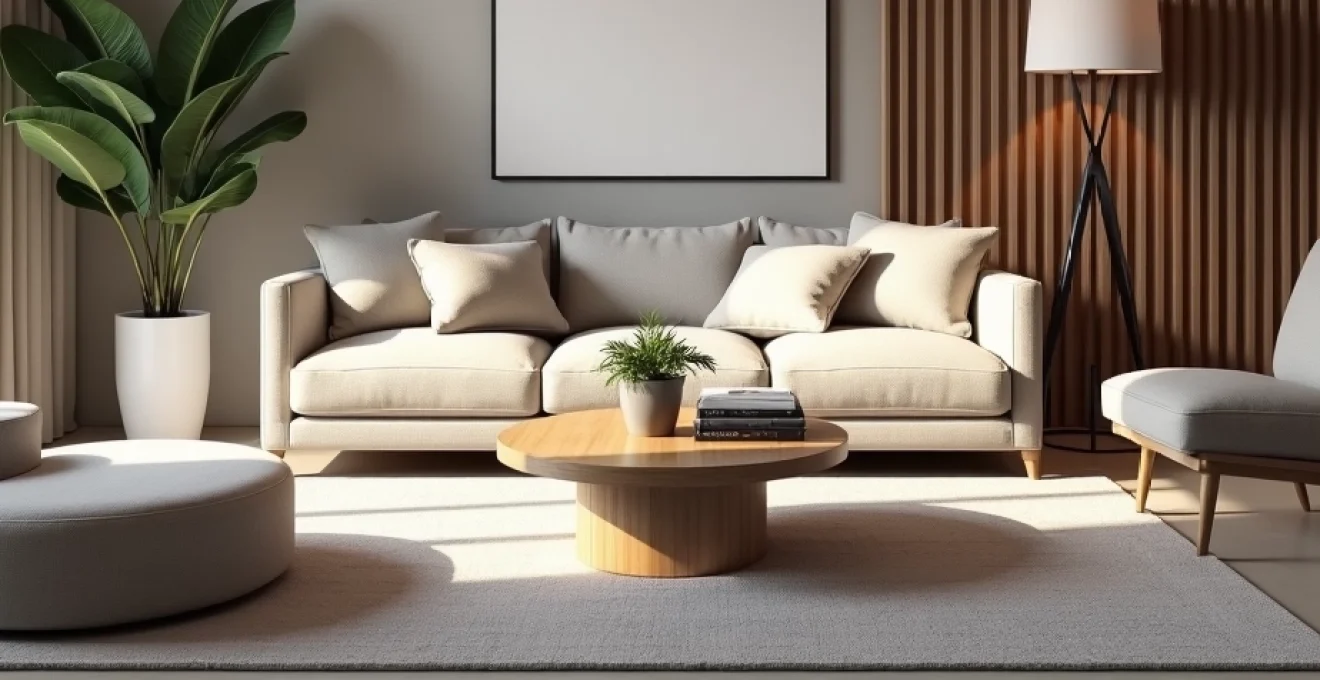
Creating a harmonious living space transcends mere aesthetic appeal—it’s about establishing an environment where every element feels purposeful and perfectly positioned. Visual balance represents the cornerstone of exceptional interior design, transforming ordinary rooms into extraordinary sanctuaries that resonate with occupants on both conscious and subconscious levels. When you master the art of visual equilibrium, you unlock the ability to craft spaces that feel naturally cohesive, emotionally satisfying, and functionally superior.
The principles governing visual balance have evolved from centuries of architectural wisdom and psychological research into human spatial perception. Today’s interior designers leverage these time-tested concepts alongside contemporary understanding of colour theory, proportion methodologies, and material science to create spaces that not only look stunning but also enhance wellbeing and productivity.
Understanding visual weight distribution in interior design composition
Visual weight distribution forms the fundamental framework upon which all successful interior compositions are built. Unlike physical weight, visual weight refers to the perceived heaviness or lightness of objects within a space, influenced by factors such as colour intensity, texture complexity, size, and positioning. Dark colours typically carry more visual weight than lighter hues, whilst rough textures appear heavier than smooth surfaces. Understanding these nuances enables designers to create equilibrium without relying solely on symmetrical arrangements.
The concept of visual weight extends beyond individual objects to encompass entire compositional areas. A single large artwork can balance multiple smaller decorative elements on the opposite side of a room, provided the visual masses feel equivalent to the human eye. This principle explains why a substantial dark wood dining table might be perfectly balanced by a collection of lighter-coloured chairs and a delicate chandelier overhead.
Professional designers often employ the “squint test” to assess visual weight distribution effectively. By partially closing your eyes whilst observing a room, you can better perceive the distribution of light and dark masses, identifying areas that feel too heavy or insufficiently anchored. This technique helps reveal imbalances that might not be immediately apparent when viewing individual elements in sharp focus.
Symmetrical balance through furniture placement and proportional scaling
Symmetrical balance represents the most intuitive approach to achieving visual harmony, relying on mirror-image arrangements around a central axis. This method creates immediate visual stability and conveys a sense of formal elegance that works particularly well in traditional and classical interior schemes. Think of matching table lamps flanking a sofa, identical armchairs positioned equidistantly from a fireplace, or twin bookcases framing a central window.
However, perfect symmetry can sometimes feel overly rigid or predictable. The most successful symmetrical arrangements incorporate subtle variations that maintain balance whilst adding personality. You might use identical lamp bases with slightly different shade textures, or matching chairs in complementary rather than identical fabric patterns. These gentle deviations prevent symmetrical spaces from feeling like museum displays whilst preserving their inherent sense of order.
Asymmetrical balance using the rule of thirds and focal point theory
Asymmetrical balance offers greater creative flexibility, achieving equilibrium through the strategic placement of dissimilar elements that share equivalent visual weight. This approach mirrors natural compositions found in landscapes and organic forms, creating spaces that feel more dynamic and contemporary. The rule of thirds, borrowed from photographic composition, proves invaluable when arranging asymmetrical elements within interior spaces.
Focal point theory plays a crucial role in asymmetrical arrangements, as the eye naturally seeks dominant elements around which to organise visual information. A large piece of abstract artwork might anchor one side of a living room, balanced by a carefully curated collection of smaller objects, plants, and furniture on the opposite side. The key lies in ensuring that the combined visual weight of the multiple elements equals that of the single dominant piece.
Radial balance techniques for circular and organic room layouts
Radial balance creates harmony through elements arranged around a central focal point, resembling the spokes of a wheel or petals of a flower. This approach works exceptionally well in rooms with circular or curved architectural features, or when you want to create an intimate, conversation-friendly atmosphere. Round dining tables naturally exemplify radial balance, with chairs positioned equidistantly around the perimeter and a central chandelier completing the composition.
Beyond dining areas, radial balance can transform living spaces through strategic furniture arrangement around a central coffee table, ottoman, or decorative rug. This technique encourages social interaction whilst creating a sense of unity that draws people together. Consider how a circular seating arrangement with a central fire pit creates both physical warmth and visual cohesion in outdoor living spaces.
Crystallographic balance in contemporary minimalist interiors
Crystallographic balance represents the most complex form of visual equilibrium, achieved through the repetition of similar elements across multiple axes without a dominant central focal point. This approach creates rhythm and movement throughout a space, making it feel larger and more dynamic. Modern minimalist interiors often employ crystallographic balance through repeated geometric forms, consistent spacing intervals, or rhythmic material applications.
Implementation of crystallographic balance requires careful attention to proportional relationships and visual rhythm. You might achieve this through a series of identical pendant lights suspended at varying heights, repeated window treatments across multiple openings, or a consistent modular shelving system that spans an entire wall. The result is a space that feels cohesive and purposeful without relying on traditional symmetrical or asymmetrical arrangements.
Colour theory applications for harmonious spatial arrangements
Colour serves as one of the most powerful tools for achieving visual balance, capable of unifying disparate elements or creating dramatic focal points that anchor entire compositions. The psychological and physiological effects of colour on human perception make it essential to understand how different hues interact within spatial contexts. Warm colours advance visually, making objects appear closer and more substantial, whilst cool colours recede, creating sense of space and tranquillity.
The distribution of colour across a room directly impacts visual weight distribution. A single wall painted in a bold, saturated hue can balance an entire room filled with neutral furnishings, whilst subtle colour gradations can guide the eye smoothly through different functional zones. Professional designers often create colour maps during the planning process, ensuring that no single area becomes overpowering whilst maintaining sufficient visual interest throughout the space.
The most harmonious interiors achieve perfect colour balance by treating hues as three-dimensional elements that occupy space and carry visual weight, rather than mere surface treatments applied to walls and fabrics.
Triadic colour schemes in william morris textile integration
Triadic colour schemes utilise three colours positioned equidistantly on the colour wheel, creating vibrant yet balanced compositions that maintain visual harmony through equal colour relationships. William Morris textile patterns exemplify this principle beautifully, incorporating rich burgundies, deep forest greens, and golden yellows in proportions that feel naturally balanced. These historical patterns demonstrate how complex colour relationships can coexist harmoniously when properly distributed across pattern and space.
Modern applications of triadic colour schemes require careful attention to saturation levels and spatial distribution. You might incorporate the three colours through major furniture pieces, accent textiles, and decorative accessories, ensuring that each hue appears multiple times throughout the room to create visual continuity and balance.
Analogous colour palettes following farrow & ball coordination principles
Analogous colour palettes draw from adjacent colours on the colour wheel, creating sophisticated harmonies that feel naturally cohesive and restful. Farrow & Ball’s approach to colour coordination demonstrates how subtle variations within analogous ranges can create depth and interest whilst maintaining overall harmony. These palettes work particularly well in spaces where tranquillity and sophistication are primary objectives.
The success of analogous colour schemes depends on varying the intensity and proportion of each hue whilst maintaining their fundamental relationship. You might use the lightest colour for major surfaces, medium tones for larger furnishings, and the deepest shade for accent elements and architectural details. This creates a natural hierarchy that guides the eye whilst maintaining visual balance.
Complementary contrast balance in kelly wearstler design philosophy
Complementary colour combinations utilise opposing hues on the colour wheel to create dynamic tension and visual excitement whilst maintaining fundamental balance. Kelly Wearstler’s design philosophy demonstrates how bold complementary contrasts can energise spaces without overwhelming occupants, provided the colours are distributed thoughtfully and balanced with neutral elements.
Successful implementation of complementary schemes requires understanding the 60-30-10 rule, where the dominant colour occupies approximately 60% of the visual space, the secondary colour claims 30%, and the complementary accent appears in carefully chosen 10% applications. This proportion prevents either colour from overwhelming the composition whilst ensuring sufficient contrast to create visual interest.
Monochromatic depth creation through tonal variation techniques
Monochromatic colour schemes rely on variations of a single hue to create depth, interest, and visual balance without the complexity of multiple colour relationships. These schemes can appear deceptively simple but require sophisticated understanding of tone, saturation, and texture to prevent monotony. The most successful monochromatic interiors incorporate dramatic tonal contrasts alongside subtle gradations that create visual rhythm and movement.
Texture becomes particularly important in monochromatic schemes, as variations in surface quality can substitute for colour contrast in creating visual weight distribution. A deep charcoal velvet sofa might balance pale grey walls and silver metallic accents, with the texture differences providing the contrast necessary for visual interest and equilibrium.
Scale and proportion methodologies for cohesive room design
Scale and proportion form the mathematical foundation of visual harmony, governing how objects relate to one another and to the human occupants who use the space. Proper proportional relationships create an intuitive sense of rightness that resonates with human perception, whilst poor proportions can make even the most expensive furnishings feel awkward or uncomfortable. Understanding these relationships enables designers to create spaces that feel naturally balanced and appropriately scaled for their intended functions.
The relationship between furniture scale and room dimensions requires careful consideration of both visual and functional requirements. Oversized furniture can make a room feel cramped and claustrophobic, whilst undersized pieces may appear lost or inadequate. The most successful interiors achieve proportional harmony by considering not just individual object dimensions but also the relationships between multiple elements and their collective impact on spatial perception.
Golden ratio implementation in furniture sizing and positioning
The golden ratio, approximately 1.618:1, represents one of nature’s most fundamental proportional relationships and has guided architectural and artistic composition for millennia. In interior design, this ratio can inform furniture sizing, room layout proportions, and decorative arrangements to create innately pleasing compositions. A sofa positioned so that its length relates to the wall space in golden ratio proportions will typically appear more harmonious than arbitrary sizing decisions.
Implementing the golden ratio doesn’t require precise mathematical calculations but rather developing an eye for these naturally pleasing proportions. Many successful furniture arrangements unconsciously approximate golden ratio relationships, suggesting that these proportions align with intuitive human aesthetic preferences. Consider how a coffee table positioned at golden ratio distance from seating creates the optimal balance between accessibility and visual space.
Anthropometric measurements for Human-Centred spatial planning
Anthropometric measurements provide the foundation for creating spaces that function comfortably for human occupants whilst maintaining visual harmony. These measurements, based on average human dimensions and movement patterns, ensure that furniture arrangements support natural circulation flows whilst creating appropriate visual relationships. Understanding anthropometrics prevents the common mistake of prioritising aesthetic considerations over functional requirements.
The integration of anthropometric principles with visual balance creates spaces that feel both beautiful and intuitively comfortable. Seating heights that accommodate average human proportions will naturally appear correctly scaled within room contexts, whilst circulation paths that follow natural movement patterns will enhance both functionality and visual flow. These considerations become particularly important in multi-functional spaces where furniture must serve various purposes whilst maintaining compositional harmony.
Modular scale systems based on le corbusier’s proportional standards
Le Corbusier’s modular scale system demonstrates how mathematical relationships can create cohesive proportional harmony across complex architectural and interior compositions. This system, based on human proportions and golden ratio relationships, provides a framework for making sizing and spacing decisions that naturally harmonise with one another. Applying modular principles to interior design creates consistency that unifies diverse elements within cohesive compositions.
Modern applications of modular scale principles might govern furniture sizing relationships, architectural detail proportions, or even decorative object arrangements. By establishing a consistent proportional language throughout a project, designers can ensure that additions and modifications will integrate harmoniously with existing elements, creating spaces that feel intentionally unified rather than accidentally assembled.
Fibonacci sequence applications in decorative object arrangement
The Fibonacci sequence appears frequently in natural forms and can guide decorative arrangements to achieve organic-feeling balance and progression. This numerical sequence, where each number equals the sum of the two preceding numbers, creates naturally pleasing rhythms when applied to object sizing, spacing, or grouping decisions. Collections of decorative objects arranged according to Fibonacci proportions often feel more harmonious than arbitrary groupings.
Practical applications might include arranging books, decorative vessels, or artwork in groupings that follow Fibonacci number relationships. These arrangements feel naturally progressive and balanced without appearing overly calculated or artificial. The sequence provides an intuitive framework for making compositional decisions that align with fundamental patterns found throughout the natural world.
Texture and material juxtaposition for visual equilibrium
Texture and material selection play crucial roles in achieving visual balance, as different surface qualities carry varying degrees of visual weight and emotional impact. Rough textures typically appear heavier and more grounded than smooth surfaces, whilst reflective materials can lighten the perceived weight of objects and surfaces. Understanding these relationships enables designers to create equilibrium through strategic material juxtaposition rather than relying solely on colour or scale adjustments.
The interplay between different materials can create visual interest whilst maintaining overall harmony through thoughtful balance of textural weights. A room dominated by smooth surfaces might feel cold or sterile, whilst excessive rough textures can appear overwhelming or rustic. The most successful interiors achieve textural balance by incorporating a variety of surface qualities that complement rather than compete with one another.
Material juxtaposition also influences how spaces feel psychologically and emotionally. Warm materials like wood and natural fibres create feelings of comfort and intimacy, whilst cool materials like metal and stone convey sophistication and formality. Balancing these emotional qualities through strategic material selection can create spaces that serve multiple functions whilst maintaining cohesive aesthetic character.
The most sophisticated interiors achieve textural harmony by treating materials as compositional elements that contribute to overall visual weight distribution, rather than simply surface treatments applied for aesthetic effect.
Lighting design integration for enhanced spatial harmony
Lighting serves as the invisible architect of visual balance, capable of dramatically altering how colours appear, how textures are perceived, and how spatial relationships read to occupants. Natural and artificial lighting work together to create the three-dimensional quality that transforms flat surfaces into dynamic compositions. Understanding how different lighting conditions affect visual weight distribution enables designers to create spaces that maintain their intended balance throughout changing daily conditions.
The direction, intensity, and colour temperature of lighting all influence visual balance within interior spaces. Side lighting emphasises texture and creates dramatic shadow patterns that add visual weight to surfaces, whilst overhead lighting can flatten compositions and reduce textural impact. Successful lighting design considers how different lighting scenarios will affect the overall balance of room compositions, ensuring harmony under various conditions.
Artificial lighting can be strategically employed to rebalance compositions when natural lighting changes throughout the day. Accent lighting might highlight artwork or architectural features to maintain focal point strength during evening hours, whilst ambient lighting can be adjusted to preserve colour relationships and material appearances. This dynamic approach to lighting enables spaces to maintain their intended visual balance regardless of external lighting conditions.
The integration of multiple lighting types creates layered compositions that enhance spatial depth whilst supporting functional requirements. Task lighting addresses specific functional needs without disrupting overall visual balance, accent lighting can emphasise or de-emphasise particular elements as needed, and ambient lighting establishes the overall mood and visual foundation. When properly coordinated, these lighting layers work together to support and enhance the intended visual balance of interior compositions.
Advanced placement techniques using professional interior design principles
Professional placement techniques transcend basic furniture arrangement to encompass sophisticated understanding of human psychology, spatial flow, and compositional hierarchy. These advanced methods consider how occupants will move through and interact with spaces, ensuring that visual balance supports rather than impedes natural usage patterns. The most successful interiors achieve harmony between aesthetic and functional requirements through careful application of professional placement principles.
Circulation patterns significantly influence how visual balance is perceived and experienced within interior spaces. Furniture arrangements that create natural circulation flows will feel more comfortable and appear more balanced than those that impede movement or create awkward navigation challenges. Professional designers consider both primary and secondary circulation routes when establishing furniture placement, ensuring that visual balance enhances rather than conflicts with functional requirements.
The concept of visual anchoring involves positioning key elements to establish reference points that help occupants understand and navigate spatial relationships. These anchor points might include major furniture pieces, architectural features, or significant decorative elements that provide stability within otherwise dynamic compositions. Proper anchoring prevents spaces from feeling chaotic or disorienting whilst maintaining sufficient visual interest to
engage viewers throughout extended visual experiences.
Professional space planning also incorporates the principle of visual hierarchy, establishing clear dominance relationships between elements whilst maintaining overall balance. Primary focal points command immediate attention, secondary elements provide supporting interest, and tertiary components fill compositional gaps without competing for visual dominance. This hierarchical approach prevents visual confusion whilst ensuring that spaces communicate their intended messages clearly and effectively.
The strategic use of negative space becomes particularly sophisticated in professional applications, where empty areas are treated as active compositional elements rather than mere voids between objects. These breathing spaces allow important elements to command appropriate attention whilst preventing visual overwhelm that can make even well-appointed spaces feel chaotic or uncomfortable. Mastering the balance between occupied and unoccupied space distinguishes professional-level design from amateur arrangements.
Advanced placement techniques also consider the psychological impact of different arrangements on occupant behaviour and emotional responses. Intimate conversation groupings require different spacing relationships than formal presentation arrangements, whilst work-focused spaces benefit from organizational systems that support productivity rather than purely aesthetic considerations. The most successful professional placements seamlessly integrate these functional requirements with visual harmony principles.
Seasonal adaptability represents another sophisticated aspect of professional placement strategies. Furniture arrangements that work beautifully during summer months when natural light streams through large windows may require adjustment during winter when artificial lighting dominates spatial perception. Flexible placement systems that accommodate these seasonal variations ensure that spaces maintain their intended visual balance throughout changing conditions.
The integration of technology within traditional placement principles requires careful consideration of both functional and aesthetic requirements. Entertainment systems, charging stations, and smart home devices must be incorporated in ways that support rather than disrupt overall compositional harmony. Professional designers develop strategies for concealing or integrating technological elements whilst preserving the timeless visual balance principles that create enduring spatial appeal.
The hallmark of truly professional placement lies not in following rigid rules, but in understanding fundamental principles deeply enough to adapt them creatively to unique spatial challenges and client requirements whilst maintaining the essential harmony that makes spaces feel effortlessly perfect.
Contemporary professional practice increasingly emphasizes sustainable placement strategies that consider lifecycle impacts and adaptability over time. Furniture arrangements that can evolve with changing needs whilst maintaining visual integrity represent sophisticated understanding of both immediate compositional requirements and long-term spatial sustainability. This approach recognizes that the most successful interiors serve occupants well not just initially, but throughout extended periods of use and evolution.
The culmination of these advanced techniques creates interior environments that transcend mere aesthetic appeal to become supportive frameworks for human activity and emotional wellbeing. When visual balance principles are masterfully applied through professional placement strategies, the resulting spaces feel effortlessly harmonious whilst supporting the complex requirements of contemporary living. These environments demonstrate that technical expertise and artistic sensitivity can work together to create spaces that enrich daily life whilst maintaining timeless aesthetic appeal.