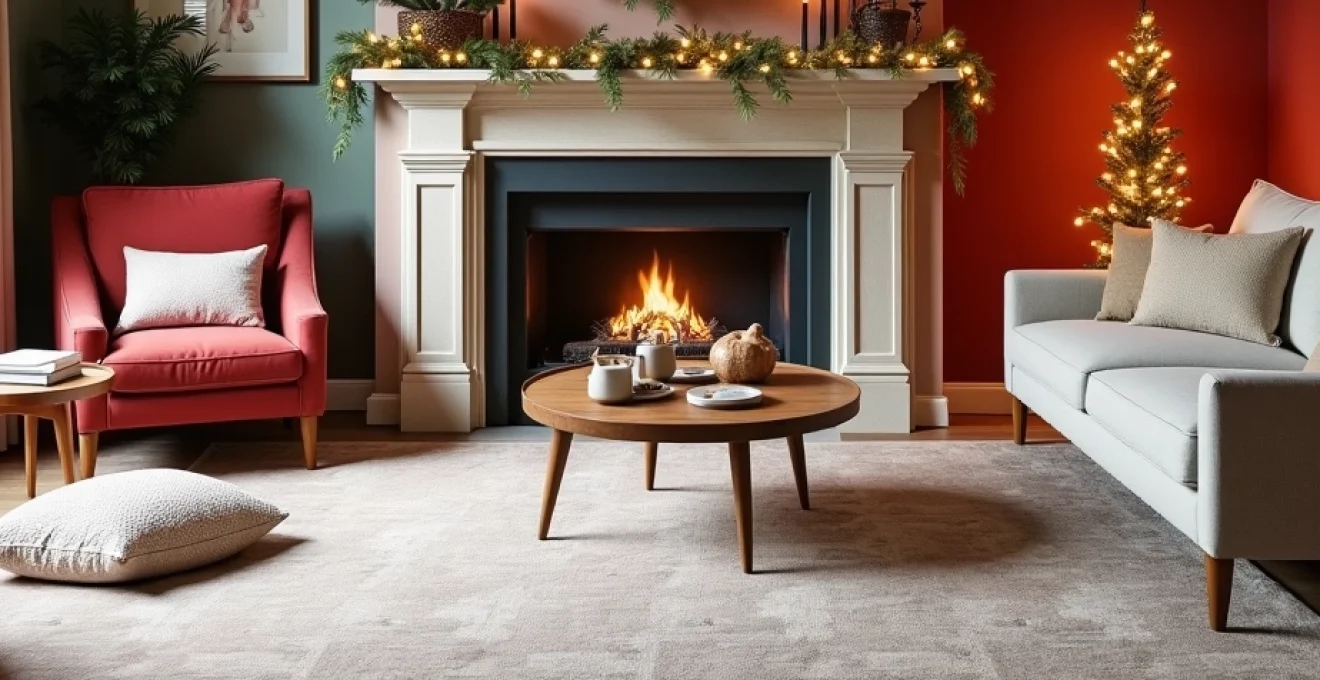
The holiday season presents a unique opportunity to transform your living space into a warm, inviting sanctuary that celebrates the festive spirit whilst maintaining your home’s inherent style and functionality. Creating stylish holiday décor doesn’t require overwhelming your space with countless ornaments or breaking your budget on elaborate displays. Instead, the most successful seasonal decorating approaches focus on thoughtful design principles that enhance rather than overwhelm your existing interior aesthetic.
Professional interior designers understand that effective holiday decorating relies on the same fundamental principles that govern year-round design excellence: colour harmony, spatial balance, lighting consideration, and purposeful material selection. By applying these core concepts to your seasonal decorating strategy, you can achieve a sophisticated holiday atmosphere that feels both festive and timeless, creating spaces that genuinely reflect your personal style whilst accommodating the practical demands of holiday entertaining.
Colour psychology and seasonal palette selection for holiday interior design
The foundation of any successful holiday decorating scheme begins with strategic colour selection that considers both the psychological impact of hues and their harmonious integration with your existing interior palette. Colour psychology plays a crucial role in creating the desired emotional atmosphere during the festive season, with certain combinations naturally evoking feelings of warmth, joy, and togetherness that define successful holiday entertaining spaces.
Understanding the emotional resonance of different colour combinations allows you to craft environments that support the specific mood you wish to create. Deep burgundy and forest green combinations naturally evoke feelings of sophistication and tradition, whilst lighter sage greens paired with cream create a more contemporary, calming atmosphere. The key lies in selecting colours that complement your home’s existing palette rather than competing with it, ensuring visual continuity throughout your decorating scheme.
Warm versus cool undertones in traditional christmas colour schemes
Traditional Christmas colour schemes benefit significantly from careful consideration of warm versus cool undertones, particularly when integrating seasonal elements with your home’s permanent colour palette. Warm undertones in reds lean towards orange or yellow bases, creating inviting, energetic atmospheres that pair beautifully with brass or copper metallic accents. These warmer reds work particularly well in rooms with south-facing windows or existing warm wood tones.
Cool-toned reds contain blue or purple undertones, offering a more sophisticated, contemporary approach to traditional Christmas decorating. These cooler hues complement silver and platinum metallic finishes exceptionally well, creating elegant colour schemes that feel fresh and modern. When working with green, warm undertones create cosy, forest-like atmospheres, whilst cool green undertones provide crisp, contemporary aesthetics that work beautifully in minimalist or Scandinavian-inspired interiors.
Incorporating pantone’s colour of the year into festive décor arrangements
Integrating contemporary colour trends, such as Pantone’s annual colour selection, into holiday decorating schemes creates fresh, current aesthetics that feel both seasonal and stylish. This approach allows you to maintain relevance with current design trends whilst creating unique holiday environments that stand apart from traditional red and green schemes. The key lies in using trending colours as accent elements rather than dominant themes, ensuring longevity and visual balance.
Consider incorporating trending colours through easily changeable elements such as ribbon, candles, or small ornamental accessories. This strategy allows you to experiment with contemporary colour trends without overwhelming your space or requiring significant investment in seasonal items that may feel dated in subsequent years. Strategic colour integration creates sophisticated holiday environments that feel both current and timeless.
Scandinavian Hygge-Inspired neutral palettes for minimalist holiday styling
Scandinavian design principles offer exceptional frameworks for creating serene, sophisticated holiday environments that emphasise comfort and natural beauty over elaborate ornamentation. Hygge-inspired neutral palettes focus on soft whites, warm greys, and natural wood tones, creating calming atmospheres that support relaxation and intimate gatherings during the busy holiday season.
This minimalist approach to holiday decorating prioritises texture and natural materials over bold colours, creating environments that feel both festive and restful. Incorporating elements such as sheepskin throws, wooden candle holders, and simple evergreen arrangements maintains seasonal relevance whilst supporting the peaceful, contemplative atmosphere that characterises successful hygge-inspired spaces. The result is holiday décor that enhances rather than overwhelms your living environment.
Metallic accent integration using copper, brass, and brushed gold finishes
Metallic accents provide sophisticated finishing touches that elevate holiday decorating schemes from simple to stunning, with copper, brass, and brushed gold offering distinct aesthetic qualities that complement different colour palettes and interior styles. Copper accents bring warmth and earthiness to holiday displays, working particularly well with deep greens, burgundies, and cream colour schemes. This metal’s natural patina adds character and depth to seasonal arrangements.
Brass offers timeless elegance that bridges traditional and contemporary aesthetics, providing warm metallic accents that complement both bold and subtle colour schemes. Brushed gold finishes create luxurious atmospheres without appearing ostentatious, particularly when used sparingly as accent elements throughout your holiday decorating scheme. The key to successful metallic integration lies in consistency—choose one primary metallic finish and use it throughout your seasonal decorating to maintain visual cohesion.
Strategic space planning and traffic flow management during holiday entertaining
Effective holiday decorating extends far beyond aesthetic considerations to encompass practical spatial planning that accommodates the increased foot traffic and entertaining demands characteristic of the festive season. Understanding how people naturally move through your spaces during gatherings allows you to strategically place decorative elements that enhance rather than impede functionality, creating environments that are both beautiful and practical for holiday entertaining.
Professional space planners recognise that successful holiday decorating must account for the changed usage patterns that occur during seasonal celebrations. Rooms that typically serve single purposes throughout the year often need to accommodate multiple functions during holiday gatherings, requiring flexible decorating approaches that support varied activities whilst maintaining visual appeal. This might involve creating conversation zones that can easily adapt to different group sizes or ensuring clear pathways to essential areas such as kitchens and powder rooms.
Furniture reconfiguration techniques for maximising conversational zones
Strategic furniture arrangement during the holiday season focuses on creating multiple intimate conversation areas that encourage natural social interaction whilst maintaining clear traffic patterns throughout your entertaining spaces. This approach involves temporarily relocating certain furniture pieces to create more open floor plans that can accommodate larger groups whilst preserving the comfortable, intimate atmosphere essential for successful holiday gatherings.
Consider pulling seating arrangements away from walls to create more dynamic conversational groupings, ensuring that each seating area can comfortably accommodate four to six people for optimal social interaction. Floating furniture arrangements in larger rooms can create multiple conversation zones whilst maintaining clear sight lines between different areas, allowing hosts to easily move between groups and ensuring that no guests feel isolated from the broader celebration.
Entryway staging with mudroom organisation systems and welcome displays
The entryway serves as your guests’ first impression of your holiday decorating scheme whilst simultaneously managing the practical demands of winter weather and increased visitor frequency. Effective entryway staging combines welcoming seasonal displays with functional organisation systems that accommodate coats, boots, and packages without creating visual clutter or impeding traffic flow.
Strategic placement of seasonal wreaths, garlands, or arrangement creates immediate festive impact whilst thoughtful storage solutions ensure that practical items don’t detract from your decorative efforts. Consider incorporating attractive baskets or bins that can discretely accommodate seasonal accessories such as scarves and gloves, maintaining both functionality and aesthetic appeal throughout the entertaining season. Organised entryway systems create positive first impressions whilst supporting smooth guest transitions into your main entertaining areas.
Open-plan kitchen integration with buffet station design principles
Open-plan kitchens present unique opportunities for seamless holiday decorating integration whilst serving as natural focal points for casual entertaining and buffet-style service. The key lies in creating cohesive decorative themes that flow naturally from cooking areas into adjacent living spaces whilst maintaining clear functional zones for food preparation and service.
Buffet station design requires careful consideration of traffic flow patterns, ensuring that guests can easily access food and beverages without creating bottlenecks or interfering with ongoing food preparation. Strategic placement of seasonal decorative elements should enhance rather than compete with food presentations, using colour and texture coordination to create unified aesthetic experiences that support both functional and decorative goals throughout your entertaining spaces.
Child-safe décor placement using the 60-30-10 design rule
The classic 60-30-10 design rule provides an excellent framework for creating child-safe holiday decorating schemes that maintain visual impact whilst prioritising safety and accessibility. This principle involves placing 60% of decorative elements above child reach, 30% at intermediate heights with safety considerations, and 10% at child-accessible levels using exclusively safe, unbreakable materials.
Upper-level decorating focuses on elements such as garlands, ceiling-mounted displays, and wall-hung arrangements that create visual impact without safety concerns. Mid-level decorating incorporates sturdy, child-friendly elements that can withstand curious hands whilst maintaining decorative appeal. Lower-level decorating should exclusively feature soft, unbreakable items such as plush seasonal figures or fabric-based decorative elements that pose no safety risks to exploring children.
Sustainable holiday decorating materials and Eco-Conscious design solutions
Contemporary holiday decorating increasingly embraces sustainable materials and eco-conscious design solutions that reflect growing environmental awareness whilst maintaining the festive atmosphere essential to seasonal celebrations. Natural materials offer exceptional versatility and beauty whilst supporting environmentally responsible decorating practices that align with modern lifestyle values.
Sustainable holiday decorating focuses on materials that can be composted, recycled, or repurposed after the season ends, reducing environmental impact whilst often providing superior aesthetic qualities compared to synthetic alternatives. Natural evergreen branches, pinecones, wooden ornaments, and fabric-based decorative elements create beautiful seasonal displays whilst supporting environmental stewardship. These materials often age gracefully throughout the season, developing character and patina that enhance rather than detract from their visual appeal.
The investment in quality natural and sustainable materials often proves economically advantageous over time, as many elements can be reused for multiple seasons or repurposed for different decorating applications. Wooden ornaments develop beautiful patina over years of use, whilst natural fabric elements such as burlap ribbons or wool garlands maintain their appeal season after season. This approach creates unique, personalised holiday decorating schemes that reflect both aesthetic preferences and environmental consciousness.
Eco-conscious decorating strategies also encompass energy-efficient lighting choices and storage solutions that extend the life of seasonal decorations. LED lighting systems consume significantly less energy than traditional incandescent options whilst providing superior light quality and longevity. Proper storage using breathable natural materials helps preserve decorative elements for future seasons, reducing the need for annual replacement and supporting long-term sustainability goals.
Lighting design fundamentals for creating ambient holiday atmospheres
Effective lighting design forms the foundation of successful holiday decorating, creating the warm, inviting atmospheres that define memorable seasonal celebrations. Understanding the interplay between different lighting sources allows you to craft layered illumination schemes that enhance both decorative elements and architectural features whilst supporting the varied activities that characterise holiday entertaining.
Professional lighting designers recognise that holiday lighting succeeds when it creates emotional resonance rather than simply providing illumination. The goal involves crafting atmospheric lighting that evokes feelings of warmth, comfort, and celebration through careful consideration of light intensity, colour temperature, and placement strategies. Layered lighting approaches combine ambient, task, and accent lighting to create dynamic environments that can adapt to different entertaining needs throughout the season.
LED string light temperature selection and energy efficiency calculations
LED string light selection involves understanding colour temperature options and their impact on seasonal atmosphere creation, with warm white options (2700K-3000K) providing cosy, traditional ambiance that complements most interior colour schemes. Cool white LEDs (4000K-5000K) create crisp, contemporary atmospheres that work particularly well with minimalist or modern decorating approaches, whilst coloured LED options offer creative possibilities for themed decorating schemes.
Energy efficiency calculations demonstrate that LED string lights consume approximately 75% less energy than traditional incandescent alternatives whilst providing superior lifespan and durability. A typical 100-light LED string consumes approximately 7 watts compared to 40 watts for equivalent incandescent strings, resulting in significant energy savings over the decorating season. This efficiency allows for more extensive lighting displays without dramatic increases in energy consumption, supporting both environmental and economic goals.
Candlelight safety protocols with hurricane lanterns and votives
Candlelight creates unparalleled warmth and intimacy in holiday decorating schemes, but requires careful attention to safety protocols and strategic placement to ensure both atmospheric success and risk mitigation. Hurricane lanterns and glass votives provide excellent containment systems that allow you to enjoy candlelight’s benefits whilst maintaining safety standards appropriate for busy entertaining environments.
Strategic candle placement focuses on stable surfaces away from high-traffic areas, ensuring that decorative candle displays don’t create safety hazards during gatherings. Battery-operated candle alternatives now offer remarkably realistic flame simulation with superior safety profiles, allowing candlelight ambiance in locations where open flames might present risks. Thoughtful candle integration enhances holiday atmospheres whilst maintaining appropriate safety standards for diverse entertaining situations.
Timer integration systems for automated holiday light management
Automated lighting systems simplify holiday decorating management whilst ensuring consistent atmospheric lighting throughout the entertaining season. Timer integration allows you to create sophisticated lighting sequences that automatically adjust throughout evening hours, supporting different entertaining phases from cocktail reception through dinner service and evening socialising.
Smart timer systems enable complex programming that can coordinate multiple lighting elements, creating seamless transitions between different lighting moods as entertaining progresses. These systems also provide energy efficiency benefits by ensuring lights operate only when needed, whilst maintaining the consistent atmospheric lighting that characterises professionally designed holiday environments. The convenience of automated systems reduces daily management requirements, allowing you to focus on entertaining rather than technical lighting adjustments.
Storage solutions and Post-Holiday organisation systems
Effective storage solutions form the foundation of stress-free holiday decorating by ensuring that seasonal elements remain organised, accessible, and well-preserved between decorating seasons. Professional organisers emphasise that successful holiday decorating begins with systematic storage approaches that categorise, protect, and identify decorative elements for efficient retrieval and deployment year after year.
Investment in quality storage solutions pays dividends through improved decoration longevity, reduced replacement costs, and significantly simplified decorating processes. Clear storage containers with secure lids protect delicate ornaments and decorative elements whilst allowing easy identification of contents. Specialised storage solutions for specific items such as wreath storage bags, ornament dividers, and light storage reels prevent damage whilst maximising storage space efficiency.
Strategic storage planning involves creating detailed inventory systems that document decoration locations, condition, and intended usage for future seasons. Digital photography of storage containers and their contents creates visual inventories that simplify planning and ensure efficient decoration deployment. This systematic approach transforms holiday decorating from potentially overwhelming projects into manageable, enjoyable seasonal traditions that improve with each year’s refinement.
The most successful holiday decorating storage systems anticipate both current season needs and future expansion, allowing for gradual collection growth whilst maintaining organisational efficiency.
Budget-conscious DIY techniques using natural elements and repurposed materials
Budget-conscious holiday decorating emphasises creativity and resourcefulness over expensive purchases, utilising natural elements and repurposed materials to create unique, personalised seasonal displays that often surpass commercial alternatives in both beauty and character. Natural materials such as evergreen branches, pinecones, berries, and seasonal flowers provide exceptional decorative value whilst supporting sustainable decorating practices.
DIY decorating projects offer opportunities for family involvement and creative expression that commercial decorations cannot match. Simple techniques such as creating natural garlands from gathered evergreen branches, crafting ornaments from repurposed materials, or designing centrepieces using seasonal natural elements create meaningful decorative elements whilst developing valuable crafting skills and family traditions.
Repurposed materials offer unlimited creative possibilities for unique holiday decorating solutions that reflect personal style whilst supporting environmental responsibility. Mason jars transform into elegant candle holders or vases for seasonal arrangements, whilst vintage textiles can become unique tree skirts or table runners. Wine corks, glass bottles, and cardboard packaging materials provide raw materials for creative ornament and decoration projects that cost significantly less than commercial alternatives.
The key to successful budget-conscious decorating lies in planning projects that utilise available materials and skills whilst creating cohesive aesthetic results. Simple colour schemes using readily available materials often prove more successful than complex projects requiring specialised supplies. Strategic material selection focuses on versatile elements that can serve multiple decorating purposes, maximising both budget efficiency and creative possibilities throughout your holiday decorating scheme.