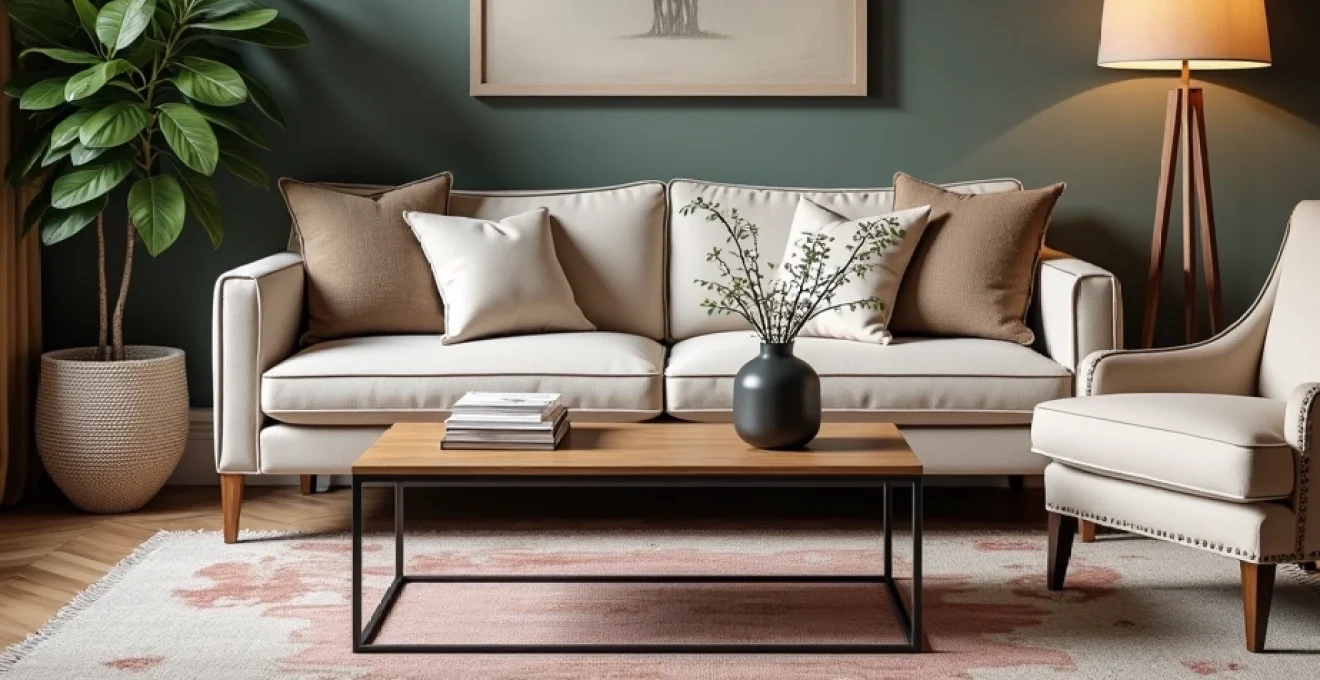
The marriage of vintage elegance and contemporary functionality has become one of interior design’s most captivating trends. Vintage chic design transcends mere nostalgia, offering a sophisticated approach to creating homes that honour the past while embracing modern living requirements. This design philosophy recognises that the finest elements from bygone eras—whether Georgian symmetry, Victorian craftsmanship, or Art Nouveau artistry—can breathe soul into today’s minimalist spaces. The growing appreciation for sustainable design practices has further elevated vintage chic, as homeowners seek to reduce environmental impact whilst surrounding themselves with pieces that tell authentic stories.
Contemporary homes often suffer from a sterile, show-home aesthetic that lacks personality and warmth. Vintage chic design addresses this challenge by introducing carefully curated historical elements that create visual interest and emotional connection. The approach requires understanding how different periods complement modern architecture, ensuring that antique pieces enhance rather than overwhelm contemporary spaces. Successful vintage chic integration balances proportion, colour, and texture to achieve harmony between old and new.
Victorian era furniture integration techniques for modern living spaces
Victorian furniture, with its ornate details and substantial presence, presents unique opportunities for contemporary interior design. The key lies in selective integration rather than wholesale period recreation. Victorian pieces work exceptionally well as statement elements within modern contexts, where their intricate craftsmanship can be appreciated without overwhelming the space. The period’s emphasis on quality materials—solid mahogany, brass fittings, and hand-carved details—ensures these pieces maintain their beauty and functionality across generations.
Modern living demands flexibility that Victorian furniture wasn’t originally designed to accommodate. However, thoughtful placement strategies can maximise both aesthetic impact and practical utility. The contrast between Victorian ornatenesss and contemporary simplicity creates dynamic visual tension that energises interior spaces. Consider how a single Victorian armchair can transform a stark modern living room, or how an ornate writing desk can add gravitas to a home office dominated by sleek technology.
Chippendale chair placement strategies in contemporary Open-Plan layouts
Chippendale chairs, renowned for their distinctive ladder-back or ribbon-back designs, excel as accent pieces in open-plan environments. Their vertical lines and geometric patterns complement contemporary architecture whilst maintaining period authenticity. The secret lies in treating these chairs as sculptural elements rather than merely functional seating. Position a pair flanking a modern fireplace or use a single chair to define a reading corner within a larger living space.
In open-plan layouts, Chippendale chairs serve as visual anchors that help define different zones without requiring physical barriers. Their modest scale prevents them from dominating spaces, whilst their refined proportions complement modern furniture. Consider reupholstering original pieces with contemporary fabrics that bridge historical and modern elements—perhaps a traditional Chippendale frame with linen upholstery in a current colour palette.
Edwardian wardrobes as statement pieces in minimalist bedrooms
Edwardian wardrobes possess architectural qualities that make them ideal focal points in minimalist bedrooms. Their clean lines and elegant proportions align naturally with contemporary design sensibilities, whilst their generous storage capacity addresses modern needs. These pieces often feature beautiful inlay work, bevelled mirrors, and quality hardware that add tactile interest to sparse bedroom environments.
The key to successfully incorporating Edwardian wardrobes lies in allowing them sufficient visual breathing room. In minimalist settings, these substantial pieces can command attention without competing with other elements. Choose wardrobes with simpler lines over heavily carved examples, and consider professional restoration to ensure they meet contemporary storage requirements whilst preserving their period character.
Georgian dining table restoration methods for daily family use
Georgian dining tables embody timeless elegance through their refined proportions and superior craftsmanship. Restoration for contemporary use requires balancing preservation of original character with practical modifications for modern family life. Professional restoration should address structural integrity, surface refinishing, and potential size adjustments whilst maintaining the table’s essential Georgian characteristics.
Modern restoration techniques can enhance durability without compromising authenticity. Consider applying contemporary wood treatments that protect against heat and moisture whilst preserving the natural patina that gives these pieces their character. Some Georgian tables benefit from professional cleaning of original French polish finishes, which reveal the wood’s natural beauty whilst providing adequate protection for daily use.
Art nouveau display cabinets for modern collectible showcasing
Art Nouveau display cabinets offer exceptional opportunities to showcase modern collections whilst adding period sophistication to contemporary interiors. These pieces typically feature curved glass panels, flowing lines, and organic motifs that complement rather than clash with modern design sensibilities. Their transparent nature makes them ideal for displaying everything from contemporary ceramics to vintage glassware without visually cluttering spaces.
The cabinet’s interior can be modernised with LED lighting systems that enhance displayed objects whilst respecting the piece’s original design integrity. Consider how the cabinet’s curves and organic details can soften the angular lines common in contemporary furniture, creating visual harmony that bridges different design eras effectively.
Textile heritage preservation through sustainable interior design practices
Historic textile patterns and weaving techniques represent invaluable cultural heritage that sustainable design practices can preserve and celebrate. Contemporary interest in vintage textiles stems partly from growing environmental consciousness, as homeowners recognise the ecological benefits of repurposing existing materials rather than purchasing new mass-produced alternatives. Textile heritage preservation through interior design creates unique spaces whilst supporting artisanal crafts and reducing environmental impact.
The quality of historical textiles often surpasses modern alternatives, particularly in terms of fibre content, weaving density, and dye fastness. These characteristics make vintage textiles practical choices for contemporary interiors, where they can withstand daily use whilst maintaining their beauty. Understanding proper care and restoration techniques ensures these textiles continue serving functional and aesthetic purposes for future generations.
Vintage textiles bring authenticity and character that cannot be replicated through modern manufacturing processes, whilst their superior quality often outperforms contemporary alternatives.
William morris wallpaper pattern revival in accent wall applications
William Morris patterns, with their intricate botanical motifs and rich colour palettes, create stunning accent walls in contemporary settings. These designs work particularly well in spaces that benefit from visual warmth and complexity—dining rooms, bedrooms, or home libraries. The key lies in limiting Morris patterns to single accent walls rather than entire rooms, allowing their beauty to enhance rather than overwhelm modern spaces.
Contemporary printing techniques can reproduce Morris designs with remarkable accuracy whilst offering improved durability and easier maintenance than historical papers. Consider how these patterns interact with modern lighting, as their complexity and depth create different effects throughout the day. Morris patterns pair beautifully with contemporary furniture, providing rich backdrops that highlight clean modern lines.
Liberty of london fabric upholstery techniques for vintage sofas
Liberty of London fabrics bring distinctive pattern and colour to vintage sofa restoration projects. These fabrics, renowned for their small-scale prints and sophisticated colour combinations, work exceptionally well on period furniture where they enhance rather than compete with original design elements. The fabric’s quality ensures longevity, making it a practical choice for frequently used seating.
Professional upholstery techniques must accommodate both fabric characteristics and sofa construction. Liberty fabrics typically require careful pattern matching and consideration of directional prints. The restoration process offers opportunities to improve comfort through modern padding materials whilst preserving the sofa’s original silhouette and character.
Toile de jouy integration methods in contemporary window treatments
Toile de Jouy patterns, with their narrative scenes and monochromatic colour schemes, adapt beautifully to contemporary window treatments. These classical French designs add storytelling elements to modern interiors whilst providing practical light control and privacy. The patterns’ traditional associations with luxury and refinement elevate simple window treatments into architectural features.
Modern window treatment styles can showcase Toile patterns effectively whilst maintaining contemporary functionality. Consider Roman blinds that display the pattern’s full narrative scope, or use Toile as contrast lining in otherwise plain curtains. The monochromatic nature of traditional Toile makes it versatile for various interior colour schemes.
Vintage kelim rug layering systems for modern floor compositions
Vintage Kelim rugs offer exceptional versatility for contemporary floor compositions through their flat-weave construction and geometric patterns. These rugs layer beautifully with modern carpeting or other vintage pieces, creating complex visual textures that add warmth and interest to contemporary spaces. Their durability makes them practical choices for high-traffic areas whilst their cultural significance adds authenticity to interior narratives.
Successful rug layering requires understanding scale, colour, and pattern relationships. Vintage Kelims work particularly well over neutral base rugs, where their patterns and colours can take precedence. Consider how different sizes create visual hierarchy, with larger pieces providing foundation layers and smaller rugs adding accent colours or patterns.
Architectural period detail adaptation for Twenty-First century homes
Modern homes often lack the architectural character that makes period properties so appealing. However, carefully selected period details can transform contemporary spaces without compromising their fundamental design integrity. The challenge lies in identifying which historical elements translate effectively to modern construction techniques and lifestyle requirements. Architectural adaptation requires understanding both historical context and contemporary building standards to create authentic-feeling details that enhance rather than compete with modern architecture.
Successful period detail integration demands attention to proportion, materials, and craftsmanship standards. Modern manufacturing techniques can reproduce historical details with remarkable accuracy, whilst contemporary materials can offer improved durability and maintenance characteristics. The key lies in selecting details that complement existing architectural features rather than overwhelming them with excessive ornamentation.
Crown moulding installation techniques inspired by regency architecture
Regency architecture exemplifies elegant proportions and refined detail that translates beautifully to contemporary interiors. Crown moulding inspired by Regency principles can add sophistication to modern rooms whilst respecting their clean lines and uncluttered aesthetic. The key lies in selecting profiles that echo Regency refinement without excessive complexity or ornamentation.
Modern installation techniques allow for precise fitting and long-term durability that surpasses historical methods. Consider how crown moulding interacts with contemporary lighting systems, particularly recessed fixtures that require careful integration. The moulding should enhance ceiling height perception whilst providing visual transition between walls and ceilings.
Original sash window frame restoration in Energy-Efficient retrofits
Original sash windows possess aesthetic and functional qualities that modern replacements struggle to match. Professional restoration can achieve contemporary energy efficiency standards whilst preserving historical character and operational smoothness. The process requires specialist knowledge of period construction techniques, modern glazing options, and weatherproofing systems that complement rather than compromise original design.
Energy efficiency improvements must balance performance requirements with heritage preservation. Double glazing can be achieved through slim-profile systems that maintain original sight lines, whilst draught-proofing systems can improve comfort without altering window operation or appearance. Professional restoration often reveals superior timber quality and construction techniques that ensure decades of continued service.
Victorian fireplace surround modernisation for contemporary heating systems
Victorian fireplace surrounds provide architectural focal points that contemporary heating systems can enhance rather than replace. Modern gas or electric insert systems can utilise existing chimney openings whilst providing efficient, controllable heating that complements the surround’s decorative function. The integration requires careful consideration of proportions, materials, and safety requirements.
Restoration should address both aesthetic and functional requirements, ensuring the surround complements modern heating technology whilst maintaining its period character. Consider how different heating systems affect the surround’s thermal stress and expansion, particularly for original materials like marble or slate. Professional installation ensures safety compliance whilst preserving the surround’s architectural integrity.
Period staircase balustrade integration with modern safety standards
Period staircases often require modifications to meet contemporary safety standards without compromising their historical character. The challenge lies in achieving compliance whilst preserving the visual elements that make these features architecturally significant. Modern safety requirements can be accommodated through careful detail modifications that maintain the overall design aesthetic.
Balustrade restoration may require height adjustments, spacing modifications, or structural reinforcement to meet current building codes. These changes can often be achieved through techniques that appear consistent with original construction methods whilst providing enhanced safety and durability. Professional assessment ensures compliance whilst preserving architectural significance.
Colour psychology applications using historical paint schemes
Historical paint schemes offer sophisticated colour relationships developed over centuries of artistic and decorative tradition. These palettes often demonstrate superior colour harmony compared to contemporary alternatives, drawing from natural pigments and traditional mixing techniques that create depth and complexity difficult to achieve with modern paints. Understanding the psychological effects of historical colour combinations can enhance contemporary interiors whilst creating authentic period atmospheres.
Period colour schemes typically feature more subtle transitions and complex undertones than modern alternatives. Georgian schemes often emphasised natural harmony through earth-based pigments, whilst Victorian palettes explored richer, more dramatic contrasts enabled by advances in synthetic dyes. These historical approaches to colour can inform contemporary choices, creating sophisticated schemes that transcend current trends.
Historical colour schemes demonstrate centuries of refinement in achieving psychological comfort and visual harmony, offering superior alternatives to trend-driven contemporary palettes.
Modern paint technology can reproduce historical colours with remarkable accuracy whilst providing superior durability and coverage. Consider how different lighting conditions affect historical colours, as these schemes were developed for natural daylight conditions rather than artificial illumination. The interaction between historical colours and contemporary furnishings often creates unexpected harmonies that enhance both elements.
Colour psychology research supports many traditional colour applications, validating historical choices through scientific understanding. Warm earth tones promote relaxation and comfort, whilst cooler blue-greens create calming environments suitable for rest and contemplation. Historical schemes often balanced these effects through careful colour placement that modern interior design can learn from and adapt.
Antique lighting solutions for contemporary electrical infrastructure
Antique lighting fixtures possess character and craftsmanship that mass-produced modern alternatives rarely match. However, integrating these pieces into contemporary electrical systems requires professional expertise to ensure safety whilst preserving aesthetic integrity. The conversion process must address electrical safety standards, bulb compatibility, and control systems without compromising the fixture’s historical appearance or operational characteristics.
LED technology offers exceptional opportunities for antique lighting restoration, providing energy efficiency and longevity whilst accommodating historical fixture designs. Modern LED bulbs can mimic traditional incandescent or gas-flame appearances whilst providing superior light quality and reduced heat output. This technology enables antique fixtures to meet contemporary performance expectations without visual compromise.
The restoration process typically involves rewiring with modern cable standards, installing contemporary switch gear, and adapting lamp holders for current bulb types. Professional restoration can incorporate dimming systems and smart home controls whilst maintaining period-appropriate operation and appearance. These modifications enable antique lighting to function seamlessly within contemporary home automation systems.
Consider how antique lighting interacts with modern interior finishes and furnishings. Period fixtures often provide warmer, more intimate illumination than contemporary alternatives, creating atmosphere that enhances vintage furniture and architectural details. The quality of light from restored antique fixtures can dramatically improve the appearance of both period and contemporary elements within the same space.
Curated vintage accessory styling methods for modern interior narratives
Vintage accessories provide the finishing touches that transform contemporary interiors into personally meaningful spaces. The curation process requires understanding how individual pieces contribute to overall interior narratives, creating cohesive stories that reflect personal taste whilst maintaining design sophistication. Accessory styling becomes an art form when vintage pieces are thoughtfully integrated with contemporary elements to create unique, authentic environments.
Successful vintage accessory integration requires restraint and editing skills to avoid cluttered or museum-like appearances. Each piece should serve both aesthetic and narrative functions, contributing to the room’s overall story whilst maintaining practical utility where appropriate. The challenge lies in balancing personal significance with design coherence, ensuring accessories enhance rather than overwhelm the interior architecture.
Vintage accessories often possess superior craftsmanship and materials compared to contemporary alternatives, making them practical choices for daily use. Consider how brass candlesticks, ceramic vases, or wooden boxes can serve functional purposes whilst adding authentic character to modern spaces. The patina and wear patterns of genuine vintage pieces create visual depth and tactile interest impossible to replicate artificially.
Grouping strategies can maximise vintage accessories’ impact whilst maintaining visual order. Consider how different scales, materials, and periods interact within carefully composed vignettes. The key lies in finding common threads—colour, material, or form—that unify diverse pieces whilst allowing individual characteristics to shine. These groupings become focal points that anchor larger design schemes whilst providing intimate scale details that reward closer inspection.