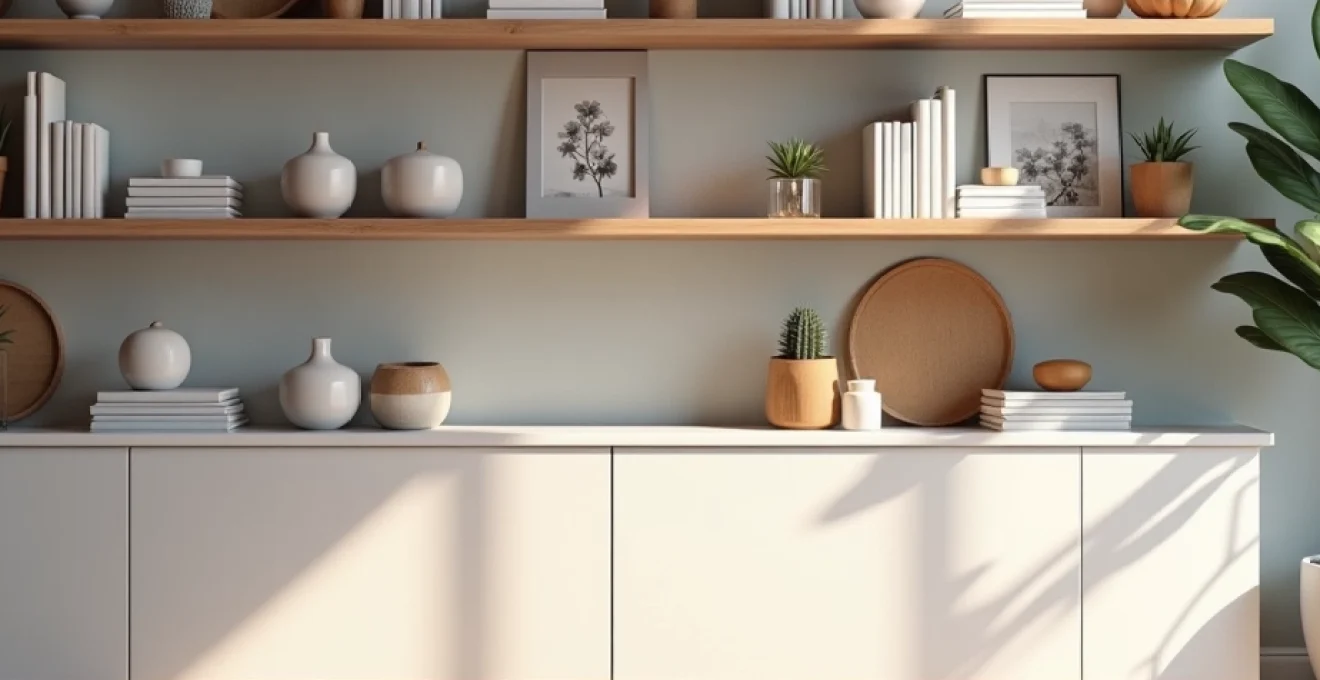
Open shelving has become a defining element of modern interior design, transforming ordinary storage into striking visual displays. Yet the beauty of exposed shelving lies not in filling every available space, but in the careful curation of objects that tell a story whilst maintaining functional purpose. The challenge many homeowners face is achieving that effortlessly styled look without creating visual chaos that overwhelms rather than enhances their living spaces.
The art of styling open shelves requires understanding fundamental design principles that govern how the human eye processes visual information. When executed properly, open shelving can make rooms appear larger, create focal points, and showcase cherished possessions. However, without proper planning and restraint, these same shelves can become cluttered eyesores that detract from your home’s overall aesthetic appeal.
Mastering the balance between functionality and beauty demands a strategic approach that considers everything from colour coordination to spatial relationships. Professional interior designers employ specific methodologies to create harmonious displays that appear naturally assembled whilst serving practical storage needs.
Visual weight distribution principles for open shelving systems
Understanding visual weight distribution forms the foundation of successful open shelf styling. Visual weight refers to how heavy or light an object appears to the eye, influenced by factors such as size, colour, texture, and positioning within the space. Darker objects typically carry more visual weight than lighter ones, whilst complex textures and patterns draw more attention than smooth, simple surfaces.
The key principle involves distributing heavier visual elements across your shelving system to create equilibrium. Rather than clustering all dark or large items on one shelf, strategic placement ensures no single area dominates the display. This concept mirrors architectural principles where structural elements must be balanced to maintain stability and aesthetic appeal.
Rule of thirds application in shelf composition
The rule of thirds, borrowed from photography and fine art, divides any visual plane into nine equal sections using two horizontal and two vertical lines. When applied to shelf styling, this principle helps create more dynamic and visually appealing arrangements than centred compositions.
Position key focal points along these imaginary lines or at their intersections for maximum impact. A striking ceramic vase might occupy the left third of a shelf, balanced by a cluster of books in the right third, leaving the central area with breathing room. This asymmetrical approach feels more natural and engaging than perfectly centred arrangements.
Height variation techniques using the golden ratio
The golden ratio, approximately 1:1.618, appears throughout nature and classical architecture, creating proportions that feel inherently pleasing to the human eye. When styling shelves, vary object heights using this mathematical relationship to achieve harmonious compositions that feel naturally balanced.
If your tallest object measures 24 centimetres, companion pieces should ideally measure around 15 centimetres (24 ÷ 1.618) for optimal visual harmony. This principle prevents the monotony of uniform heights whilst avoiding jarring contrasts that can create visual tension within your display.
Colour temperature balance in display arrangements
Colour temperature significantly influences how shelving displays are perceived and how they integrate with surrounding décor. Warm colours (reds, oranges, yellows) advance visually and carry more weight, whilst cool colours (blues, greens, purples) recede and appear lighter. Understanding this phenomenon allows for more sophisticated colour arrangements.
Balance warm and cool elements throughout your shelving system rather than concentrating all warm tones in one area. A warm terracotta pot might be balanced by cool blue ceramics on an adjacent shelf, creating visual dialogue between different sections of your display whilst maintaining overall cohesion.
Negative space management for breathing room
Negative space, or the empty areas between objects, plays a crucial role in preventing visual clutter. Professional designers understand that what you don’t display is often as important as what you do. Adequate breathing room allows each piece to be appreciated individually whilst contributing to the overall composition.
Aim to leave approximately 30-40% of each shelf surface empty. This might feel counterintuitive when you have numerous items to display, but restraint creates sophistication. Consider negative space as an active design element that provides visual rest points and emphasises the beauty of your chosen objects.
Strategic grouping methodologies for shelf displays
Effective grouping transforms random collections into cohesive vignettes that tell visual stories. Rather than scattering individual items across shelves, strategic clustering creates focal points that guide the eye through your display. Professional stylists employ specific methodologies to achieve these polished arrangements that appear effortlessly assembled.
The psychology behind successful groupings relates to how humans naturally process visual information. Our brains seek patterns and relationships between objects, finding comfort in logical arrangements whilst being intrigued by subtle variations within established themes.
Triangular formation clustering techniques
Triangular arrangements create stability and visual interest by establishing three points of connection between objects. This technique works particularly well when combining items of different heights, creating dynamic compositions that feel balanced and intentional rather than accidental.
Start with your tallest object as the triangle’s apex, then position two shorter items to form the base. The triangle doesn’t need to be equilateral; varying the distances between objects creates more organic, less rigid compositions. This approach works effectively with books, decorative objects, and plants to create compelling shelf vignettes.
Odd-number grouping psychology in interior design
The human brain finds odd-numbered groupings more visually appealing and memorable than even numbers. Groups of three, five, or seven items create dynamic tension that keeps the eye engaged whilst maintaining visual balance. This psychological principle has been utilised in art and design for centuries.
When working with groups of three, vary the heights and shapes to create interest within unity. A tall candlestick might be paired with a medium-height decorative box and a small sculptural object, creating a pleasing progression that draws the eye along the arrangement whilst maintaining cohesion through careful material or colour coordination.
Scale progression systems from small to large objects
Creating smooth transitions between objects of different sizes prevents jarring visual jumps that can make displays appear chaotic. Scale progression involves arranging items so that size differences feel gradual and intentional rather than arbitrary or accidental.
Establish a rhythm by progressing from small to large (or vice versa) across your shelving system. This doesn’t mean every shelf must follow identical patterns, but overall progression should feel logical and planned. Consistent scaling creates visual flow that guides the eye naturally through your display.
Colour blocking strategies using analogous palettes
Analogous colour schemes, which utilise colours adjacent to each other on the colour wheel, create harmonious displays with subtle variation. This approach allows for colour interest without the visual chaos that can result from too many competing hues within a single display.
Consider working with blue-green-yellow progressions or red-orange-yellow combinations to create sophisticated colour stories across your shelving. Books, ceramics, and artwork can be arranged to create gentle colour flows that unify disparate objects whilst maintaining visual interest through tonal variations.
Material and texture coordination frameworks
Material coordination creates visual cohesion whilst preventing displays from appearing too uniform or monotonous. The interplay between different textures, finishes, and materials adds depth and interest to shelf arrangements without creating visual chaos. Understanding how different materials interact visually allows for more sophisticated styling decisions.
Natural materials like wood, stone, and ceramics provide warmth and organic appeal, whilst metals and glass introduce contemporary sophistication. The key lies in establishing a material hierarchy where one or two materials dominate whilst others serve as accents. This approach prevents visual competition between too many different surface treatments.
Texture plays an equally important role in creating compelling displays. Rough, matte surfaces absorb light and create visual weight, whilst smooth, glossy finishes reflect light and appear lighter. Balancing these opposing qualities throughout your shelving system creates dynamic tension that maintains visual interest without overwhelming the eye.
The most successful shelf displays feel like natural collections that have evolved over time rather than conscious styling exercises.
Consider establishing texture families across your display: perhaps grouping woven baskets with leather-bound books and linen-wrapped objects to create tactile coherence. Alternatively, use contrasting textures strategically to create focal points and prevent displays from appearing too uniform or predictable.
Metallic accents serve as excellent unifying elements that can tie together diverse materials. Brass bookends might echo brass picture frames, creating visual connections across different shelf levels. However, limit metallic finishes to two or three types maximum to prevent excessive visual competition between different reflective surfaces.
Vertical storage optimisation without overcrowding
Vertical storage maximisation requires understanding how the human eye processes information at different heights and distances. Eye-level zones naturally receive the most attention, making them prime real estate for your most cherished or frequently used items. Understanding these visual hierarchies allows for more strategic placement decisions that enhance both functionality and aesthetic appeal.
The concept of visual gravity suggests that heavier-appearing items should occupy lower positions whilst lighter objects can successfully inhabit upper reaches. This principle not only creates psychological comfort but also ensures physical stability within your shelving system.
Top-shelf styling for cathedral and vaulted ceilings
High ceilings present unique opportunities and challenges for shelf styling. Upper shelves in these spaces can accommodate larger, more dramatic pieces that might overwhelm standard-height rooms. However, these elevated positions also require careful consideration of viewing angles and lighting conditions.
Large, sculptural objects or oversized books work particularly well on high shelves, creating impressive silhouettes against expansive wall surfaces. Trailing plants can add organic movement whilst softer objects like textiles or baskets introduce warmth to potentially austere upper reaches. Consider how these elevated displays contribute to the room’s overall vertical composition.
Eye-level zone curation for Daily-Use items
The eye-level zone, typically between 140-170 centimetres from the floor, represents prime visual real estate that deserves careful curation. This area naturally draws attention and should feature your most beautiful or meaningful objects alongside frequently accessed items.
Functional items placed at eye level should be aesthetically pleasing enough to serve double duty as decorative elements. Beautiful ceramic containers, well-designed books, and attractive storage boxes can provide practical access whilst contributing to the overall visual composition. This approach eliminates the artificial separation between functional and decorative elements.
Bottom-shelf weight distribution for stability
Lower shelves provide both physical and visual stability for your entire shelving system. These areas can accommodate heavier, bulkier items that might appear overwhelming at higher positions. Storage baskets, substantial books, and weighty decorative objects work well at floor level whilst providing practical access to frequently used items.
Visual weight distribution across bottom shelves should mirror the overall balance of your entire display. If upper shelves feature predominantly light-coloured objects, consider introducing darker elements below to ground the composition and prevent it from appearing top-heavy or unstable.
Lighting integration for enhanced visual hierarchy
Lighting transforms shelf displays from static arrangements into dynamic focal points that change throughout the day. Understanding how different lighting conditions affect your displays allows for more sophisticated styling decisions that maintain appeal under various illumination scenarios. Natural light, artificial ambient lighting, and targeted accent lighting each contribute unique qualities to shelf presentations.
The interplay between light and shadow creates depth and dimension within displays, emphasising textures and forms whilst creating visual drama. Strategic lighting placement can highlight favourite pieces whilst de-emphasising less attractive but necessary storage elements.
LED strip installation behind floating shelves
LED strip lighting installed behind floating shelves creates atmospheric backlighting that emphasises silhouettes and creates dramatic shadows. This technique works particularly well with translucent or semi-transparent objects like glass vases or ceramic pieces that can capture and diffuse light beautifully.
Cool white LED strips (4000-5000K) provide crisp, contemporary illumination that enhances modern displays, whilst warm white options (2700-3000K) create cosier, more intimate atmospheres. Dimmable systems allow for customisation based on time of day and desired mood, transforming shelf displays from daytime storage to evening focal points.
Accent lighting placement for object highlighting
Directional accent lighting allows for precise highlighting of specific objects or shelf sections. Small LED spotlights or track lighting systems can be positioned to graze surfaces, emphasising textures whilst creating dramatic shadows that add depth to displays.
Consider the colour temperature and intensity of accent lighting carefully. Warmer light temperatures enhance natural materials like wood and ceramics, whilst cooler temperatures can make metallic and glass objects appear more brilliant. Adjustable fixtures allow for seasonal or occasional reconfiguration as displays evolve.
Natural light optimisation through strategic positioning
Natural light changes throughout the day, affecting how shelf displays appear at different times. Morning light might emphasise certain objects whilst afternoon illumination highlights others. Understanding these patterns allows for more strategic object placement that takes advantage of changing light conditions.
Position reflective objects like mirrors or metallic surfaces where they can capture and redirect natural light to illuminate darker shelf areas. Conversely, place light-sensitive items like photographs or delicate fabrics away from direct sunlight to prevent fading and deterioration whilst maintaining their contribution to the overall display.
Successful lighting design enhances the natural beauty of objects without creating harsh contrasts or unflattering shadows.
Consider seasonal light changes when planning displays. Objects that appear balanced during summer’s bright light might seem invisible during winter’s shorter days. Incorporating supplemental lighting ensures year-round visual appeal whilst allowing for seasonal display modifications that reflect changing preferences and available natural illumination.
Common styling mistakes and professional remediation strategies
Even well-intentioned styling efforts can result in cluttered, chaotic displays when common mistakes go unrecognised. Professional designers frequently encounter these recurring issues and have developed specific strategies to address them systematically. Understanding these pitfalls allows you to avoid them whilst implementing corrective measures for existing problematic displays.
The most prevalent mistake involves attempting to display too many items simultaneously, often resulting from emotional attachment to objects rather than objective aesthetic assessment. This overabundance creates visual competition where individual pieces lose impact within the crowded composition.
Scale misunderstanding represents another frequent error where objects appear either overwhelmingly large or insignificantly small for their intended spaces. Professional remediation involves reassessing object proportions relative to shelf dimensions and surrounding elements, often requiring strategic regrouping or replacement.
The most effective remedy for cluttered shelving involves removing half the displayed items and reassessing the remaining composition.
Colour coordination failures typically manifest as either excessive uniformity that lacks visual interest or chaotic mixing that creates visual tension. Successful remediation requires establishing a cohesive colour story whilst introducing controlled variation through different tones, textures, and finishes within the chosen palette.
Inadequate height variation creates monotonous displays that fail to engage the eye effectively. Professional correction involves introducing objects of varying heights whilst maintaining overall visual balance through careful positioning and strategic use of platforms or risers to create dynamic compositions.
Lighting oversight often results in beautifully styled displays that disappear in evening hours or create harsh shadows during daytime. Remediation requires assessing illumination throughout different times of day and implementing supplemental lighting solutions that enhance rather than compete with natural light sources.
Functionality neglect occurs when styling priorities completely override practical considerations, creating beautiful but impractical arrangements. Professional strategies involve identifying frequently used items and ensuring their accessibility whilst maintaining aesthetic integrity through careful integration rather than separation of functional and decorative elements.