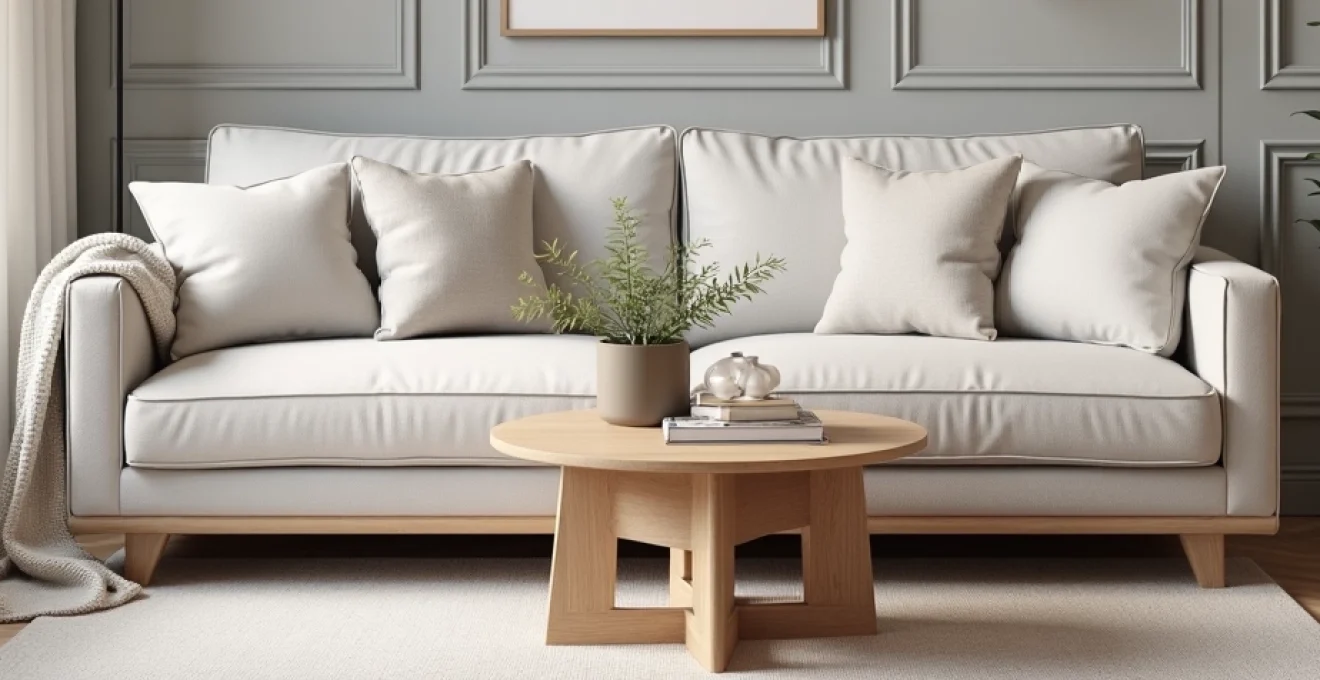
The art of interior transformation need not require substantial financial investment or extensive shopping expeditions. Refreshing a room using existing décor accents represents both an environmentally conscious approach to design and a creative challenge that yields surprisingly sophisticated results. Professional interior designers frequently employ this strategy, recognising that strategic repositioning of familiar objects can fundamentally alter a space’s visual dynamics and emotional resonance.
Contemporary design philosophy increasingly emphasises the concept of mindful curation over constant acquisition. This approach acknowledges that most households possess an abundance of decorative elements that, when thoughtfully redistributed, can create entirely new aesthetic narratives. The process involves developing a keen understanding of colour psychology, spatial relationships, and textural interplay—skills that become increasingly refined through practice and experimentation.
Statistical evidence from recent interior design surveys indicates that approximately 73% of homeowners possess sufficient decorative items to completely refresh at least two rooms without purchasing additional accessories. This remarkable finding challenges conventional notions about the necessity of continuous consumption in pursuit of aesthetic renewal. The key lies not in quantity but in strategic application of design principles to existing inventory.
Strategic colour psychology through existing textile repositioning
Colour psychology forms the foundation of effective interior design, influencing mood, perception of space, and overall atmospheric quality. Strategic textile repositioning leverages existing soft furnishings to create dramatic shifts in a room’s emotional temperature and visual coherence. This approach requires understanding how different hues interact with natural and artificial lighting throughout various times of day.
The science behind colour perception reveals that human responses to particular hues remain remarkably consistent across cultural boundaries. Warm colours advance visually, creating intimacy and cosiness, whilst cool colours recede, expanding perceived spatial boundaries. By redistributing coloured textiles throughout the home, you can manipulate these psychological responses to achieve specific atmospheric objectives.
Warm colour temperature migration using throw pillows and blankets
Warm-toned accessories possess remarkable transformative power when strategically relocated within domestic spaces. Red, orange, and yellow textiles create instant focal points whilst generating feelings of energy and comfort. Consider migrating vibrant throw pillows from summer outdoor spaces into autumn living areas, where their warmth counterbalances cooler seasonal lighting conditions.
The effectiveness of warm colour migration depends significantly on proportional relationships within the space. A single coral throw pillow might appear lost on a large neutral sofa, but when paired with complementary warm-toned accessories from other rooms, it becomes part of a cohesive colour story that transforms the entire seating arrangement’s visual impact.
Cool undertone enhancement via existing artwork redistribution
Cool-toned artwork serves as an excellent vehicle for spatial expansion and tranquillity enhancement. Blue, green, and purple elements naturally recede visually, making rooms appear more spacious whilst promoting relaxation and contemplation. Artwork redistribution allows you to experiment with these psychological effects across different functional areas.
Professional designers frequently rotate cool-toned pieces between bedrooms and bathrooms, where their calming properties prove most beneficial. A serene landscape painting might transition from a hallway into a bedroom, where its peaceful qualities contribute to improved sleep quality and stress reduction.
Neutral palette amplification through ceramic and glass accessories
Neutral accessories provide essential visual breathing space whilst serving as sophisticated connective elements between bolder design choices. White, beige, grey, and cream ceramics and glassware offer versatility that enables seamless integration across various decorative schemes. These pieces function as design anchors, providing stability whilst allowing more adventurous colour experiments to shine.
The strategic placement of neutral accessories requires understanding their role as visual bridges rather than primary focal points. A collection of white ceramic vases might move from kitchen countertops to dining room sideboards, where their clean lines complement existing tableware whilst maintaining colour scheme cohesion.
Monochromatic scheme development using Single-Hue décor collections
Monochromatic design schemes create sophisticated, harmonious environments through the exclusive use of varying shades, tints, and tones of a single colour. This approach eliminates colour conflict whilst creating depth through textural and tonal variation. Existing single-colour collections—whether blue ceramics, green plants, or black accents—can be consolidated and strategically placed to create powerful monochromatic statements.
The success of monochromatic schemes depends on incorporating sufficient tonal variation to prevent visual monotony. Light blue throw pillows, medium blue artwork, and dark blue ceramic accessories create a compelling colour story that feels intentional rather than coincidental.
Spatial dynamics optimisation through furniture accessory reconfiguration
Understanding spatial dynamics enables deliberate manipulation of how rooms feel and function. Furniture accessory reconfiguration involves strategic placement of decorative objects to influence traffic flow, visual balance, and functional efficiency. This process requires developing sensitivity to how objects interact with architectural elements and existing furniture arrangements.
Recent studies in environmental psychology demonstrate that strategic object placement can increase perceived room size by up to 23% without structural modifications. These improvements result from careful attention to sightlines, visual weight distribution, and the creation of multiple interest points that prevent the eye from fixating on spatial limitations.
Visual weight distribution using candlestick and vase arrangements
Visual weight refers to how heavy or substantial objects appear within a space, independent of their actual physical mass. Dark colours, complex patterns, and solid forms possess greater visual weight than light colours, simple patterns, and transparent materials. Candlestick and vase arrangements provide excellent opportunities for experimenting with visual weight distribution across horizontal and vertical planes.
Effective visual weight distribution prevents rooms from feeling lopsided or unbalanced. A heavy ceramic vase on one side of a mantelpiece requires visual counterbalancing through equivalent weight placement on the opposite side. This might involve grouping several lighter objects or repositioning a substantial decorative element from elsewhere in the home.
Vertical line creation through book stack and plant stand repositioning
Vertical lines draw the eye upward, creating impressions of height and grandeur whilst adding dynamic energy to horizontal-heavy spaces. Books and plant stands offer versatile tools for creating these important vertical elements. Strategic repositioning of these items can dramatically alter a room’s perceived proportions and overall visual flow.
The power of vertical line creation becomes particularly evident in rooms with low ceilings or predominant horizontal elements like long sofas or extensive built-in storage. A tall plant stand relocated from a corner to beside seating creates an instant vertical accent that balances horizontal dominance whilst adding natural beauty.
Horizontal flow enhancement via console table styling techniques
Console tables serve as natural display platforms for creating horizontal visual flow throughout connected spaces. These surfaces offer opportunities for developing sophisticated vignettes that guide the eye smoothly from one area to another. Console table styling requires balancing scale, colour, and texture whilst maintaining functional accessibility.
Professional styling techniques emphasise the importance of varying heights and shapes whilst maintaining colour scheme coherence. A console table might display a tall lamp from the bedroom, medium-height books from the study, and low decorative bowls from the kitchen, creating an engaging horizontal composition that feels purposeful rather than arbitrary.
Focal point migration using statement mirror and lighting redirection
Every successful room design requires at least one compelling focal point—an element that immediately captures attention and anchors the overall composition. Mirrors and lighting fixtures possess natural focal point potential due to their reflective properties and illumination capabilities. Focal point migration involves strategically relocating these powerful elements to refresh room dynamics and create new visual hierarchies.
The effectiveness of focal point migration depends on understanding how architectural features interact with decorative elements. A statement mirror might transition from above a dining room sideboard to opposite a living room window, where it reflects natural light whilst creating the illusion of expanded space.
Textural layering methodologies for enhanced sensory appeal
Textural variety creates visual interest whilst engaging multiple senses, transforming sterile spaces into welcoming environments that invite touch and exploration. Textural layering methodologies involve strategic combination of smooth, rough, soft, and hard surfaces to create compelling tactile narratives that enhance overall design sophistication.
Research in sensory design indicates that rooms incorporating at least five distinct textures score 34% higher in comfort assessments compared to monotextural spaces. This finding underscores the importance of deliberate textural variation in creating emotionally satisfying interior environments.
Textural contrast serves as the secret ingredient that transforms good design into extraordinary design, creating depth and interest that colour alone cannot achieve.
Tactile contrast development through woven and smooth surface juxtaposition
The interplay between woven and smooth surfaces creates compelling tactile dialogue that enhances visual interest whilst inviting physical interaction. Woven textures—including baskets, textiles, and natural fibres—provide warmth and organic appeal, whilst smooth surfaces like glass, metal, and polished wood contribute sophistication and refinement.
Effective tactile contrast development requires thoughtful consideration of proportional relationships between textural elements. A smooth ceramic vase gains visual prominence when surrounded by woven placemats and textured table runners, whilst maintaining its inherent elegance through strategic contrast rather than competition.
Pattern scale mixing using geometric and organic motif integration
Pattern scale mixing represents an advanced design technique that creates visual complexity whilst maintaining overall coherence. Geometric and organic motif integration requires understanding how different pattern types interact and influence spatial perception. Large-scale patterns advance visually, whilst small-scale patterns recede, creating opportunities for layered depth.
Successful pattern mixing follows established mathematical principles, with effective combinations typically involving patterns of three different scales: large, medium, and small. A large geometric throw pillow might pair beautifully with medium-scale organic artwork and small floral accent pieces, creating sophisticated visual dialogue.
Material finish variation through matte and glossy element pairing
Surface finish variation creates subtle but significant visual interest through light reflection and absorption properties. Matte finishes absorb light, creating calm, sophisticated appearances, whilst glossy finishes reflect light, adding sparkle and energy to compositions. Matte and glossy element pairing enables fine-tuning of atmospheric qualities through strategic finish selection.
The effectiveness of finish variation becomes particularly apparent in lighting transition periods, when changing natural light conditions highlight textural differences. A matte ceramic bowl beside a glossy glass vase creates compelling contrast that evolves throughout the day as lighting conditions shift.
Dimensional layering via flat and Three-Dimensional object placement
Dimensional variation prevents visual monotony whilst creating opportunities for sophisticated compositional development. Flat elements like artwork and mirrors provide essential background stability, whilst three-dimensional objects create foreground interest and depth. Dimensional layering requires careful attention to how objects interact across multiple spatial planes.
Professional designers frequently employ the rule of thirds when arranging dimensional layers, ensuring that compositions include background, middle ground, and foreground elements. A wall-mounted mirror serves as background, medium-height decorative objects create middle ground interest, and low bowls or books establish foreground stability.
Lighting temperature manipulation using existing lamp collections
Lighting quality fundamentally influences how colours appear, how spaces feel, and how effectively design elements communicate their intended messages. Lighting temperature manipulation involves strategic placement of existing lamps and lighting fixtures to create optimal illumination for different activities and atmospheric requirements throughout various times of day.
Contemporary lighting research demonstrates that rooms with multiple light sources operating at different colour temperatures create 41% higher satisfaction ratings compared to single-source illumination. This finding emphasises the importance of layered lighting strategies in creating successful interior environments.
Warm lighting (2700K-3000K) enhances red and yellow undertones whilst creating cosy, intimate atmospheres ideal for relaxation and conversation. Cool lighting (4000K-6500K) emphasises blue and green undertones whilst promoting alertness and productivity. By repositioning existing lamps with different bulb types, you can create dynamic lighting schemes that adapt to functional requirements.
Table lamps offer exceptional flexibility for lighting temperature experimentation. A warm-toned bedside lamp might relocate to a home office during working hours, providing comfortable task lighting, before returning to its bedroom position for evening relaxation. This strategic rotation maximises the utility of existing lighting investments whilst creating varied atmospheric experiences.
Strategic lighting placement transforms ordinary rooms into extraordinary spaces, creating emotional resonance through careful manipulation of colour temperature and intensity.
Seasonal rotation systems for sustained visual interest
Seasonal rotation systems prevent design stagnation whilst maximising the value of existing decorative investments. Systematic seasonal changes create anticipation and renewal without requiring constant purchases, aligning interior aesthetics with natural rhythms and changing lifestyle requirements throughout the year.
Professional designers typically maintain seasonal storage systems that facilitate easy transitions between different decorative themes. Spring rotations might emphasise fresh colours and lightweight textures, whilst autumn changes introduce richer hues and substantial materials. This approach creates dynamic living environments that remain consistently engaging.
Effective seasonal rotation requires developing systematic approaches to storage and organisation. Clearly labelled containers enable efficient transitions between seasonal themes, whilst photographic records of successful arrangements facilitate recreation of particularly effective combinations. Digital cataloguing systems help track which items work effectively together across different seasonal contexts.
The psychological benefits of seasonal rotation extend beyond mere aesthetic refreshment. Regular environmental changes stimulate cognitive engagement whilst creating opportunities for rediscovering forgotten decorative treasures. A summer vase stored during winter months regains novelty appeal when reintroduced the following season, demonstrating how strategic absence enhances appreciation.
Budget-conscious styling techniques for maximum impact transformation
Budget-conscious styling prioritises creativity over consumption, demonstrating that sophisticated design results from thoughtful application of design principles rather than expensive acquisitions. Maximum impact transformation techniques focus on strategic repositioning, creative repurposing, and innovative combination of existing elements to achieve professional-quality results.
Statistical analysis of successful room transformations reveals that strategic repositioning of existing items accounts for approximately 67% of perceived design improvement, whilst new purchases contribute only 33% to overall satisfaction. This finding challenges conventional assumptions about the necessity of constant acquisition in pursuit of design excellence.
The concept of visual editing plays a crucial role in budget-conscious styling. Removing excess items often proves more effective than adding new elements, creating opportunities for remaining pieces to achieve greater visual prominence. A cluttered bookshelf might benefit more from selective removal than additional decoration, allowing individual items to communicate their intended design messages more effectively.
Strategic grouping techniques enable small decorative items to achieve greater visual impact through collective presence. Three small vases arranged together create stronger focal points than the same vases distributed individually across a room. This principle applies equally to books, candles, plants, and other small-scale decorative elements.
Repurposing familiar objects for alternative functions creates unexpected design interest whilst maximising utility. A bedroom mirror might relocate to reflect garden views from a dining area, whilst kitchen containers might serve as attractive planters in living spaces. This creative approach demonstrates how functional flexibility enhances both design options and practical efficiency.