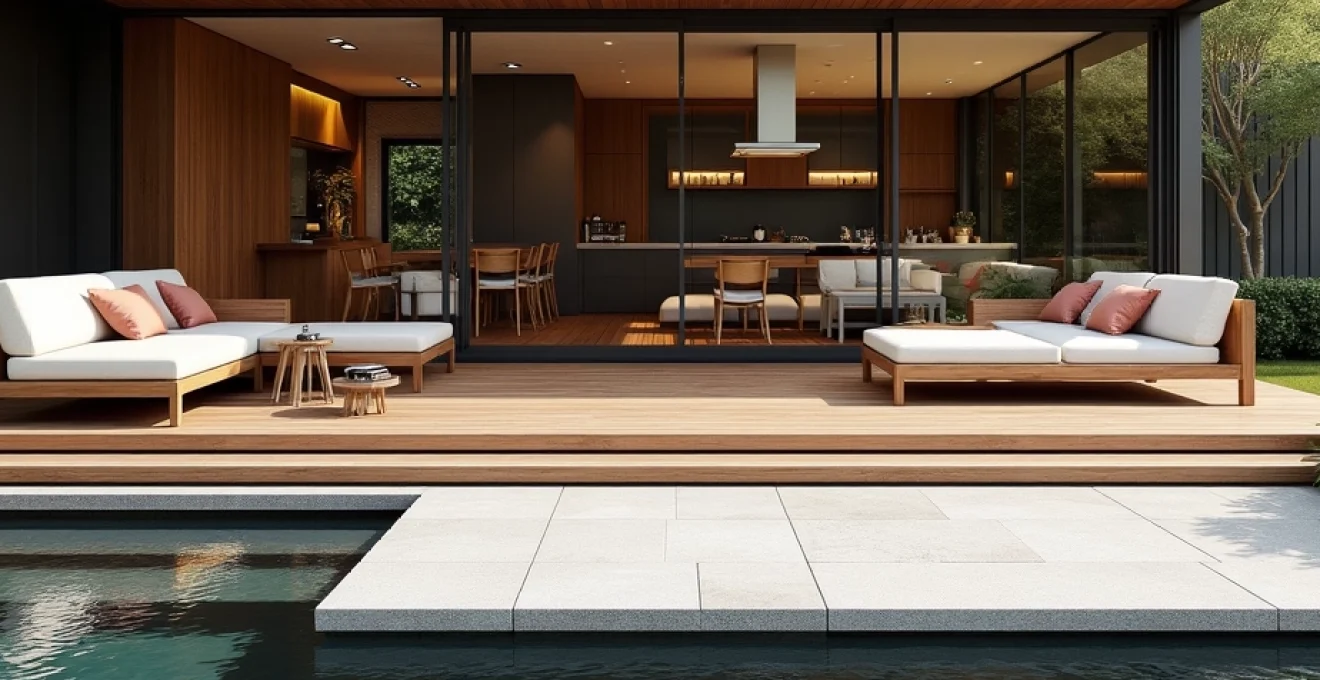
Contemporary outdoor design represents a sophisticated dance between the raw beauty of natural materials and the sleek precision of modern aesthetics. This harmonious blend creates spaces that feel both grounded in nature and elegantly contemporary, offering homeowners the best of both worlds. The key lies in understanding how organic textures can complement industrial finishes, and how traditional materials can be reimagined through modern applications.
The demand for balanced outdoor styling has surged as people seek refuge from increasingly digital lifestyles, craving authentic connections with natural elements whilst maintaining the convenience and sophistication of modern living. This design philosophy transforms ordinary patios, gardens, and terraces into extraordinary outdoor sanctuaries that serve as seamless extensions of interior spaces.
Mastering this delicate equilibrium requires careful consideration of material selection, furniture integration, and landscape design principles that honour both natural authenticity and contemporary functionality. The result is an outdoor environment that feels timeless yet current, sophisticated yet approachable.
Natural material selection and weatherproofing techniques for outdoor spaces
The foundation of successful natural-modern fusion begins with selecting authentic materials that can withstand outdoor conditions whilst maintaining their aesthetic appeal. Weather resistance becomes paramount when investing in quality natural materials, as proper treatment ensures longevity and preserves the initial investment. Understanding the characteristics and maintenance requirements of different natural materials allows designers to make informed decisions that balance beauty with practicality.
Teak and eucalyptus wood treatment for UV resistance
Teak remains the gold standard for outdoor wood applications due to its inherent oil content and natural weather resistance. However, even this premium hardwood benefits from proper UV protection to maintain its rich honey tones and prevent silvering. Professional-grade teak sealers containing UV inhibitors should be applied annually, whilst eucalyptus requires more frequent treatment every six to eight months.
The treatment process involves thorough cleaning with specialized wood cleaners, followed by light sanding to open the grain for optimal sealer penetration. Marine-grade teak oils provide the deepest protection, whilst water-based sealers offer a more natural appearance with easier maintenance requirements. Proper timing of application during moderate temperatures ensures maximum absorption and effectiveness.
Natural stone integration: limestone, sandstone and slate applications
Natural stone brings timeless elegance to modern outdoor designs, with each variety offering distinct characteristics and aesthetic possibilities. Limestone provides a sophisticated neutral palette that complements both warm and cool design schemes, whilst its porous nature requires sealing to prevent staining and weather damage. Sandstone offers warmer tones and interesting textural variations, making it ideal for creating focal points and accent walls.
Slate delivers dramatic colour depth and exceptional durability, particularly suitable for water feature applications and contemporary pathway designs. The key to successful stone integration lies in understanding each material’s porosity and selecting appropriate sealers that protect without altering the natural appearance. Professional installation techniques ensure proper drainage and prevent frost damage in colder climates.
Bamboo and rattan weatherproofing with Marine-Grade sealants
Bamboo and rattan bring organic texture and visual warmth to modern outdoor spaces, but these materials require specialized protection against moisture and UV degradation. Marine-grade polyurethane sealants provide excellent water resistance whilst maintaining flexibility as the materials expand and contract with temperature changes.
The weatherproofing process begins with thorough cleaning and light sanding to remove any existing finishes or surface contaminants. Multiple thin coats of marine sealant, applied with proper curing time between applications, create a durable protective barrier. Regular maintenance involves cleaning with mild soap solutions and reapplication of protective coatings every two to three years, depending on exposure levels.
Corten steel patina development and maintenance protocols
Corten steel represents the perfect marriage of industrial aesthetics and natural weathering processes, developing a protective rust patina that stabilizes over time. The controlled oxidation process typically takes 12 to 18 months in most climates, creating the characteristic orange-brown finish that defines this material’s unique appeal.
Proper Corten steel installation requires understanding drainage patterns to prevent water pooling and ensuring adequate ventilation for even patina development. The initial weathering period may produce rust runoff that can stain adjacent surfaces, requiring protective measures during the patination process. Regular inspection and cleaning of weep holes maintain proper drainage and prevent accelerated corrosion in localized areas.
Contemporary furniture integration with biophilic design principles
Modern outdoor furniture serves as the bridge between architectural elements and natural landscapes, requiring careful selection to maintain visual harmony whilst providing functional comfort. The integration of biophilic design principles ensures that contemporary pieces enhance rather than compete with natural surroundings. This approach emphasizes the psychological benefits of nature connection whilst maintaining the clean lines and sophisticated materials characteristic of modern design.
The most successful outdoor spaces create an intuitive flow between built elements and natural features, allowing occupants to feel simultaneously grounded in nature and elevated by thoughtful design.
Powder-coated aluminium framework with natural cushioning materials
Powder-coated aluminium provides the structural foundation for weather-resistant outdoor furniture whilst offering unlimited colour possibilities to complement natural material palettes. The powder coating process creates a durable finish that resists chipping, fading, and corrosion, making it ideal for modern outdoor applications where longevity and appearance retention are priorities.
Natural cushioning materials such as Sunbrella performance fabrics in organic textures and earth tones soften the industrial appearance of aluminium frameworks. These high-performance textiles resist fading, mold, and moisture whilst providing the tactile comfort essential for relaxation spaces. The contrast between sleek metal structures and soft, natural-toned fabrics exemplifies successful natural-modern integration.
Concrete planters combined with organic textile elements
Contemporary concrete planters serve dual functions as sculptural elements and practical growing containers, their monolithic forms providing strong geometric contrast to organic plant materials. Modern casting techniques allow for diverse surface textures and integrated features such as built-in drainage systems and water reservoirs.
The integration of organic textile elements through weather-resistant fabric wraps or rope detailing softens the industrial appearance whilst adding textural interest. Natural fiber ropes and woven elements introduce warmth and visual complexity that prevents concrete planters from appearing stark or institutional. Proper sizing ensures plants have adequate root space whilst maintaining proportional relationships with surrounding landscape elements.
LED strip lighting integration within natural wood pergolas
The seamless integration of LED strip lighting within natural wood pergolas creates ambient illumination that enhances evening functionality without overwhelming natural materials. Modern LED technology offers precise colour temperature control, allowing designers to match warm wood tones or create dramatic contrast effects.
Installation techniques include routing channels within timber beams to conceal wiring and create clean sight lines that maintain the pergola’s natural appearance during daylight hours. Dimmable controls and programmable systems provide flexibility for different occasions and seasons. Proper waterproofing and heat dissipation considerations ensure long-term reliability in outdoor applications.
Modular seating systems incorporating live edge timber
Modular seating systems offer design flexibility whilst live edge timber elements introduce authentic natural character and unique visual interest to contemporary outdoor spaces. Each live edge piece displays distinct grain patterns and organic curves that celebrate the tree’s natural growth, creating one-of-a-kind design elements.
The combination of standardized modular components with custom live edge elements allows for both practicality and personalization. Weather-resistant joinery techniques and appropriate wood stabilization treatments ensure structural integrity whilst preserving the natural edge character. Regular maintenance involves oil treatments to prevent cracking and seasonal adjustments to accommodate wood movement.
Hardscaping fusion: industrial materials with organic textures
The strategic combination of industrial hardscaping materials with organic textures creates dynamic visual tension that defines successful natural-modern outdoor design. This approach leverages the strength and durability of contemporary materials whilst incorporating natural elements that provide warmth and visual interest. The key lies in understanding scale relationships and ensuring that neither element overwhelms the other, creating instead a harmonious dialogue between opposing characteristics.
Successful hardscaping fusion requires careful consideration of material transitions and joint details that appear intentional rather than accidental. The goal is to create seamless integration where industrial precision enhances natural beauty rather than competing with it. Proper installation techniques ensure structural integrity whilst maintaining the aesthetic vision that defines the space’s character.
Modern hardscaping materials such as polished concrete, steel edging, and composite decking provide clean lines and geometric precision that serve as counterpoints to irregular natural stone, weathered wood, and organic plantings. The interplay between these contrasting elements creates visual depth and maintains interest throughout changing seasons and lighting conditions. Professional installation ensures that expansion joints, drainage requirements, and structural considerations are addressed without compromising the design vision.
The selection of specific materials depends on climate considerations, maintenance preferences, and intended use patterns. High-traffic areas benefit from durable industrial materials with slip-resistant surfaces, whilst intimate spaces can incorporate more delicate natural textures that invite closer inspection and tactile interaction. Understanding these functional requirements prevents design decisions that prioritize appearance over practical performance.
Plant selection for architectural landscape harmony
Strategic plant selection serves as the living link between architectural elements and natural landscapes, requiring species that complement both modern design principles and local environmental conditions. The most effective plant palettes combine structural specimens that provide year-round architectural interest with seasonal varieties that introduce colour and textural variation throughout the growing season.
Architectural plants such as ornamental grasses, sculptural succulents, and carefully pruned evergreens provide structure and form that harmonizes with contemporary design elements whilst maintaining natural authenticity. These foundation plantings establish the framework within which more ephemeral seasonal displays can flourish without overwhelming the overall composition. The selection process must balance aesthetic preferences with practical considerations including mature size, maintenance requirements, and local climate adaptation.
Native plant integration ensures environmental sustainability whilst reducing long-term maintenance requirements and supporting local ecosystem health. Contemporary landscape design increasingly emphasizes the use of indigenous species that naturally thrive in local conditions, creating landscapes that feel both modern and ecologically appropriate. The challenge lies in selecting native varieties that possess the clean forms and interesting textures that complement modern architectural elements.
Seasonal interest becomes crucial for maintaining visual appeal throughout the year, particularly in climates with distinct growing seasons. The layering of plants with different bloom times, foliage colours, and structural characteristics ensures continuous visual interest whilst providing habitat diversity for local wildlife. This approach creates landscapes that feel dynamic and alive rather than static compositions that peak during specific seasons.
The most sophisticated outdoor spaces achieve timeless appeal by balancing contemporary design elements with natural materials that age gracefully and develop character over time.
Water feature engineering: contemporary pumps with natural stone cascades
Modern water features represent the ultimate fusion of technological sophistication and natural beauty, combining precision engineering with organic materials to create focal points that engage multiple senses. Contemporary pump technology enables complex water effects whilst maintaining energy efficiency and quiet operation essential for residential applications. The integration of natural stone cascades provides the visual and auditory elements that transform mechanical systems into living landscape features.
Variable speed pumps and programmable controls allow for customized water effects that can be adjusted for different occasions and times of day. These systems can create everything from gentle bubbling effects to dramatic cascading displays, providing the flexibility to match water features to changing moods and activities. Advanced filtration systems maintain water clarity and quality whilst minimizing maintenance requirements and chemical treatments.
Natural stone selection for cascade construction requires understanding both aesthetic preferences and hydraulic engineering principles. Stone characteristics such as porosity, surface texture, and thermal properties affect both water flow patterns and sound qualities. Professional installation ensures proper water distribution, prevents erosion, and creates the intended visual and auditory effects whilst maintaining system efficiency.
The integration of LED underwater lighting extends the functionality of water features into evening hours whilst creating dramatic visual effects that highlight both water movement and stone textures. Colour-changing capabilities allow for seasonal themes and special occasions, whilst warm white settings provide subtle enhancement that doesn’t compete with natural moonlight and surrounding landscape lighting.
Lighting design: smart technology integration with natural uplighting techniques
Sophisticated outdoor lighting design seamlessly blends smart technology capabilities with traditional uplighting techniques that enhance natural materials and landscape features. Modern LED systems offer unprecedented control over colour temperature, intensity, and timing whilst providing energy efficiency that makes comprehensive outdoor lighting both practical and environmentally responsible. The key is creating lighting schemes that feel natural and unobtrusive during evening hours whilst providing adequate illumination for safety and functionality.
Smart lighting controllers enable complex programming that can automatically adjust for seasonal variations, special events, and daily usage patterns. These systems can gradually increase intensity as natural light fades, create different lighting zones for various activities, and even respond to weather conditions with appropriate adjustments. Integration with home automation systems allows for seamless control through smartphone applications and voice commands.
Natural uplighting techniques focus on highlighting the inherent beauty of trees, architectural elements, and landscape features through carefully positioned fixtures that remain hidden during daylight hours. The placement of ground-mounted uplights requires understanding plant growth patterns and seasonal changes to maintain proper illumination angles throughout the year. Professional installation ensures fixtures are properly sealed against moisture infiltration whilst providing adequate access for maintenance and lamp replacement.
The balance between functional task lighting and aesthetic accent lighting determines the overall success of outdoor lighting design. Pathway lighting provides essential safety illumination whilst accent lighting creates ambiance and highlights design features. The most effective schemes layer multiple light sources at varying intensities to create depth and visual interest whilst avoiding harsh shadows or glare that compromises evening comfort and enjoyment.