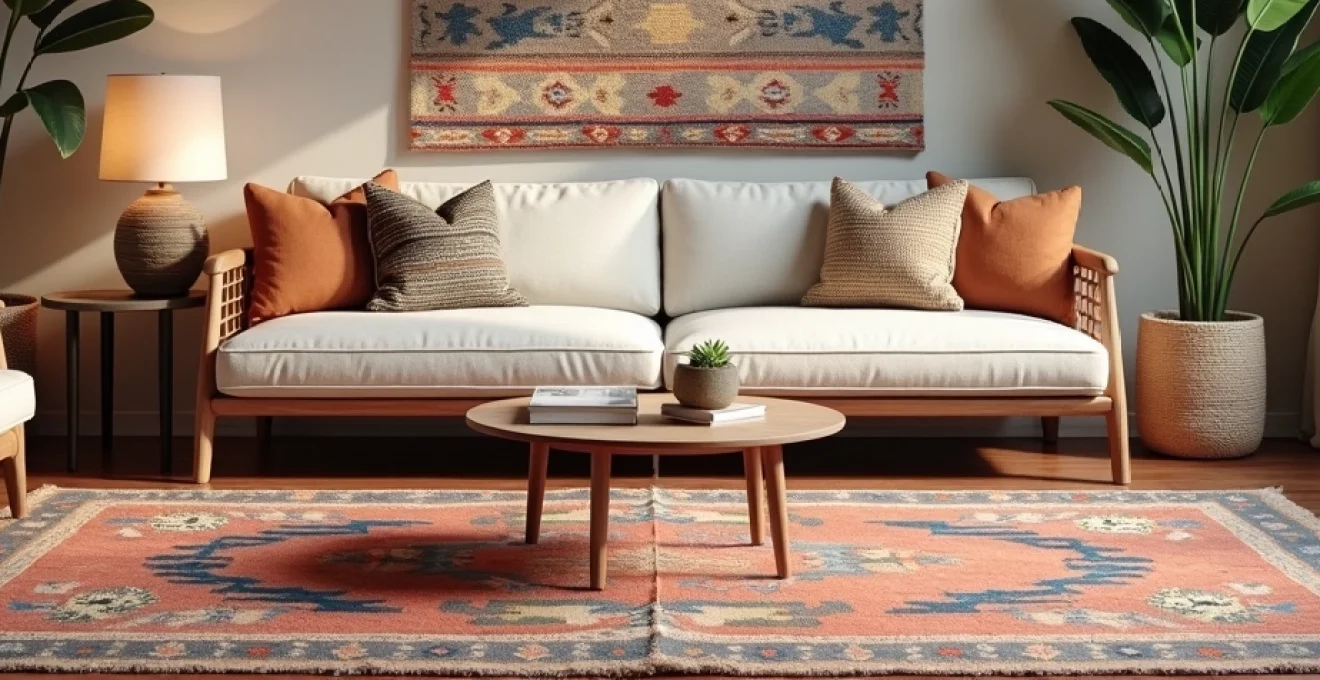
Ethnic rugs have transcended their traditional boundaries to become the cornerstone of contemporary global-inspired interior design. These handcrafted masterpieces carry within their fibres the stories of ancient civilisations, nomadic tribes, and centuries-old weaving traditions that continue to captivate modern homeowners. The allure of ethnic rugs lies not merely in their aesthetic appeal, but in their ability to transform sterile spaces into warm, culturally rich environments that speak of worldly sophistication and appreciation for artisanal craftsmanship. Whether you’re drawn to the geometric precision of Moroccan Berber weaves, the intricate florals of Persian carpets, or the bold patterns of Turkish kilims, these textiles offer an authentic pathway to creating interiors that celebrate global heritage whilst maintaining contemporary relevance.
The contemporary design landscape has witnessed a remarkable shift towards embracing cultural authenticity in home décor. As globalisation has made the world more interconnected, homeowners increasingly seek to incorporate elements that reflect diverse cultural experiences and appreciation for traditional craftsmanship. Ethnic rugs serve as perfect ambassadors of this movement , offering both functional beauty and cultural significance that mass-produced alternatives simply cannot replicate.
Understanding ethnic rug origins and cultural significance in interior design
The foundation of successfully incorporating ethnic rugs into global-inspired interiors begins with understanding their cultural origins and symbolic meanings. Each region’s weaving traditions have been shaped by climate, available materials, religious beliefs, and social structures, resulting in distinctive characteristics that tell unique cultural stories. This knowledge empowers designers and homeowners to make informed choices that respect the heritage of these textiles whilst creating harmonious living spaces.
Traditional rug-making regions have developed signature styles over millennia, with techniques passed down through generations of skilled artisans. The geographical distribution of these traditions spans from the Atlas Mountains of Morocco to the steppes of Central Asia, each area contributing unique elements to the global tapestry of ethnic rug design. Understanding these origins helps in creating authentic global-inspired interiors that avoid cultural appropriation whilst celebrating diversity.
Persian kashan and isfahan rug motifs for sophisticated living spaces
Persian rugs from Kashan and Isfahan represent the pinnacle of carpet weaving artistry, characterised by their intricate floral medallions, curvilinear patterns, and sophisticated colour palettes. These rugs typically feature central medallion designs surrounded by elaborate border patterns, with motifs often including palmettes, arabesques, and stylised flowers that create visual depth and movement. The traditional colour schemes favour deep blues, rich reds, and cream backgrounds, though contemporary interpretations embrace broader chromatic ranges.
In sophisticated living spaces, Persian Kashan and Isfahan rugs function as anchor pieces that establish the room’s aesthetic foundation. Their classical elegance complements both traditional and contemporary furniture styles, creating a sense of timeless sophistication. The intricate patterns work particularly well in formal sitting rooms, dining areas, and master bedrooms where their detailed craftsmanship can be fully appreciated. The key to successful integration lies in allowing these statement pieces sufficient visual breathing room, avoiding competing patterns in nearby textiles or wallpapers.
Moroccan beni ourain wool textures in contemporary settings
Moroccan Beni Ourain rugs offer a striking contrast to their Persian counterparts, featuring minimalist geometric patterns against cream or white backgrounds. These thick-pile wool rugs originated in the Atlas Mountains, where Berber tribes created them for both practical warmth and aesthetic expression. The characteristic diamond patterns, known as lozenges, often symbolise protection against evil spirits and represent the feminine principle in Berber culture.
Contemporary settings benefit enormously from the textural richness and neutral palette of Beni Ourain rugs. Their versatility makes them ideal for modern minimalist interiors, Scandinavian-inspired spaces, and transitional designs that bridge traditional and contemporary elements. The plush texture provides visual and tactile warmth in spaces dominated by hard surfaces like concrete, steel, or glass.
The beauty of Beni Ourain rugs lies in their ability to ground a space whilst maintaining visual lightness, making rooms feel both cosy and spacious.
Turkish kilim Flat-Weave patterns for minimalist aesthetics
Turkish kilims represent a fascinating category of flat-weave textiles that combine bold geometric patterns with practical durability. These reversible rugs feature traditional motifs including stylised animals, geometric medallions, and prayer niches, each carrying specific cultural meanings within Turkish nomadic traditions. The weaving technique creates sharp pattern definition and vibrant colour contrasts that make kilims particularly suitable for contemporary minimalist aesthetics.
In minimalist settings, Turkish kilims provide essential pattern and colour elements without overwhelming clean architectural lines. Their flat construction makes them ideal for layering over larger neutral rugs, creating visual depth whilst maintaining the uncluttered feel that minimalist design demands. The geometric nature of kilim patterns harmonises beautifully with modern furniture’s angular forms, whilst their handcrafted irregularities introduce human warmth to otherwise austere spaces.
Afghan chobi and oushak rug heritage in modern decor
Afghan Chobi and Turkish Oushak rugs represent distinct weaving traditions that have found renewed relevance in contemporary global-inspired interiors. Chobi rugs, characterised by their muted earth tones and traditional Persian-influenced patterns, offer a more subdued alternative to their brighter counterparts. Oushak rugs, with their distinctive large-scale patterns and soft colour palettes, bridge the gap between traditional and contemporary design preferences.
These heritage rugs excel in modern décor applications where homeowners seek authentic character without overwhelming boldness. Their weathered appearance and organic colour variations complement natural materials like reclaimed wood, raw metals, and stone surfaces commonly found in contemporary architecture. The cultural heritage embedded in these textiles adds narrative depth to modern interiors , creating spaces that feel collected and meaningful rather than simply designed.
Colour psychology and pattern integration techniques for Global-Inspired spaces
The successful integration of ethnic rugs into global-inspired interiors requires sophisticated understanding of colour psychology and pattern dynamics. Colours evoke emotional responses and cultural associations that can either enhance or detract from a space’s intended atmosphere. Traditional ethnic rugs often feature symbolic colour choices rooted in cultural beliefs, religious practices, or natural environments, making colour consideration crucial for authentic integration.
Pattern integration presents unique challenges in global-inspired interiors where multiple cultural elements may coexist. The key lies in identifying common threads between different cultural patterns – perhaps geometric structures, organic motifs, or symbolic elements – that can create visual harmony across diverse ethnic textiles. This approach allows for the celebration of multiple cultures within a single space without creating visual chaos or cultural confusion.
Chromatic harmony between indigo ikat patterns and neutral palettes
Indigo ikat patterns represent one of the world’s most sophisticated dyeing traditions, found across cultures from Indonesian batik to Japanese shibori and Central Asian textiles. The characteristic blue-white patterns created through resist-dyeing techniques offer versatility in contemporary colour schemes. Indigo’s psychological associations with tranquillity, depth, and sophistication make it an ideal choice for creating calming yet visually interesting environments.
Neutral palettes provide the perfect backdrop for indigo ikat patterns, allowing their intricate designs to take centre stage whilst maintaining overall visual harmony. The contrast between the rich blues and cream, beige, or grey surroundings creates dynamic tension without overwhelming the space. This colour combination works particularly well in bedrooms, studies, and meditation spaces where the calming properties of both indigo and neutral tones contribute to peaceful atmospheres. Layer different scales of ikat patterns through cushions, throws, and smaller accent rugs to create visual depth whilst maintaining chromatic unity.
Complementary colour theory with tibetan dragon motifs
Tibetan rugs featuring traditional dragon motifs present unique opportunities for exploring complementary colour theory in global-inspired interiors. Traditional Tibetan dragon designs typically employ rich burgundies, deep blues, and golden yellows against dark backgrounds, creating dramatic visual impact rooted in Buddhist symbolism. Understanding these colour relationships allows for sophisticated integration into contemporary spaces.
Complementary colour schemes utilising Tibetan dragon motifs can energise spaces whilst maintaining cultural authenticity. The warm golds and cool blues create natural balance, whilst burgundy accents add depth and richness. Consider how traditional Tibetan colour combinations can inform broader room palettes, using the rug’s colours as inspiration for wall treatments, furniture selections, and decorative accessories.
The power of dragon motifs lies not just in their dramatic visual impact, but in their ability to introduce spiritual symbolism and cultural depth to modern living spaces.
Geometric navajo weaving patterns in biophilic design schemes
Navajo weaving traditions offer distinctive geometric patterns that complement biophilic design principles beautifully. Traditional Navajo rugs feature bold geometric designs inspired by natural phenomena – lightning patterns, mountain ranges, and flowing water – making them natural partners for interior schemes that celebrate humanity’s connection with nature. The earthy colour palettes traditionally used in Navajo weaving align perfectly with biophilic design’s emphasis on natural materials and organic colour schemes.
Incorporating Navajo geometric patterns into biophilic design schemes requires careful attention to scale and proportion. The bold patterns work best as focal points in rooms where natural materials like wood, stone, and plants provide textural contrast. Consider how the rug’s geometric elements can echo architectural features or complement natural light patterns throughout the day. The key is maintaining balance between the rug’s cultural significance and its role within the broader biophilic design narrative.
Earthy terracotta tones from rajasthani Block-Printed rugs
Rajasthani block-printed rugs showcase centuries-old textile traditions that have recently gained popularity in global-inspired interiors. These rugs feature hand-carved wooden blocks used to create repetitive patterns in rich terracotta, ochre, and rust tones that evoke the desert landscapes of northern India. The earthy colour palette and organic pattern variations make these textiles particularly suitable for contemporary interiors seeking warmth and authenticity.
Terracotta tones from Rajasthani textiles introduce warmth and grounding energy to modern spaces dominated by cool materials like concrete, steel, or glass. These earthy colours complement natural materials beautifully, creating cohesive colour stories that feel both contemporary and timeless. The handcrafted nature of block-printing ensures that each rug possesses unique character , with subtle variations that add visual interest without overwhelming refined interior schemes.
Strategic placement and scale proportions for maximum visual impact
The strategic placement of ethnic rugs can dramatically transform interior spaces, but achieving maximum visual impact requires careful consideration of scale relationships, traffic patterns, and architectural features. Proper placement ensures that these cultural treasures function as intended focal points whilst maintaining practical accessibility and visual harmony with surrounding elements. Understanding the relationship between rug size and room proportions is fundamental to creating balanced, harmonious interiors that showcase ethnic textiles effectively.
Scale proportions in ethnic rug placement follow both aesthetic and cultural principles. Many traditional rugs were designed for specific functional purposes – prayer rugs sized for individual use, tribal tent decorations scaled to nomadic living spaces, or palace carpets created for grand ceremonial halls. Contemporary placement should respect these original intentions whilst adapting to modern living requirements. The goal is achieving visual weight distribution that feels natural and intentional rather than arbitrary or purely decorative.
Consider the architectural context when determining ethnic rug placement strategies. High ceilings can accommodate larger, more dramatic pieces that might overwhelm intimate spaces, whilst smaller rooms benefit from rugs that complement rather than dominate the architectural scale. Doorway sightlines, furniture arrangements, and natural light sources all influence optimal placement decisions. Successful integration requires thinking beyond individual rooms to consider how ethnic rugs contribute to overall circulation and visual flow throughout the home.
Room function significantly impacts placement strategies for ethnic rugs in global-inspired interiors. Living areas typically benefit from larger statement pieces that anchor seating arrangements and define conversation zones. Bedrooms can accommodate more intimate rug selections that provide comfort underfoot whilst contributing to restful atmospheres. Dining rooms require rugs large enough to accommodate chair movement whilst protecting floor surfaces. Understanding these functional requirements ensures that ethnic rugs serve both aesthetic and practical purposes effectively.
Layering techniques using multiple ethnic textiles and floor coverings
Layering multiple ethnic textiles creates sophisticated global-inspired interiors that celebrate diverse cultural traditions whilst maintaining visual cohesion. This advanced technique requires understanding how different patterns, textures, and colours interact to create harmonious rather than chaotic compositions. Successful layering involves establishing hierarchy among textile elements, ensuring that each piece contributes meaningfully to the overall design narrative without competing for attention.
The foundation of effective textile layering lies in identifying common elements that unify diverse ethnic pieces. These connections might include shared colour families, similar geometric structures, complementary scales, or related cultural origins. For example, combining a large Persian carpet with smaller Turkish kilim accents works well when both pieces share similar colour palettes or geometric principles, even though their cultural origins and construction techniques differ significantly.
Scale variation plays a crucial role in successful ethnic textile layering. Combining large anchor pieces with medium accent rugs and small decorative elements creates visual rhythm that guides the eye through the space naturally.
The art of layering lies in creating conversations between textiles – allowing each piece to speak whilst contributing to a larger cultural dialogue.
This approach transforms individual ethnic rugs from isolated decorative elements into components of cohesive global-inspired narratives.
Texture contrast enhances the visual interest of layered ethnic textile arrangements. Combining flat-weave kilims with pile rugs, smooth silk pieces with nubby wool textures, or coarse jute foundations with refined decorative overlays creates tactile diversity that enriches the sensory experience of global-inspired interiors. These textural contrasts should complement rather than conflict with the room’s overall material palette, ensuring that layered textiles integrate seamlessly with furniture, architectural elements, and decorative accessories.
Lighting design considerations for showcasing handwoven rug craftsmanship
Proper lighting design is essential for showcasing the intricate craftsmanship and cultural significance of ethnic rugs in global-inspired interiors. Natural and artificial lighting interact with textile colours, textures, and patterns in complex ways that can either enhance or diminish their visual impact. Understanding these relationships allows designers to create illumination strategies that celebrate the artisanal qualities of handwoven pieces whilst maintaining comfortable, functional lighting throughout the space.
Natural light changes throughout the day, affecting how ethnic rug colours appear and how patterns read from different angles. South-facing rooms with abundant daylight may cause certain dyes to appear washed out during peak hours, whilst north-facing spaces might mute vibrant colours that would sing in brighter conditions. Consider these natural light patterns when selecting ethnic rugs and positioning them within rooms. The interplay between changing daylight and traditional textile dyes creates dynamic visual experiences that connect inhabitants with natural rhythms whilst celebrating cultural craftsmanship.
Artificial lighting layers should complement rather than compete with ethnic rug characteristics. General ambient lighting provides overall room illumination without creating harsh shadows that might fragment rug patterns. Accent lighting can highlight specific textile areas, emphasising particularly fine craftsmanship or culturally significant motifs. Task lighting ensures practical functionality whilst avoiding glare that might make pattern appreciation difficult. The goal is creating lighting environments that allow ethnic rugs to be fully appreciated whilst supporting the room’s functional requirements.
Colour temperature considerations significantly impact how ethnic rugs appear under artificial lighting. Warm light sources (2700K-3000K) tend to enhance the traditional appearance of ethnic textiles, emphasising earth tones and making colours appear richer and more saturated. Cool light sources (4000K-5000K) can create more contemporary appearances but may shift colour perceptions in ways that alter the intended cultural associations. Consider the cultural context of specific ethnic rugs when selecting lighting colour temperatures, ensuring that artificial illumination supports rather than contradicts their traditional aesthetic character.
Furniture selection and spatial planning around statement ethnic rugs
Furniture selection and spatial planning around statement ethnic rugs requires balancing respect for cultural significance with contemporary functional requirements. These handcrafted textiles often represent centuries of cultural evolution and artistic refinement, making them worthy of careful consideration in furniture arrangements and room layouts. The goal is creating environments where ethnic rugs can be properly appreciated whilst serving practical purposes in modern living situations.
Scale relationships between furniture and ethnic rugs significantly impact overall room harmony. Oversized furniture can overwhelm delicate rug patterns, whilst pieces that are too small may appear lost against bold ethnic designs. Traditional proportional guidelines suggest that rugs should extend beyond furniture footprints, creating visual anchoring that feels intentional and balanced. However, cultural context matters – some ethnic rug traditions were designed for floor-level living arrangements that differ significantly from contemporary Western furniture scales.
Furniture style coordination with ethnic rugs offers opportunities
to create sophisticated global-inspired interiors that honour cultural heritage whilst meeting contemporary living needs. Mid-century modern furniture, with its clean lines and organic forms, pairs beautifully with geometric ethnic patterns, creating visual dialogue between different design eras. Traditional furniture styles can complement ethnic rugs from similar cultural regions, though this approach risks creating overly themed environments that feel more like museums than lived-in homes.
The key to successful furniture coordination lies in identifying shared design principles rather than literal style matching. A contemporary sectional sofa can work beautifully with a traditional Persian rug when both share similar colour palettes or proportional relationships. Similarly, minimalist Scandinavian furniture often harmonises unexpectedly well with Moroccan textiles, as both traditions value craftsmanship, natural materials, and functional beauty. This cross-cultural design approach creates fresh, innovative interiors that celebrate global diversity whilst maintaining contemporary relevance.
Spatial planning around statement ethnic rugs requires understanding both traffic flow and visual hierarchy within rooms. These valuable textiles deserve protection from excessive wear whilst remaining accessible for appreciation and use. Consider creating furniture arrangements that naturally direct foot traffic around rather than across delicate rug areas, using furniture placement to subtly guide movement patterns. This approach preserves textile longevity whilst ensuring that ethnic rugs remain integral to daily living rather than becoming untouchable museum pieces.
Multi-functional furniture solutions can enhance ethnic rug integration in smaller spaces where every element must serve multiple purposes. Ottoman storage pieces covered in coordinating ethnic textiles provide seating, storage, and visual continuity. Low-profile furniture allows ethnic rug patterns to remain visible and unobstructed, ensuring that these cultural treasures receive the visual prominence they deserve. Consider how furniture height affects rug visibility from different vantage points throughout the room, adjusting arrangements to optimise pattern appreciation from primary seating and circulation areas.
The most successful global-inspired interiors treat ethnic rugs as foundation elements that inform all other design decisions, rather than decorative afterthoughts added to completed spaces.
Maintenance accessibility should influence furniture placement around valuable ethnic rugs. Professional cleaning and conservation require periodic access that fixed or heavy furniture arrangements might complicate. Plan spatial arrangements that allow for occasional furniture movement without disrupting overall room harmony. This practical consideration becomes particularly important for antique or investment-quality ethnic pieces that require specialised care to maintain their cultural and monetary value over time.
Contemporary furniture materials can either complement or clash with ethnic rug characteristics, making material coordination crucial for successful integration. Natural materials like wood, leather, and stone typically harmonise well with traditional textile fibres, creating cohesive material stories that feel authentic and grounded. Synthetic materials require more careful consideration, though contemporary interpretations can work when they share similar textural or visual qualities with ethnic rug characteristics.
Creating conversation areas around ethnic rugs encourages appreciation and use whilst respecting cultural significance. Arrange seating to face rug centres, allowing occupants to fully appreciate pattern details and craftsmanship quality. This approach transforms ethnic rugs from mere floor coverings into focal points that inspire discussion and cultural appreciation. Consider how different seating heights affect rug viewing angles, ensuring that patterns read clearly from primary use positions.
The integration of ethnic rugs into global-inspired interiors represents more than aesthetic choice – it reflects appreciation for cultural diversity, artisanal craftsmanship, and the human stories embedded within handwoven textiles. These remarkable creations bridge geographical distances and temporal spans, connecting contemporary homes with ancient traditions whilst enriching modern living experiences. Success lies not in perfect stylistic matching but in thoughtful integration that honours both cultural heritage and contemporary functional needs. When approached with respect, knowledge, and creative vision, ethnic rugs become powerful tools for creating interiors that celebrate our interconnected global community whilst providing comfortable, beautiful spaces for modern living.