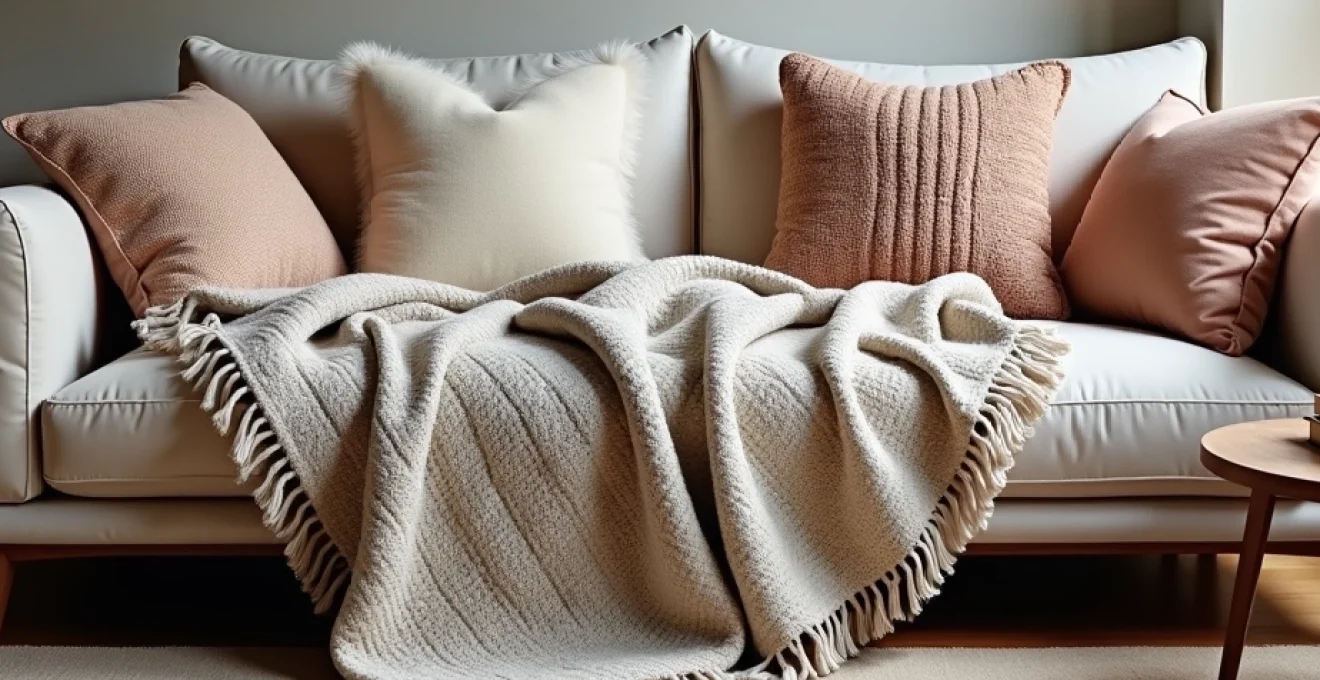
Transform your living space from ordinary to extraordinary with the strategic use of textured throws. These versatile design elements serve as powerful tools for interior transformation, offering both visual appeal and tactile comfort. The careful selection and placement of textured throws can dramatically alter the atmosphere of your living room, creating layers of sophistication that extend far beyond simple decoration. Whether you’re working with a minimalist Scandinavian aesthetic or a bold contemporary design, understanding how different textures interact with light, colour, and spatial elements enables you to create a cohesive and inviting environment that reflects your personal style.
Textile science behind textured throw blankets and visual impact
The science of textiles reveals fascinating insights into how different weaving techniques and material compositions create distinct visual effects in interior spaces. Understanding these principles allows you to make informed decisions when selecting throws that will enhance your living room’s aesthetic appeal. The way light interacts with various textile surfaces fundamentally shapes our perception of space, warmth, and comfort.
Chenille weaving techniques and light reflection properties
Chenille fabric’s unique construction creates a velvety surface that interacts with light in remarkable ways. The yarn’s fuzzy exterior, achieved through a specialized weaving process where short fibres are caught between twisted core yarns, produces a surface that both absorbs and reflects light simultaneously. This dual action creates depth and richness that appears to change throughout the day as natural light shifts across your living room.
The pile height in chenille throws typically ranges from 3 to 8 millimeters, with shorter piles creating a more subtle sheen and longer piles producing dramatic light play. When positioned near windows or under directional lighting, chenille throws exhibit what textile experts call “colour chatoyancy” – the ability to display different colour intensities depending on the viewing angle and light direction.
Boucle yarn construction and shadow play effects
Boucle’s distinctive looped texture creates fascinating shadow patterns that add dimensional interest to your living space. The irregular loops, formed during the yarn creation process, cast micro-shadows that shift throughout the day, creating an ever-changing visual landscape on your throw’s surface. This dynamic quality makes boucle throws particularly effective in rooms with abundant natural light.
The size and density of boucle loops significantly impact the visual texture intensity. Fine boucle with tight loops creates subtle texture variations, whilst chunky boucle with loose, irregular loops produces bold shadow play that can serve as a focal point in minimalist room designs. The three-dimensional quality of boucle texture also influences how colours appear, with shadows creating natural colour variation that adds sophistication to monochromatic schemes.
Cable knit patterns and dimensional depth creation
Cable knit throws introduce architectural elements to soft furnishings through their raised, interwoven patterns. The mathematical precision of cable patterns creates visual rhythm and movement that draws the eye across the throw’s surface. Traditional Aran cable patterns, featuring combinations of twists, braids, and bobbles, can add up to 15 millimeters of surface variation, creating substantial dimensional interest.
The interplay between raised cables and recessed valleys creates natural highlights and shadows that enhance the perception of depth. This effect is particularly pronounced with neutral colours, where the texture becomes the primary design element. Cable knit throws work exceptionally well in contemporary spaces where their structured appearance complements clean architectural lines whilst adding essential softness.
Faux fur pile height and tactile visual perception
Faux fur throws operate on multiple sensory levels, combining visual luxury with implied tactile comfort. The pile height, ranging from short 8-millimeter plush to long 50-millimeter luxury faux fur, dramatically affects both appearance and perceived warmth. Longer pile creates movement that suggests comfort and invitation, whilst shorter pile maintains sophistication with subtle texture variation.
The direction of fur pile influences light reflection, creating what textile designers term “flow lines” – visual paths where the pile direction catches or deflects light. Strategic placement of faux fur throws can guide the eye through your living space, creating visual connections between furniture pieces and establishing focal points that anchor the room’s design scheme.
Strategic placement techniques for maximum aesthetic enhancement
The placement of textured throws requires careful consideration of room proportions, furniture scale, and traffic flow patterns. Strategic positioning transforms throws from simple accessories into integral design elements that enhance your living room’s functionality and visual appeal. Understanding the principles of placement ensures that your throws contribute meaningfully to the overall design narrative rather than appearing as afterthoughts.
Draping methodology over Mid-Century modern furniture
Mid-century modern furniture’s clean lines and minimal ornamentation provide the perfect canvas for textured throw placement. The key lies in respecting the furniture’s architectural integrity whilst introducing textural contrast. For iconic pieces like Eames lounge chairs or Barcelona daybed designs, throws should complement rather than overwhelm the furniture’s distinctive silhouette.
The most effective draping technique involves the “casual precision” approach – positioning throws to appear naturally placed whilst maintaining careful attention to fold placement and edge alignment. Asymmetrical draping works particularly well with mid-century pieces , allowing one corner to drape naturally over the arm whilst the opposite corner falls in controlled folds. This technique maintains the furniture’s visual weight distribution whilst adding essential softness to balance the period’s characteristic hard materials.
Layering protocols with existing cushion collections
Successful throw integration with existing cushions requires understanding colour harmony, texture balance, and scale relationships. The layering process follows established design principles that prevent visual chaos whilst maximising comfort and aesthetic impact. Begin with your largest textural element – typically the throw – then introduce cushions in complementary textures and coordinating colours.
The golden ratio applies to cushion and throw combinations, with the throw occupying approximately 60% of the visual weight, primary cushions 30%, and accent cushions the remaining 10%. This distribution ensures visual balance whilst allowing each element sufficient presence. Texture contrast becomes crucial in monochromatic schemes , where material differences provide the primary visual interest in the absence of colour variation.
Colour theory application in scandinavian interior schemes
Scandinavian design principles emphasise light, natural materials, and restrained colour palettes, making textured throws essential for introducing warmth without compromising the aesthetic’s fundamental clarity. The Nordic approach to colour focuses on undertones rather than bold statements, requiring throws that enhance the existing palette through subtle variation rather than dramatic contrast.
Successful integration involves selecting throws in the same colour family as your primary palette but with different saturation levels or undertones. For example, in a predominantly white and grey scheme, introduces throws in warm grey, mushroom, or stone tones that maintain harmony whilst adding depth. Natural fibre textures like wool, linen, and cotton align perfectly with Scandinavian values , providing both visual and philosophical consistency with the design approach’s emphasis on authentic materials.
Asymmetrical arrangement principles for contemporary spaces
Contemporary interior design embraces asymmetry as a means of creating visual interest and dynamic balance. Asymmetrical throw placement breaks traditional symmetry rules whilst maintaining overall visual equilibrium through careful consideration of visual weight and colour distribution. This approach works particularly well in open-plan living spaces where throws must interact with multiple sight lines and furniture groupings.
The technique involves creating visual triangles through throw placement, where three points of textural interest form an invisible triangle that guides the eye around the room. Position your primary throw over one sofa arm, a secondary textured element on an opposite chair, and a third textural accent on a coffee table or ottoman. This arrangement creates movement and prevents static, overly balanced compositions that can appear rigid in contemporary settings.
Material composition analysis for living room environments
Understanding material properties enables informed selection of throws that will perform well in your specific living room environment. Different fibres respond uniquely to various conditions including light exposure, humidity levels, and usage patterns. Natural fibres like wool, cotton, and linen each offer distinct characteristics that influence both appearance and longevity.
Wool throws excel in temperature regulation and natural stain resistance, making them ideal for high-traffic family living rooms. The lanolin content in wool provides natural antimicrobial properties whilst the fibre structure creates excellent insulation without excessive bulk. Merino wool, in particular, offers exceptional softness and breathability, maintaining comfort across seasonal temperature variations.
Cotton and linen blends provide durability and easy maintenance whilst offering excellent colour retention and minimal shrinkage. These natural fibres work particularly well in contemporary and Scandinavian design schemes where their clean, crisp appearance complements minimalist aesthetics. Linen’s natural tendency to soften with age creates an appealing lived-in quality that enhances rather than detracts from its visual appeal over time.
Synthetic blends, particularly those incorporating acrylic or polyester components, offer practical advantages including fade resistance, easy care, and consistent texture retention. Modern synthetic fibres have evolved significantly, with many offering natural fibre appearance whilst providing superior durability. Microfibre constructions can replicate the appearance of cashmere or mohair whilst offering hypoallergenic properties essential for households with sensitivities.
The choice between natural and synthetic fibres ultimately depends on your lifestyle requirements, budget considerations, and aesthetic preferences, with each option offering distinct advantages for different living room applications.
Scale and proportion calculations for different sofa configurations
Successful throw integration requires precise understanding of scale relationships between the throw size and your furniture dimensions. Standard sofa configurations – from compact two-seaters to expansive sectionals – each demand different throw proportions to achieve visual balance and functional effectiveness. The mathematical relationship between furniture scale and textile size directly impacts the overall visual harmony of your living space.
For standard three-seater sofas measuring 180-220 centimeters in length, throws should measure between 150-180 centimeters to provide adequate coverage without overwhelming the furniture proportions. The throw width should correspond to the sofa depth plus 30-40 centimeters to allow for proper draping over armrests whilst maintaining floor clearance. Sectional sofas require larger throws, typically 200-250 centimeters, to maintain proportion with the extended furniture footprint.
Compact two-seater sofas and love seats work best with throws measuring 120-150 centimeters, preserving the intimate scale that makes these pieces appealing whilst providing sufficient coverage for practical use. Oversized throws on small furniture create visual imbalance that can make compact seating appear overwhelmed and cluttered rather than cosy and inviting.
The thickness and weight of your chosen throw also influence appropriate sizing. Lightweight materials like cotton or linen can accommodate larger dimensions without appearing bulky, whilst heavy materials like chunky knit wool require more conservative sizing to prevent visual overwhelm. Consider the throw’s draping characteristics when calculating appropriate dimensions – stiff fabrics require larger sizes to achieve natural-looking folds, whilst fluid materials work effectively in more conservative proportions.
| Sofa Type | Recommended Throw Size | Coverage Percentage |
|---|---|---|
| Two-seater (120-150cm) | 120-150cm | 80-90% |
| Three-seater (180-220cm) | 150-180cm | 70-80% |
| Sectional (250cm+) | 200-250cm | 60-70% |
Seasonal rotation strategies using textured throw collections
Developing a systematic approach to seasonal throw rotation ensures your living room maintains fresh visual interest throughout the year whilst responding appropriately to changing light conditions and temperature requirements. Strategic seasonal changes involve more than simple colour adjustments – texture, weight, and fibre composition all contribute to creating seasonally appropriate atmospheres that enhance comfort and aesthetic appeal.
Autumn integration with herringbone and tweed textures
Autumn’s transition into cooler temperatures and reduced daylight hours calls for throws that provide both physical warmth and visual richness. Herringbone patterns, with their distinctive V-shaped weaving technique, create sophisticated texture that complements the season’s architectural quality as leaves fall and landscapes become more structured. The diagonal pattern movement in herringbone weaves adds visual energy that counteracts autumn’s potentially sombre mood.
Tweed textures, traditionally associated with countryside autumn activities, bring authentic seasonal character to urban living spaces. The flecked appearance of tweed, created through multicoloured yarn combinations, provides subtle colour variation that works harmoniously with autumn’s natural palette of amber, russet, and golden tones. The substantial weight of tweed throws signals the approach of winter whilst maintaining sophisticated appearance suitable for contemporary interiors.
Wool content becomes increasingly important during autumn months, with natural temperature regulation properties providing comfort as heating systems cycle on and off. Lamb’s wool and merino blends offer optimal balance between warmth and breathability, preventing overheating during mild autumn days whilst providing adequate insulation during cooler evenings.
Spring refresh using linen waffle weave patterns
Spring’s arrival demands lighter, more breathable textures that respond to increasing temperatures and longer daylight hours. Linen waffle weave combines practical breathability with appealing textural interest, creating subtle dimensional patterns that catch spring’s bright, clear light. The open weave structure promotes air circulation whilst maintaining visual sophistication appropriate for refined interior schemes.
The natural irregularities inherent in linen fibres contribute to waffle weave’s organic appearance, aligning perfectly with spring’s themes of natural renewal and growth. Pale, fresh colours work exceptionally well in linen waffle weaves, with white, natural, sage, and soft blue tones reflecting spring’s optimistic energy. The fabric’s tendency to soften and improve with washing mirrors spring’s gradual warming and the seasonal transition from winter’s harsh textures to summer’s gentle comfort.
Maintenance considerations become simpler with linen throws, as the fibre’s natural antibacterial properties and easy care requirements align with spring cleaning traditions. Linen’s casual elegance perfectly captures spring’s relaxed sophistication , providing refined appearance without the formal weight of winter textures.
Winter layering with sherpa and fleece combinations
Winter’s harsh conditions require throws that prioritise warmth retention whilst maintaining visual appeal during extended indoor periods. Sherpa-lined throws provide exceptional insulation through their double-layer construction, combining smooth outer surfaces with fluffy inner linings that trap warm air effectively. The contrast between smooth and textured surfaces adds visual interest whilst delivering practical performance.
Fleece technology has evolved significantly, with modern microfleece offerings providing natural fibre appearance whilst delivering superior warmth-to-weight ratios. High-quality fleece throws resist pilling and maintain their texture integrity through repeated use and washing cycles essential during winter’s increased indoor activity periods. Polar fleece constructions offer additional benefits including moisture-wicking properties that maintain comfort in heated indoor environments.
Layering strategies become crucial during winter months, with multiple throws in complementary textures creating versatile comfort options. Combine lightweight fleece base layers with decorative outer throws in luxurious textures like faux fur or mohair blends. This approach provides practical warmth options whilst maintaining sophisticated visual appeal when entertaining or relaxing during winter’s social season.
Successful winter throw layering requires balancing functional warmth requirements with aesthetic considerations, ensuring your living room remains both comfortable and visually appealing throughout the season’s extended indoor periods.
Maintenance protocols for preserving texture integrity and appearance
Proper maintenance ensures your textured throws retain their visual appeal and tactile qualities throughout their useful life. Different textures require specific care approaches that preserve their unique characteristics whilst preventing premature wear or texture degradation. Understanding these requirements protects your investment whilst maintaining the throws’ contribution to your living room’s aesthetic scheme.
Natural fibre throws, particularly wool varieties, benefit from gentle hand washing or professional cleaning to preserve lanolin content and prevent felting. Use cool water temperatures below 30 degrees Celsius and wool-specific detergents that maintain fibre integrity. Avoid wringing or aggressive agitation that can damage delicate fibres or distort texture patterns. Air drying flat prevents stretching whilst maintaining the throw’s original dimensions and drape characteristics.
Cotton and linen throws tolerate machine washing but require attention to prevent excessive shrinkage or texture loss. Use gentle cycles with cool water and avoid overcrowding the machine to allow proper water circulation. Pre-treating stains immediately prevents permanent marking that can compromise the throw’s appearance and reduce its decorative effectiveness in your living room scheme.
For synthetic blends and delicate textures like chenille or boucle, regular vacuuming with upholstery attachments removes accumulated dust and debris that can dull surface texture. Weekly maintenance prevents deep-seated dirt that requires more aggressive cleaning methods potentially damaging to delicate fibres. Storage considerations become equally important, with throws requiring breathable storage solutions that prevent moisture accumulation and mildew development during extended periods of non-use.
Cable knit throws require special attention to prevent snagging, which can unravel intricate patterns and compromise structural integrity. Inspect throws regularly for loose threads or damaged areas, addressing issues promptly before they expand. Professional repair services can restore damaged cable patterns, often making repairs virtually invisible when performed by skilled textile specialists.
Rotation schedules prevent excessive wear on frequently used throws whilst ensuring your entire collection remains in optimal condition. Implement monthly rotation systems that distribute usage evenly across your throw collection, preventing premature wear on favourite pieces whilst maintaining fresh visual interest in your living space arrangement.
Proper storage techniques during seasonal transitions protect throws from environmental damage including UV exposure, moisture fluctuation, and pest intrusion. Use cedar-lined storage containers or breathable garment bags that allow air circulation whilst preventing moth damage. Avoid plastic storage bags that can trap moisture and promote mildew growth, particularly problematic for natural fibre throws.
Investment in proper maintenance protocols extends throw lifespan significantly whilst preserving their decorative effectiveness, ensuring your textured throws continue enhancing your living room’s aesthetic appeal for years rather than requiring frequent replacement due to preventable damage.
Temperature and humidity control in your living environment affects throw longevity, with stable conditions preventing fibre degradation and colour fading. Maintain indoor humidity levels between 30-50% to prevent excessive drying of natural fibres whilst avoiding moisture levels that promote mildew growth. Position throws away from direct sunlight and heating sources that can cause uneven fading or fibre damage over time.
Professional cleaning schedules vary by usage intensity and fibre type, but annual deep cleaning maintains optimal appearance and hygiene standards. Document cleaning dates and methods to track maintenance history and identify optimal care schedules for different throws in your collection. This systematic approach ensures consistent care whilst preventing over-cleaning that can damage delicate textures or under-cleaning that allows soil accumulation to compromise appearance.