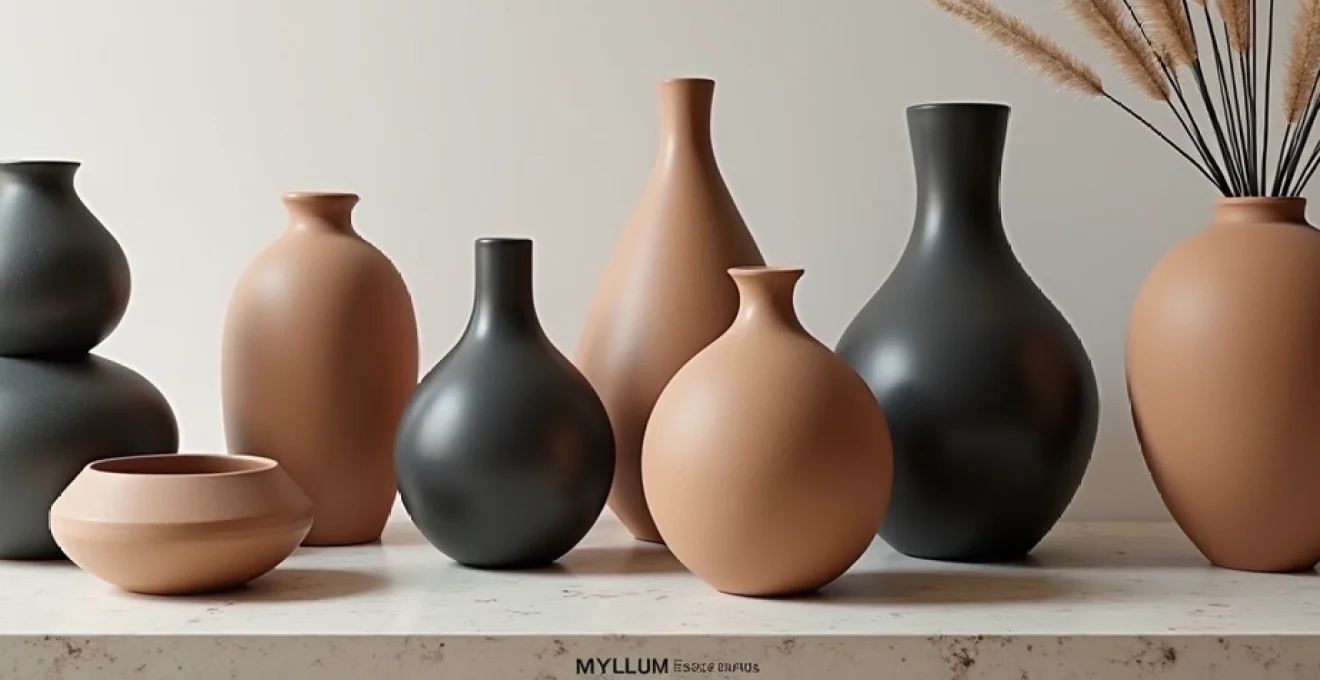
The intersection of functional design and artistic expression has never been more prominent in contemporary interior design than through the use of sculptural vases. These extraordinary vessels transcend their traditional role as mere flower containers, emerging as powerful design statements that can fundamentally transform the visual dynamics of any space. Unlike conventional decorative objects, sculptural vases possess the unique ability to serve dual purposes: they function as practical vessels whilst simultaneously acting as three-dimensional artworks that command attention and spark conversation.
The growing appreciation for sculptural ceramics reflects a broader shift towards personalised, curated interiors where every element contributes to a cohesive aesthetic narrative. Professional interior designers increasingly recognise that sculptural vases offer unparalleled versatility in creating focal points, adding textural interest, and introducing organic forms that soften the hard edges of modern architectural spaces. Whether you’re working with a minimalist Scandinavian palette or embracing maximalist design principles, the right sculptural vessel can elevate your space from merely functional to genuinely inspiring.
Contemporary ceramic sculptural forms in modern interior design
The evolution of ceramic art has reached unprecedented heights in contemporary design, with sculptural vases representing one of the most dynamic categories within this renaissance. Modern ceramic artists and designers are pushing boundaries through innovative forming techniques, experimental glazing processes, and conceptual approaches that challenge traditional vessel forms. This artistic revolution has created a rich marketplace where collectors and interior enthusiasts can discover pieces that function as both practical objects and museum-quality artworks.
The integration of sculptural ceramics into modern interiors requires an understanding of how these pieces interact with surrounding elements. Unlike mass-produced decorative objects, contemporary sculptural vases possess individual character traits that influence spatial dynamics through their unique proportions, surface treatments, and visual weight. The most successful interior applications occur when these vessels are treated as anchor points around which other design elements can be arranged and balanced.
Organic asymmetrical vessels by jonathan adler and kelly wearstler
The influence of renowned designers like Jonathan Adler and Kelly Wearstler has significantly shaped contemporary approaches to organic asymmetrical vessel design. Their philosophies emphasise the beauty found in imperfection and the dynamic energy created through irregular forms. These asymmetrical pieces challenge conventional notions of balance, introducing visual tension that energises interior spaces whilst maintaining sophisticated aesthetic appeal.
Organic asymmetrical vessels work particularly effectively in spaces that embrace biophilic design principles , where the connection to natural forms enhances overall wellbeing. The irregular contours and flowing lines of these pieces echo natural formations found in coastal erosion patterns, wind-carved stone, and organic growth structures. When positioned strategically, these vessels create visual anchors that draw the eye whilst providing textural contrast against linear architectural elements.
Geometric brutalist ceramics inspired by memphis group aesthetics
The resurgence of Memphis Group aesthetics has profoundly influenced contemporary ceramic design, particularly in the creation of geometric brutalist vessels that celebrate bold forms and unexpected colour combinations. These pieces embrace the postmodern principle of form following emotion rather than function, resulting in sculptural objects that provoke strong visual responses and challenge conventional beauty standards.
Geometric brutalist ceramics typically feature angular forms, bold primary colours, and surface treatments that emphasise the material’s inherent plasticity. These vessels work exceptionally well in industrial loft environments, mid-century modern interiors, and contemporary spaces that celebrate architectural boldness. The key to successful integration lies in understanding how their strong geometric presence can be balanced against softer furnishing elements and natural textures.
Handthrown artisanal pottery from japanese Wabi-Sabi tradition
The Japanese concept of wabi-sabi continues to influence contemporary ceramic arts, particularly in the creation of handthrown vessels that celebrate imperfection, impermanence, and incompleteness. These pieces represent a philosophical approach to beauty that finds profound meaning in asymmetry, rough textures, and the visible traces of the maker’s hand. The resulting vessels possess a quiet strength that brings contemplative energy to interior spaces.
Artisanal pottery rooted in wabi-sabi traditions typically features earth-toned glazes, organic forms that reflect the throwing process, and surface treatments that highlight rather than hide the clay’s natural characteristics. These pieces work particularly well in Scandinavian-inspired interiors , zen meditation spaces, and contemporary environments that prioritise authenticity over perfection. The meditative quality of these vessels creates focal points that encourage mindfulness and appreciation for craft traditions.
3d-printed parametric vase structures with algorithmic surface patterns
The integration of digital fabrication technologies has revolutionised ceramic vessel design, enabling the creation of complex parametric structures that would be impossible to achieve through traditional making methods. 3D-printed ceramic vessels represent the cutting edge of contemporary design, where algorithmic surface patterns and mathematically precise forms create visually striking objects that blur the boundaries between craft and technology.
These technologically advanced vessels often feature intricate lattice structures, gradient transitions, and surface textures generated through computational design processes. The resulting pieces possess a futuristic aesthetic that works particularly well in contemporary tech-influenced interiors, minimalist spaces that celebrate precision, and environments where innovation and craftsmanship intersect. The precision of parametric design creates vessels that appear both alien and familiar, challenging viewers to reconsider their relationships with manufactured objects.
Strategic placement techniques for sculptural vessel integration
The strategic placement of sculptural vessels requires careful consideration of spatial relationships, viewing angles, and the interplay between positive and negative space. Professional interior designers understand that these pieces function most effectively when their positioning enhances rather than competes with existing architectural features and furnishing arrangements. The goal is to create harmonious compositions where sculptural vessels serve as visual punctuation marks that guide the eye through carefully orchestrated spatial sequences.
Successful vessel placement also considers the changing quality of natural light throughout the day, ensuring that sculptural forms remain visually engaging under various lighting conditions. The three-dimensional nature of these pieces means they cast shadows and reflect light in ways that can dramatically alter their appearance and impact on surrounding spaces. Understanding these dynamic relationships enables more sophisticated placement decisions that maximise the aesthetic and emotional impact of sculptural ceramics.
Negative space utilisation in minimalist scandinavian interiors
The Scandinavian design philosophy emphasises the importance of negative space as an active design element, creating breathing room that allows individual objects to be fully appreciated. When integrating sculptural vessels into minimalist interiors, the surrounding empty space becomes as important as the object itself. This approach requires restraint and careful consideration of proportional relationships between vessels, furniture, and architectural elements.
Effective negative space utilisation involves understanding how visual weight distributes across a room and using sculptural vessels as strategic counterbalances to heavier furnishing elements. A single, carefully chosen vessel positioned against a clean white wall can create more visual impact than multiple objects clustered together. The key lies in allowing each piece sufficient space to establish its own presence whilst contributing to the overall compositional harmony of the interior.
Focal point creation through scale contrast and visual weight distribution
Creating effective focal points with sculptural vessels requires an understanding of how scale relationships influence visual hierarchy within interior spaces. Large-scale vessels naturally command attention and can anchor entire room compositions, whilst smaller pieces function more effectively when grouped or positioned to complement existing focal points. The principle of scale contrast suggests that dramatic size differences create more dynamic visual relationships than gradual size progressions.
Visual weight distribution involves balancing the perceived heaviness of sculptural vessels against other elements in the room. Dark colours, complex textures, and bold forms carry more visual weight than light colours, smooth surfaces, and simple geometries. Successful focal point creation requires careful orchestration of these variables to ensure that sculptural vessels enhance rather than overwhelm the overall interior composition. The most effective arrangements create visual tension that energises the space whilst maintaining overall balance and harmony.
Layered depth composition using foreground and background object relationships
Creating visual depth through layered compositions transforms flat interior spaces into dynamic environments that encourage exploration and discovery. Sculptural vessels excel in these arrangements due to their three-dimensional forms and varied surface treatments that interact differently with foreground and background elements. The principle of atmospheric perspective suggests that objects with stronger contrast and sharper details appear closer, whilst softer, more muted pieces recede into the background.
Successful layered compositions utilise sculptural vessels at multiple depths within the viewing field, creating visual pathways that guide the eye through carefully orchestrated sequences. This technique works particularly well when vessels of different scales and surface treatments are positioned to create overlapping silhouettes and intersecting sight lines. The resulting compositions possess a cinematic quality that transforms static interior spaces into engaging visual narratives.
Lighting interaction with textured ceramic surfaces and shadow casting
The interaction between lighting and sculptural ceramic surfaces creates opportunities for dramatic visual effects that change throughout the day. Textured surfaces respond differently to various lighting angles, revealing surface details that may be invisible under flat, even illumination. Understanding these relationships enables more sophisticated placement decisions that maximise the visual impact of sculptural vessels under both natural and artificial lighting conditions.
Strategic lighting can transform sculptural vessels from static objects into dynamic elements that evolve with changing conditions. Directional spotlighting can emphasise surface textures and create dramatic shadow patterns, whilst diffused ambient lighting reveals subtle colour variations and glaze characteristics. The most successful installations consider how these lighting relationships contribute to the overall atmosphere and emotional impact of the interior space. Professional lighting designers often use sculptural ceramics as focal points around which entire lighting schemes are developed.
Material composition and surface treatment technologies
The technical aspects of ceramic material composition and surface treatment technologies play crucial roles in determining the final aesthetic and functional characteristics of sculptural vessels. Contemporary ceramic artists have access to an unprecedented range of clay bodies, glaze formulations, and firing techniques that enable the creation of surfaces and forms that were previously impossible to achieve. Understanding these technical foundations enhances appreciation for the craftsmanship involved and informs more sophisticated selection criteria when choosing pieces for interior applications.
Modern ceramic technology encompasses traditional earthenware, stoneware, and porcelain bodies alongside innovative composite materials that incorporate recycled content, sustainable sourcing, and enhanced performance characteristics. Surface treatments range from traditional glazing techniques passed down through generations to cutting-edge nanotechnology applications that create self-cleaning surfaces and responsive colour-changing effects. This technical diversity provides interior designers and collectors with virtually unlimited options for achieving specific aesthetic and functional objectives.
The firing process fundamentally affects both the structural integrity and aesthetic characteristics of sculptural vessels. High-fire stoneware and porcelain bodies offer superior durability and can support complex glazing effects, whilst low-fire earthenware provides greater colour saturation and surface texture possibilities. Alternative firing methods such as raku , saggar firing, and wood firing create unique surface effects that cannot be replicated through conventional electric or gas kiln firing. These technical considerations directly impact the suitability of different pieces for various interior environments and functional requirements.
Contemporary surface treatment technologies also include innovative approaches such as laser engraving, digital printing on ceramic surfaces, and the integration of electronic components for interactive effects. These technological advances expand the possibilities for sculptural vessels that respond to environmental conditions, incorporate lighting elements, or display dynamic visual content. The intersection of traditional ceramic techniques with digital technologies creates opportunities for entirely new categories of sculptural objects that blur the boundaries between craft, technology, and fine art.
Colour psychology and glaze chemistry in vessel selection
The psychological impact of colour in interior environments has been extensively documented, and sculptural vessels offer powerful opportunities to introduce specific colour influences in concentrated, artistic forms. Unlike painted surfaces or textile applications, ceramic glazes create colour through complex chemical processes that result in unique visual characteristics including depth, luminosity, and surface texture variations that cannot be achieved through other mediums. Understanding these relationships enables more sophisticated colour selection strategies that enhance both aesthetic appeal and emotional wellbeing.
Glaze chemistry involves the careful balance of silica, alumina, and flux materials that determine how colours develop during the firing process. Metal oxides create specific colour ranges, but their final appearance depends on firing temperature, atmosphere conditions, and interaction with other glaze components. This complexity means that ceramic colours possess unique characteristics that change under different lighting conditions and viewing angles, creating dynamic visual effects that enhance interior environments throughout the day.
Celadon and tenmoku glazing techniques for sophisticated palette integration
Traditional East Asian glazing techniques such as celadon and tenmoku continue to influence contemporary ceramic arts due to their sophisticated colour palettes and subtle surface characteristics. Celadon glazes create soft, jade-like colours ranging from pale green to deep sea blue, with subtle variations that reflect the underlying clay body and firing conditions. These glazes work exceptionally well in sophisticated interior palettes that emphasise natural materials and restrained colour schemes.
Tenmoku glazes produce rich, dark surfaces with metallic highlights and subtle colour variations that create visual depth and mystery. Originally developed in Chinese ceramic traditions, these glazes have been adapted by contemporary artists to create vessels that function as meditative focal points in interior spaces. The dark, reflective surfaces of tenmoku glazes make them particularly effective in environments where dramatic contrast and visual weight are desired to balance lighter furnishing elements.
Matte black ceramic finishes in industrial loft environments
The popularity of matte black ceramic finishes reflects broader trends towards industrial aesthetics and the appreciation for surfaces that absorb rather than reflect light. These finishes create vessels with strong visual presence that function effectively as anchor points in loft environments characterised by exposed brick, steel, and concrete surfaces. Unlike glossy black glazes, matte finishes eliminate distracting reflections and create surfaces that appear to absorb light, resulting in forms that seem to emerge from shadow.
Matte black ceramic surfaces work particularly well in monochromatic interior schemes where textural variation provides visual interest without colour distraction. These pieces can serve as sophisticated counterpoints to metallic finishes and natural materials whilst maintaining the restrained palette that defines contemporary industrial aesthetics. The challenge lies in preventing these dark surfaces from appearing as visual holes in the composition, which requires careful consideration of lighting and surrounding surface treatments.
Reactive glaze applications creating unique surface variations
Reactive glazes create unpredictable surface effects through chemical interactions during the firing process, resulting in vessels with unique characteristics that cannot be exactly replicated. These glazes often incorporate materials such as copper carbonate, rutile, or iron oxide that respond to firing atmosphere and temperature variations by creating dramatic colour breaks, metallic effects, and textural variations across the vessel surface.
The unpredictable nature of reactive glazes means that each vessel possesses individual character traits that make it truly unique. This individuality appeals to collectors and interior designers who value objects that cannot be mass-produced and possess inherent artistic merit. Crystalline glazes , copper red reductions, and oil spot effects represent some of the most striking examples of reactive glaze applications that create vessels suitable for the most sophisticated interior environments.
Scale proportionality and spatial harmony principles
The relationship between vessel scale and interior proportions fundamentally determines the success of sculptural ceramic integration within residential and commercial spaces. Professional interior designers rely on established proportional systems derived from classical architecture and contemporary spatial theory to ensure that sculptural objects enhance rather than overwhelm their environments. The golden ratio, modular proportional systems, and anthropometric scaling principles provide frameworks for making informed decisions about vessel selection and placement.
Spatial harmony emerges when sculptural vessels are appropriately scaled to their immediate surroundings whilst contributing to the overall compositional balance of the room. This requires consideration of ceiling heights, furniture proportions, and the visual weight of surrounding elements. A vessel that appears perfectly scaled in a showroom may overwhelm a smaller residential interior or disappear entirely within a large commercial space. Understanding these relationships enables more confident selection decisions and more successful integration outcomes.
The principle of proportional progression suggests that collections of vessels work most effectively when their size relationships follow mathematical progressions rather than arbitrary selections. This might involve grouping vessels in sizes that progress according to the golden ratio, creating visual rhythms that feel natural and harmonious. Alternatively, dramatic scale contrasts can create dynamic tension that energises interior spaces, but these approaches require careful balance to avoid visual chaos or compositional instability.
Contemporary research in environmental psychology demonstrates that appropriately scaled objects contribute to positive emotional responses and enhanced sense of spatial comfort. Vessels that are too large for their contexts can create feelings of claustrophobia or displacement, whilst pieces that are too small may appear insignificant and contribute to visual clutter. The most successful installations achieve a balance where sculptural vessels feel perfectly suited to their environments, as if they were designed specifically for their placement locations.
Investment value and collectible ceramic art market trends
The contemporary ceramic art market has experienced unprecedented growth over the past decade, with sculptural vessels representing one of the most dynamic collecting categories. Major auction houses now regularly feature ceramic works alongside traditional fine art categories, and established galleries are dedicating increasing exhibition space to ceramic arts. This market evolution
reflects broader cultural shifts towards valuing handcrafted objects and individual artistic expression. The emergence of ceramic art as a legitimate investment category has created new opportunities for collectors whilst simultaneously elevating the status of functional ceramic objects within fine art contexts.
Market analysis indicates that works by established ceramic artists have demonstrated consistent appreciation rates that often exceed traditional investment vehicles. Pieces by renowned artists such as Betty Woodman, Ken Price, and Peter Voulkos have achieved record auction prices, establishing precedents for contemporary sculptural vessels. The market’s growing sophistication has also created opportunities for emerging artists whose innovative approaches to form, surface, and concept position their works for future appreciation.
The investment potential of sculptural vessels depends on several key factors including artist reputation, technical excellence, conceptual innovation, and rarity within the artist’s body of work. Limited edition pieces and unique works command premium prices, particularly when accompanied by comprehensive provenance documentation and exhibition histories. Collectors increasingly seek vessels that demonstrate both aesthetic merit and historical significance within the broader context of contemporary ceramic arts development.
Contemporary market trends indicate growing international interest in ceramic arts, with Asian collectors driving significant price increases for both historical and contemporary works. The integration of digital platforms has democratised access to ceramic art markets, enabling collectors worldwide to discover and acquire significant pieces directly from artists and galleries. This global accessibility has contributed to more dynamic pricing structures and increased market liquidity for high-quality sculptural vessels.
The institutional recognition of ceramic arts has further strengthened investment potential through museum acquisitions, scholarly publications, and major exhibition programming. When museums acquire works by ceramic artists, they validate the artistic significance of those pieces and often drive increased collector interest in related works. The establishment of dedicated ceramic art departments at major institutions signals the medium’s evolution from craft to fine art, creating more stable market conditions for serious collectors.
Professional art advisors now regularly recommend ceramic works as portfolio diversification strategies, particularly for collectors interested in supporting contemporary making traditions whilst building wealth. The physical durability of ceramic materials provides additional security compared to more fragile mediums, whilst the functional aspects of sculptural vessels offer enjoyment benefits that purely aesthetic artworks cannot provide. This combination of practical utility and investment potential makes sculptural vessels particularly attractive to sophisticated collectors who value objects that enhance daily life whilst appreciating in value.
Market projections suggest continued growth in ceramic art appreciation, driven by increasing global wealth, growing appreciation for handmade objects, and the recognition of ceramic arts within contemporary art discourse. The limited supply of significant historical pieces ensures that contemporary works by established artists will likely experience continued appreciation as new collectors enter the market. However, investment success requires careful selection based on artistic merit rather than speculative trends, emphasising the importance of developing sophisticated aesthetic judgment alongside market knowledge.