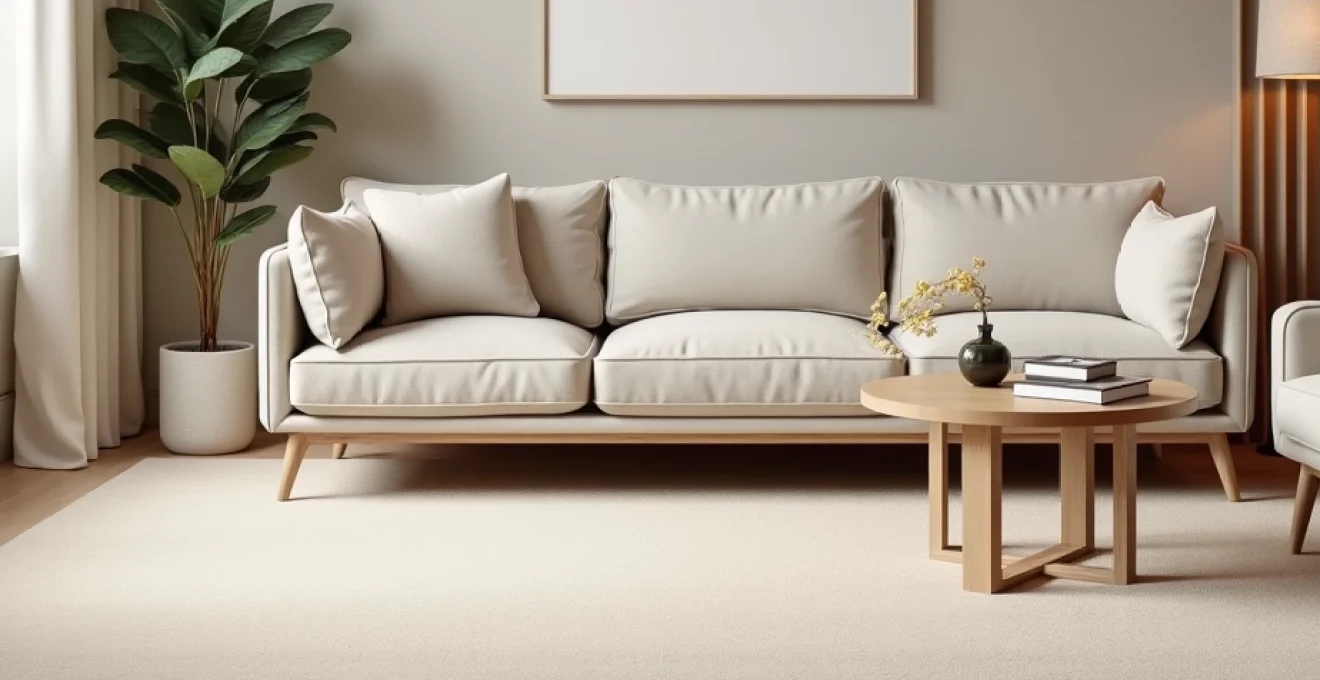
In the ever-evolving landscape of interior design, plain rugs have emerged as the unsung heroes of sophisticated spaces. These understated foundation pieces possess an remarkable ability to transform chaotic environments into serene sanctuaries, where visual noise gives way to purposeful tranquillity. Far from being merely neutral background elements, plain rugs serve as powerful design tools that anchor entire room compositions while allowing other decorative elements to shine without competition.
The growing appreciation for minimalist aesthetics has elevated plain rugs from simple floor coverings to essential components of contemporary interior architecture. Their clean lines and unadorned surfaces create breathing room within busy modern lives, offering visual respite that promotes mental clarity and emotional wellbeing. When strategically selected and positioned, these seemingly simple textiles become the cornerstone of balanced design schemes that feel both intentional and effortlessly elegant.
Colour psychology and visual weight distribution in plain rug design
The psychological impact of colour in interior spaces cannot be overstated, particularly when it comes to large-surface elements like rugs that command significant visual attention. Plain rugs harness the power of chromatic simplicity to influence mood, perception of space, and overall atmospheric quality within a room. Research conducted by environmental psychology institutes demonstrates that solid colours create more predictable emotional responses than complex patterns, making plain rugs invaluable tools for achieving specific psychological outcomes in interior environments.
Visual weight distribution becomes particularly crucial when working with plain surfaces, as the absence of pattern places greater emphasis on colour intensity and saturation levels. Darker hues naturally carry more visual weight, anchoring spaces and creating a sense of grounding, while lighter tones appear to recede, opening up spaces and enhancing the perception of airiness. This fundamental principle allows designers to manipulate spatial perception through strategic colour selection, using plain rugs as primary vehicles for achieving desired visual balance.
Neutral palette theory: how beige, grey, and cream foundations anchor interior schemes
The triumvirate of beige, grey, and cream represents the most sophisticated approach to neutral foundation design, offering subtle variations that prevent monotony while maintaining visual cohesion. Beige undertones bring warmth and earthiness to spaces, particularly beneficial in rooms with abundant natural light where cooler surfaces might feel stark. These sandy hues work exceptionally well in transitional spaces, bridging the gap between traditional comfort and contemporary sophistication.
Grey foundations provide the ultimate versatility, serving as chameleon-like backdrops that adapt to surrounding elements while maintaining their own quiet dignity. Cool greys complement industrial and modern aesthetics, while warmer charcoal tones add depth without overwhelming delicate colour schemes. Cream-based rugs offer the perfect compromise between pure white’s potential starkness and beige’s warmer personality, creating luminous foundations that enhance natural lighting while remaining practical for everyday living.
Monochromatic colour blocking techniques for enhanced spatial perception
Monochromatic colour blocking using plain rugs creates sophisticated visual layering that enhances spatial perception without relying on pattern complexity. This technique involves selecting rugs in varying saturations of the same colour family, creating subtle tonal shifts that add dimensional interest while maintaining overall harmony. Deep navy rugs paired with lighter blue-grey wall treatments exemplify this approach, creating rooms that feel cohesive yet dynamic.
The strategic use of monochromatic blocking can significantly alter room proportions, with darker floor treatments making spaces feel more intimate and grounded, while lighter tones expand perceived boundaries. Professional interior designers often employ this technique in open-plan environments, using tonal variations to subtly define different functional zones without creating visual fragmentation or disrupting natural flow patterns.
Chromatic temperature balance: cool vs warm undertones in plain textiles
Understanding chromatic temperature becomes essential when selecting plain rugs, as undertones significantly impact the overall atmospheric quality of interior spaces. Cool undertones, including blue-based greys and silver-toned beiges, create calming environments that feel refreshing and expansive. These selections work particularly well in south-facing rooms where abundant natural light might otherwise create overly warm atmospheres.
Warm undertones, encompassing golden beiges, taupe variations, and cream selections with yellow or pink influences, foster cosy and inviting atmospheres that feel nurturing and comfortable. The key lies in achieving balance between natural lighting conditions and desired emotional responses, ensuring that chromatic temperatures complement rather than compete with existing architectural elements and natural light patterns throughout different times of day.
Visual hierarchy establishment through tonal contrast ratios
Establishing visual hierarchy through tonal contrast ratios requires careful consideration of how plain rug selections interact with surrounding surfaces and furnishings. The 60-30-10 rule applies particularly well to plain rug integration, where the rug often serves as either the dominant 60% foundation or the substantial 30% supporting element within overall colour schemes.
Effective contrast ratios prevent visual flatness while maintaining the serene quality that makes plain rugs so appealing. Light rugs against medium-toned flooring create gentle definition, while bold contrasts between dark rugs and light walls establish dramatic focal points that ground entire room compositions. The most successful implementations achieve sufficient contrast to create visual interest without sacrificing the peaceful atmosphere that plain surfaces naturally provide.
Texture and material properties: wool, jute, and synthetic fibre performance
Material selection forms the foundation of plain rug performance, influencing everything from tactile comfort to long-term durability and maintenance requirements. The absence of pattern in plain rugs places greater emphasis on surface texture and fibre quality, as these elements become the primary sources of visual and tactile interest. Understanding the specific properties and performance characteristics of different materials enables informed decisions that balance aesthetic goals with practical considerations.
Natural fibres continue to dominate high-end plain rug construction, offering superior comfort, durability, and environmental sustainability compared to many synthetic alternatives. However, modern synthetic materials have achieved remarkable improvements in both performance and aesthetic quality, making them viable alternatives for specific applications where natural fibres might prove impractical or cost-prohibitive.
Hand-knotted wool construction: dense pile height impact on acoustic dampening
Hand-knotted wool construction represents the pinnacle of plain rug craftsmanship, offering unparalleled durability and luxurious tactile experiences. Dense pile heights, typically ranging from 8mm to 15mm in premium constructions, provide exceptional acoustic dampening properties that significantly reduce sound transmission between floors and improve overall room acoustics. This becomes particularly valuable in multi-story residences or urban environments where noise control contributes significantly to living comfort.
The natural crimp in wool fibres creates millions of tiny air pockets within the rug structure, enhancing both thermal insulation and sound absorption capabilities. Premium wool plain rugs with pile densities exceeding 200 knots per square inch offer superior performance longevity, maintaining their appearance and structural integrity for decades with proper care and maintenance protocols.
Flatweave jute durability: natural fibre tensile strength in High-Traffic applications
Flatweave jute construction offers exceptional durability for high-traffic applications while maintaining the natural aesthetic qualities that complement plain design philosophies. Jute fibres possess remarkable tensile strength, with breaking points often exceeding those of many synthetic alternatives when properly processed and woven. This natural strength makes jute flatweaves particularly suitable for hallways, entryways, and other areas subject to frequent foot traffic.
The naturally occurring variations in jute fibre colour and thickness create subtle textural interest that prevents plain jute rugs from appearing monotonous or sterile. These organic variations, combined with the fibre’s natural golden hue, bring warmth and earthiness to contemporary interiors while maintaining the clean, uncluttered aesthetic that defines successful minimalist design approaches.
Polypropylene and polyester blends: stain resistance and UV stability metrics
Modern polypropylene and polyester blends have revolutionised synthetic rug manufacturing, achieving stain resistance levels that exceed 95% effectiveness against common household spills and UV stability ratings that prevent colour fading for over a decade under normal indoor lighting conditions. These performance characteristics make synthetic plain rugs particularly attractive for households with children, pets, or high entertainment activity levels.
Solution-dyed synthetic fibres demonstrate superior colour fastness compared to post-dyed alternatives, maintaining their appearance integrity throughout extended use periods. Advanced manufacturing techniques now produce synthetic plain rugs with tactile qualities that closely approximate natural fibre comfort levels while offering significantly reduced maintenance requirements and enhanced stain resistance capabilities.
Loop pile vs cut pile construction: surface texture influence on light reflection
Loop pile construction creates uniform surface textures that reflect light consistently across the entire rug surface, producing even illumination that enhances the serene qualities inherent in plain rug designs. This construction method works particularly well in rooms with multiple light sources, as the consistent surface prevents the creation of distracting light and shadow patterns that might compromise the peaceful atmosphere.
Cut pile construction offers softer tactile experiences and creates subtle surface variations that add visual depth without relying on colour or pattern complexity. The way cut fibres catch and reflect light creates gentle textural interest that changes throughout the day as natural lighting conditions shift, providing dynamic visual elements that maintain interest without disrupting overall design harmony.
Spatial proportion calculations and room scale optimisation
Achieving optimal spatial proportions requires mathematical precision combined with intuitive understanding of how different rug sizes impact room perception and functionality. The relationship between rug dimensions and room scale directly influences atmospheric quality, traffic flow patterns, and overall design success. Professional interior designers rely on established proportion guidelines while adapting these principles to accommodate specific architectural features and functional requirements.
Room scale optimisation extends beyond simple measurement calculations to encompass furniture relationships, traffic patterns, and visual weight distribution. Plain rugs, with their emphasis on colour and texture rather than pattern, require particular attention to sizing decisions, as proportional errors become more apparent when surface decoration cannot distract from fundamental spatial relationships.
Golden ratio applications: 8×10 and 9×12 rug sizing for standard living spaces
The golden ratio principle, approximately 1.618:1, provides mathematical foundations for rug sizing decisions that create inherently pleasing spatial relationships. Standard 8×10 and 9×12 rug dimensions align closely with golden ratio proportions, making them optimal choices for typical living room configurations measuring between 12×16 and 14×18 feet respectively.
These standardised dimensions accommodate most furniture arrangements while maintaining appropriate border spaces that prevent rooms from feeling cramped or oversized rugs from overwhelming spatial proportions. The mathematical harmony inherent in golden ratio proportions contributes to the calming effect that well-proportioned plain rugs bring to interior environments, creating subconscious feelings of balance and rightness that enhance overall atmospheric quality.
Furniture placement geometry: front leg positioning on rug perimeters
Strategic furniture placement geometry ensures that plain rugs properly anchor seating arrangements while maintaining visual cohesion and functional accessibility. The front legs of primary seating pieces should rest on rug surfaces, creating physical and visual connections that unify furniture groupings. This positioning technique works particularly well with plain rugs, as the absence of pattern eliminates concerns about disrupting decorative motifs.
Optimal placement positions allow for natural conversation angles while ensuring that all seating participants feel included within the defined space. Coffee tables should be completely positioned on rug surfaces when possible, with at least 36 inches of rug extending beyond table edges to accommodate movement and maintain proper scale relationships throughout the seating arrangement.
Traffic flow patterns: maintaining 18-inch walkway clearances around rug edges
Maintaining minimum 18-inch walkway clearances around rug perimeters ensures comfortable navigation while preventing the rug from appearing to float awkwardly within the room space. These clearances become particularly important in open-plan environments where traffic patterns intersect with multiple functional zones, requiring careful consideration of how rug placement impacts natural movement flows.
Plain rugs benefit from generous border treatments that allow their calming influence to extend throughout the room without creating physical or visual barriers. Adequate clearances also prevent wear patterns from developing along rug edges, maintaining appearance integrity and extending useful life spans throughout extended use periods.
Ceiling height correlation: Low-Profile rug selection for rooms under 8 feet
Rooms with ceiling heights under 8 feet require careful consideration of rug pile height and visual weight to prevent spaces from feeling compressed or oppressive. Low-profile constructions, typically under 10mm in total thickness, maintain appropriate scale relationships while providing necessary comfort and acoustic benefits without overwhelming limited vertical space.
Light-coloured plain rugs work particularly well in lower-ceiling environments, as their reflective properties help bounce natural light upward, creating the illusion of greater vertical space. The absence of busy patterns further contributes to spatial openness, allowing the eye to move freely without encountering visual obstacles that might emphasise spatial limitations.
Scandinavian and japanese minimalist design integration
The convergence of Scandinavian hygge principles and Japanese wabi-sabi aesthetics has created a global appreciation for design philosophies that celebrate simplicity, functionality, and natural beauty. Plain rugs serve as essential elements in both traditions, providing foundations that support rather than compete with carefully curated furnishings and architectural features. These design approaches emphasise quality over quantity, encouraging investment in superior materials and construction techniques that enhance daily living experiences.
Scandinavian design integration focuses on creating bright, airy environments that combat long winter months while maintaining connection to natural elements. Plain rugs in light natural tones complement blonde wood finishes and white-painted surfaces, creating cohesive environments that feel fresh and inviting. The emphasis on functionality ensures that rug selections prioritise comfort and durability while maintaining aesthetic appeal.
Japanese minimalist principles encourage contemplative spaces that promote mindfulness and inner peace. Plain rugs support these goals by eliminating visual distractions that might interfere with meditative practices or quiet reflection. The concept of ma , or negative space, becomes particularly relevant when selecting plain rugs that create breathing room within carefully composed interiors.
Both design traditions share common values regarding craftsmanship quality and material authenticity. Hand-woven plain rugs using natural fibres align perfectly with these philosophies, offering tangible connections to traditional making processes while supporting sustainable production methods. The resulting interiors feel grounded in human experience while maintaining contemporary relevance and functionality.
The most profound spaces are often the simplest, where every element serves multiple purposes and contributes to an overall sense of harmony and wellbeing.
Integration techniques include layering plain rugs with natural wood furniture, incorporating ceramic and stone accessories, and maintaining neutral colour palettes that emphasise texture over decoration. These approaches create timeless environments that remain relevant regardless of changing fashion trends, offering long-term value that justifies initial investment in quality materials and construction.
Maintenance protocols and longevity preservation techniques
Implementing comprehensive maintenance protocols significantly extends plain rug lifespans while preserving appearance quality and performance characteristics throughout years of regular use. The absence of pattern in plain rugs makes proper maintenance even more critical, as wear patterns, stains, or colour variations become immediately apparent on uniform surfaces. Professional-grade maintenance approaches combine preventive measures with reactive treatments that address specific issues before they compromise overall rug integrity.
Regular maintenance schedules should include weekly vacuuming using appropriate suction settings for specific pile heights and construction types. Natural fibre rugs require gentler handling than synthetic alternatives, with brush attachments used sparingly to prevent pile disturbance that might create permanent texture variations. Rotation protocols, implemented every three to six months, ensure even wear distribution and prevent the development of permanent traffic patterns that compromise visual uniformity.
Professional cleaning services become essential for maintaining natural fibre plain rugs, particularly wool and silk constructions that require specialised knowledge and equipment. Annual professional cleaning maintains appearance standards while addressing embedded soil and allergen accumulation that regular vacuuming cannot eliminate. The investment in professional maintenance pays dividends through extended useful life and preserved appearance quality.
Proper maintenance transforms a rug from a disposable decorative element into a treasured heirloom that improves with age and care.
Spot cleaning protocols require immediate attention to spills and stains, using appropriate cleaning solutions for specific fibre types and stain compositions. Natural cleaning solutions often prove most effective for wool and other natural fibres, while synthetic materials may tolerate stronger chemical treatments when necessary. Testing cleaning solutions on inconspicuous areas prevents unexpected colour bleeding or texture damage that might require professional restoration services.
Environmental factors including humidity control, direct sunlight exposure, and temperature fluctuations significantly impact rug longevity and appearance retention. Proper environmental management includes using window treatments to filter UV radiation, maintaining consistent humidity levels between 30-50%, and avoiding placement near heating or cooling sources that create temperature extremes. These preventive measures cost nothing to implement but provide substantial protection against premature aging and deterioration.
Cost-per-square-metre analysis: budget allocation for interior design projects
Understanding the cost-per-square-metre economics of plain rug investments enables informed budget allocation decisions that balance initial expenditure with long-term value retention. Premium hand-knotted wool plain rugs typically range from £180 to £450 per square metre, while high-quality machine-made alternatives offer comparable aesthetic results at £45 to £120 per square metre. These price differentials reflect manufacturing complexity, material quality, and expected lifespan rather than purely aesthetic considerations.
Budget allocation strategies should consider total cost of ownership, including initial purchase price, maintenance requirements, and replacement frequency over projected use periods. A £2,000 hand-knotted wool plain rug with a 20-year lifespan represents superior value compared to multiple £400 synthetic replacements required over the same timeframe. Professional interior designers typically allocate 8-12% of total room budgets to foundational rug selections, recognising their crucial role in establishing successful design schemes.
Regional pricing variations reflect local manufacturing capabilities, import duties, and market demand patterns. European hand-woven plain rugs command premium pricing due to superior labour standards and environmental regulations, while South Asian alternatives offer exceptional value through established manufacturing expertise and competitive labour costs. Understanding these market dynamics enables strategic purchasing decisions that maximise design impact within available budget parameters.
The most expensive rug is often the cheapest one you buy, when measured against years of satisfaction and avoided replacement costs.
Investment-grade plain rugs appreciate in value over time, particularly hand-knotted constructions from recognised weaving regions. Antique and vintage plain rugs from established manufacturers often command higher prices than their original retail values, making quality rug purchases potential investment opportunities that provide aesthetic benefits while preserving capital value. This dual-purpose functionality justifies higher initial expenditures for discerning buyers who appreciate both design excellence and financial prudence.
Cost-benefit analysis should incorporate intangible benefits including improved acoustic comfort, enhanced thermal insulation, and psychological wellbeing contributions that quality plain rugs provide. These factors, while difficult to quantify financially, represent substantial value additions that justify premium pricing for superior materials and construction techniques. The resulting environments support productivity, relaxation, and overall life satisfaction in ways that extend far beyond simple floor covering functionality.