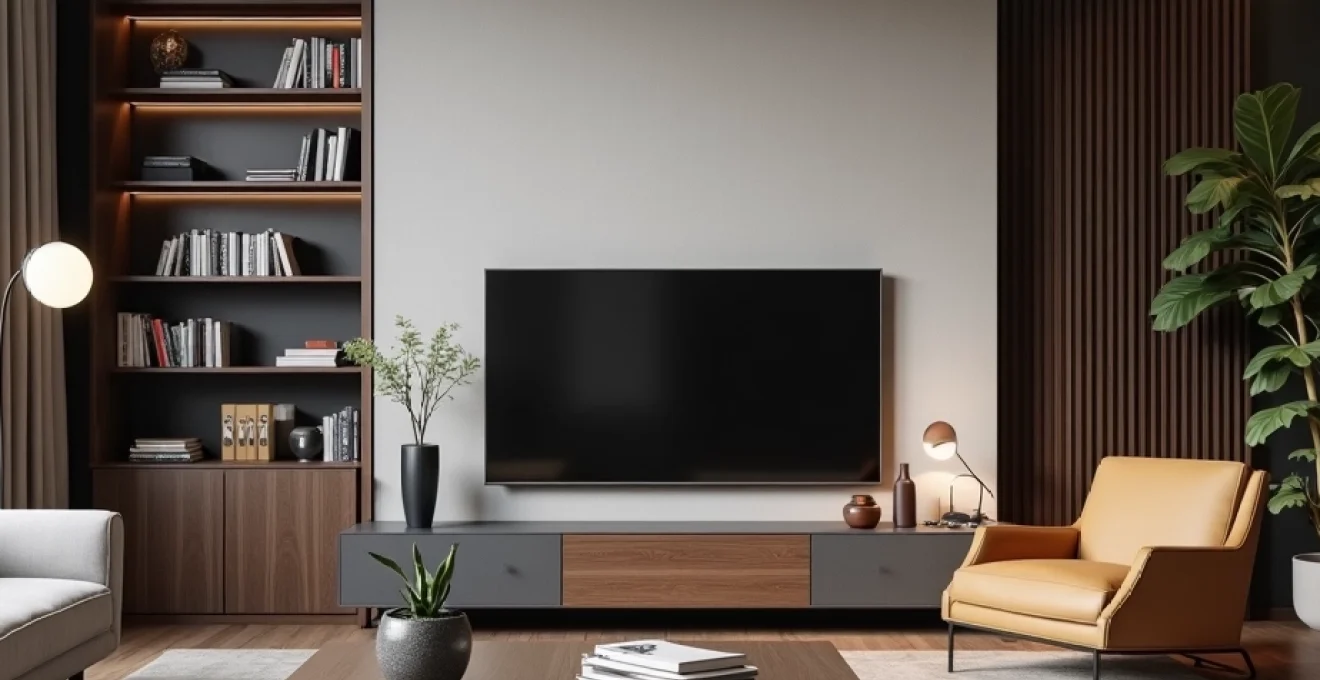
Metal accent pieces have emerged as the defining element of contemporary interior design, transforming ordinary spaces into sophisticated sanctuaries that reflect modern sensibilities. The strategic integration of metallic elements creates visual depth, introduces textural contrast, and establishes a sense of refined luxury that transcends traditional decorating boundaries. From the warm patina of aged copper to the sleek sophistication of brushed steel, metal accents serve as both functional components and artistic statements that elevate every room they inhabit.
The current fascination with metallic finishes represents more than a fleeting trend; it reflects our collective desire for materials that embody both durability and beauty. Modern homeowners increasingly seek design solutions that balance industrial strength with aesthetic appeal , creating spaces that feel both grounded and aspirational. Metal accents deliver this perfect equilibrium, offering surfaces that catch and reflect light whilst maintaining their structural integrity for years to come.
Strategic placement techniques for metal accents in contemporary interior architecture
The art of incorporating metal accents into contemporary living spaces requires a sophisticated understanding of spatial relationships and visual hierarchy. Strategic placement transforms random metallic elements into a cohesive design narrative that guides the eye through carefully orchestrated moments of brilliance. Consider how natural light interacts with metallic surfaces throughout the day—morning sunlight streaming across a brass console table creates entirely different shadows and reflections than the warm glow of evening illumination.
Balance becomes paramount when distributing metal accents across a room’s architecture. Rather than clustering metallic elements in one corner, successful designers create a triangular placement pattern that establishes visual equilibrium. A chrome floor lamp anchoring one corner might be balanced by brushed steel cabinet hardware on the opposite wall, with a copper pendant light serving as the third point of this invisible triangle. This technique prevents the space from feeling weighted towards one particular area whilst ensuring every sight line includes metallic interest.
Focal point creation using copper and brass statement fixtures
Copper and brass fixtures possess an inherent warmth that makes them exceptional choices for creating commanding focal points within contemporary interiors. Their rich, honeyed tones naturally draw attention whilst complementing a wide spectrum of colour palettes, from cool greys to warm terracotta shades. A large brass chandelier suspended above a dining table doesn’t merely provide illumination—it transforms the entire room into a stage where the fixture serves as the starring performer.
The key to successful focal point creation lies in understanding scale relationships. A statement copper range hood in a kitchen requires supporting elements that enhance rather than compete with its presence . Consider pairing such dramatic pieces with smaller brass accents—cabinet knobs, tap fixtures, or decorative bowls—that echo the material whilst maintaining visual hierarchy. This approach creates what designers call “metallic conversation,” where different pieces of the same metal family communicate across the space.
Layered metal integration through tom dixon and west elm collections
Contemporary furniture collections from designers like Tom Dixon demonstrate the sophisticated approach to layered metal integration that defines modern styling. Their pieces showcase how multiple metallic finishes can coexist harmoniously when united by consistent design principles. A Tom Dixon Melt pendant light’s reflective chrome surface might be paired with West Elm’s brass-framed mirrors, creating depth through material variation whilst maintaining stylistic coherence.
The layering process requires careful attention to finish compatibility and visual weight distribution. Polished surfaces reflect more light and appear visually lighter, making them suitable for upper placement in a room’s hierarchy. Matte or oxidised finishes absorb light and feel more substantial, positioning them naturally as grounding elements. This interplay between reflective and absorptive metallic surfaces creates dimensional complexity that transforms flat spaces into dynamic environments .
Visual weight distribution principles for brushed steel elements
Brushed steel elements occupy a unique position in the metallic spectrum, offering substantial visual presence without overwhelming delicate design schemes. Their subtle texture catches light differently than polished surfaces, creating gentle highlights that add interest without distraction. Understanding how brushed steel affects visual weight distribution enables designers to create balanced compositions that feel both sophisticated and approachable.
The linear grain pattern inherent in brushed steel surfaces introduces directional energy that can be leveraged to guide visual flow. Horizontal brushing on appliance surfaces creates calm, grounding lines that anchor a space, whilst vertical brushing on decorative panels draws the eye upward, emphasising ceiling height. Strategic orientation of brushed finishes allows designers to manipulate perceived proportions and create desired atmospheric effects .
Geometric pattern enhancement with hexagonal and linear metal designs
Geometric metal designs serve as powerful tools for introducing pattern and rhythm into contemporary interiors without relying on traditional textile approaches. Hexagonal metal tiles, linear brass inlays, and repetitive perforation patterns create visual texture that adds sophistication whilst maintaining the clean lines essential to modern design. These geometric applications work particularly well in transition spaces—hallways, entryways, and staircases—where they can be appreciated from multiple angles.
The mathematics of geometric metal patterns requires careful consideration of scale relationships and repetition intervals. Too small a pattern reads as texture rather than design element, whilst overly large patterns can overwhelm intimate spaces . The golden ratio often provides guidance for pattern sizing, ensuring that geometric metal elements feel proportionally correct within their architectural context whilst maintaining visual interest across viewing distances.
Material science and finish selection for modern metal décor elements
Understanding the material science behind metallic finishes empowers homeowners to make informed decisions that balance aesthetic preferences with practical requirements. Different metals exhibit varying responses to environmental conditions, with some developing beautiful patina over time whilst others maintain their original appearance indefinitely. The choice between copper’s evolving character and stainless steel’s consistency reflects deeper philosophical approaches to design permanence .
Surface treatments dramatically alter both the appearance and performance characteristics of base metals. A single piece of steel can be transformed through powder coating, electroplating, or oxidation processes to achieve radically different aesthetic effects whilst maintaining its structural properties. These finishing options allow designers to specify exactly the right visual impact for each application, whether seeking subtle integration or dramatic contrast within the broader design scheme.
Patina development processes in aged copper accent pieces
Copper’s natural patina development represents one of nature’s most beautiful finishing processes, transforming bright metallic surfaces into rich, complex colour palettes that evolve continuously over time. The patination process involves copper’s reaction with atmospheric elements—oxygen, moisture, and various compounds—creating the distinctive blue-green verdigris that graces historic architecture worldwide. Understanding this process enables designers to either accelerate patina formation for immediate effect or select pre-patinated pieces for predictable results.
Controlled patina development allows for customised aging effects that complement specific design schemes. Ammonia vapour treatments can create dramatic blue-green patterns within days, whilst salt spray applications produce more subtle, variegated textures. The unpredictability inherent in natural patina processes adds organic character that contrasts beautifully with the precision of modern manufacturing . However, this variability requires careful consideration in applications where consistent appearance is essential.
Powder coating applications for matte black steel fixtures
Powder coating technology has revolutionised the durability and appearance options available for steel fixtures, enabling the creation of perfectly uniform matte black finishes that resist chipping, fading, and environmental damage. The electrostatic application process ensures complete coverage of complex geometries, creating seamless finishes that would be impossible to achieve through traditional painting methods. This technology is particularly valuable for outdoor applications where weather resistance is paramount.
The thickness and texture of powder coat finishes can be precisely controlled to achieve specific visual and tactile effects. Textured powder coats create subtle grip surfaces that enhance both functionality and visual interest , whilst ultra-smooth applications achieve mirror-like reflectivity in matte formulations. Colour matching capabilities enable perfect coordination with other design elements, ensuring that powder-coated fixtures integrate seamlessly into comprehensive design schemes.
Oxidation resistance properties in stainless steel home accessories
Stainless steel’s remarkable oxidation resistance stems from its chromium content, which forms an invisible protective layer that self-repairs when damaged. This property makes stainless steel accessories ideal for high-moisture environments like kitchens and bathrooms, where other metals might corrode or discolour over time. The grade of stainless steel significantly affects its performance characteristics, with 316-grade offering superior corrosion resistance compared to the more common 304-grade.
Different stainless steel finishes exhibit varying levels of maintenance requirements and aesthetic effects. Brushed finishes hide minor scratches and water spots better than polished surfaces, making them practical choices for frequently handled accessories. The grain direction in brushed stainless steel affects both its cleaning requirements and visual character , with longitudinal brushing creating elongating effects whilst circular brushing produces more neutral patterns suitable for diverse applications.
Electroplating techniques for rose gold and chrome surface treatments
Electroplating processes enable the application of precious metal finishes to more economical base materials, creating affordable luxury finishes that rival solid metal construction in appearance. Rose gold plating combines copper and gold elements to achieve warm, romantic tones that complement both traditional and contemporary design schemes. The thickness of electroplated layers affects both durability and colour intensity, with thicker applications providing better wear resistance.
Chrome electroplating creates the most reflective surface finish available in decorative hardware, producing mirror-like surfaces that amplify available light whilst resisting tarnishing and corrosion. The multi-step process involves copper underlays, nickel intermediate layers, and final chrome deposition, each contributing to the overall quality and longevity of the finish. Understanding these layering processes helps explain why quality electroplated finishes command premium pricing whilst delivering superior performance .
Colour theory applications for metallic accent integration
The integration of metallic accents requires sophisticated understanding of how reflective surfaces interact with colour palettes and lighting conditions. Metals don’t simply add their own colours to a scheme—they transform and reflect surrounding hues , creating complex colour relationships that evolve throughout the day. Warm metals like brass and copper naturally complement analogous colour schemes featuring oranges, reds, and yellows, whilst cool metals such as chrome and steel enhance blues, greens, and purples.
However, the most interesting colour applications occur when metals bridge different colour families, creating unexpected harmonies that add sophisticated depth to design schemes. A brass accent lamp in a predominantly cool-toned room introduces warmth without overwhelming the established palette, whilst chrome fixtures in warm environments provide refreshing contrast that prevents schemes from becoming overly saturated. These cross-temperature applications require careful balance to avoid creating jarring discontinuities.
The most successful metallic integrations create colour conversations rather than colour statements, allowing reflective surfaces to enhance and transform existing palettes rather than dominating them.
Lighting significantly affects how metallic colours appear and interact with their surroundings. Natural daylight reveals the truest metal colours, whilst warm incandescent lighting emphasises golden undertones even in cool metals. LED lighting systems offer unprecedented control over colour temperature, enabling designers to fine-tune how metallic accents appear throughout different times of day and seasonal changes. This lighting flexibility allows single metallic elements to serve multiple aesthetic functions within the same space.
Industrial design influence through raw steel and iron architectural features
The industrial design movement has profoundly influenced contemporary residential styling, bringing raw steel and iron elements traditionally associated with commercial and manufacturing spaces into domestic environments. This aesthetic celebrates the honest expression of materials and construction methods , creating spaces that feel both substantial and authentic. Raw steel beams, iron pipe fixtures, and weathered metal panels introduce textural richness that contrasts beautifully with refined residential finishes.
Successful industrial integration requires careful balance between raw authenticity and liveable comfort. Exposed steel structural elements need thoughtful pairing with warming materials like wood, leather, and natural textiles to prevent spaces from feeling cold or unwelcoming. The patina and surface texture of industrial metals tells stories of use and age that add narrative depth to interior spaces, creating environments that feel connected to broader cultural and historical contexts.
The scale relationships inherent in industrial design demand careful consideration when adapting these elements for residential use. Factory-scale fixtures and hardware may require downsizing or reinterpretation to function effectively in domestic environments whilst maintaining their characteristic visual impact. Successful industrial styling captures the spirit rather than the literal scale of its commercial origins , creating spaces that feel authentically industrial without overwhelming human-scale activities.
Weathering and aging effects in industrial metals create unique aesthetic opportunities that celebrate the passage of time rather than resisting it. Corten steel’s controlled rusting process produces rich orange-brown surfaces that evolve continuously, whilst galvanised steel develops distinctive zinc patina patterns that add visual texture. These naturally occurring surface treatments provide sustainable finishing alternatives that improve with age rather than requiring replacement or refinishing.
Minimalist styling methodologies using scandinavian metal design principles
Scandinavian design principles emphasise restraint, functionality, and connection to natural materials, creating a unique approach to metallic integration that celebrates subtlety over showmanship. This methodology treats metal accents as supporting players rather than starring performers , using their reflective and structural properties to enhance other materials whilst maintaining visual calm. Brushed brass details on simple wooden furniture, steel framework supporting natural stone surfaces, and copper pipe exposed as decorative elements exemplify this sophisticated restraint.
The Scandinavian approach to metal selection prioritises longevity and aging characteristics that improve over time rather than requiring maintenance to preserve original appearance. This philosophy aligns with sustainable design principles whilst creating spaces that develop character through use and environmental interaction. Brass hardware that develops warm patina, steel fixtures that acquire subtle oxidation patterns, and copper elements that evolve through natural processes all contribute to spaces that feel lived-in and authentic rather than static and perfect.
Proportion and scale receive particular attention in Scandinavian metallic applications, with emphasis on elements that feel appropriately sized for human interaction rather than architectural monumentality. Slender brass curtain rods, delicate steel plant stands, and refined copper drawer pulls provide necessary functionality whilst maintaining visual lightness that prevents spaces from feeling cluttered or over-designed. This restraint requires confidence in material quality and craftsmanship, as simple forms cannot hide inferior construction or finishing .
Light interaction becomes a crucial consideration in minimalist metallic applications, where each reflective surface must contribute meaningfully to the overall atmospheric quality. Scandinavian designers leverage the limited daylight available in northern climates by positioning metallic accents to maximise light reflection and distribution. Polished surfaces near windows amplify available natural light, whilst matte finishes in interior locations provide subtle highlighting without creating glare or visual distraction.
Maintenance protocols and longevity strategies for metal home accessories
Proper maintenance protocols ensure that metallic home accessories retain their aesthetic appeal and functional performance throughout years of regular use. Different metal types require specific care approaches, with some benefiting from regular polishing whilst others perform best when left to develop natural patina. Understanding these maintenance requirements during the selection process prevents future disappointment and ensures long-term satisfaction with metallic investments .
Stainless steel accessories benefit from regular cleaning with appropriate pH-neutral cleaners that remove water spots and fingerprints without damaging the protective chromium oxide layer. Harsh abrasives and chlorine-based cleaners can permanently damage stainless steel surfaces, creating pitting and discolouration that cannot be reversed. Consistent cleaning schedules prevent the buildup of contaminants that can lead to more serious corrosion issues over time.
| Metal Type | Cleaning Method | Frequency | Avoid |
|---|---|---|---|
| Brass | Soft cloth with brass cleaner | Monthly | Abrasive materials |
| Copper | Lemon juice and salt paste | Bi-monthly | Harsh chemicals |
| Stainless Steel | Microfibre with neutral cleaner | Weekly | Chlorine bleach |
| Chrome | Glass cleaner and soft cloth | Weekly | Steel wool pads |
Preventive measures significantly extend the lifespan of metallic accessories whilst reducing maintenance requirements. Protective coatings like car wax applied to outdoor metal fixtures create barriers against environmental damage, whilst indoor humidity control prevents excessive oxidation in susceptible metals. Strategic placement away from high-moisture areas and direct contact with cleaning chemicals preserves original finishes whilst allowing natural aging processes to proceed gracefully .
Professional restoration services can address more serious maintenance issues when home care proves insufficient. Replating services restore electroplated finishes to their original brilliance, whilst metal refin
ishing services offer comprehensive restoration that returns vintage pieces to their original lustre whilst preserving their historical character.
Investment-grade metallic accessories often justify professional maintenance services due to their significant value and irreplaceable nature. Antique brass fixtures, handcrafted copper vessels, and vintage chrome furniture pieces require specialised knowledge for proper restoration and preservation. Professional conservators understand the historical finishing techniques that enable authentic restoration whilst maintaining the integrity and value of original pieces. These services become particularly valuable when dealing with pieces that have sentimental significance or represent significant financial investments.
Long-term storage considerations become important for seasonal metallic accessories or pieces undergoing renovation projects. Climate-controlled environments prevent rapid oxidation changes that can occur during temperature and humidity fluctuations. Proper wrapping materials that don’t trap moisture whilst protecting surfaces from scratching ensure that stored pieces emerge in excellent condition when needed. Documentation of original finishes and any restoration work performed creates valuable records for insurance purposes and future maintenance decisions.
Quality assessment protocols help homeowners evaluate whether metallic accessories warrant professional maintenance or replacement. Surface scratches that penetrate protective coatings, structural damage that affects functionality, and finish degradation that cannot be reversed through home care methods all indicate the need for professional evaluation. Understanding these threshold conditions prevents minor issues from developing into major restoration projects whilst maximising the return on maintenance investments.
The integration of smart home technology introduces new considerations for metallic accessory maintenance, as electronic components within modern fixtures require different care approaches than traditional mechanical elements. Touch-sensitive metallic switches, LED-integrated fixtures, and app-controlled hardware combine aesthetic metal finishes with sensitive electronic components that demand specialised cleaning products and techniques. Regular firmware updates, battery replacement schedules, and connection diagnostics become part of comprehensive maintenance protocols for contemporary metallic home accessories.
Seasonal maintenance schedules align care activities with natural environmental cycles that affect metallic accessories differently throughout the year. Spring cleaning protocols focus on removing winter salt residue and humidity damage, whilst autumn preparations involve protective treatments that guard against winter weather conditions. These cyclical approaches prevent damage accumulation whilst distributing maintenance workloads across manageable timeframes that respect both material needs and homeowner schedules. Understanding how seasonal changes affect different metals enables proactive care that prevents problems rather than simply addressing them after they occur.