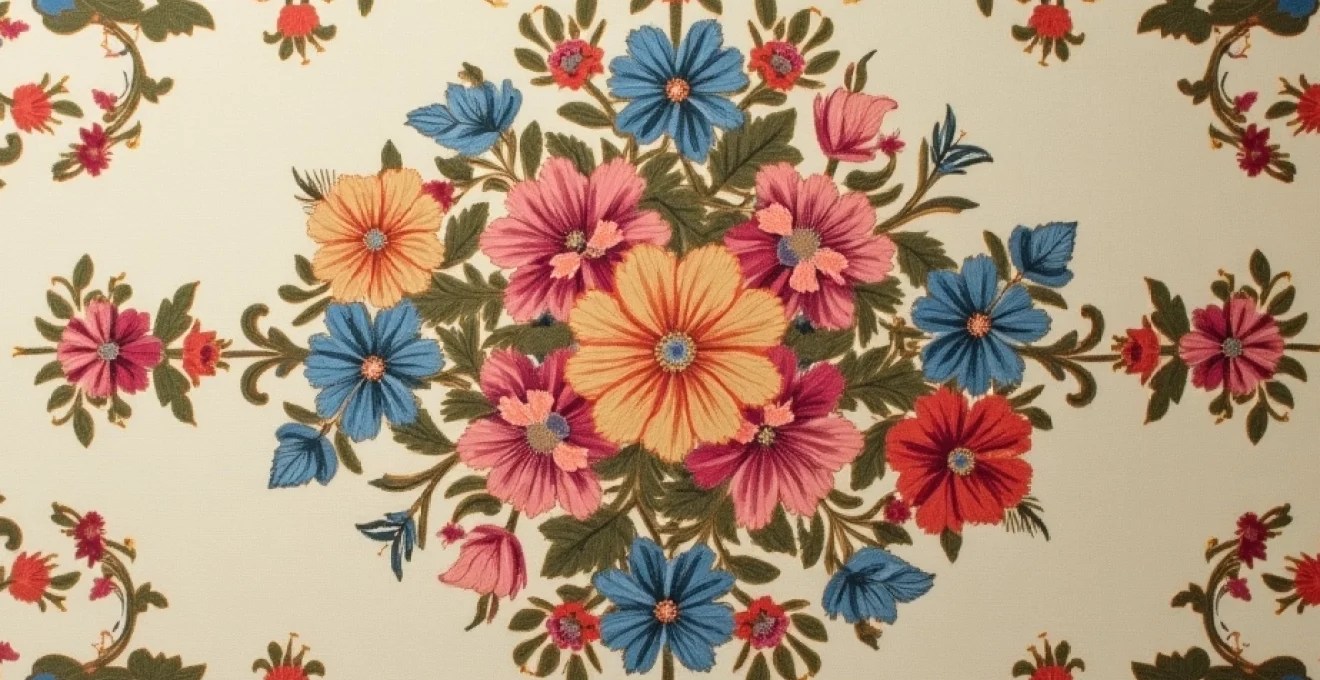
Floral rugs represent one of interior design’s most enduring and versatile elements, transforming spaces with their intricate patterns and nature-inspired motifs. These decorative floor coverings serve as more than mere functional pieces; they act as artistic statements that bridge the gap between indoor comfort and outdoor beauty. The resurgence of botanical patterns in contemporary interior design reflects our collective desire to reconnect with nature whilst maintaining sophisticated aesthetic standards.
The psychological impact of floral patterns extends beyond visual appeal, influencing mood and spatial perception in profound ways. Whether you’re seeking to create a calming retreat in your bedroom or an energising focal point in your living area, floral rugs offer unparalleled flexibility in achieving your design objectives. Their ability to complement both traditional and modern interiors makes them invaluable tools for interior designers and homeowners alike.
Understanding the nuanced relationship between floral patterns, colour psychology, and spatial dynamics enables you to make informed decisions that elevate your interior design. From the intricate medallions of Persian craftsmanship to contemporary abstract botanical interpretations, floral rugs continue to captivate designers and homeowners seeking to infuse their spaces with warmth, character, and visual sophistication.
Persian and turkish floral rug motifs: traditional patterns that define interior character
Persian and Turkish floral rug traditions represent centuries of artistic evolution, with each pattern carrying cultural significance and decorative purpose. These time-honoured designs continue to influence contemporary interior aesthetics, offering depth and authenticity that mass-produced alternatives cannot match. The intricate craftsmanship evident in traditional floral motifs speaks to a level of artisanal expertise that enhances any interior setting.
The enduring appeal of Persian and Turkish floral patterns lies in their sophisticated balance of symmetry and organic flow. These designs demonstrate how traditional motifs can seamlessly integrate into modern living spaces, providing visual anchors that ground contemporary furniture whilst adding layers of cultural richness. The complexity of these patterns rewards closer inspection, revealing new details that continue to engage viewers over time.
Herati pattern integration in contemporary living spaces
The Herati pattern, characterised by its distinctive fish motif surrounded by serrated leaves, offers remarkable versatility in contemporary interior applications. This traditional design element creates visual movement without overwhelming modern furniture silhouettes, making it particularly effective in minimalist settings where pattern serves as the primary decorative element. The geometric precision of the Herati pattern complements clean architectural lines whilst adding organic warmth.
Contemporary interpretations of the Herati pattern often feature simplified colour palettes that maintain the motif’s essential character whilst adapting to modern aesthetic preferences. Interior designers frequently utilise this pattern’s inherent rhythm to create visual flow between different areas of open-plan living spaces, demonstrating how traditional motifs can serve contemporary spatial planning needs.
Isfahan rose motif applications for feminine room aesthetics
The Isfahan rose motif represents one of Persian rug making’s most celebrated floral expressions, offering delicate beauty that enhances feminine interior schemes. These intricate rose patterns create focal points that draw the eye whilst maintaining an air of refined elegance. The sophisticated colour variations within traditional Isfahan roses provide natural coordination opportunities with furnishings and accessories.
Modern applications of Isfahan rose motifs demonstrate their adaptability to contemporary colour palettes, from soft pastels to bold contemporary hues. The three-dimensional quality achieved through skilled weaving techniques adds textural interest that complements smooth surfaces found in modern interiors, creating pleasing tactile contrasts that enhance overall sensory experience.
Kashan floral medallion designs as statement centrepieces
Kashan floral medallions command attention through their bold central motifs surrounded by intricate border patterns, making them ideal statement pieces in formal living areas. These designs offer structured beauty that anchors furniture arrangements whilst providing sufficient visual weight to balance large-scale architectural elements. The medallion format naturally draws the eye inward, creating intimate conversation areas within larger spaces.
The proportional relationships within Kashan medallion designs offer valuable lessons for contemporary interior planning, demonstrating how traditional artisans understood spatial harmony. These time-tested principles continue to inform modern rug selection, helping homeowners choose pieces that enhance rather than compete with their existing décor elements.
Tabriz garden carpet interpretations for natural interior themes
Tabriz garden carpets embody the Persian concept of paradise through their compartmentalised floral designs, offering rich inspiration for nature-themed interiors. These patterns feature organised botanical motifs that suggest formal garden layouts, bringing structured natural beauty indoors. The compartmental nature of these designs makes them particularly effective in defining different functional areas within open-plan living spaces.
Contemporary interpretations of Tabriz garden patterns often emphasise specific colour families to coordinate with modern interior schemes whilst maintaining the essential organisational principles of the original designs. The botanical diversity within these patterns provides natural coordination opportunities with indoor plants and natural materials, creating cohesive biophilic design schemes.
Colour psychology and floral rug palette selection for emotional interior design
The psychological impact of colour in floral rug selection extends far beyond aesthetic preferences, influencing mood, energy levels, and spatial perception in measurable ways. Understanding how different botanical hues affect human psychology enables more intentional design choices that support specific lifestyle objectives. Research in environmental psychology demonstrates that floral patterns combined with strategic colour selection can significantly impact occupant wellbeing and productivity.
The relationship between natural colour associations and interior emotional responses forms the foundation of effective floral rug selection. Botanical colours carry inherent psychological associations derived from our evolutionary relationship with natural environments, making them particularly powerful tools for creating desired atmospheric effects. Professional interior designers increasingly rely on colour psychology principles to guide client consultations and project outcomes.
The strategic use of floral rug colours can transform a space’s emotional resonance, creating environments that actively support occupant wellbeing and lifestyle objectives.
Warm botanical hues: terracotta and sage green impact on room ambiance
Terracotta and sage green floral combinations create naturally warming environments that promote relaxation and social interaction. These earthy botanical hues establish psychological connections to natural outdoor settings whilst maintaining sophisticated interior appeal. The grounding effect of terracotta provides stability and comfort, whilst sage green contributes calming properties that reduce stress and promote mental clarity.
Research indicates that warm botanical colour schemes can increase perceived room temperature by up to three degrees, making them valuable tools for improving comfort in north-facing or naturally cool spaces. The organic quality of these hues complements natural materials like wood and stone, creating cohesive design schemes that feel authentically connected to natural environments.
Cool floral tones: lavender and dusty blue effects on spatial perception
Lavender and dusty blue floral palettes create expansive visual effects that make spaces appear larger and more serene. These cool botanical tones promote contemplation and rest, making them particularly effective in bedrooms and study areas where mental calm supports functional objectives. The receding quality of cool colours helps push visual boundaries outward, creating more spacious feeling environments.
The sophisticated restraint of cool floral tones appeals to contemporary aesthetic preferences whilst maintaining the softening qualities essential to successful pattern integration. These subtle colour relationships demonstrate how traditional floral motifs can adapt to modern minimalist principles without losing their essential decorative impact.
Neutral botanical palettes: cream and taupe floral designs for versatile décor
Cream and taupe floral palettes offer maximum decorative flexibility whilst maintaining sophisticated visual interest through subtle tonal variations. These neutral botanical schemes provide stable foundations for evolving interior colour stories, allowing accessories and furnishings to change whilst maintaining design coherence. The understated elegance of neutral florals appeals to homeowners seeking timeless rather than trendy decorative solutions.
The layering potential of neutral floral designs enables complex textural relationships that add visual depth without colour complexity. Pattern becomes the primary design element, allowing the inherent beauty of floral motifs to take precedence over colour impact. This approach particularly suits contemporary interiors where architectural elements and natural light play primary decorative roles.
Jewel-toned floral rugs: emerald and sapphire accents for luxury interiors
Emerald and sapphire floral accents create dramatic focal points that elevate interior luxury quotient whilst maintaining botanical authenticity. These rich jewel tones demonstrate how traditional floral patterns can support contemporary glamour without sacrificing design integrity. The optical density of jewel tones creates visual weight that anchors furniture arrangements and provides dramatic contrast against neutral backgrounds.
The psychological impact of jewel-toned florals includes increased energy and mental alertness, making them effective choices for entertaining areas and creative workspaces. However, their intensity requires careful balance with neutral elements to prevent visual overwhelm. Strategic placement of jewel-toned floral rugs can create stunning dramatic effects whilst maintaining overall design harmony.
Textile construction and floral pattern weaving techniques
The construction methodology of floral rugs directly impacts both their visual impact and functional performance, making technical understanding essential for informed selection decisions. Different weaving techniques produce distinct textural qualities that affect how patterns appear and how rugs perform under various usage conditions. Understanding these technical aspects enables better matching of rug characteristics to specific interior requirements and lifestyle demands.
The relationship between weaving technique and pattern clarity becomes particularly important with intricate floral designs, where construction quality directly affects visual impact. Higher knot densities generally produce crisper pattern definition, whilst different pile heights create varying textural effects that can enhance or diminish floral motif visibility. These technical considerations significantly influence both immediate visual impact and long-term satisfaction with floral rug selections.
Hand-knotted botanical motifs: density and durability considerations
Hand-knotted construction represents the pinnacle of floral rug craftsmanship, enabling intricate botanical detail impossible to achieve through mechanical production methods. The knot density, typically measured in knots per square inch, directly correlates with pattern clarity and durability. Premium hand-knotted floral rugs often feature densities exceeding 300 knots per square inch, allowing for extraordinary botanical detail and colour nuance.
The durability advantages of hand-knotted construction become particularly apparent in high-traffic areas where pattern integrity must withstand years of use. Individual knot construction distributes wear more evenly than other techniques, helping maintain floral pattern clarity over extended periods. Investment in hand-knotted floral rugs often provides superior long-term value despite higher initial costs.
Machine-woven floral designs: wilton and axminster manufacturing methods
Wilton and Axminster weaving technologies enable cost-effective production of floral rugs whilst maintaining acceptable pattern quality for most residential applications. Wilton weaving produces cut pile construction with excellent pattern definition, making it suitable for detailed floral motifs requiring clear colour delineation. Axminster construction allows for virtually unlimited colour possibilities within patterns, supporting complex botanical designs with multiple hues.
The consistency of machine-woven floral rugs appeals to homeowners seeking predictable quality and availability, particularly for larger installations where multiple pieces must coordinate perfectly. Modern machine weaving capabilities increasingly approach hand-knotted quality levels whilst offering practical advantages including consistent sizing and faster production timelines.
Tufted floral rug construction: pile height variations for textural interest
Tufted construction techniques enable creative pile height variations that add dimensional interest to floral patterns through textural contrast. Multi-level pile heights can emphasise specific botanical elements whilst creating shadow effects that enhance pattern depth. These textural variations particularly benefit contemporary floral interpretations where dimensional interest compensates for simplified colour palettes.
The speed and flexibility of tufted construction methods make them ideal for custom floral designs and limited production runs. Contemporary designers increasingly specify tufted construction for projects requiring specific colour matching or unique sizing requirements that would be impractical with traditional weaving methods.
Strategic floral rug placement for optimal visual balance
The strategic placement of floral rugs requires understanding both spatial dynamics and visual weight distribution to achieve optimal decorative impact. Floral patterns carry inherent visual complexity that must be balanced against other interior elements to prevent overwhelming or underwhelming effects. Successful placement considers factors including room scale, furniture arrangement, lighting conditions, and traffic patterns to maximise both aesthetic and functional benefits.
Room proportion relationships significantly influence how floral patterns are perceived and experienced within interior spaces. Larger rooms can accommodate bold floral designs that might overwhelm smaller spaces, whilst intimate areas benefit from delicate botanical motifs that enhance rather than dominate the environment. The interplay between rug size, pattern scale, and room dimensions creates visual harmony that supports overall design objectives.
Lighting considerations play crucial roles in floral rug placement decisions, as natural and artificial illumination can dramatically affect pattern visibility and colour perception. South-facing rooms with abundant natural light can support deeper colour palettes and more complex patterns, whilst north-facing spaces may require lighter, more open floral designs to maintain visual clarity. Strategic positioning relative to primary light sources ensures optimal pattern visibility throughout daily lighting variations.
Furniture relationship planning determines how floral rugs interact with other interior elements to create cohesive decorative schemes. Rugs that extend beyond furniture footprints create floating effects that can make spaces appear larger, whilst rugs contained within furniture arrangements create intimate, grounded feelings. The scale relationship between floral patterns and furniture silhouettes requires careful consideration to achieve visual balance.
Proper floral rug placement transforms these decorative elements from simple floor coverings into integral components of comprehensive interior design schemes.
Traffic flow patterns must be considered when positioning floral rugs to ensure both aesthetic success and practical functionality. High-traffic areas require durable construction and strategic placement that accommodates natural movement patterns whilst maintaining design integrity. The relationship between functional requirements and decorative objectives often determines optimal placement solutions that serve both purposes effectively.
Material selection: natural fibres versus synthetic options for floral carpets
Material selection fundamentally impacts both the appearance and performance characteristics of floral carpets, making informed fibre choice essential for achieving desired design outcomes. Natural fibres offer distinct advantages in terms of texture, durability, and environmental impact, whilst synthetic alternatives provide practical benefits including stain resistance and cost-effectiveness. Understanding the relationship between fibre choice and floral pattern expression enables more strategic selection decisions.
Wool represents the traditional standard for premium floral carpets, offering natural resilience, excellent dye retention, and inherent soil resistance that supports long-term pattern clarity. The cellular structure of wool fibres creates natural variations that enhance the organic quality of botanical motifs whilst providing practical benefits including natural flame resistance and moisture regulation. Wool’s natural elasticity helps maintain pattern integrity under traffic whilst its dyeing characteristics support rich, complex colour palettes essential for detailed floral designs.
Silk additions to wool bases create lustrous effects that enhance floral pattern highlighting whilst adding luxury appeal and improved pattern definition. The reflective qualities of silk fibres create depth and movement within botanical motifs that cannot be achieved through other materials. However, silk content increases maintenance requirements and limits appropriate placement to lower-traffic areas where its beauty can be preserved.
Cotton provides practical advantages for casual floral carpet applications, offering easy maintenance and consistent colour retention at accessible price points. Cotton’s smooth fibre structure produces clear pattern definition suitable for geometric floral designs whilst its washability makes it appropriate for family environments and high-use areas. However, cotton lacks the resilience and luxury appeal of wool for premium applications.
Synthetic fibres including nylon, polyester, and polypropylene offer practical advantages for specific floral carpet applications, particularly where moisture resistance or extreme durability requirements exist. Modern synthetic fibres increasingly replicate natural fibre appearance whilst providing superior stain resistance and colour fastness. The environmental impact of synthetic production must be balanced against practical performance advantages and lifecycle considerations.
Fibre blend strategies combine natural and synthetic materials to optimise both performance and aesthetic characteristics for specific applications. Wool-nylon blends provide improved durability whilst maintaining natural appearance, making them suitable for moderate-traffic floral installations. Strategic blending enables customisation of performance characteristics whilst controlling costs and maintaining design integrity.
Scale and proportion guidelines for floral rug selection in different room dimensions
Scale and proportion relationships between floral rugs and room dimensions determine visual harmony and spatial perception, making proper sizing essential for successful interior integration. Understanding how pattern scale interacts with room proportions enables informed selection decisions that enhance rather than diminute spatial qualities. The mathematical relationships between rug dimensions, pattern repeat intervals, and room proportions create predictable design outcomes that can be planned and optimised.
Large-scale floral patterns require adequate viewing distance to be properly appreciated, making them suitable for spacious rooms where their full impact can be experience
d without visual obstruction. Small rooms benefit from more delicate floral motifs that maintain pattern interest without overwhelming limited square footage. The scale relationship between individual floral elements and room dimensions should create comfortable visual proportions that feel neither cramped nor sparse.
Medium-sized rooms measuring 12-16 feet in primary dimensions offer optimal flexibility for both pattern scale and rug sizing, accommodating most traditional floral designs whilst providing adequate visual breathing space. These proportions allow for sophisticated layering of pattern scales, from intricate border details to bold central motifs. Understanding optimal viewing distances for different pattern scales enables more strategic placement decisions within various room configurations.
Furniture scale relationships significantly influence appropriate floral rug proportions, as oversized furniture requires correspondingly substantial rug dimensions to maintain visual balance. The combined visual weight of furniture and floral patterns must be carefully calibrated to prevent either element from overwhelming the space. Proper proportional relationships create harmonious environments where all elements contribute to overall design success.
Ceiling height considerations affect how floral rug scale is perceived within vertical spatial contexts, with higher ceilings accommodating bolder patterns and larger rug dimensions. Rooms with standard 8-foot ceilings may benefit from more restrained floral scales to maintain comfortable proportional relationships. The three-dimensional nature of interior spaces requires consideration of all dimensional relationships when selecting appropriate floral rug scales.
The mathematical precision of proper scale relationships transforms floral rugs from decorative afterthoughts into fundamental design elements that actively enhance spatial harmony and visual comfort.
Open-plan living areas present unique challenges for floral rug scale selection, as multiple functional zones require coordinated yet distinct pattern approaches. Large-scale florals can effectively define primary seating areas whilst smaller-scale companion pieces delineate secondary spaces. The visual connectivity between different floral scales must maintain design coherence whilst providing functional zone definition.
Pattern repeat intervals within floral designs create rhythm and movement that must align with room proportions to achieve optimal visual flow. Dense pattern repeats may feel busy in small spaces, whilst widely spaced motifs might appear sparse in large areas. Strategic pattern selection considers both individual motif scale and overall repeat rhythm to create appropriately proportioned decorative effects for specific room dimensions.
Corner and edge relationships become particularly important in smaller rooms where floral rug boundaries interact closely with architectural elements. Proper proportion planning ensures adequate visual breathing space around rug perimeters whilst maximising pattern impact within available floor area. These spatial relationships directly influence how floral patterns are perceived and appreciated within interior contexts.
Multi-room coordination requires consistent proportional principles whilst allowing for appropriate scale variations based on individual room characteristics. A cohesive floral rug strategy considers how different scales and proportions work together to create unified design narratives throughout connected living spaces. This comprehensive approach ensures individual room success whilst maintaining overall interior design coherence.