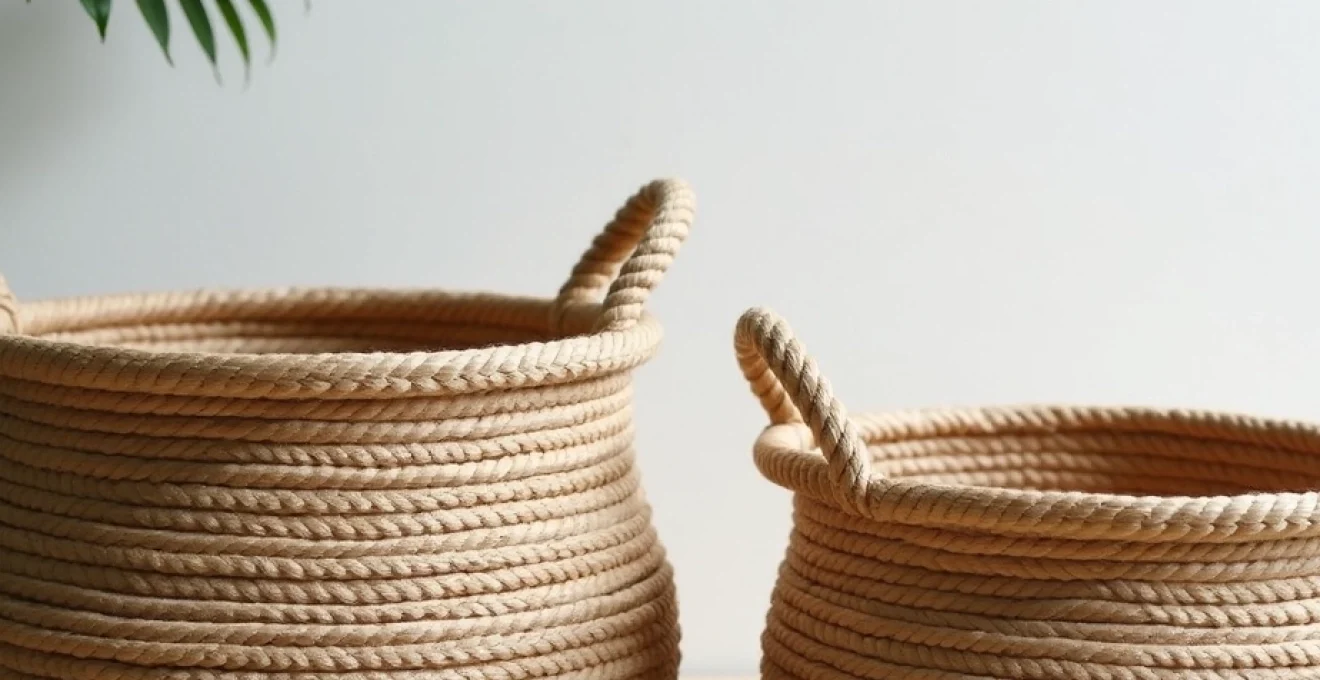
The growing popularity of sustainable home décor has sparked renewed interest in handcrafted storage solutions, with rope baskets emerging as versatile and aesthetically pleasing alternatives to mass-produced plastic containers. These woven masterpieces combine functionality with natural beauty, offering homeowners an opportunity to create personalised storage whilst reducing environmental impact. The therapeutic nature of basket weaving, coupled with the satisfaction of creating something genuinely useful, has attracted crafters from all backgrounds to explore this ancient art form. Modern rope basket construction techniques have evolved to accommodate various skill levels, from simple coil methods suitable for beginners to intricate patterns that challenge experienced artisans. The accessibility of materials and tools means that anyone can begin crafting beautiful storage solutions with minimal initial investment, making this craft both economical and rewarding.
Essential rope types and materials for basket weaving projects
Selecting appropriate rope materials forms the foundation of successful basket construction, with each fibre type offering distinct characteristics that influence both appearance and durability. The choice of rope significantly impacts the final product’s aesthetic appeal, structural integrity, and practical applications within the home environment. Understanding the properties of different rope materials enables crafters to make informed decisions based on their specific project requirements and intended usage patterns.
Cotton rope characteristics and durability properties
Cotton rope stands as one of the most popular choices for indoor basket projects, offering excellent workability and a soft, comfortable texture that enhances the tactile experience. The natural fibres provide sufficient grip for secure wrapping whilst remaining gentle on hands during extended crafting sessions. Cotton rope typically ranges from 4mm to 12mm in diameter, with thicker options providing greater structural stability for larger baskets. The material’s ability to accept various staining and dyeing treatments makes it particularly versatile for colour customisation projects.
The durability of cotton rope proves adequate for most indoor applications, though it requires protection from excessive moisture to prevent mould development. High-quality cotton rope maintains its shape well over time, resisting stretching and distortion under normal storage loads. However, cotton’s natural tendency to attract dust necessitates regular cleaning to maintain appearance, making it most suitable for items stored in clean, dry environments.
Jute fibre advantages for rustic storage applications
Jute rope delivers exceptional value for money whilst providing the authentic rustic appearance that complements farmhouse and bohemian interior design schemes. The naturally golden-brown colour of jute fibres eliminates the need for additional treatments, though the material readily accepts natural dyes for colour variation. Jute’s coarser texture creates distinctive visual interest and provides excellent grip during construction, making it particularly suitable for beginners learning wrapping techniques.
The environmental credentials of jute make it an outstanding choice for eco-conscious crafters, as the plant grows rapidly without requiring pesticides or excessive water consumption. Jute rope demonstrates remarkable strength-to-weight ratios, supporting substantial loads whilst remaining lightweight and manageable. The material’s natural antimicrobial properties help resist odour development, making it ideal for storing linens, towels, and clothing items.
Polyester cord weather resistance and indoor use
Synthetic polyester cord offers superior weather resistance compared to natural fibres, making it the preferred choice for baskets intended for outdoor use or high-humidity environments such as bathrooms and laundries. The material’s consistent diameter and smooth texture facilitate even wrapping patterns, producing baskets with refined, contemporary appearances that complement modern interior design schemes. Polyester’s colourfast properties ensure long-lasting vibrancy without fading from sunlight exposure.
The synthetic nature of polyester cord provides excellent resistance to mould, mildew, and insect damage, significantly extending basket lifespan compared to natural alternatives. Cleaning polyester baskets requires only simple soap and water solutions, with the material drying quickly to prevent moisture retention. However, the smooth surface of polyester can be more challenging for beginners to work with, as it provides less grip than textured natural fibres during construction.
Manila hemp rope strength and natural aesthetics
Manila hemp rope represents the premium option for serious basket makers seeking exceptional strength and distinctive natural appearance. Derived from abaca plant fibres, manila hemp combines the aesthetic appeal of natural materials with remarkable tensile strength that surpasses most other rope types. The light tan colour and subtle texture variations create visually striking baskets that serve as decorative elements even when empty.
The superior strength characteristics of manila hemp make it particularly suitable for heavy-duty storage applications, including laundry baskets and toy storage containers that must withstand frequent use and substantial weight loads. The material’s natural resistance to saltwater damage makes it an excellent choice for coastal homes, whilst its inherent flexibility prevents cracking and splitting under stress. However, manila hemp typically commands higher prices than alternative materials, making it most appropriate for special projects where durability and appearance justify the additional investment.
Core basket construction techniques and structural methods
Mastering fundamental construction techniques enables crafters to create sturdy, attractive baskets that serve practical storage needs whilst showcasing sophisticated craftsmanship. The foundation methods determine the overall strength and appearance of finished baskets, making proper technique selection crucial for project success. Understanding these core approaches provides the versatility needed to adapt patterns for different basket sizes and intended applications.
Coil stitching foundation methods using blanket stitch
The coil stitching technique forms the traditional foundation for many rope basket designs, utilising continuous spirals of rope secured with regular stitching patterns. This method begins with a tight centre coil that gradually expands outward, with each successive round attached to the previous layer through systematic stitching intervals. The blanket stitch provides particularly secure connections whilst creating attractive decorative elements that enhance the basket’s visual appeal.
Proper needle selection proves critical for successful coil stitching, with large tapestry needles accommodating thick threads whilst penetrating rope fibres effectively. The spacing between stitches directly influences both structural integrity and aesthetic appearance, with closer stitching providing greater strength at the cost of increased construction time. Consistent stitch tension throughout the construction process ensures uniform appearance and prevents weak points that might compromise basket durability under load.
Spiral wrapping techniques for cylindrical forms
Spiral wrapping represents the most accessible technique for beginners, requiring minimal specialised tools whilst producing attractive results with consistent effort. This method involves systematically wrapping rope around a form or previous layer, using adhesive or mechanical fasteners to secure each wrap in position. The continuous nature of spiral wrapping creates naturally strong structures that distribute stress evenly throughout the basket walls.
Hot glue application requires careful attention to working time and positioning, as the fast-setting nature of the adhesive leaves little room for adjustment once contact occurs. Professional results depend on maintaining consistent tension throughout the wrapping process, preventing loose sections that create weak points or tight areas that distort the basket shape. The technique adapts readily to various basket profiles, from simple cylindrical forms to complex tapered shapes that require gradual diameter changes.
Figure-eight binding for enhanced basket stability
Figure-eight binding techniques provide exceptional structural stability by creating interlocking connections that resist separation under stress. This advanced method involves weaving binding cord through existing rope layers using figure-eight patterns that lock successive wraps together mechanically. The resulting connections prove significantly stronger than simple adhesive bonds, making this technique ideal for heavy-duty storage applications.
The complexity of figure-eight binding requires careful planning to ensure binding points align properly throughout the construction process. Crafters must maintain awareness of the overall pattern whilst focusing on individual binding operations, balancing local perfection with global consistency. The additional time investment required for this technique produces baskets with professional-quality strength that justify the extra effort through extended service life and enhanced load-bearing capacity.
Rim finishing with overcast edge treatments
Professional rim finishing transforms amateur-looking baskets into polished storage solutions worthy of prominent display in any room. Overcast edge treatments involve wrapping the basket rim with supplementary cord or rope, creating smooth, reinforced edges that resist wear and provide comfortable handling surfaces. This finishing technique also conceals construction joints and irregularities that might otherwise detract from the basket’s overall appearance.
The selection of finishing materials offers opportunities for creative expression through colour contrast or texture variation that enhances the basket’s decorative appeal. Proper tension control during rim wrapping prevents puckering or distortion that could compromise the basket’s shape or functionality. The investment in quality rim finishing pays dividends through improved durability and professional appearance that elevates handmade baskets to the level of commercial alternatives.
Advanced shaping patterns for functional storage designs
Contemporary homes require storage solutions tailored to specific organizational needs, making advanced shaping techniques essential skills for serious basket makers. These sophisticated patterns transform basic construction methods into purposeful designs that maximize storage efficiency whilst complementing existing décor schemes. Understanding the relationship between form and function enables crafters to create custom solutions that address unique storage challenges throughout the home.
Tapered bowl construction for fruit storage
Tapered bowl designs provide ideal proportions for fruit storage, combining adequate capacity with the gentle slopes that prevent bruising of delicate produce. The construction process begins with a small base diameter that gradually expands to create the characteristic bowl profile, requiring careful attention to expansion rates that maintain smooth curves throughout the sidewall development. Proper taper angles ensure stability whilst maximizing accessible storage volume for various fruit sizes and quantities.
The optimal fruit bowl dimensions typically feature base diameters between 15-20cm expanding to rim diameters of 25-30cm, with sidewall heights of 8-12cm providing adequate depth without restricting air circulation. These proportions accommodate standard fruit assortments whilst preventing the pyramid stacking that can damage lower layers. The gradual taper angles, typically ranging from 15-25 degrees, provide structural stability whilst maintaining the elegant curves that characterize high-quality serving pieces.
Rectangular magazine holder formation techniques
Rectangular magazine holders require specialized construction approaches that deviate from traditional circular basketry patterns, incorporating corner reinforcement and straight-line shaping that challenge conventional techniques. The formation process typically begins with a rectangular base constructed using parallel rope arrangements secured with perpendicular binding elements. Corner construction demands particular attention to prevent weak points whilst maintaining the crisp angles essential for professional appearance.
Standard magazine holder dimensions accommodate A4 publications with typical measurements of 25cm width, 32cm depth, and 28cm height providing adequate clearance for various magazine thicknesses. The construction technique involves creating rigid corner posts using doubled rope elements that support the rectangular framework throughout the building process. Strategic reinforcement placement at stress concentration points prevents distortion under the weight of stored publications whilst maintaining the geometric precision required for effective storage organization.
Cylindrical umbrella stand proportions and measurements
Umbrella stand construction requires careful attention to proportional relationships that ensure stability whilst accommodating various umbrella lengths and styles. The ideal stand proportions feature base diameters ranging from 20-25cm with heights between 45-60cm, providing adequate support for standard umbrella configurations whilst maintaining appropriate aesthetic proportions for typical room scales. The cylindrical form offers structural advantages through natural hoop strength that resists deformation under lateral loads.
Weight distribution considerations mandate substantial base construction that prevents tipping when loaded with wet umbrellas of varying sizes. The construction technique often incorporates internal ballast or weighted base inserts that lower the centre of gravity without compromising the basket’s appearance or functionality. Drainage considerations may require strategic gap placement that allows water runoff whilst maintaining structural integrity throughout the basket walls.
Handled laundry basket engineering and weight distribution
Laundry basket handles represent critical structural elements that must withstand substantial loads whilst providing comfortable grip surfaces for regular use. The engineering approach involves integrating handle elements during the primary construction process rather than adding them as afterthoughts, ensuring adequate load distribution throughout the basket structure. Handle placement typically occurs at opposite sides of oval or rectangular baskets, with positioning heights that accommodate comfortable lifting postures for users of varying statures.
The load-bearing requirements for laundry baskets often exceed 15-20kg when fully loaded with wet clothing, necessitating robust construction techniques and material selection that prioritize strength over aesthetic considerations. Handle construction involves creating reinforced loops using doubled or tripled rope elements that distribute stress across multiple attachment points rather than concentrating loads at individual connection locations. The resulting handles must maintain their shape and strength through repeated loading cycles whilst providing ergonomic comfort during transport operations.
The key to successful laundry basket construction lies in balancing structural requirements with practical usability, creating storage solutions that withstand daily use whilst maintaining their attractive appearance over extended periods.
Professional finishing techniques and durability enhancement
Professional finishing techniques distinguish handcrafted baskets from amateur attempts, elevating functional storage items into decorative elements that complement sophisticated interior design schemes. These advanced methods require patience and attention to detail but produce results that rival commercial alternatives in both appearance and durability. The investment in proper finishing techniques pays long-term dividends through extended service life and maintained aesthetic appeal despite regular use.
Surface preparation forms the foundation of professional finishing, requiring systematic removal of loose fibres, construction irregularities, and adhesive residues that detract from the final appearance. This process involves careful trimming with sharp craft knives or scissors, working systematically around the entire basket to achieve consistent surface quality. Attention to detail during this preparatory phase prevents minor flaws from becoming prominent visual distractions in the finished piece.
Protective treatments enhance both durability and appearance, with various options available depending on intended usage patterns and environmental conditions. Natural fibre ropes benefit from appropriate sealers that resist moisture absorption whilst preserving the material’s breathable characteristics. These treatments typically involve spray or brush application of specialized products that penetrate fibre structures without creating surface films that might crack or peel over time.
Edge reinforcement techniques prevent the gradual unraveling that commonly affects handmade baskets, particularly those subjected to frequent handling or heavy loads. Professional approaches involve wrapping critical edge areas with stronger materials or applying specialized adhesives that bond individual fibres together permanently. The selection of reinforcement methods depends on the basket’s intended use and aesthetic requirements, balancing functional necessities with visual appeal considerations.
Quality hardware integration opportunities arise in baskets designed for specific applications, such as removable fabric liners or adjustable divider systems that enhance organizational capabilities. These additions require careful planning during the construction phase to ensure proper mounting points and dimensional compatibility. The professional approach involves concealing hardware elements wherever possible whilst ensuring accessibility for maintenance or replacement operations.
Troubleshooting common construction defects and repair methods
Even experienced crafters encounter construction challenges that require systematic problem-solving approaches to achieve satisfactory results. Understanding common defects and their underlying causes enables timely interventions that prevent minor issues from compromising entire projects. The diagnostic process involves identifying symptoms, determining root causes, and implementing appropriate corrective measures whilst minimizing disruption to completed work.
Uneven tension represents one of the most frequent construction problems, manifesting as irregular surface textures, dimensional distortions, or weak points that compromise structural integrity. This defect typically results from inconsistent wrapping pressure or varying rope characteristics that affect how individual sections respond to construction forces. The correction process involves systematically identifying problem areas and implementing localized tension adjustments that restore uniformity without disrupting surrounding construction.
Gap formation between rope layers creates both aesthetic and structural problems that require immediate attention to prevent progressive deterioration. These gaps often result from insufficient adhesive application, inadequate compression during construction, or rope shrinkage that occurs during curing processes. The repair approach involves carefully separating affected sections, applying appropriate bonding agents, and re-establishing proper layer contact through mechanical compression or additional binding techniques.
Adhesive failure represents a serious structural problem that can cause catastrophic basket failure under load, making early detection and correction crucial for safety and functionality. Hot glue failures typically occur due to temperature extremes, excessive moisture exposure, or incompatible material combinations that prevent proper adhesion. The repair process requires complete removal of failed adhesive, surface preparation to ensure optimal bonding conditions, and reapplication using appropriate techniques and materials.
Prevention remains the most effective approach to construction defects, with careful attention to technique and material selection eliminating most problems before they occur.
Shape distortion problems arise from inadequate support during construction or improper curing conditions that allow unconstrained deformation. These issues prove particularly troublesome in complex shapes that rely on precise dimensional relationships for both appearance and functionality. The correction approach involves identifying the original design intent, implementing temporary support systems that restore proper geometry, and allowing sufficient time for stabilization before removing corrective measures.
Surface irregularities detract from professional appearance whilst potentially creating stress concentration points that accelerate wear patterns. These defects range from protruding rope ends to adhesive deposits that create texture variations across the basket surface. The correction process involves systematic surface preparation using appropriate tools and techniques that restore smooth, consistent appearance without damaging underlying structure or compromising basket integrity.
Styling integration with contemporary interior design schemes
Modern interior design increasingly emphasizes natural materials and handcrafted elements that provide visual warmth and textural interest in otherwise minimalist spaces. Rope baskets offer exceptional versat
ility that allows them to complement various decorating approaches without overwhelming existing design elements. The key lies in selecting rope materials and construction techniques that align with the room’s overall aesthetic direction whilst providing practical storage functionality. Understanding how different rope characteristics interact with lighting conditions, colour palettes, and spatial arrangements enables crafters to create pieces that enhance rather than compete with surrounding furnishings.
Colour coordination plays a crucial role in successful integration, with natural rope tones providing neutral foundations that harmonise with most interior schemes. The warm undertones of jute and manila hemp complement wooden furniture and earth-tone palettes commonly found in farmhouse and Scandinavian design approaches. Conversely, the cooler greys and whites of treated cotton rope align beautifully with contemporary minimalist schemes that emphasize clean lines and uncluttered surfaces.
Scale considerations prove equally important, as oversized baskets can overwhelm intimate spaces whilst undersized pieces may appear insignificant in large rooms. Professional interior designers recommend selecting basket proportions that relate harmoniously to surrounding furniture, typically choosing pieces that measure between one-third and two-thirds the height of adjacent elements. This proportional relationship creates visual balance that feels intentional rather than accidental.
Texture layering opportunities arise when rope baskets interact with other natural materials commonly used in contemporary interiors, such as linen fabrics, ceramic accessories, and live plants. The coarse texture of rope provides interesting contrast against smooth surfaces whilst complementing other organic elements that contribute to biophilic design principles. This layered approach creates visual depth and tactile interest that enriches the sensory experience of interior spaces.
Lighting interaction affects how rope baskets appear throughout different times of day, with natural fibres casting subtle shadows that add dimensional interest to wall surfaces and floor areas. Strategic placement near windows or artificial light sources can emphasize the textural qualities of rope weaving whilst creating focal points that draw attention to well-designed storage areas. The interplay between light and shadow transforms functional storage into decorative elements that contribute to the room’s overall ambiance.
Functionality integration requires careful consideration of how storage needs align with aesthetic preferences, ensuring that practical requirements don’t compromise design intentions. Modern living often demands concealed storage that maintains clean visual lines, making rope basket placement crucial for achieving both organizational goals and design coherence. The natural camouflage properties of rope materials help storage containers blend seamlessly into their surroundings when not actively in use.
The most successful interior integrations occur when handcrafted storage solutions enhance the room’s character whilst serving genuine organizational needs, creating spaces that feel both beautiful and thoroughly functional.
Seasonal adaptability represents another advantage of rope basket storage, as these neutral pieces transition effortlessly between different decorating themes without requiring replacement or modification. The timeless appeal of natural materials ensures that investment in quality rope baskets provides long-term value through changing design trends and evolving personal preferences. This adaptability makes rope baskets particularly suitable for rental properties or homes undergoing gradual renovation processes.
Professional styling techniques can elevate simple rope baskets into sophisticated design elements through strategic placement and complementary accessorizing. Interior designers often group baskets in odd numbers to create visual interest whilst ensuring size variation that prevents monotonous repetition. The addition of coordinated elements, such as matching plant containers or complementary textiles, creates cohesive vignettes that appear professionally curated rather than randomly assembled.
Maintenance considerations influence long-term satisfaction with rope basket integration, as different materials require varying care levels to maintain their appearance over time. Regular dusting and occasional deep cleaning help preserve the natural beauty of rope fibres whilst preventing the accumulation of dirt and debris that can dull their appearance. Understanding proper care techniques ensures that handcrafted storage solutions continue enhancing interior spaces rather than becoming maintenance burdens that detract from overall design success.