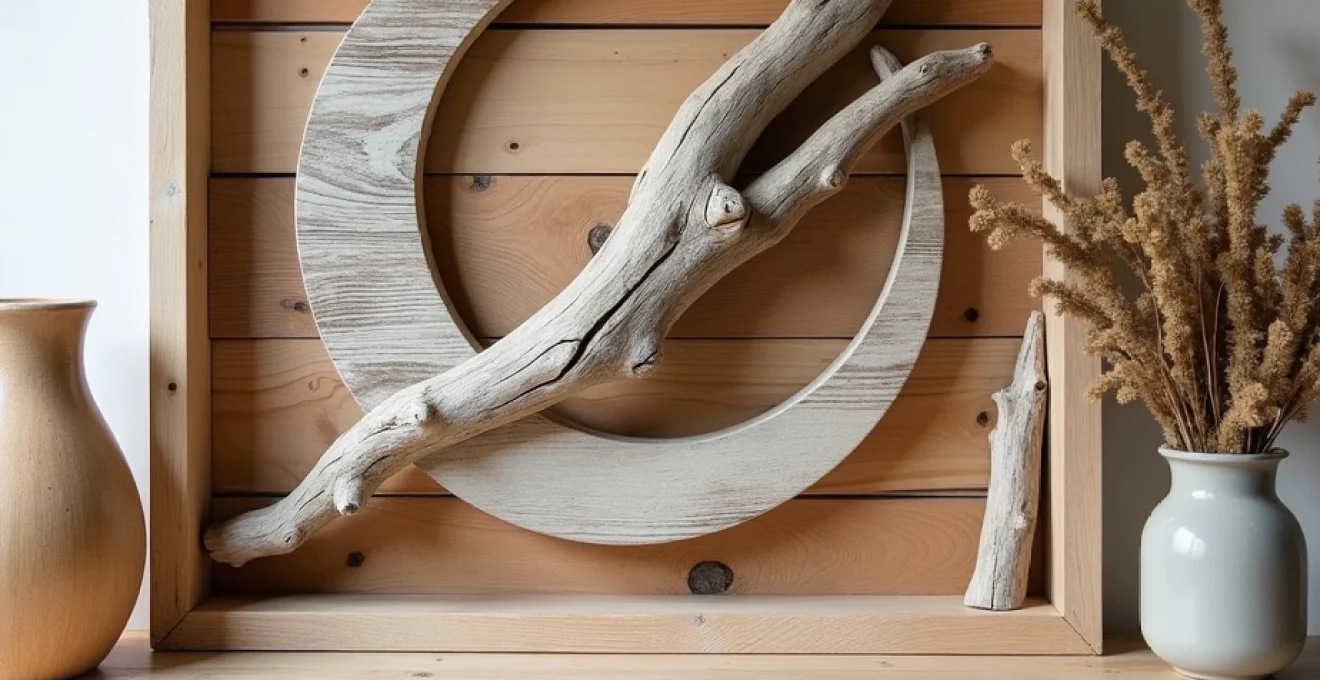
The allure of weathered timber transformed by salt water and time has captivated coastal dwellers for generations. Driftwood represents nature’s artistry at its finest, bearing the sculptural qualities that only years of oceanic tumbling can produce. Each piece carries the unique story of its maritime journey, making it an exceptional medium for creating bespoke wall décor that brings authentic seaside charm into any living space.
Creating driftwood art transcends simple crafting; it connects us to the raw power of coastal environments whilst producing stunning decorative pieces that cannot be replicated by manufactured materials. The natural patina, organic grain patterns, and distinctive weathering marks make every creation truly one-of-a-kind. Whether you’re seeking to enhance a coastal-themed interior or simply bring elements of nature indoors, driftwood art offers an environmentally conscious and deeply rewarding creative outlet that celebrates the beauty of reclaimed materials.
Essential driftwood selection and coastal foraging techniques
The foundation of exceptional driftwood art lies in selecting premium materials that possess the structural integrity and aesthetic appeal necessary for wall-mounted installations. Quality driftwood selection requires understanding the fundamental characteristics that distinguish superior specimens from inferior alternatives that may compromise your artistic vision or structural durability.
Beach combing strategies for premium weathered timber
Successful driftwood foraging demands strategic timing and location awareness that maximises your chances of discovering exceptional specimens. Early morning expeditions following high tides often yield the most promising results, as overnight wave action deposits fresh materials along the tideline. Focus your search efforts on rocky coastlines and secluded coves where prevailing currents naturally concentrate floating debris, creating natural collection points for premium weathered timber.
Storm systems and seasonal weather patterns significantly influence driftwood availability, with winter storms frequently delivering the most substantial pieces to accessible shoreline locations. Experienced collectors monitor weather forecasts and plan collecting expeditions to coincide with optimal conditions that bring exceptional materials within reach of dedicated foragers.
Wood species identification: cedar, pine, and hardwood characteristics
Different timber species exhibit distinct characteristics that directly impact their suitability for artistic applications and long-term durability in interior environments. Cedar specimens typically display exceptional resistance to moisture and insect damage, making them ideal choices for projects requiring extended longevity and minimal maintenance requirements. The natural oils present in cedar create distinctive aromatic properties whilst providing inherent preservation qualities that enhance artistic longevity.
Pine driftwood offers excellent workability and attractive grain patterns that respond beautifully to various finishing techniques and artistic treatments. However, softwood species require more careful preparation and may benefit from additional stabilisation treatments to ensure structural integrity over time. Hardwood specimens, whilst less commonly encountered, provide exceptional durability and stunning grain patterns that create striking focal points in sophisticated artistic compositions.
Optimal grain patterns and natural patina assessment
The visual impact of finished driftwood art depends heavily upon selecting pieces that exhibit compelling grain patterns, interesting textural variations, and attractive natural colouration developed through extended maritime exposure. Premium specimens display subtle colour gradations ranging from silvered grey through warm honey tones, created by the complex interaction between saltwater, sunlight, and natural weathering processes over extended periods.
Look for pieces that demonstrate interesting structural features such as natural curves, knots, and surface textures that add visual complexity and sculptural interest to artistic compositions. Avoid specimens showing signs of excessive checking, splitting, or structural weakness that could compromise the integrity of wall-mounted installations or limit artistic possibilities through restricted handling requirements.
Sustainable harvesting from cornwall, devon, and norfolk coastlines
Responsible driftwood collection practices ensure the continued availability of quality materials whilst respecting fragile coastal ecosystems and local regulations governing shoreline resource utilisation. Many coastal areas implement specific guidelines regarding the collection of natural materials, particularly within designated conservation areas or Sites of Special Scientific Interest where ecological protection takes precedence over recreational harvesting activities.
Cornwall’s dramatic granite coastlines produce exceptional hardwood specimens, whilst Devon’s varied geological formations yield diverse species selections ideal for complex artistic projects. Norfolk’s extensive beaches offer abundant softwood materials perfect for large-scale installations requiring numerous coordinated pieces. Sustainable harvesting practices involve taking only what you need, avoiding living trees or recently fallen timber that may still serve important ecological functions, and respecting private property boundaries and local access restrictions.
Professional driftwood preparation and preservation methods
Transforming raw beach findings into stable artistic materials requires comprehensive preparation techniques that address contamination, structural integrity, and long-term preservation considerations. Professional-grade preparation methods ensure your finished artwork maintains its beauty and structural stability for decades whilst eliminating potential issues related to salt contamination, insect infestation, or moisture-related deterioration that could compromise artistic investments.
Salt extraction and deep cleaning protocols
Salt contamination represents the primary challenge when preparing marine-sourced timber for interior applications, as residual salt deposits can attract moisture, promote corrosion of metal hardware, and create ongoing maintenance issues that detract from artistic enjoyment. Effective salt extraction requires systematic soaking procedures that gradually leach accumulated minerals from wood fibres without compromising structural integrity or desirable aesthetic characteristics.
Begin the extraction process by submerging specimens in fresh water for 24-48 hours, changing the water every 8-12 hours to maintain optimal extraction efficiency. Multiple water changes accelerate salt removal whilst preventing recontamination that could occur with extended single-bath treatments. Monitor water clarity and taste to assess extraction progress, continuing the process until water remains clear and tasteless after extended soaking periods.
Professional conservators recommend conductivity testing to verify complete salt extraction, ensuring specimens meet museum-quality standards for long-term preservation and display applications.
Wood stabilisation using penetrating sealers and hardeners
Structural stabilisation transforms weathered timber into durable artistic materials capable of supporting mounting hardware and maintaining dimensional stability throughout varying environmental conditions. Penetrating hardeners infiltrate compromised wood fibres, creating enhanced structural integrity without altering surface appearance or desirable weathered characteristics that define quality driftwood aesthetics.
Epoxy-based consolidants provide exceptional strengthening properties for severely weathered specimens, whilst polyurethane hardeners offer excellent results for moderately compromised materials requiring enhanced durability. Application techniques involve flooding surfaces with diluted hardener solutions, allowing complete penetration before applying subsequent coats that build structural integrity progressively through controlled layering processes.
Insect treatment: borax solutions and heat processing
Eliminating potential insect infestations ensures your driftwood art remains pristine whilst preventing damage to surrounding furnishings or structural elements within interior environments. Marine boring insects, wood-eating beetles, and various larvae can remain dormant within timber for extended periods before emerging to cause significant damage that compromises both aesthetic appeal and structural integrity of artistic installations.
Borax solution treatments provide effective, environmentally friendly pest elimination whilst preserving wood integrity and appearance. Create treatment solutions using one part borax to ten parts water, ensuring complete penetration through extended soaking periods. Heat processing offers alternative treatment methods, with controlled oven drying at 60-70°C for several hours effectively eliminating insect threats without compromising timber quality or aesthetic characteristics.
Surface conditioning with wire brushing and sanding techniques
Surface preparation techniques enhance natural textures whilst removing loose fibres, splinters, and degraded surface materials that could create handling hazards or detract from finished appearance quality. Wire brushing reveals underlying grain patterns and removes surface contamination whilst preserving the weathered patina that defines authentic driftwood character. Progressive sanding techniques utilising increasingly fine abrasives create smooth, touchable surfaces whilst maintaining organic textures and visual interest.
Begin conditioning with coarse wire brushes to remove loose material and reveal structural grain patterns, progressing through medium and fine brushes to achieve desired surface textures. Follow brushing with progressive sanding using 120, 220, and 320-grit papers, focusing on eliminating splinters and rough areas whilst preserving natural character marks and weathering patterns that define authentic driftwood appeal.
Advanced mounting systems and wall installation hardware
Professional-grade mounting systems ensure driftwood art installations remain secure whilst accommodating the irregular geometries and varying densities characteristic of weathered timber specimens. Advanced mounting techniques distribute loads effectively across multiple attachment points, preventing stress concentrations that could lead to timber failure or wall damage over time. Understanding load-bearing requirements and selecting appropriate hardware prevents installation failures that could result in property damage or personal injury.
Hidden mounting systems preserve the natural appearance of driftwood art whilst providing secure attachment methods that accommodate thermal expansion, settling, and minor structural movement without compromising installation integrity. French cleat systems excel for larger installations, distributing loads across extended wall areas whilst allowing easy removal for cleaning or repositioning. Concealed bracket systems work exceptionally well for smaller pieces, maintaining clean aesthetic lines whilst providing robust structural support for various timber configurations.
Consider wall construction materials when selecting mounting hardware, as drywall installations require different approaches compared to masonry, timber frame, or metal stud wall systems. Hollow wall anchors provide adequate support for lightweight installations, whilst heavy-duty toggle bolts or masonry anchors accommodate substantial pieces requiring enhanced load-bearing capacity. Professional installation may be advisable for large or complex installations where structural engineering considerations exceed typical DIY capabilities.
Load calculations should account for dynamic forces created by environmental conditions, building movement, and potential impact loads that exceed static weight considerations alone.
Contemporary driftwood art composition and design principles
Creating compelling driftwood art requires understanding fundamental design principles that transform random collections of weathered timber into cohesive artistic statements that enhance interior environments. Contemporary composition techniques balance organic irregularity with structured design elements, creating visual harmony that celebrates natural beauty whilst maintaining sophisticated aesthetic appeal suitable for modern living spaces.
Successful compositions utilise scale relationships, colour coordination, and textural contrasts that create visual interest without overwhelming surrounding décor elements. Consider the golden ratio when arranging multiple pieces, positioning focal elements at mathematically pleasing proportions that create subconscious visual satisfaction. Asymmetrical balance often proves more engaging than rigid symmetry, allowing organic timber shapes to interact naturally whilst maintaining overall compositional stability.
Colour palette considerations extend beyond the timber itself to encompass mounting surfaces, surrounding furnishings, and lighting conditions that influence perception of finished installations. Neutral backgrounds enhance timber textures and grain patterns, whilst strategic lighting creates dramatic shadow patterns that add depth and visual complexity to wall-mounted compositions. Consider seasonal lighting changes and their impact on colour perception throughout different times of day and year.
Layering techniques create dimensional depth that transforms flat wall surfaces into engaging sculptural installations. Varying projection distances and overlapping elements generate shadow patterns that change throughout the day as lighting conditions shift. Mixed-media integration incorporating metal elements, rope details, or glass components can enhance coastal themes whilst adding contemporary sophistication that appeals to diverse aesthetic preferences.
Finishing techniques: danish oil, beeswax, and marine varnish applications
Professional finishing techniques preserve natural beauty whilst providing protection against environmental factors that could compromise long-term appearance and structural integrity. Finishing selection depends upon intended display location, desired appearance characteristics, and maintenance preferences that vary according to individual requirements and aesthetic goals. Understanding the properties and application techniques for various finishing materials enables informed decisions that enhance artistic longevity and visual appeal.
Danish oil penetrates deeply into timber fibres, providing enhanced water resistance whilst maintaining natural appearance and tactile qualities that preserve authentic driftwood character. Application involves flooding surfaces with liberal quantities of oil, allowing complete penetration before removing excess material that could create sticky surface films or uneven appearance patterns. Multiple thin coats provide superior results compared to single heavy applications, building protection gradually whilst maintaining natural wood characteristics.
Beeswax finishing creates protective barriers whilst enhancing natural grain patterns and providing subtle lustre that complements weathered timber aesthetics. Natural beeswax mixed with carnauba wax creates durable finishes suitable for interior applications where enhanced protection requirements demand superior performance characteristics. Application techniques involve warming wax to facilitate penetration, buffing between coats to achieve desired lustre levels, and maintaining finishes through periodic reapplication schedules that preserve appearance quality.
Marine varnish applications provide maximum protection for installations exposed to challenging environmental conditions or high-traffic locations requiring enhanced durability. Modern polyurethane varnishes offer excellent UV protection whilst maintaining flexibility that accommodates timber movement without finish failure. Professional application techniques involve comprehensive surface preparation, controlled environmental conditions during application and curing periods, and progressive coat building that creates uniform protection layers without obscuring desirable natural characteristics.