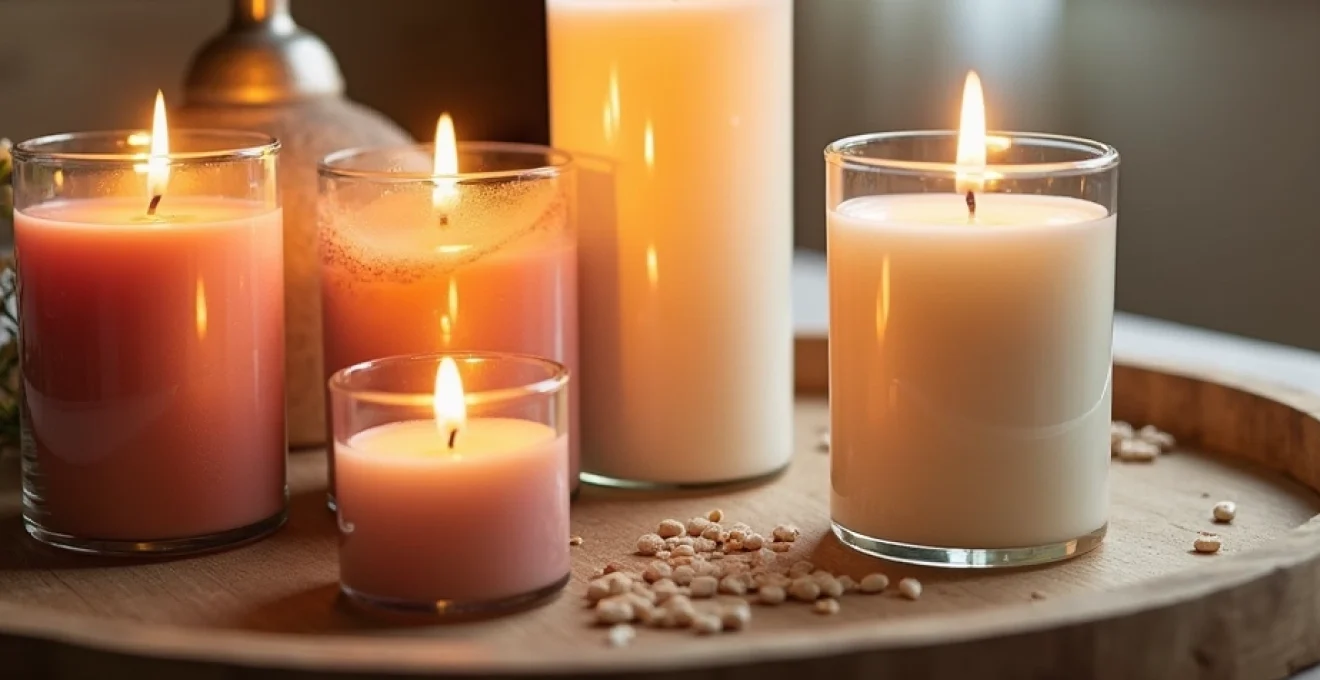
The art of candle making has evolved from a simple household necessity into a sophisticated interior design element that transforms living spaces through carefully crafted ambience. Creating your own scented candles allows you to develop unique fragrance profiles that perfectly complement your personal aesthetic whilst establishing an intimate connection between scent and space. Modern candle crafting combines traditional techniques with contemporary materials, enabling enthusiasts to produce professional-quality candles that rival commercial offerings. The process involves understanding complex interactions between wax types, fragrance chemistry, and wick performance to achieve optimal burn characteristics and scent distribution. Whether you’re seeking to create calming lavender blends for bedroom sanctuaries or invigorating citrus combinations for energising workspaces, custom candle making offers unlimited creative possibilities for personalising your interior environment.
Essential candle making materials and equipment for artisan home crafting
Professional candle making requires specific materials and equipment that directly influence the quality, performance, and safety of your finished products. The foundation of successful candle crafting begins with selecting appropriate tools that ensure consistent temperature control, precise measurements, and proper handling of hot materials. Essential equipment includes digital scales for accurate fragrance oil calculations, thermometers for monitoring wax temperatures, and stirring implements designed for high-temperature applications.
Safety equipment forms a crucial component of any candle making setup, including heat-resistant gloves, safety goggles, and well-ventilated workspace arrangements. Fire extinguishers rated for Class B fires should be readily accessible, as should first aid supplies for treating potential burns. Professional candle makers invest in quality equipment that withstands repeated use whilst maintaining accuracy throughout extended crafting sessions.
Paraffin wax vs soy wax vs beeswax: performance characteristics for interior applications
Paraffin wax remains the most widely used candle wax due to its excellent scent throw capabilities and consistent melting properties. Derived from petroleum, paraffin offers superior fragrance retention and produces bright, steady flames with minimal tunneling when properly formulated. However, environmental considerations have led many crafters to explore natural alternatives that provide comparable performance whilst supporting sustainable practices.
Soy wax presents an eco-friendly alternative that burns cleaner and longer than paraffin whilst offering excellent cold throw properties. Natural soy wax requires specific fragrance oil percentages to achieve optimal hot throw, typically ranging from 8-12% depending on the specific blend. The lower melting point of soy wax creates larger melt pools that distribute fragrance more effectively throughout medium-sized rooms.
Beeswax represents the premium natural option, offering naturally sweet honey notes and exceptional burn quality. This traditional wax burns approximately 50% longer than paraffin whilst producing negative ions that may help purify indoor air. However, beeswax requires careful wick selection and precise temperature control during pouring to prevent cracking and ensure smooth finishes.
Cotton core vs wood wick selection: burn rate and scent throw optimisation
Cotton core wicks provide consistent flame height and reliable burning characteristics across various wax types and container sizes. The cotton core structure maintains wick stability whilst the braided exterior promotes even wax consumption and minimises mushrooming. Different cotton wick series accommodate specific applications, from small votive candles to large pillar designs, each engineered for optimal performance within defined parameters.
Wood wicks create distinctive crackling sounds reminiscent of fireplace ambience whilst producing wider flame surfaces that enhance hot throw performance. These natural wicks require specific thickness selections based on wax type and container diameter to prevent tunneling or excessive flame height. Wood wicks perform exceptionally well in soy wax blends , creating even burn pools and extended fragrance release throughout the candle’s lifespan.
Professional grade fragrance oils: concentration ratios and flash point considerations
Fragrance oil selection directly impacts both safety and performance outcomes in finished candles. Professional grade oils undergo extensive testing to ensure compatibility with various wax types whilst maintaining stable burn characteristics. Flash point ratings indicate the temperature at which fragrance oils become combustible, requiring careful consideration during blending and pouring processes.
Optimal fragrance load percentages vary significantly between wax types, with soy wax typically accommodating 8-12% fragrance oil whilst paraffin blends may handle concentrations up to 15%. Exceeding recommended percentages can result in poor burn performance, wick clogging, or safety hazards during burning. Quality fragrance oils maintain their integrity at recommended temperatures , preventing separation or crystallisation that compromises final product quality.
Double boiler systems and temperature control for consistent wax melting
Professional double boiler systems provide precise temperature control essential for achieving consistent wax melting and fragrance integration. These systems prevent direct heat contact that can cause wax scorching or temperature fluctuations that affect final product quality. Digital temperature controllers maintain steady heating rates whilst preventing overheating that damages fragrance compounds.
Proper temperature control becomes critical when blending different wax types or incorporating colour additives that require specific melting sequences. Each wax type exhibits optimal pouring temperatures that ensure smooth finishes and prevent surface imperfections. Maintaining consistent temperatures throughout the melting process eliminates hot spots that can cause uneven fragrance distribution or structural weaknesses in finished candles.
Advanced fragrance blending techniques for custom scent profiles
Creating sophisticated fragrance profiles requires understanding how different scent components interact and evolve throughout the burning process. Advanced blending techniques involve layering complementary notes that create complex olfactory experiences whilst maintaining balance and harmony. Professional perfumers spend years mastering these principles, but home crafters can achieve remarkable results by following established blending ratios and testing methodically.
The key to successful fragrance blending lies in understanding how individual components contribute to the overall scent profile at different stages of the candle’s life. Some fragrances dominate during cold throw whilst others emerge only when heated, creating dynamic scent experiences that evolve as the candle burns. This complexity requires careful planning and extensive testing to achieve desired results consistently.
Top, middle, and base note composition using essential oil chemistry
Fragrance architecture follows traditional perfumery principles with top notes providing initial impact, middle notes forming the scent’s heart, and base notes creating lasting foundation elements. Top notes typically comprise 15-25% of the total fragrance blend and include volatile compounds like citrus oils or light herbs that dissipate quickly but create immediate sensory impact.
Middle notes constitute 30-60% of the fragrance blend and include floral, fruity, or spice elements that develop after initial top note evaporation. These heart notes define the candle’s primary character and maintain prominence throughout most of the burning cycle. Base notes represent 15-25% of the blend and include heavy molecules like vanilla, sandalwood, or musk that provide depth and longevity to the overall composition.
Understanding molecular weight differences helps predict how blended fragrances will perform in finished candles. Light molecules evaporate quickly whilst heavy molecules provide sustained release , creating natural progression through the scent pyramid as the candle burns. Professional blenders adjust ratios based on intended applications and burning durations to achieve optimal scent evolution.
Scent load calculations: maximum fragrance oil percentages by wax type
Calculating appropriate scent loads requires understanding each wax type’s absorption capacity and how fragrance concentration affects burning characteristics. Soy wax typically accommodates 8-10% fragrance oil for optimal performance, though some premium blends can handle up to 12% without compromising burn quality. Exceeding these limits often results in poor cold throw, excessive smoking, or wick drowning during burning.
Paraffin wax offers higher fragrance capacity, generally accepting 10-15% fragrance oil concentrations whilst maintaining proper burn characteristics. The petroleum-based structure provides superior fragrance binding properties that enhance both cold and hot throw performance. However, higher concentrations require careful wick selection to prevent tunneling or excessive flame height during burning.
| Wax Type | Maximum Fragrance % | Optimal Performance % | Burn Characteristics |
|---|---|---|---|
| Soy Wax | 12% | 8-10% | Clean burn, excellent cold throw |
| Paraffin Wax | 15% | 10-12% | Strong hot throw, bright flame |
| Beeswax | 8% | 4-6% | Natural honey notes, long burn time |
| Coconut Wax | 14% | 10-12% | Excellent throw, premium finish |
Lavender and eucalyptus combinations for Relaxation-Focused room ambience
Lavender and eucalyptus create synergistic combinations that promote relaxation whilst providing therapeutic aromatherapy benefits. True lavender essential oil contains linalool and linalyl acetate compounds that naturally reduce stress hormones and promote deeper sleep patterns. Eucalyptus adds clearing menthol notes that enhance respiratory function whilst balancing lavender’s sometimes overwhelming floral intensity.
Successful lavender-eucalyptus blends typically use 60-70% lavender as the primary note with 20-30% eucalyptus providing supporting freshness. Adding 10-15% vanilla or sandalwood base notes creates warmth that prevents the blend from becoming too clinical or medicinal. These combinations work particularly well in bedroom and bathroom applications where relaxation and clarity are equally important.
Vanilla bean and sandalwood blending for warm interior atmospherics
Vanilla and sandalwood create luxurious combinations that establish warm, inviting atmospheres perfect for living areas and entertaining spaces. Madagascar vanilla provides rich, creamy sweetness whilst Indian sandalwood contributes woody depth and subtle spice notes. These complementary profiles create sophisticated fragrances that appeal to diverse preferences whilst maintaining universal appeal.
Optimal vanilla-sandalwood ratios typically feature 40-50% vanilla as the dominant sweet note with 30-40% sandalwood providing woody foundation. Adding 10-20% complementary notes like amber, benzoin, or light spices creates complexity without overwhelming the primary vanilla-sandalwood harmony. These warm blends perform exceptionally well during autumn and winter months when cosy indoor atmospheres become particularly desirable.
Cold throw vs hot throw: testing methods for optimal scent distribution
Cold throw refers to fragrance intensity detected from unlit candles, whilst hot throw describes scent distribution during burning. Both characteristics require careful evaluation to ensure satisfactory performance in intended applications. Cold throw testing involves placing finished candles in closed spaces and evaluating fragrance detection at various distances after 24-48 hour curing periods.
Hot throw evaluation requires systematic burning tests in controlled environments, measuring scent intensity at specific distances and time intervals. Professional testing involves multiple evaluators to account for individual scent perception variations and environmental factors that influence fragrance distribution. Optimal performance balances strong cold throw with sustained hot throw throughout the entire burning cycle , ensuring consistent scent delivery from initial lighting to final extinguishing.
Quality fragrance performance requires achieving the perfect balance between cold and hot throw characteristics, ensuring your candles provide immediate appeal and sustained scent delivery throughout their entire lifespan.
Container selection and wick positioning for interior design integration
Container selection significantly impacts both functional performance and aesthetic integration within interior design schemes. Beyond visual appeal, containers must withstand thermal stress whilst providing adequate heat dissipation to prevent cracking or structural failure during burning. The relationship between container material, size, and shape directly influences burn characteristics, scent throw, and overall candle lifespan.
Professional container selection considers thermal expansion coefficients, heat conductivity, and visual compatibility with intended interior applications. Premium containers often cost more initially but provide superior performance and safety margins that justify the investment through extended product lifespan and enhanced user experience.
Heat-resistant glass vessels: borosilicate vs standard glass performance
Borosilicate glass offers superior thermal resistance compared to standard soda-lime glass, withstanding temperature differentials up to 300°F without cracking or structural failure. This enhanced durability makes borosilicate ideal for large candles or high-fragrance applications that generate significant heat during burning. The material’s low thermal expansion coefficient prevents stress fractures that commonly affect standard glass containers during repeated heating and cooling cycles.
Standard glass containers cost significantly less than borosilicate alternatives but require careful wick sizing to prevent excessive heat generation that could cause thermal shock. These containers work well for smaller candles or moderate-fragrance applications where heat generation remains within safe operating parameters. Standard glass containers often feature decorative elements that enhance interior design integration whilst providing adequate performance for most home applications.
Ceramic and metal container considerations for temperature management
Ceramic containers provide excellent heat retention whilst offering unlimited design possibilities through glazing and decorative techniques. The porous nature of unglazed ceramic can absorb fragrance oils over time, potentially affecting scent throw and requiring careful sealing during production. Properly glazed ceramic containers offer superior durability and can be reused for decorative purposes after candle consumption.
Metal containers, particularly tin and aluminium options, provide exceptional heat conductivity that prevents wax overheating whilst ensuring even melting patterns. These containers work particularly well for travel candles or outdoor applications where durability and portability become primary considerations. However, metal containers require careful wick selection to prevent excessive heat transfer that could make containers uncomfortably hot to handle during burning.
Wick centering tools and adhesive dot application techniques
Wick centering requires precision tools that maintain proper positioning throughout the pouring and cooling process. Professional wick bars span container diameters whilst holding wicks in exact centre positions, preventing movement during wax cooling that could compromise burn performance. Adjustable centering tools accommodate various container sizes whilst providing consistent positioning accuracy.
Adhesive dot application creates secure wick anchoring that withstands thermal cycling without compromising container integrity. High-temperature adhesive dots maintain bonding strength throughout repeated heating and cooling cycles whilst remaining invisible in finished candles. Proper adhesive application prevents wick movement that could create uneven burn patterns or safety hazards during normal candle operation.
Container size to wick diameter ratios for even wax pool formation
Achieving optimal wax pool formation requires precise wick sizing based on container diameter and wax type characteristics. The ideal wax pool should extend to within 1/4 inch of container edges without creating excessive heat that could damage container materials. Undersized wicks create tunneling effects that waste wax and reduce fragrance throw, whilst oversized wicks produce dangerous flame heights and excessive soot.
Professional wick sizing charts provide baseline recommendations that require adjustment based on specific fragrance loads and wax formulations. High-fragrance candles often require smaller wicks to compensate for enhanced fuel content, whilst natural waxes may need larger wicks to maintain proper melt pools. Systematic testing with various wick sizes ensures optimal performance before committing to production quantities.
Proper wick sizing creates the foundation for safe, efficient burning that maximises both fragrance distribution and candle lifespan whilst maintaining attractive visual appeal throughout the burning cycle.
Colour psychology and dye integration for interior aesthetic harmony
Colour psychology plays a fundamental role in creating candles that complement interior design schemes whilst influencing mood and atmosphere through visual impact. Different colours evoke specific emotional responses and energy levels that can enhance or detract from intended ambience. Understanding these psychological associations allows candle makers to create products that support desired interior atmospheres whilst providing visual appeal that integrates seamlessly with existing décor elements.
Professional colour integration requires understanding how dyes interact with different wax types and fragrance oils to achieve consistent, vibrant results. Some colour combinations create unexpected reactions that alter fragrance performance or create visual irregularities in finished candles. Systematic colour testing ensures predictable results whilst maintaining the integrity of both visual and olfactory characteristics.
Warm colours like reds, oranges, and deep yellows create energising, welcoming atmospheres that complement social spaces and dining areas. These colours stimulate appetite and conversation whilst creating cosy intimate settings that encourage relaxation and connection. Cool colours such as blues, greens, and purples promote calm, contemplative moods that work well in bedrooms, bathrooms, and meditation spaces where tranquility becomes the primary objective.
Neutral colours including whites, creams
, and soft grays offer timeless versatility that adapts to changing décor trends whilst providing sophisticated backdrops for fragrance appreciation. These understated colours allow scent to become the primary sensory focus whilst creating elegant visual elements that complement rather than compete with interior design schemes.
Dye integration techniques vary significantly between wax types, with natural waxes often requiring different approaches than petroleum-based alternatives. Liquid dyes blend more uniformly in hot wax but may affect fragrance throw if used excessively. Block dyes provide intense colour saturation but require thorough melting and stirring to prevent streaking or colour inconsistencies in finished candles.
Colour stability becomes crucial for candles exposed to direct sunlight or artificial lighting that could cause fading over time. UV-resistant dyes maintain colour integrity throughout extended display periods, ensuring candles retain their intended visual impact. Professional candle makers often test colour stability under various lighting conditions to guarantee consistent performance in diverse interior environments.
Professional candle curing and quality control methods
Proper curing processes significantly impact final candle quality, fragrance throw, and burn performance. Freshly poured candles require controlled cooling periods that allow wax molecules to stabilise whilst fragrance oils fully integrate throughout the wax matrix. This critical phase determines whether candles achieve optimal cold throw and maintain structural integrity during burning.
Professional curing environments maintain consistent temperatures between 65-75°F with moderate humidity levels that prevent condensation formation on candle surfaces. Rapid temperature fluctuations during curing can create surface imperfections, internal stress fractures, or fragrance separation that compromises finished product quality. Controlled curing environments ensure consistent results across production batches whilst maximising the investment in premium materials.
Quality control protocols begin with visual inspection for surface defects, colour consistency, and proper wick positioning. Professional standards require smooth, even surfaces without visible air bubbles, colour streaking, or fragrance oil separation. Burn testing evaluates flame height consistency, melt pool formation, and sustained fragrance throw throughout the candle’s intended lifespan.
Documentation systems track production variables including wax temperatures, fragrance percentages, and environmental conditions to identify factors that influence quality outcomes. This systematic approach enables continuous improvement whilst maintaining consistency across multiple production runs. Detailed quality records provide valuable data for troubleshooting performance issues and optimising future formulations.
Professional curing and quality control methods transform good candles into exceptional products that deliver consistent performance and maintain brand reputation through superior customer experiences.
Interior styling applications: room-specific candle placement and design coordination
Strategic candle placement maximises both aesthetic impact and functional benefits whilst ensuring safety compliance within different interior spaces. Living areas benefit from clustered arrangements that create focal points whilst providing ambient lighting for entertainment and relaxation. Multiple candles of varying heights and sizes generate visual interest whilst distributing fragrance evenly throughout larger spaces.
Bedroom applications require careful consideration of fragrance intensity and flame safety, with placement distances from bedding, curtains, and other combustible materials. Relaxing scents like lavender or chamomile work best in bedside locations where gentle illumination and calming fragrances promote restful sleep. Bedroom candles should never be left burning unattended, making battery-operated alternatives worth considering for extended evening ambience.
Kitchen and dining areas present unique challenges due to competing food aromas and higher temperatures from cooking activities. Light, fresh fragrances complement culinary experiences without overwhelming delicate flavours, whilst avoiding placement near heat sources or high-traffic areas where accidental contact becomes more likely. Clean-burning soy or beeswax candles work best in food preparation areas where air quality concerns become paramount.
Bathroom environments require moisture-resistant containers and fragrances that complement rather than compete with personal care products. Eucalyptus, mint, or light citrus scents enhance spa-like atmospheres whilst providing natural deodorising properties. Proper ventilation becomes essential in smaller bathroom spaces where fragrance concentration could become overwhelming without adequate air circulation.
Design coordination involves selecting candle colours, textures, and container styles that complement existing décor elements whilst creating cohesive visual themes throughout interior spaces. Metallic containers add glamour to contemporary settings, whilst natural materials like wood or stone complement rustic or organic design schemes. Seasonal candle rotations allow interior atmospheres to evolve throughout the year whilst maintaining design consistency through coordinated colour palettes and container styles.
Professional interior designers often use candles as transitional elements that bridge different room functions or create intimate zones within larger open-plan spaces. Grouping candles of similar colours but varying textures creates sophisticated vignettes that draw attention without overwhelming surrounding décor. The interplay between candlelight and existing lighting schemes creates layered illumination that enhances architectural features whilst providing flexibility for different activities and moods throughout the day.