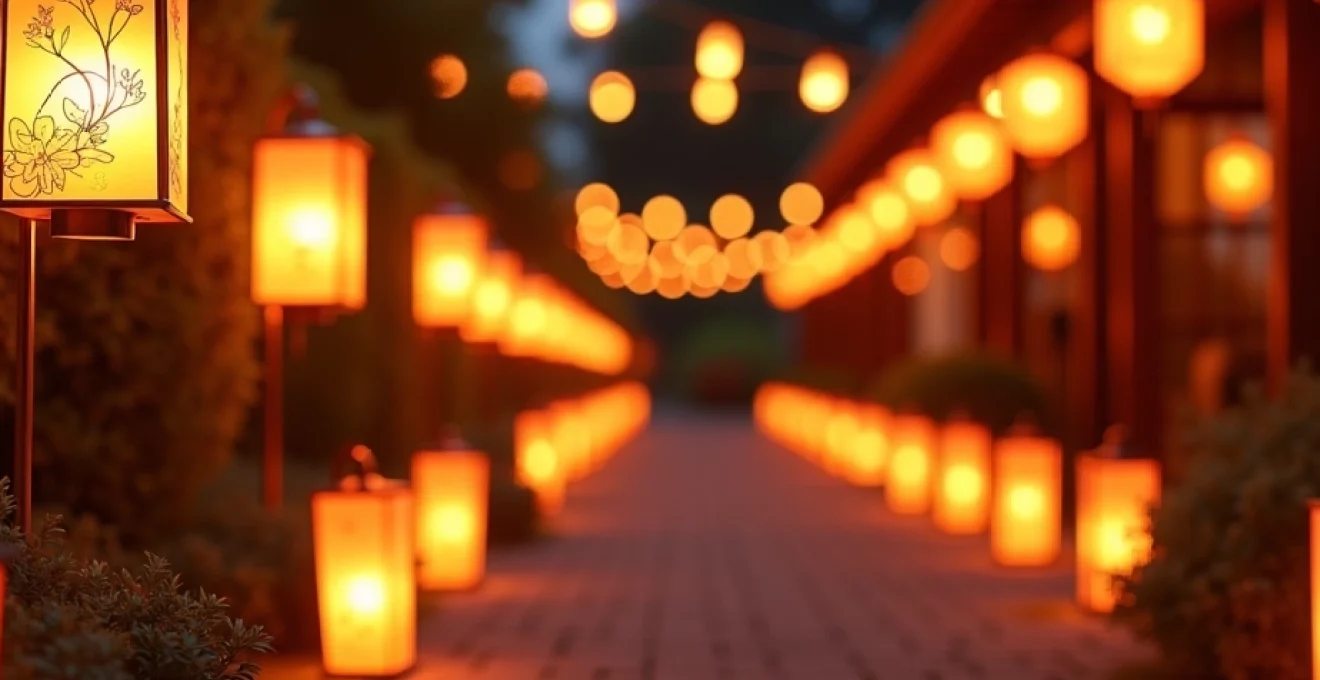
Paper lanterns have captivated homeowners and designers for centuries, transforming ordinary outdoor spaces into enchanting environments that beckon visitors to linger. These delicate yet striking decorative elements offer an unparalleled ability to create atmosphere, casting gentle shadows and warm glows that enhance the natural beauty of gardens, patios, and terraces. The art of incorporating paper lanterns into outdoor design extends far beyond simple illumination—it involves understanding cultural traditions, material science, and sophisticated lighting principles that work harmoniously with architectural elements and natural landscapes.
Modern outdoor enthusiasts are discovering that paper lanterns provide one of the most versatile and cost-effective methods for creating dramatic visual impact in their exterior spaces. Whether you’re planning an intimate dinner party, a grand celebration, or simply seeking to enhance your daily outdoor experience, these luminous installations offer endless possibilities for creative expression while maintaining practical functionality throughout various weather conditions.
Traditional paper lantern categories for outdoor illumination design
Understanding the rich heritage of paper lantern traditions provides the foundation for creating sophisticated outdoor lighting schemes that respect cultural origins while meeting contemporary design needs. Each traditional style offers unique characteristics that influence how light disperses, how the lanterns interact with architectural elements, and how they contribute to the overall ambiance of outdoor environments.
Chinese sky lantern installation techniques for garden pathways
Chinese sky lanterns, originally designed for ceremonial releases, adapt beautifully to stationary garden installations when properly secured and modified for permanent display. These cylindrical paper structures, traditionally measuring between 60 and 100 centimeters in height, create dramatic vertical elements that draw the eye upward while providing gentle ground-level illumination for walkways and garden borders.
Installation requires careful consideration of wind patterns and structural support systems. Professional designers recommend using weighted bamboo stakes driven at least 30 centimeters into the ground, with guy-wire systems providing additional stability during adverse weather conditions. The key to successful pathway lighting lies in spacing these lanterns approximately 2.5 meters apart, creating rhythm and continuity while ensuring adequate illumination for safe navigation.
Japanese chochin lantern mounting systems for pergola structures
Japanese chochin lanterns, with their distinctive collapsible design and traditional red and white colour schemes, offer exceptional versatility for pergola installations. These lanterns feature internal bamboo or wire frameworks that allow for easy assembly and disassembly, making them ideal for seasonal outdoor displays or temporary event installations.
Mounting systems for pergola applications typically involve adjustable cable systems that allow for height variation and easy maintenance access. Professional installers often incorporate pulley mechanisms that enable lowering individual lanterns for cleaning or bulb replacement without disrupting the entire display. The traditional sizing ranges from small 15-centimeter diameter versions for intimate settings to impressive 60-centimeter specimens that create bold focal points in larger outdoor spaces.
Thai loi krathong inspired floating lantern pool arrangements
Drawing inspiration from Thailand’s beautiful Loi Krathong festival, floating lantern arrangements bring magical ambiance to pools, ponds, and water features. These installations require specialized waterproof construction techniques and consideration of water circulation patterns to ensure proper positioning and longevity.
Successful floating displays typically combine multiple lantern sizes, with larger 40-centimeter diameter specimens serving as anchor points and smaller 20-centimeter versions creating clusters of gentle illumination. Marine-grade LED systems with sealed battery compartments ensure reliable operation while maintaining the delicate aesthetic that makes these installations so captivating during evening entertaining or quiet contemplation.
Korean yeon deung festival style clustered display configurations
Korean festival traditions offer inspiration for creating stunning clustered lantern displays that work exceptionally well in larger outdoor spaces where dramatic impact is desired. These configurations typically feature dozens of colourful lanterns arranged in organic groupings that mimic the flowing installations seen during traditional celebrations.
Professional installation techniques involve creating multiple suspension points at varying heights, typically ranging from 1.5 to 4 meters above ground level. The visual success of these displays depends on careful colour coordination and size variation, with gradient transitions creating movement and depth that changes throughout the day as natural light conditions shift from afternoon sun to evening twilight.
Weather-resistant paper lantern material selection and treatment methods
The longevity and performance of outdoor paper lantern installations depend heavily on material selection and protective treatment applications. Traditional paper construction, while beautiful, requires significant enhancement to withstand the challenges of outdoor exposure including UV radiation, moisture, temperature fluctuations, and wind stress. Understanding the properties and limitations of different materials enables designers to make informed decisions that balance aesthetic goals with practical durability requirements.
Modern outdoor paper lantern design increasingly relies on hybrid approaches that maintain the visual appeal of traditional materials while incorporating contemporary protective technologies. This evolution has led to innovative treatment methods and alternative materials that extend operational life from weeks to years, making permanent outdoor installations economically viable for residential and commercial applications.
Washi paper durability enhancement through lacquer application
Traditional Japanese washi paper, renowned for its strength and translucent beauty, becomes an exceptional outdoor material when properly treated with protective lacquer systems. The inherent fiber structure of washi provides superior tear resistance compared to conventional papers, while lacquer treatments create a moisture barrier that prevents degradation from rain and humidity exposure.
Professional treatment involves multiple thin coats of marine-grade polyurethane lacquer, applied in controlled humidity conditions to ensure proper adhesion and curing. This process typically increases material costs by approximately 40%, but extends operational life from 6 months to 3-4 years in typical outdoor conditions. The treated washi maintains its characteristic light diffusion properties while gaining water resistance comparable to synthetic alternatives.
Polyethylene-coated rice paper alternatives for extended outdoor exposure
Polyethylene-coated rice paper represents a compromise between traditional aesthetics and modern durability requirements. These materials feature a thin polymer coating applied to rice paper substrates, creating a translucent barrier that protects against moisture while maintaining the organic appearance that makes paper lanterns so appealing in natural settings.
Laboratory testing indicates that properly manufactured polyethylene-coated papers can withstand over 500 hours of direct UV exposure before showing significant degradation, compared to approximately 50 hours for untreated materials. The coating process adds minimal weight while significantly improving dimensional stability during temperature cycling, reducing the warping and distortion that commonly affects untreated paper installations.
Bamboo frame reinforcement techniques using Marine-Grade sealants
The structural integrity of paper lantern frames becomes critical in outdoor applications where wind loading and thermal expansion create stresses unknown in protected indoor environments. Bamboo frames, while traditional and aesthetically appropriate, require reinforcement and protective treatment to achieve acceptable service life in exterior installations.
Marine-grade penetrating sealants, originally developed for boat construction, provide excellent protection for bamboo components while maintaining the natural appearance that complements paper construction. These treatments typically penetrate 2-3 millimeters into bamboo fibers, creating water resistance while allowing the material to breathe and adjust to humidity changes. Professional installers often incorporate flexible joint compounds at critical stress points to accommodate movement without compromising structural integrity.
LED integration systems for Water-Resistant paper lantern modifications
Modern LED technology enables paper lantern installations to achieve consistent, long-term performance while maintaining safety standards appropriate for outdoor residential use. Waterproof LED systems designed specifically for paper lantern applications feature low-voltage operation, extended battery life, and wireless control capabilities that enhance both convenience and visual impact.
Professional-grade systems typically operate at 12 volts or less, eliminating electrical safety concerns while providing sufficient illumination for atmospheric lighting applications. Advanced installations incorporate programmable colour-changing capabilities and dimming controls that allow homeowners to adjust lighting intensity and colour temperature throughout the evening, creating dynamic displays that evolve with changing social needs and natural light conditions.
Architectural integration strategies for paper lantern outdoor installations
Successfully integrating paper lanterns into existing outdoor architectural elements requires careful consideration of scale, proportion, and visual flow between built and natural environments. The most effective installations feel organic and intentional, as though the lanterns were always meant to be part of the space rather than afterthoughts added for temporary decoration. This integration involves understanding how different architectural styles interact with various lantern designs, sizes, and placement strategies.
Contemporary outdoor design increasingly emphasizes the creation of cohesive environments where lighting, landscaping, and architectural elements work together to support specific lifestyle goals. Paper lanterns excel in this role because their soft, organic forms provide visual contrast to hard architectural lines while their warm illumination creates intimate spaces within larger outdoor environments. The key lies in understanding how to use these elements to enhance rather than compete with existing design features.
Modern pergola and arbor structures offer ideal frameworks for paper lantern installations, providing both structural support and defined spaces that benefit from atmospheric lighting. The linear elements of these structures create natural hanging points while their open construction allows lantern light to filter through and interact with surrounding landscape elements. Successful integration typically involves creating visual anchors at key structural points while allowing secondary lanterns to flow organically between these focal areas.
Deck and patio railings present another excellent opportunity for architectural integration, particularly when lanterns are sized and spaced to complement the rhythm of railing posts and balusters. Professional designers often recommend using lantern diameters that relate mathematically to railing spacing, creating visual harmony that feels natural and unforced. This approach works particularly well when colour schemes coordinate with existing paint or stain colours, creating unified palettes that enhance rather than distract from architectural features.
Existing landscape lighting infrastructure provides practical advantages for paper lantern integration, particularly when low-voltage systems can be adapted to power LED installations. Many homeowners discover that replacing or supplementing traditional landscape fixtures with paper lantern alternatives creates more interesting visual textures while maintaining equivalent illumination levels for safety and security purposes.
Seasonal colour psychology applications in paper lantern garden schemes
The psychological impact of colour in outdoor lighting design extends far beyond simple aesthetic preferences, influencing mood, behaviour, and the perceived comfort of outdoor spaces throughout changing seasons. Paper lanterns offer unique advantages in colour application because their translucent materials create soft, diffused colour effects that feel natural and welcoming rather than artificial or harsh. Understanding how different colours affect human psychology enables designers to create outdoor environments that support specific emotional and social goals.
Spring installations benefit from fresh, energizing colour palettes that reflect the renewal and growth happening in surrounding landscapes. Light greens, soft yellows, and gentle pinks create optimistic atmospheres that encourage outdoor activity and social interaction as weather becomes more favourable for exterior entertaining. These colours work particularly well when combined with emerging foliage and early blooming plants, creating harmonious relationships between artificial and natural elements.
Summer colour schemes can embrace bolder, more saturated hues that complement the intensity of full foliage and abundant flowering. Vibrant blues, warm oranges, and rich purples create dynamic visual interest while providing the stronger illumination needed for extended evening activities. Research suggests that warmer colour temperatures in the 2700K to 3000K range create the most comfortable atmospheres for dining and conversation, while cooler blues and greens can provide visual relief in areas where relaxation and contemplation are primary goals.
Autumn presentations offer opportunities to echo the spectacular colour changes happening in deciduous trees and shrubs, with warm reds, golden yellows, and deep oranges creating cohesive seasonal themes. These colour choices not only complement natural autumn palettes but also provide psychological warmth that extends the comfortable outdoor season as temperatures begin to drop. Professional designers often recommend gradually transitioning from summer to autumn colour schemes over several weeks, creating evolving displays that maintain visual interest throughout the seasonal transition.
Winter installations require careful consideration of psychological factors related to shorter days and reduced outdoor activity levels. Warm white and soft amber colours create inviting atmospheres that encourage continued outdoor use despite cooler temperatures, while avoiding the harsh, cold feeling that can result from pure white or blue-tinted lighting. Research indicates that warm colour temperatures can actually influence perceived temperature, making outdoor spaces feel several degrees warmer than they actually are.
Professional colour psychology research demonstrates that warm amber lighting can increase perceived outdoor temperature by 3-5 degrees Celsius, significantly extending comfortable outdoor entertainment seasons in temperate climates.
Professional lighting design principles using paper lantern arrays
Professional outdoor lighting design requires understanding complex relationships between light intensity, colour temperature, beam patterns, and environmental factors that affect both visual comfort and practical functionality. Paper lantern arrays offer unique opportunities to apply these principles because their soft, omnidirectional light distribution creates gentle illumination patterns that complement rather than compete with natural moonlight and starlight. The key to successful professional results lies in treating paper lanterns as sophisticated lighting instruments rather than simple decorative elements.
Layered lighting schemes represent the foundation of professional outdoor illumination design, typically incorporating ambient lighting for general visibility, task lighting for specific activities, and accent lighting for visual interest and architectural enhancement. Paper lanterns excel in ambient and accent roles, providing the background illumination that makes outdoor spaces feel welcoming while highlighting key features like dining areas, water elements, or specimen plants.
Kelvin temperature coordination for warm amber outdoor ambience
Colour temperature coordination becomes critical in professional installations where multiple light sources must work together to create cohesive atmospheric effects. Paper lantern installations typically perform best when LED colour temperatures range between 2200K and 2700K, providing warm amber qualities that complement candlelight, firelight, and other traditional outdoor illumination sources.
Professional designers often specify tunable LED systems that allow colour temperature adjustment throughout the evening, beginning with slightly cooler temperatures during twilight hours and gradually warming as full darkness arrives. This approach mimics natural light transitions while accommodating changing social activities and visual needs. Research indicates that colour temperature variations of more than 300K between adjacent fixtures create noticeable discontinuities that can detract from overall ambiance quality.
Dimmer control systems integration with Battery-Powered lantern networks
Modern wireless dimmer control systems enable sophisticated management of large paper lantern installations, providing the flexibility needed for professional-quality results in residential applications. These systems typically operate using mesh network protocols that ensure reliable communication between individual fixtures while maintaining the low-voltage safety standards appropriate for outdoor residential use.
Battery-powered lantern networks offer particular advantages in retrofit applications where running electrical infrastructure would be disruptive or expensive. Advanced lithium-ion battery systems can provide 8-12 hours of continuous operation while supporting wireless dimming and colour control functions. Professional installations often incorporate automated charging systems using discrete solar panels that maintain battery levels without requiring manual intervention or visible wiring connections.
Shadow pattern optimisation through strategic paper lantern placement
The interplay between light and shadow creates much of the visual interest that makes outdoor lighting installations memorable and emotionally engaging. Paper lanterns cast particularly appealing shadow patterns because their round or cylindrical forms create soft, organic shadows that complement natural landscape elements while avoiding the harsh geometric patterns associated with traditional architectural lighting fixtures.
Strategic placement involves understanding how lantern shadows will interact with existing landscape features throughout different seasons as plant growth and foliage density change. Professional designers often create shadow mapping diagrams that predict how installations will perform during different times of year, ensuring that shadow patterns enhance rather than obscure important landscape features or architectural elements.
Solar panel charging solutions for sustainable paper lantern operations
Sustainable energy solutions for paper lantern installations reflect growing environmental consciousness while providing practical advantages in remote locations where electrical infrastructure is limited or expensive. Modern solar charging systems designed specifically for decorative lighting applications can maintain multiple lantern networks while remaining visually discrete and weather-resistant.
Professional solar installations typically incorporate battery storage systems that provide 3-5 days of autonomous operation during periods of limited sunlight, ensuring consistent performance even during extended cloudy periods. Advanced systems include intelligent charging algorithms that optimize battery life while maintaining adequate power reserves for peak usage periods during evening entertainment activities.
Contemporary solar charging systems achieve 85-90% efficiency rates while providing sufficient power reserves to maintain paper lantern networks for up to five consecutive days without direct sunlight, making them viable for year-round installations in most temperate climates.
Maintenance protocols and longevity maximisation for outdoor paper lantern displays
Establishing comprehensive maintenance protocols ensures that outdoor paper lantern installations continue providing reliable performance and attractive appearance throughout multiple seasons of use. Professional maintenance approaches address both preventive care that prevents common problems and corrective procedures that restore functionality when issues occur. The investment in proper maintenance typically extends installation life by 200-300% while maintaining the visual quality that makes these installations worthwhile.
Seasonal maintenance schedules provide the framework for long-term installation success, with specific tasks timed to address weather-
and climate-related challenges specific to each season. Spring maintenance focuses on inspecting structural components for winter damage, cleaning accumulated debris from frames and electrical connections, and testing LED systems after months of reduced usage. This seasonal inspection typically reveals UV degradation in paper materials, requiring selective replacement of heavily weathered lanterns while preserving those in acceptable condition.
Summer maintenance protocols emphasize protecting installations from intense UV radiation and sudden weather events common during peak outdoor entertaining seasons. Monthly inspections should focus on structural integrity assessments of hanging systems, particularly guy-wire connections and mounting hardware that experience thermal expansion and contraction cycles. Professional maintenance teams often recommend applying UV-protective spray treatments to paper surfaces every 6-8 weeks during peak summer months, extending material life by approximately 40% compared to untreated installations.
Autumn preparation involves comprehensive weatherproofing procedures that prepare installations for winter weather challenges. This includes applying additional sealant treatments to bamboo frames, inspecting and replacing battery systems before cold weather reduces capacity, and implementing protective covers for LED components in regions experiencing freezing temperatures. Professional installers often recommend reducing lantern density by 25-30% during autumn months, removing the most vulnerable specimens while maintaining visual impact through strategic spacing adjustments.
Winter maintenance requires adapting care routines to address reduced daylight hours and challenging weather access conditions. Monthly visual inspections from ground level help identify problems requiring professional attention, while quarterly detailed inspections address structural issues and electrical system performance. Advanced installations incorporate remote monitoring systems that provide real-time status updates on battery levels, LED functionality, and structural stress indicators, enabling proactive maintenance scheduling that prevents costly emergency repairs.
Professional maintenance data indicates that installations following comprehensive seasonal protocols achieve average operational lifespans of 4-6 years compared to 18-24 months for installations receiving only reactive maintenance attention.
Component replacement strategies focus on maintaining visual consistency while managing costs through selective renewal of critical elements. Paper replacement typically occurs on 2-3 year cycles depending on material quality and weather exposure, while structural components like bamboo frames and mounting hardware often remain serviceable for 5-7 years with proper protective treatment. LED components generally provide 8-10 years of reliable service, making them excellent long-term investments despite higher initial costs compared to traditional lighting alternatives.
Cleaning protocols for paper lanterns require gentle techniques that preserve material integrity while removing accumulated dirt, pollen, and environmental contaminants that reduce light transmission and visual appeal. Professional cleaning typically involves soft-bristle brushes and mild detergent solutions applied during dry weather conditions, with thorough drying periods preventing moisture damage that can compromise structural integrity. Advanced installations benefit from ultrasonic cleaning systems that remove embedded particles without mechanical stress on delicate paper fibers.
Documentation and record-keeping enable property owners to optimize maintenance schedules and predict replacement needs based on actual performance data rather than theoretical estimates. Professional maintenance programs typically include detailed photographic records, performance testing results, and environmental exposure tracking that inform future installation decisions and maintenance planning. This data-driven approach often reveals opportunities for selective upgrades and modifications that enhance performance while managing long-term operational costs effectively.