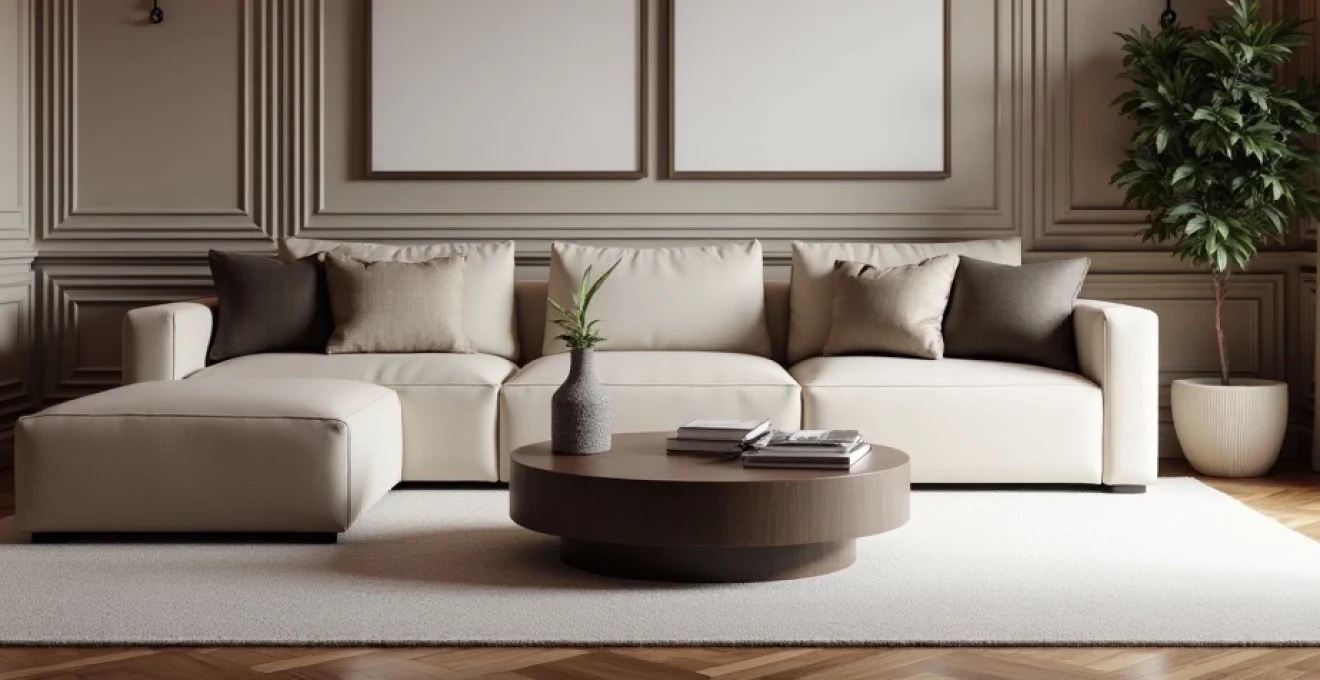
Every well-designed interior space requires a visual anchor that commands attention and creates a sense of purpose. A carefully crafted focal point transforms an ordinary room into a compelling environment where every element works in harmony. Whether you’re redesigning a living space or starting from scratch, understanding how to deliberately direct the eye through strategic design choices can dramatically enhance the impact and functionality of any interior.
Professional designers understand that the human eye naturally seeks a resting place when scanning a room. Without a clear focal point, spaces can feel scattered and uncomfortable, lacking the visual hierarchy that creates both comfort and interest. The art lies in creating these eye-catching elements through thoughtful manipulation of colour, texture, lighting, and architectural features that work together to establish clear visual dominance.
Understanding visual hierarchy through strategic colour psychology and contrast ratios
Colour serves as one of the most powerful tools for creating visual hierarchy in interior spaces. The psychological impact of colour combinations can dramatically influence how occupants perceive and navigate through a room. Understanding colour temperature, saturation levels, and contrast ratios enables designers to orchestrate visual movement with precision and intention.
The effectiveness of colour-based focal points relies heavily on the principles of simultaneous contrast, where adjacent colours influence each other’s appearance. A vibrant accent wall in deep emerald green, for example, will appear more saturated when surrounded by neutral tones than when paired with equally bold colours. This phenomenon allows designers to amplify the impact of their chosen focal elements without overwhelming the entire space.
Implementing the 60-30-10 rule for dominant focal point creation
The classic 60-30-10 colour distribution formula provides a reliable framework for establishing visual hierarchy while maintaining balance. The dominant colour (60%) typically covers walls and large furniture pieces, creating a neutral backdrop. The secondary colour (30%) appears in upholstery, window treatments, and medium-sized accessories, while the accent colour (10%) creates the focal point through artwork, pillows, or statement pieces.
This proportional approach ensures that focal elements maintain their visual impact without competing with other room elements. When applying this rule, consider how natural and artificial lighting will affect colour perception throughout different times of day. Warm morning light can intensify red and yellow undertones, while cool evening light enhances blues and greens, potentially shifting the focal point’s prominence.
Leveraging complementary colour schemes using adobe color wheel principles
Complementary colour relationships, positioned opposite each other on the colour wheel, create maximum visual tension and energy. These high-contrast pairings naturally draw attention and can establish powerful focal points when applied strategically. Orange and blue combinations, for instance, create dynamic tension that immediately captures attention, making them ideal for statement walls or artistic displays.
Digital colour tools like Adobe Color provide precise colour matching capabilities, enabling designers to explore split-complementary and triadic schemes that offer sophisticated variations on traditional complementary relationships. These tools help identify colours with specific hex codes, ensuring consistency across different materials and finishes throughout the design process.
Applying tonal contrast techniques in monochromatic interior schemes
Monochromatic schemes rely on variations in tone, saturation, and texture rather than contrasting hues to create visual interest. In these environments, focal points emerge through dramatic shifts in value – the lightness or darkness of colours within the same family. A deep charcoal grey accent wall in an otherwise light grey room creates significant impact without introducing competing colour families.
Texture becomes particularly important in monochromatic schemes, as tactile variations help distinguish different elements and create depth. Combining matte and glossy finishes, rough and smooth surfaces, or dense and airy materials within the same colour family can establish compelling focal points that rely on sensory contrast rather than colour differentiation.
Utilising Warm-Cool temperature dynamics for spatial eye movement
Colour temperature manipulation can guide eye movement through interior spaces by creating natural progression paths. Warm colours (reds, oranges, yellows) advance toward the viewer and feel more intimate, while cool colours (blues, greens, purples) recede and create spaciousness. Strategic placement of warm accent colours can draw attention to specific areas while cool backgrounds provide visual rest.
This temperature dynamic proves particularly effective in open-plan spaces where multiple functional areas require definition. A warm-toned seating area can serve as a focal point within a larger cool-toned room, creating psychological boundaries without physical barriers. The contrast between advancing and receding colours naturally guides occupants through the space while maintaining visual continuity.
Architectural elements and structural features as natural eye magnets
Built-in architectural features provide some of the most effective and lasting focal points in interior design. These permanent elements create visual anchors that transcend decorative trends and establish the fundamental character of a space. Unlike furniture or accessories that can be moved or changed, architectural focal points become integral parts of the room’s identity and influence all subsequent design decisions.
The key to maximising architectural focal points lies in understanding their proportional relationships to the overall space and enhancing their natural characteristics through complementary design elements. A modest fireplace can be transformed into a commanding presence through strategic material choices, while an impressive window can be emphasised through thoughtful framing treatments that amplify its inherent drama .
Statement walls through textural applications and material juxtaposition
Textural accent walls create focal points through tactile and visual contrast rather than colour variation alone. Natural stone, reclaimed wood, or textured plaster applications introduce dimensional qualities that catch and reflect light differently throughout the day. These surfaces create constantly evolving visual experiences as lighting conditions change, maintaining interest over time.
Material juxtaposition amplifies textural impact by creating unexpected combinations that challenge conventional expectations. Smooth concrete paired with warm timber, or rough brick contrasted with polished metal, creates tension that naturally draws attention. The success of these combinations relies on maintaining visual balance through careful attention to proportion and scale relationships.
Crown moulding and ceiling medallions for vertical visual anchoring
Ceiling treatments often represent missed opportunities for creating dramatic focal points in interior spaces. Crown moulding, coffered details, and decorative medallions draw the eye upward, making rooms feel more spacious while adding architectural character. These elements work particularly well in rooms with high ceilings where horizontal focal points might feel disproportionately small.
Modern interpretations of traditional ceiling treatments can provide contemporary spaces with focal points that feel both current and timeless. Geometric patterns, LED integration, or unexpected material applications can transform standard ceiling planes into compelling overhead focal elements that command attention without overwhelming floor-level activities.
Built-in alcoves and niche installations as sculptural display points
Architectural niches and built-in alcoves create natural display opportunities that can serve as sophisticated focal points. These recessed areas provide visual depth while offering practical storage and display functions. The key lies in treating these spaces as three-dimensional compositions where lighting, backing materials, and displayed objects work together to create cohesive visual statements.
The proportional relationship between niche size and displayed objects significantly impacts visual effectiveness. Oversized objects in small niches create tension and drama, while smaller collections in larger alcoves can appear scattered and ineffective. Strategic lighting within these spaces can transform simple storage into gallery-quality display areas that rival traditional artwork as focal elements.
Exposed beam configurations and coffered ceiling focal strategies
Structural elements like exposed beams or coffered ceiling treatments create strong linear focal points that can define and organise interior spaces. These horizontal and vertical lines naturally guide eye movement and can establish clear sight lines throughout larger rooms. The material, finish, and proportional relationships of these elements determine their effectiveness as focal points.
Contemporary applications of traditional beam treatments allow for creative interpretations that suit modern aesthetics while maintaining classical proportional principles. Steel beams with industrial finishes, laminated timber with contemporary profiles, or integrated lighting systems within beam structures can create hybrid focal points that serve multiple functional and aesthetic purposes simultaneously.
Strategic lighting design techniques for attention direction
Lighting serves as the most flexible and dramatic tool for creating and modifying focal points in interior spaces. Unlike permanent architectural features or furniture arrangements, lighting can be adjusted, programmed, and reconfigured to suit different activities, moods, and times of day. Professional lighting design goes far beyond simple illumination, using light as a sculptural medium that shapes space and directs attention with precision.
The effectiveness of lighting-based focal points relies on understanding contrast ratios and the relationship between task, ambient, and accent lighting layers. A well-lit focal point requires a carefully orchestrated background of supporting light levels that provide context without competition. The interplay between light and shadow creates depth, drama, and visual hierarchy that can transform ordinary objects into compelling focal elements.
Effective lighting design creates moments of visual drama while maintaining overall comfort and functionality throughout the space.
Track lighting systems with adjustable beam angles and kelvin temperatures
Modern track lighting systems offer unprecedented flexibility for creating adjustable focal points that can evolve with changing needs and seasons. Variable beam angles allow precise control over light distribution, from narrow spotlighting for artwork to wide flood patterns for general accent lighting. Kelvin temperature adjustment capabilities enable designers to shift colour temperature throughout the day, maintaining optimal colour rendering for different activities.
The positioning and spacing of track fixtures significantly impacts their effectiveness as focal point creators. Multiple fixtures can work together to create graduated lighting effects that guide the eye through sequential focal points, while single fixtures can provide dramatic emphasis for individual elements. Integration with smart home systems allows for programmed lighting scenes that can transform space character throughout daily cycles.
Picture lighting and gallery spotting methods for artwork emphasis
Professional artwork lighting requires precise beam control and colour accuracy to effectively highlight two-dimensional focal points. Traditional picture lighting fixtures mounted directly above artwork provide even illumination while minimising shadows and glare. However, contemporary gallery spotting techniques using adjustable track fixtures offer greater flexibility and can accommodate changing artwork displays.
The angle of incidence proves critical for artwork lighting effectiveness. Light striking artwork at approximately 30 degrees from vertical minimises glare while providing even coverage across the surface. LED technology with high CRI ratings (90+ Color Rendering Index) ensures accurate colour reproduction, allowing artwork to serve as effective focal points without colour distortion that might diminish their visual impact.
Pendant drop heights and clustered installation patterns
Pendant lighting installations create powerful focal points through both their illumination patterns and their physical presence as design objects. Drop height calculations must consider sight lines, head clearance, and proportional relationships to surrounding furniture and architectural elements. Standard guidelines suggest 30-36 inches above dining tables, but these can be adjusted based on ceiling height and design intent.
Clustered pendant installations offer opportunities for creating complex focal points that combine multiple light sources into unified compositions. Varied drop heights, different fixture sizes, or coordinated colour schemes can create dynamic lighting sculptures that serve as primary room focal points while providing functional task lighting.
LED strip integration behind floating shelves and architectural details
Concealed LED strip lighting creates sophisticated focal points by highlighting architectural details and display elements through indirect illumination. When installed behind floating shelves, these systems create dramatic silhouette effects that emphasise both the shelf structure and displayed objects. The linear nature of LED strips allows for continuous lighting runs that can follow complex architectural geometries.
Colour-changing LED strips add another dimension to focal point creation by allowing seasonal or mood-based colour adjustments. Integration with building management systems enables automated colour and intensity changes that can shift focal point emphasis throughout daily or seasonal cycles. Programmable lighting sequences can create dynamic focal points that evolve over time, maintaining visual interest in spaces viewed regularly.
Furniture arrangement using golden ratio and scale principles
The arrangement of furniture within interior spaces follows mathematical principles that create naturally pleasing compositions and effective focal points. The golden ratio (1:1.618) appears throughout successful furniture groupings, room proportions, and focal point relationships, providing a framework for arrangements that feel inherently balanced and comfortable. Understanding these proportional relationships enables designers to create furniture-based focal points that anchor spaces while maintaining visual harmony.
Scale relationships between individual pieces and their surrounding environment determine whether furniture elements can successfully serve as focal points. A single oversized piece in a modestly proportioned room creates immediate visual dominance, while the same piece in a grand space might disappear entirely. The key lies in understanding these relationships and using them strategically to create desired visual hierarchies .
Furniture focal points work most effectively when they break expected patterns or conventions while maintaining functional utility. An unusually shaped sofa, a dramatically scaled coffee table, or an unexpected material application can create compelling focal points that generate conversation and interest. These elements must be carefully integrated with supporting pieces to avoid visual isolation or dysfunction within the broader room composition.
The concept of visual weight plays a crucial role in furniture-based focal point creation. Dark colours, complex patterns, and dense materials create greater visual weight than light, simple, or airy alternatives. Balancing visual weight distribution throughout a room ensures that focal point furniture commands appropriate attention without overwhelming other necessary elements. Strategic placement near architectural features or complementary lighting can amplify furniture focal points without requiring oversized proportions.
Artwork placement and gallery wall composition strategies
Artwork represents one of the most versatile and personally expressive focal point options available to interior designers. Unlike architectural features or major furniture pieces, artwork can be changed, rearranged, and updated to reflect evolving tastes or seasonal preferences. The strategic placement and grouping of artwork can transform entire walls into compelling focal points that establish room character and provide ongoing visual interest.
The psychology of artwork viewing involves understanding optimal viewing distances, heights, and lighting conditions that allow pieces to achieve maximum visual impact. Standard guidelines suggest hanging artwork with centres approximately 57-60 inches from the floor, but these measurements must be adjusted based on ceiling height, furniture relationships, and viewer demographics. Artwork that connects with viewers at an emotional level creates more powerful focal points than pieces selected solely for aesthetic coordination.
Gallery walls require careful balance between individual piece character and overall composition unity to create effective focal points.
Gallery wall compositions offer opportunities to create large-scale focal points through collections of smaller pieces. Success requires careful attention to spacing, visual weight distribution, and thematic coherence. Templates and planning tools help designers visualise complex arrangements before installation, but the most effective gallery walls balance planned composition with organic development over time. Mixing frame styles, artwork sizes, and media types can create dynamic focal points that reveal new details upon repeated viewing.
The relationship between artwork and surrounding wall colour significantly impacts focal point effectiveness. High contrast combinations create dramatic emphasis, while tonal relationships allow artwork details to take precedence over bold colour statements. Neutral wall colours provide maximum flexibility for changing artwork displays, while coloured backgrounds can create coordinated focal point systems that unify multiple pieces within larger compositional frameworks.
Textile patterns and window treatment focal point applications
Textile applications provide opportunities for creating soft, tactile focal points that introduce pattern, colour, and texture while maintaining flexibility for seasonal or stylistic changes. Window treatments, in particular, offer significant focal point potential due to their prominent positioning and ability to frame natural light sources. The scale, pattern, and installation method of these treatments determine their effectiveness as room-anchoring elements.
Pattern mixing within textile focal points requires careful attention to scale relationships and colour coordination to avoid visual chaos. Large-scale patterns work effectively as dominant focal elements, while smaller patterns provide supporting texture and visual interest. The key lies in maintaining a clear hierarchy where one pattern dominates while others provide complementary rather than competing elements. Successful pattern combinations often share common colour families or proportional relationships that create underlying visual unity.
Contemporary window treatment applications extend far beyond traditional drapery panels to include motorised systems, integrated lighting, and smart glass technologies. These advanced systems can serve as dynamic focal points that change throughout the day based on lighting conditions, privacy needs, or aesthetic preferences. Automated systems allow for programmed focal point transitions that can shift room emphasis from exterior views during daylight hours to interior lighting features during evening periods.
The installation method and hardware selection for textile focal points significantly impacts their visual effectiveness and longevity. Ceiling-mounted treatments create more dramatic vertical emphasis than wall-mounted alternatives, while hidden track systems provide clean lines that don’t compete with textile patterns. Quality hardware ensures smooth operation and maintains crisp appearance over time, preventing focal point degradation due to poor functionality or appearance. Professional installation techniques enable textile focal points to maintain their intended impact throughout their service life while providing reliable daily functionality.