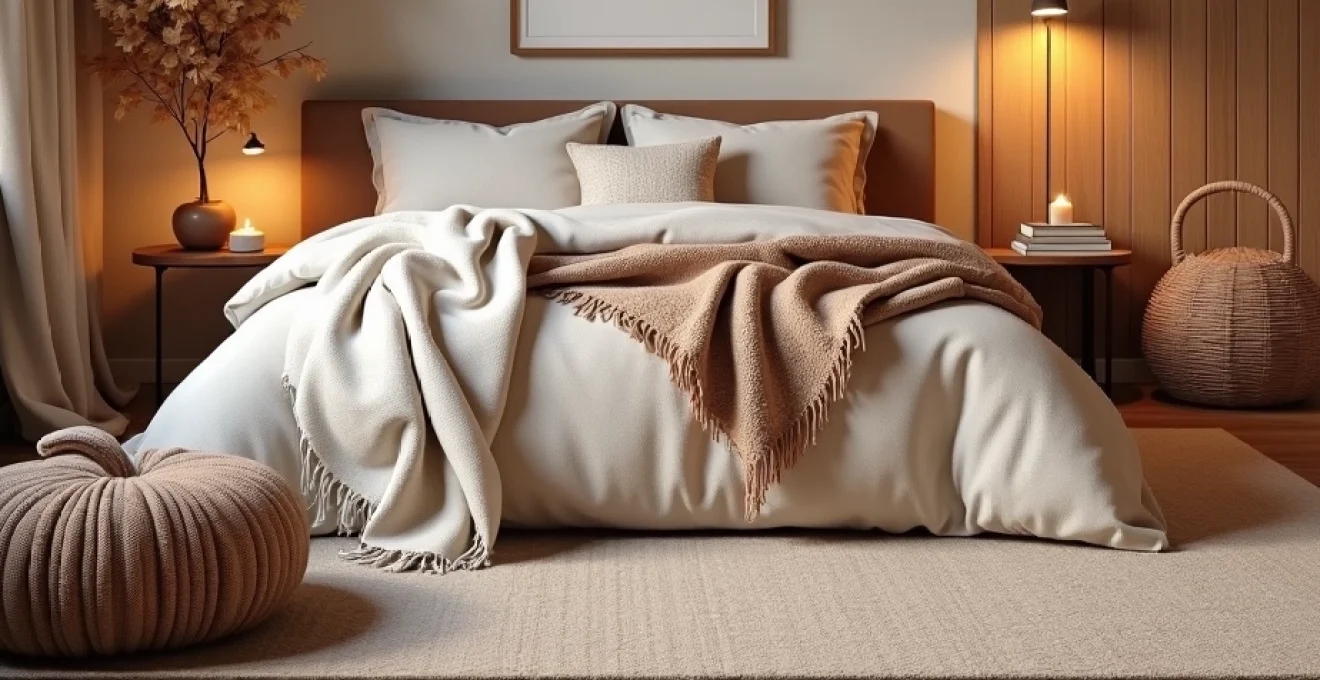
As the leaves begin their spectacular transformation and temperatures drop, the desire to create warm, inviting spaces within our homes becomes paramount. The art of crafting a cozy autumn nook transcends simple decoration; it requires a sophisticated understanding of how natural textures interact with light, warmth, and human comfort. When expertly layered, natural fibres create a multisensory experience that not only pleases the eye but also provides tactile comfort and thermal regulation essential for the changing season.
The modern approach to autumnal interior design emphasises the strategic use of organic materials that work in harmony rather than competition. Each texture tells its own story whilst contributing to a cohesive narrative of warmth and comfort. From the lustrous depths of merino wool to the rustic charm of jute rope accents, every element serves both functional and aesthetic purposes in creating spaces that feel genuinely lived-in and loved.
Essential natural fibre selection for autumn interior textiles
The foundation of any successful autumn nook lies in understanding the unique properties and visual characteristics of natural fibres. Each material brings distinct qualities that contribute to both comfort and aesthetic appeal, making careful selection crucial for achieving the desired ambience.
Wool varieties: merino, shetland, and alpaca performance characteristics
Merino wool stands as the gold standard for luxury autumn textiles, offering exceptional temperature regulation through its unique fibre structure. The crimped nature of merino fibres creates tiny air pockets that trap warm air whilst allowing moisture to escape, making it ideal for throws and cushions that remain comfortable throughout temperature fluctuations. Its natural elasticity ensures that merino wool pieces maintain their shape and appearance even with frequent use, whilst the fine fibre diameter provides a soft, non-itchy texture against the skin.
Shetland wool brings a more rustic character to autumn interiors, with its slightly coarser texture and distinctive colour variations. This hardy fibre offers superior durability and natural water resistance, making it perfect for blankets that will see heavy use. The traditional methods of processing Shetland wool preserve its natural lanolin content, providing inherent stain resistance and contributing to the material’s longevity.
Alpaca fibre represents the epitome of luxury in natural textiles, offering silk-like softness combined with exceptional warmth. Unlike sheep’s wool, alpaca lacks lanolin, making it hypoallergenic and naturally antibacterial. The hollow structure of alpaca fibres provides superior insulation whilst remaining lightweight, creating blankets and throws that offer maximum warmth without bulk. The natural lustre of alpaca fibre catches and reflects light beautifully, adding visual depth to layered arrangements.
Linen and hemp weave structures for seasonal layering
Linen’s versatility extends beyond summer applications when you consider its varying weave structures and weights. Heavy linen weaves, such as those found in Belgian stonewashed varieties, provide the perfect foundation layer for autumn textiles. The natural irregularities in linen fibres create visual interest and improve with age, developing a distinctive patina that enhances the material’s organic appeal.
Hemp textiles offer remarkable durability and natural antimicrobial properties, making them ideal for heavily used pieces in reading nooks and lounging areas. Modern hemp processing techniques have eliminated the coarseness traditionally associated with this fibre, resulting in fabrics that rival linen in softness whilst surpassing it in strength. Hemp’s natural UV resistance ensures that pieces exposed to window light maintain their colour integrity throughout the season.
The key to successful linen and hemp integration lies in selecting complementary weave structures. Loose, open weaves work beautifully as base layers, allowing air circulation and preventing overheating, whilst tighter weaves provide structure and definition to your textile arrangement. The natural tendency of these fibres to wrinkle adds to their casual, lived-in appeal rather than detracting from it.
Cotton flannel and brushed percale thermal properties
Cotton flannel undergoes a brushing process that raises the surface fibres, creating a napped finish that traps air and provides exceptional warmth. The thermal properties of quality flannel make it indispensable for autumn layering, offering cozy comfort without the weight of heavier materials. Organic cotton flannel provides superior breathability compared to conventional alternatives, ensuring comfort across varying temperatures.
Brushed percale represents a more refined approach to cotton warmth, offering subtle texture enhancement without the obvious nap of flannel. This treatment creates microscopic air pockets that improve thermal retention whilst maintaining the crisp, clean appearance that percale is known for. The balanced weave structure of percale ensures longevity and resistance to pilling, making it an excellent investment for frequently used items.
When selecting cotton varieties for autumn applications, thread count becomes less important than fibre quality and finishing techniques. Lower thread count fabrics often provide better breathability and temperature regulation, preventing the stuffiness that can occur with overly dense weaves during transitional seasons.
Jute and sisal rope texturing techniques for accent elements
Jute rope texturing adds dimensional interest to autumn arrangements through its distinctive braided or twisted construction. The natural golden colour of jute complements autumnal palettes whilst its coarse texture provides essential contrast against smoother materials. Modern jute processing techniques have improved softness whilst maintaining the material’s characteristic strength and durability.
Sisal rope offers a lighter colour palette and finer texture than jute, making it suitable for more refined applications. The linear structure of sisal fibres creates subtle variations in colour and texture that add visual interest without overwhelming other elements. When incorporated as accent piping or decorative elements, sisal provides structure and definition to soft furnishings.
Both jute and sisal benefit from proper preparation before incorporation into interior applications. Light treatment with natural oils can improve flexibility and reduce fibre shedding, whilst maintaining the authentic appearance that makes these materials so appealing in organic design schemes.
Layering methodology using scandinavian hygge principles
The Danish concept of hygge emphasises comfort, contentment, and the simple pleasures found in everyday moments. When applied to textile layering, hygge principles guide the creation of spaces that feel inherently welcoming and restorative. This approach prioritises function alongside beauty, ensuring that every element contributes to the overall sense of wellbeing.
Base layer foundation with linen throws and cotton muslin
Establishing a proper foundation begins with selecting base layer materials that provide structure without overwhelming the senses. Quality linen throws serve as the cornerstone of successful layering, offering neutral tones and subtle texture that complement rather than compete with additional elements. The natural drape of linen creates organic folds and shadows that add visual interest even in monochromatic schemes.
Cotton muslin provides an understated foundation option that offers versatility and practicality. Its lightweight nature makes it ideal for transitional seasons when temperature fluctuations require adaptability. The soft, slightly irregular texture of quality muslin adds subtle visual interest whilst maintaining the clean, uncluttered aesthetic that hygge principles emphasise.
Proper base layer selection requires consideration of both visual weight and actual weight. Materials should feel substantial enough to provide comfort and structure whilst remaining light enough to avoid creating bulk when additional layers are added. The goal is to establish a foundation that feels intentional rather than accidental.
Mid-layer integration of chunky knit wool and mohair blankets
Mid-layer elements provide the primary visual and tactile interest in layered arrangements whilst contributing essential warmth and comfort. Chunky knit wool blankets offer distinctive texture through their construction, with visible stitches and three-dimensional patterns creating shadows and highlights that change throughout the day as light conditions shift.
Mohair blankets bring a different quality to mid-layer applications, offering exceptional softness combined with natural lustre. The long fibres of mohair create a distinctive fuzzy texture that invites touch whilst providing excellent insulation properties. Unlike wool, mohair has natural elasticity that helps blankets maintain their shape and appearance over time.
The integration of mid-layer elements requires attention to proportion and scale. Oversized pieces can overwhelm smaller spaces, whilst undersized elements may appear lost within the overall composition. The key lies in selecting pieces that feel substantial enough to make a visual impact whilst remaining proportionate to the space and other elements.
Surface layer detailing with sheepskin and faux fur accents
Surface layers provide the finishing touches that elevate layered arrangements from merely functional to genuinely luxurious. Genuine sheepskin offers unparalleled softness and natural temperature regulation, with its wool pile providing insulation whilst the leather backing adds durability and structure. The natural variations in colour and texture found in quality sheepskin ensure that each piece is unique.
High-quality faux fur alternatives now offer convincing texture and appearance whilst addressing ethical concerns. Modern synthetic fur manufacturing techniques create materials that closely mimic the visual and tactile properties of natural fur whilst offering easier maintenance and hypoallergenic properties. The key to successful faux fur selection lies in choosing pieces with realistic colour variation and appropriate pile depth.
Surface layer application requires restraint and strategic placement. These elements work best as accent pieces rather than dominant features, providing tactile contrast and visual interest without overwhelming the overall composition. Consider placing surface layer elements where they will receive natural interaction, such as the arm of a chair or the foot of a bed.
Tactile contrast balancing between smooth and nubby textures
Successful textile layering relies on the interplay between contrasting textures to create visual and tactile interest. The juxtaposition of smooth surfaces against nubby or rough textures creates dynamic tension that keeps the eye engaged whilst providing varied sensory experiences. This contrast principle applies to both large-scale elements and fine details within the arrangement.
Smooth textures, such as silk or high-count cotton, provide restful areas for the eye and create sophisticated contrast against more heavily textured materials. These elements often work best in supporting roles, providing balance and preventing the overall arrangement from becoming too busy or overwhelming. The reflective properties of smooth surfaces also contribute to light play within the space.
Nubby textures, including bouclé, tweed, and roughly woven materials, add dimension and visual weight to arrangements. These textures catch and hold light differently than smooth surfaces, creating depth and shadow that changes throughout the day. The key to successful integration lies in varying the scale and intensity of texture to create rhythm and movement rather than competition.
Colour palette engineering for autumnal ambience
The psychological impact of colour in interior spaces cannot be overstated, particularly when creating environments designed for rest and relaxation. Autumn colour palettes draw inspiration from nature’s own transformation, incorporating warm earth tones that promote feelings of security and comfort. The strategic use of colour in natural textiles enhances their inherent beauty whilst contributing to the overall ambience of the space.
Warm neutrals form the backbone of successful autumn colour schemes, providing a versatile foundation that accommodates seasonal changes and personal preferences. Colours such as mushroom, taupe, and warm grey offer sophistication without the starkness of pure white or the heaviness of darker tones. These colours work particularly well in natural fibres, where subtle variations in dye uptake create organic colour variation that enhances rather than detracts from the material’s natural beauty.
Rich accent colours drawn from autumn’s natural palette add depth and interest to neutral foundations. Deep burgundy, forest green, and burnished gold introduce warmth and sophistication whilst remaining grounded in nature. When incorporated through smaller elements such as cushions or throws, these colours provide flexibility for seasonal adjustment without requiring significant investment or commitment.
The interaction between colour and texture creates additional layers of visual interest within autumn arrangements. Natural fibres often exhibit subtle colour variations that become more apparent when layered together, creating organic colour gradations that feel both intentional and natural. Understanding how different textures affect colour perception allows for more sophisticated and nuanced colour selection.
Consider the impact of artificial and natural lighting on colour perception throughout the day. Colours that appear vibrant in morning sunlight may seem muted under evening lamp light, whilst warm artificial light can enhance the golden undertones in neutral palettes. Testing colour combinations under various lighting conditions ensures that your palette remains harmonious throughout different times and seasons.
The most successful autumn colour palettes feel discovered rather than designed, as if nature herself had arranged the perfect combination of tones and textures.
Strategic furniture positioning and spatial flow optimisation
The physical arrangement of furniture and textiles within a space significantly impacts both functionality and aesthetic appeal. Strategic positioning considers not only visual composition but also practical elements such as traffic flow, natural light access, and seasonal temperature variations. The goal is to create arrangements that feel both intentional and effortless, supporting the natural rhythms of daily life whilst enhancing comfort and visual appeal.
Window positioning plays a crucial role in autumn nook creation, as natural light becomes increasingly precious during shorter days. Positioning seating to take advantage of available daylight maximises both the practical benefits of natural illumination and the psychological benefits of maintaining connection with the outdoors. However, consideration must also be given to temperature variations near windows, particularly in older buildings where drafts may be present.
Traffic flow patterns within spaces affect both the practical use of textiled areas and their visual impact. High-traffic zones require more durable materials and simpler arrangements that can withstand frequent use and adjustment. Conversely, areas with minimal foot traffic can accommodate more delicate arrangements and lighter materials that might be disrupted in busier locations.
The relationship between different functional areas within a room requires careful consideration when planning textile arrangements. Reading areas benefit from different lighting and textile selection than conversation areas, whilst relaxation zones may prioritise comfort over visual impact. Understanding these functional relationships allows for more strategic textile selection and positioning.
Scale and proportion considerations extend beyond individual pieces to encompass the relationship between textile elements and architectural features. High ceilings may accommodate larger-scale textile arrangements, whilst smaller spaces benefit from more refined selections that don’t overwhelm the available area. The goal is to achieve visual balance that feels appropriate to the space’s inherent characteristics.
Flexibility in arrangement allows for adaptation to changing needs and preferences throughout the season. Modular approaches to textile selection enable easy reconfiguration for different activities or moods, whilst ensuring that individual elements work harmoniously regardless of their specific positioning. This adaptability ensures that spaces remain fresh and engaging rather than static and predictable.
Lighting design integration with natural texture interplay
The interaction between lighting and natural textures creates much of the magic in well-designed autumn spaces. Different lighting conditions reveal varying aspects of textile character, from the subtle sheen of silk to the complex shadows created by chunky knit construction. Understanding these relationships allows for more strategic lighting design that enhances rather than obscures the beauty of natural materials.
Warm LED temperature selection (2700K-3000K) for textile enhancement
The colour temperature of artificial lighting significantly affects the appearance and perceived warmth of natural textiles. Warm LED temperatures in the 2700K to 3000K range closely approximate the colour characteristics of incandescent lighting whilst offering superior energy efficiency and longevity. This temperature range enhances the golden undertones present in many natural fibres whilst avoiding the harsh blue cast of cooler LED options.
Quality LED fixtures with good colour rendering indices (CRI above 90) accurately represent textile colours and textures, ensuring that carefully selected palettes appear as intended under artificial light. Poor quality LED fixtures with low CRI values can distort colours and flatten textures, undermining the sophisticated effects achieved through careful material selection.
Dimming capability becomes essential in autumn lighting design, allowing for adjustment throughout the day as natural light levels change. The ability to fine-tune artificial light intensity ensures that textile arrangements remain visually appealing from morning through evening, adapting to both functional requirements and mood preferences.
Task lighting placement using brass and copper fixtures
Brass and copper lighting fixtures complement natural textile palettes whilst providing the focused illumination necessary for activities such as reading or detailed work. The warm metallic tones of these materials harmonise with autumn colour schemes whilst their reflective properties help distribute light more effectively throughout the space.
Strategic placement of task lighting considers both functional requirements and aesthetic impact on surrounding textiles. Reading lights positioned to minimise shadows whilst highlighting textile textures create more engaging environments than purely functional approaches. The interplay between direct task lighting and reflected light from textile surfaces adds depth and visual interest to the overall composition.
Adjustability in task lighting fixtures allows for customisation based on specific textile arrangements and seasonal changes. Swing-arm wall sconces or adjustable table lamps provide flexibility to adapt lighting direction and intensity as arrangements evolve, ensuring consistent functionality regardless of specific textile positioning.
Ambient candlelight positioning with beeswax and soy options
Candlelight provides the ultimate warm illumination for natural textile arrangements, creating flickering shadows and highlights that bring textures to life in
ways that static lighting simply cannot achieve. The gentle movement of candle flames creates ever-changing patterns of light and shadow across textile surfaces, revealing subtle details and textures that remain hidden under steady illumination.
Beeswax candles offer superior burn characteristics and a naturally warm, honey-coloured flame that complements autumn textile palettes. The natural composition of beeswax produces minimal smoke and soot, protecting delicate natural fibres from discolouration whilst providing hours of clean burning. The subtle, sweet fragrance of beeswax adds another sensory layer to the autumn nook experience without overwhelming other natural scents.
Soy candles provide an eco-friendly alternative with excellent scent-carrying properties and clean burning characteristics. Quality soy wax holds fragrance oils effectively, allowing for the incorporation of seasonal scents that complement rather than compete with natural textile aromas. The cooler burning temperature of soy wax makes it safer around delicate fabrics whilst still providing the warm, flickering light essential for creating intimate atmospheres.
Strategic candle placement considers both safety and aesthetic impact on surrounding textiles. Grouping candles of varying heights creates visual interest whilst ensuring adequate separation from flammable materials. Hurricane lamps or glass shields protect flame stability whilst allowing full light transmission, particularly important in areas where textile movement might create drafts.
Botanical elements and organic material incorporation strategies
The integration of living and preserved botanical elements bridges the gap between indoor comfort and outdoor inspiration, bringing the essence of autumn’s natural transformation into carefully curated interior spaces. These organic additions provide colour variation, textural contrast, and subtle fragrance that enhance the sensory richness of natural textile arrangements whilst maintaining harmony with the season’s inherent beauty.
Fresh botanical arrangements require consideration of both aesthetic impact and maintenance requirements within textile-rich environments. Seasonal branches such as oak, maple, or birch provide dramatic height and natural colour variation that complements autumn textile palettes. The natural tendency of these materials to dry gradually creates an evolving display that mirrors the seasonal transition happening outdoors, whilst their neutral tones harmonise with natural fibre colour schemes.
Preserved botanical elements offer longevity and reduced maintenance whilst maintaining much of the visual impact of fresh materials. Dried pampas grass, wheat stalks, and cotton bolls provide textural interest that echoes the organic irregularity found in natural textiles. These materials can withstand the dry indoor environments that often accompany heating season whilst contributing to the overall organic aesthetic without requiring water that might damage nearby fabrics.
Potted plants selected for their autumn characteristics bring living colour and air-purifying benefits to textile arrangements. Hardy varieties such as chrysanthemums, ornamental kale, or small evergreens provide sustained colour throughout the season whilst tolerating the temperature variations common in cozy nooks near windows or heating sources. The natural pottery or woven baskets used for plant containers should complement rather than compete with surrounding textile selections.
The strategic placement of botanical elements considers their interaction with both natural and artificial lighting throughout the day. Plants positioned to receive adequate natural light may cast interesting shadows on textile surfaces, creating dynamic visual relationships that change with sun angles. However, consideration must be given to potential moisture from plant care that could damage sensitive natural fibres, requiring appropriate barriers or strategic spacing.
Seasonal rotation of botanical elements maintains freshness and interest throughout the autumn months whilst allowing for adaptation to changing textile arrangements. Early autumn displays might emphasise harvest themes with gourds and grain stalks, whilst later selections could incorporate evergreen elements that bridge the transition to winter. This evolutionary approach mirrors the natural seasonal progression whilst keeping interior arrangements feeling current and intentional.
The integration of natural materials such as pinecones, acorns, and interesting stones adds textural variety whilst providing opportunities for personal collection and seasonal adjustment. These elements work particularly well when displayed in natural containers such as wooden bowls or woven baskets that complement the organic aesthetic of natural textile arrangements. The key lies in selection and editing to avoid cluttered appearances that detract from the sophisticated simplicity that makes autumn nooks truly restorative.
Nature provides the perfect template for colour, texture, and seasonal rhythm—our role is simply to interpret these lessons within the comfort of our own spaces.
The successful creation of a cozy autumn nook represents more than mere decoration; it embodies a thoughtful approach to living that prioritises comfort, beauty, and connection with natural rhythms. Through careful selection and strategic layering of natural textures, appropriate lighting design, and harmonious integration of organic elements, these intimate spaces become sanctuaries that nurture both body and spirit throughout the season’s transition. The investment in quality natural materials and thoughtful arrangement pays dividends in daily comfort and long-term satisfaction, creating spaces that feel genuinely restorative rather than merely attractive.