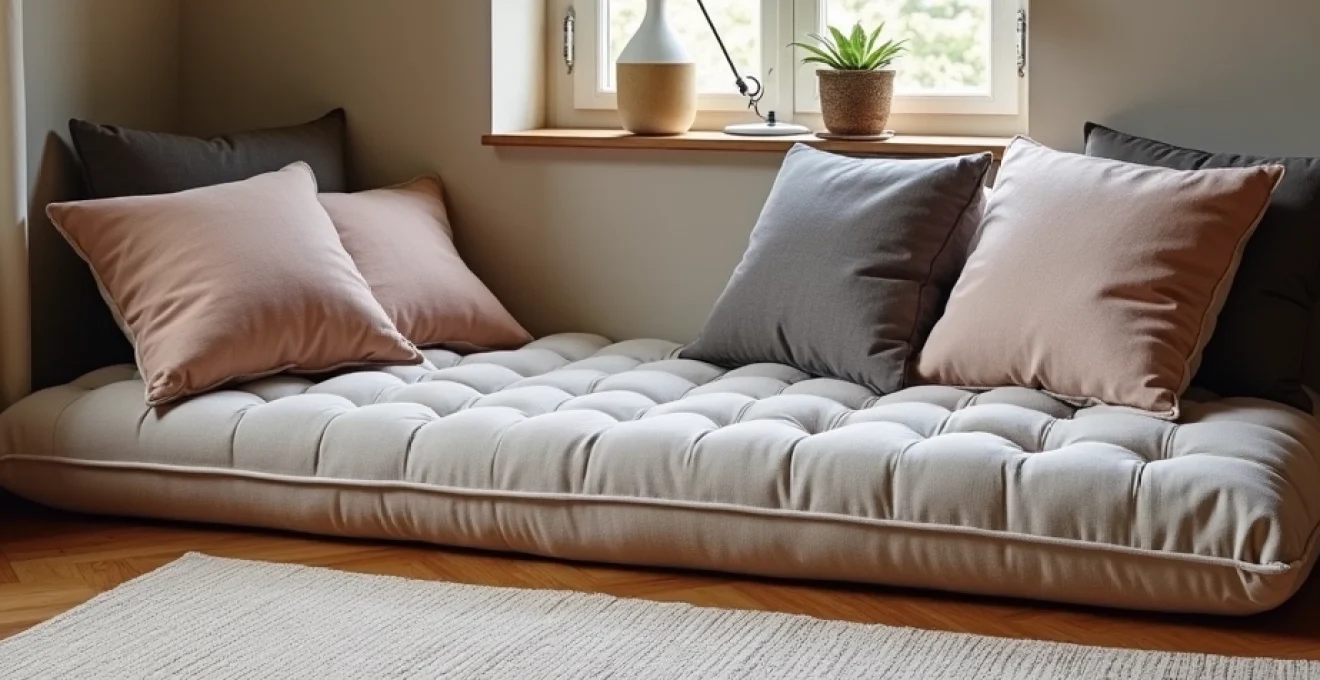
The art of creating a personal sanctuary within your home has gained tremendous momentum, particularly as more people seek intimate spaces for relaxation and literary pursuits. Handmade floor cushions represent the perfect marriage of comfort, craftsmanship, and customisation, offering an affordable yet luxurious foundation for any reading nook. These versatile seating solutions not only provide exceptional comfort for extended reading sessions but also allow you to infuse your personal style into every stitch and detail.
Unlike mass-produced alternatives, crafting your own floor cushions ensures superior quality materials, precise sizing for your specific space, and the satisfaction of creating something truly unique. The process combines traditional upholstery techniques with contemporary design sensibilities, resulting in durable, professional-grade seating that rivals expensive boutique furniture. Whether you’re working within a compact urban flat or designing a spacious country home retreat, handmade floor cushions offer the flexibility to create the perfect reading environment tailored to your exact needs.
Essential materials and tools for crafting handmade floor cushions
The foundation of exceptional floor cushions lies in selecting premium materials and professional-grade tools that ensure both longevity and comfort. Understanding the distinct characteristics of various filling materials, fabric choices, and construction hardware enables you to create cushions that perform beautifully for years whilst maintaining their shape and structural integrity.
High-density foam inserts vs. polyester fibrefill core options
The choice between foam and fibrefill significantly impacts both comfort and durability. High-density foam inserts, typically measuring between 2-6 inches thick with a density rating of 32-50 pounds per cubic foot, provide consistent support that maintains its shape over time. These inserts excel in reading applications where sustained back support is crucial, particularly during extended literary sessions. The firm yet comfortable surface prevents the gradual sinking that can lead to poor posture and discomfort.
Polyester fibrefill cores, conversely, offer a softer, more malleable seating experience that moulds to your body contours. Premium fibrefill blends incorporate hollow-fibre technology that creates loft whilst maintaining breathability. This option proves ideal for those who prefer a sink-in comfort similar to traditional beanbags but with better shape retention. Consider combining both materials, using a foam base layer with fibrefill topping for optimal support and surface comfort.
Upholstery-grade fabrics: linen, canvas, and velvet selection criteria
Fabric selection determines both aesthetic appeal and practical performance. Linen fabrics, particularly Belgian or Irish varieties with thread counts between 180-250, provide exceptional durability whilst offering a sophisticated, natural texture that complements various design schemes. The inherent breathability of linen prevents moisture buildup during extended use, making it particularly suitable for warmer climates or well-heated spaces.
Heavy-weight canvas, specifically 12-16 oz cotton duck canvas, delivers unparalleled durability for high-traffic reading areas. This material withstands frequent repositioning and maintains its structural integrity through countless washing cycles. Canvas accepts dyes beautifully, enabling vibrant colour options that remain fade-resistant under natural and artificial lighting conditions.
Velvet selections require careful consideration of pile direction and backing quality. Crushed velvet varieties offer visual interest through their varied light reflection properties, whilst straight-pile velvets provide consistent colour depth. Ensure your velvet choice includes a sturdy cotton or linen backing to prevent stretching during construction and use.
Professional sewing equipment: Heavy-Duty machines and piping foot attachments
Constructing professional-quality floor cushions demands equipment capable of handling multiple fabric layers and thick seams. Heavy-duty sewing machines with motors rated at 1.0 amps or higher provide the power necessary for consistent stitching through upholstery-weight materials. Look for machines offering variable speed control and automatic thread tension adjustment to accommodate different fabric combinations within a single project.
Piping foot attachments prove essential for creating the crisp, tailored edges that distinguish professionally-made cushions from amateur attempts. These specialised presser feet guide welting cord precisely along seam lines, ensuring consistent placement and preventing shifting during construction. Adjustable piping feet accommodate various cord thicknesses, allowing you to customise edge treatments based on your design preferences.
The difference between amateur and professional-looking floor cushions often lies in the precision of edge treatments and seam construction rather than fabric choice alone.
Reinforcement hardware: YKK zippers and Double-Fold bias tape applications
Quality hardware investments pay dividends in longevity and functionality. YKK zippers, particularly their upholstery-grade lines, feature robust teeth construction and smooth-operating pulls that withstand frequent opening for cover removal and washing. Choose zipper lengths 2-3 inches shorter than your cushion width to ensure adequate seam allowance whilst maintaining easy access to the insert.
Double-fold bias tape serves multiple reinforcement purposes, from finishing raw edges to creating internal stress-point reinforcement. Select bias tape manufactured from similar-weight fabric as your cushion material to ensure compatible laundering requirements and wear characteristics. Pre-shrink all bias tape materials before application to prevent puckering after washing.
Floor cushion construction techniques and seaming methods
Mastering professional construction techniques elevates handmade cushions from simple sewing projects to heirloom-quality furniture pieces. These methods ensure your cushions maintain their appearance and structural integrity through years of regular use whilst providing the comfort necessary for lengthy reading sessions.
French seam construction for durability and professional finishing
French seams enclose raw fabric edges completely, preventing fraying whilst creating exceptionally strong joints that withstand repeated stress. This technique involves sewing two seam lines: first with fabric pieces placed wrong sides together, then trimming seam allowances and sewing again with right sides together. The result encapsulates all raw edges within the seam itself, creating a professional finish that requires no additional serging or edge treatment.
When constructing floor cushions using French seams, allow 5/8-inch total seam allowances and trim the first seam to 1/8 inch before completing the enclosure seam. This technique proves particularly valuable for washable cushion covers, as the enclosed seams prevent edge deterioration during machine laundering cycles.
Piped edge installation using 1/4-inch cotton cord welting
Professional piping installation begins with creating custom welting using 1/4-inch cotton cord and fabric strips cut on the bias. Cut bias strips 2 inches wide for standard welting, joining strips with diagonal seams to minimise bulk. Position the cord within the fabric strip and use a piping foot to stitch close to the cord, creating consistent welting throughout your project.
Install welting around cushion perimeters by aligning raw edges and stitching precisely in the previous welting seam line. At corners, clip welting seam allowances to enable smooth curves without puckering. Where welting ends meet, overlap ends by 1 inch and trim cord ends to butt together, preventing unsightly bulk in the finished seam.
Envelope closure systems vs. invisible zipper installations
Envelope closures offer the simplest construction method whilst providing secure insert containment. Create envelope openings by extending one cushion panel 8-12 inches beyond the finished dimension, then folding this extension back and overlapping with the opposite panel edge. This creates a pocket opening that accommodates insert placement whilst eliminating visible hardware.
Invisible zipper installations provide the most refined appearance but require precise technique for professional results. Install invisible zippers before completing side seams, positioning the zipper 3-4 inches from corners to prevent stress concentration. Use an invisible zipper foot to stitch directly against zipper teeth, creating nearly invisible closure lines that maintain the cushion’s clean aesthetic lines.
Corner reinforcement stitching and stress point bartacking
Corner areas experience concentrated stress during use and repositioning, requiring additional reinforcement beyond standard seam construction. Create reinforced corners by stitching triangular patches at each corner intersection before installing welting. These patches, cut from matching or coordinating fabric, distribute stress loads across larger surface areas.
Bartacking at stress points involves creating dense zigzag stitching patterns at seam intersections and zipper ends. Set your machine for close zigzag stitches (0.5mm stitch width, 40 stitches per inch) and stitch back and forth several times to create reinforcement bars. This technique prevents seam separation at high-stress points, significantly extending cushion lifespan.
Ergonomic design principles for reading comfort optimisation
Creating truly comfortable reading cushions requires understanding human ergonomics and how body positioning affects sustained comfort. The ideal reading position maintains natural spinal curvature whilst providing adequate support for arms, neck, and lower back. Floor cushions present unique challenges compared to traditional seating, as they must accommodate various reading positions from cross-legged sitting to side-lying arrangements.
Consider cushion thickness in relation to your typical reading positions. Thicker cushions (4-6 inches) provide better back support for upright reading positions, whilst thinner options (2-3 inches) offer more versatility for varied positioning. The firmness balance proves crucial: too soft, and you’ll sink uncomfortably; too firm, and pressure points develop during extended sessions. Test different foam densities to find your personal comfort zone before committing to large cushion projects.
Multiple cushion configurations enable customised support arrangements. Create a system of varied sizes: large square cushions for primary seating, rectangular bolsters for back support, and smaller accent pillows for arm rests. This modular approach allows you to adjust your seating arrangement based on reading material, session length, and personal comfort preferences. Consider the relationship between cushion proportions and your body dimensions when planning sizes.
The most comfortable reading nook adapts to your natural preferences rather than forcing you to adapt to rigid seating constraints.
Strategic nook placement and spatial configuration planning
Successful reading nook design begins long before selecting fabrics or cutting cushions. The physical placement of your nook determines its functionality, comfort, and ultimately, how frequently you’ll use this special space. Environmental factors including lighting, temperature, acoustics, and traffic patterns significantly impact the success of your reading retreat.
Natural light assessment: window proximity and glare reduction strategies
Natural light provides the most comfortable illumination for reading, but positioning requires careful consideration of sun angles throughout the day. South-facing windows offer consistent natural light but may create glare issues during midday hours. East-facing exposures provide gentle morning light ideal for early reading sessions, whilst west-facing windows can create harsh afternoon glare that necessitates filtering solutions.
Position your cushions approximately 3-6 feet from windows to benefit from natural light whilst avoiding direct glare on reading materials. Consider seasonal sun angle variations: what feels perfect in winter may become uncomfortably bright during summer months when the sun travels higher across the sky. Install adjustable window treatments such as cellular shades or sheer panels that allow light control without completely blocking your view.
Light reflection strategies can enhance natural illumination without increasing glare. Position light-coloured walls or decorative mirrors to bounce soft light into your reading area. Avoid placing mirrors where they might create direct reflections onto reading surfaces, which can cause eye strain and reading discomfort.
Traffic flow analysis and corner utilisation in small spaces
Analyse your home’s traffic patterns to identify spaces that offer tranquillity without disrupting daily activities. Corner locations often provide the best balance of seclusion and space efficiency, utilising areas that might otherwise remain underused. However, ensure your chosen corner doesn’t block natural pathways or create bottlenecks in high-traffic areas.
Small spaces benefit from multifunctional nook design. Consider cushions that stack or fold for easy storage when the space serves other purposes. Design your cushion collection with modular components that reconfigure based on immediate needs: spread out for reading sessions, stacked for additional seating during gatherings, or stored compactly when space is needed for other activities.
Measure your available space carefully before designing cushions. Account for comfortable ingress and egress, ensuring you can enter and leave your reading position without awkward manoeuvring. Allow minimum 18-inch clearances around your primary seating area for comfortable access and positioning adjustments.
Acoustic considerations for noise reduction and reading concentration
Sound management significantly impacts reading concentration and overall nook enjoyment. Soft furnishings, including floor cushions, contribute to acoustic dampening by absorbing sound reflections that might otherwise create echoes or amplify external noise. Thick cushions filled with fibrefill materials provide superior sound absorption compared to foam-filled alternatives.
Position your reading nook away from high-noise areas such as kitchens, televisions, or busy street-facing windows. If space constraints limit your options, consider acoustic treatments such as heavy curtains, upholstered wall panels, or decorative fabric hangings that help absorb sound transmission. White noise sources like small fountains or soft music can mask unavoidable background sounds.
Consider how your own activities might affect others in your home. While you desire a quiet space for reading, ensure your nook location doesn’t require others to tiptoe around your reading sessions. Strategic placement benefits everyone by creating natural sound barriers that provide privacy without isolation.
Complementary accessories and ambient enhancement elements
A well-appointed reading nook extends beyond comfortable seating to encompass all elements that support extended reading sessions. Thoughtfully selected accessories enhance both functionality and aesthetic appeal, creating an environment that beckons you to settle in with a good book. The key lies in balancing practical necessities with personal touches that make the space uniquely yours.
Lighting deserves particular attention, as inadequate illumination causes eye strain and limits reading session duration. Layer different lighting types for optimal flexibility: ambient lighting for general space illumination, task lighting directed at reading materials, and accent lighting for atmospheric warmth. Adjustable table lamps or floor lamps with swing arms provide focused illumination exactly where needed, whilst string lights or small accent lamps create cosy atmospheric glow for evening relaxation.
Storage solutions keep reading materials organised and easily accessible. Consider attractive baskets or decorative containers for current reading selections, magazines, and reading accessories. Wall-mounted shelves conserve floor space whilst displaying favourite volumes. A small side table or floor-level platform provides convenient surfaces for beverages, reading glasses, bookmarks, and electronic devices.
Personal comfort items enhance the reading experience beyond basic seating. Soft throws or blankets extend your reading nook’s seasonal usability and provide adjustable warmth. Small pillows offer additional positioning support for neck, arms, or lower back. Consider aromatherapy elements such as essential oil diffusers or scented candles that create relaxing olfactory environments conducive to concentrated reading.
Temperature control accessories ensure year-round comfort in your reading space. Small fans provide gentle air circulation during warmer months, whilst space heaters or heated throws extend comfortable reading seasons. Consider the thermal properties of your cushion fabrics when planning seasonal comfort: linen breathes well for summer use, whilst velvet provides warmth during cooler months.
The most inviting reading nooks feel like personal retreats that anticipate and accommodate every comfort preference and practical need.
Maintenance protocols and longevity preservation techniques
Proper maintenance ensures your handmade floor cushions remain beautiful and comfortable throughout years of regular use. Developing consistent care routines prevents minor issues from becoming major problems whilst preserving the investment of time and materials you’ve put into creating these custom pieces. Understanding appropriate cleaning methods, storage techniques, and preventive measures extends cushion lifespan significantly.
Regular maintenance begins with simple weekly routines. Rotate and flip cushions regularly to ensure even wear patterns and prevent permanent impressions from developing in foam inserts. Vacuum cushion surfaces weekly using upholstery attachments to remove dust, pet hair, and debris that can work into fabric fibres and cause premature wear. Check zippers and seams periodically for signs of stress or separation that might require prompt attention.
Spot cleaning addresses spills and stains before they set permanently. Create a cleaning kit specifically for your cushion fabrics, including appropriate cleaners for each material type. Linen responds well to mild detergent solutions, whilst velvet requires specialised fabric cleaners that won’t damage pile texture. Test cleaning solutions on inconspicuous areas before treating visible surfaces, and always blot rather than rub stains to prevent spreading or setting.
Deep cleaning schedules depend on usage frequency and environmental factors. Removable covers should be laundered monthly or quarterly, following manufacturer guidelines for water temperature and drying methods. For
cushions with non-removable covers, professional cleaning services may be necessary for deep stains or odours that resist home treatment methods.
Proper storage techniques protect cushions during periods of non-use. Clean cushions thoroughly before storage to prevent stains from setting or attracting pests. Store cushions in breathable fabric bags rather than plastic containers that can trap moisture and promote mould growth. Cedar blocks or lavender sachets provide natural pest deterrence whilst adding pleasant fragrance. Avoid storing cushions in damp basements or hot attics where temperature extremes and humidity fluctuations can damage fabrics and filling materials.
Preventive measures significantly extend cushion lifespan with minimal ongoing effort. Use furniture protectors or throws during messy activities near your reading nook. Position cushions away from direct sunlight exposure that can fade fabrics and degrade synthetic materials over time. Rotate seasonal cushion collections to prevent continuous wear on favourite pieces, allowing materials to recover their shape and resilience between uses.
Repair techniques address common wear issues before they necessitate complete cushion replacement. Loose seams can be reinforced with hand stitching using matching thread colours. Replace worn zippers before they fail completely, which often proves less expensive than professional repair services. Small tears in fabric covers respond well to careful patching using coordinating fabric pieces applied from the reverse side, creating nearly invisible repairs that prevent further damage.
Proactive maintenance costs significantly less than replacement whilst preserving the personal satisfaction and custom fit that drew you to handmade cushions initially.
Environmental factors in your reading space affect maintenance requirements and cushion longevity. High-humidity environments increase cleaning frequency needs and may require more frequent airing to prevent moisture accumulation. Pet-friendly households benefit from additional protective measures such as removable outer covers or more frequent deep cleaning schedules. Monitor your specific conditions and adjust maintenance routines accordingly for optimal results.
Documentation of care routines helps maintain consistency and identifies successful techniques for future reference. Keep records of cleaning products that work well with your specific fabric choices, noting any adverse reactions or particularly effective treatments. Track rotation schedules to ensure even wear distribution across your cushion collection. This systematic approach transforms maintenance from reactive problem-solving into proactive preservation that keeps your reading nook looking and feeling perfect for countless literary adventures.
Creating and maintaining a cosy reading nook with handmade floor cushions represents more than a simple home improvement project—it’s an investment in personal comfort, creative expression, and daily quality of life. The techniques and principles outlined here provide the foundation for crafting furniture-quality seating that rivals expensive commercial alternatives whilst offering the satisfaction of personal craftsmanship. Your carefully constructed reading sanctuary awaits, ready to support countless hours of literary exploration in supreme comfort and style.