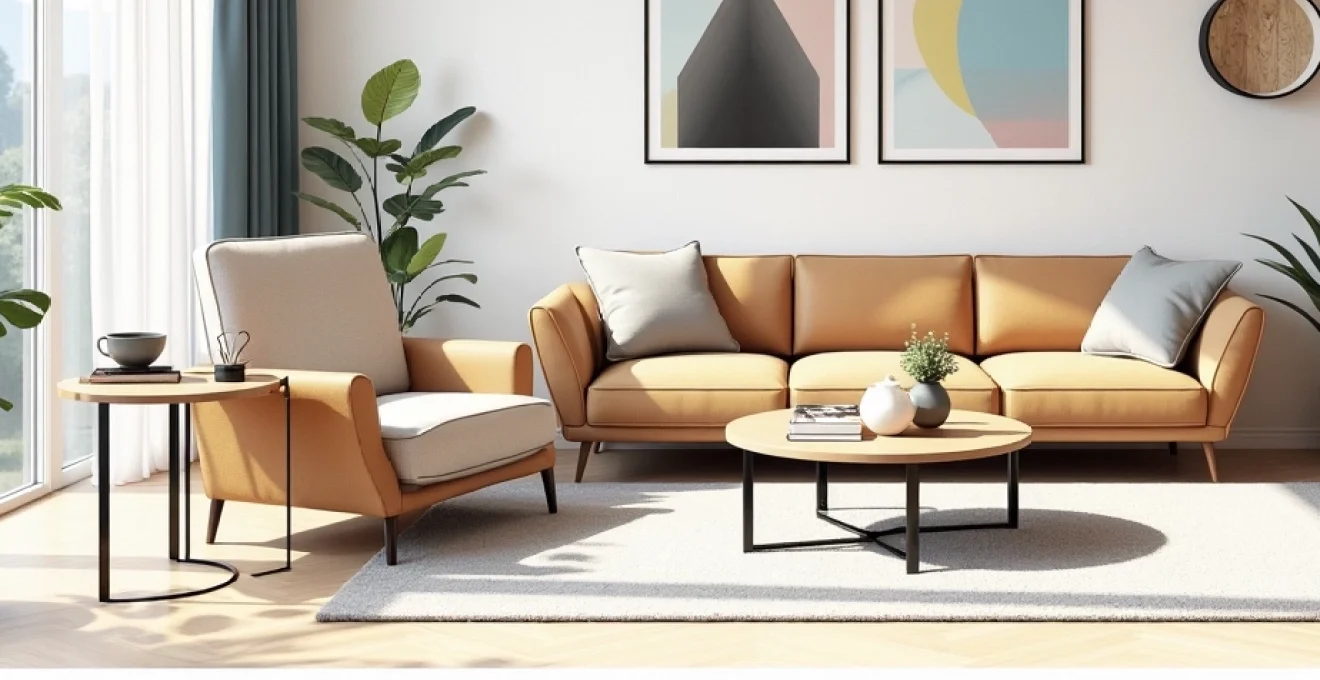
The difference between a home that feels professionally designed and one that appears haphazardly assembled often comes down to a single fundamental principle: proportion. When furniture, artwork, and decorative elements relate harmoniously to both their surroundings and each other, spaces achieve that elusive quality of feeling “just right.” Professional interior designers understand that mastering scale and proportion transforms ordinary rooms into sophisticated, comfortable environments that naturally draw people in.
Scale in interior design encompasses both the absolute size of objects within a space and their visual weight relative to human perception. A grand piano in a compact flat creates obvious discord, whilst a delicate side table in a cathedral-ceilinged drawing room appears lost and insignificant. Yet the principles governing these relationships extend far beyond obvious mismatches, influencing everything from colour distribution to lighting placement.
Understanding proportional relationships requires recognising that every element within a room communicates with every other element. Visual harmony emerges when these conversations flow naturally , creating spaces that feel balanced without appearing static or overly calculated. The most successful interiors achieve this balance by applying both mathematical principles and intuitive design sensibilities.
Golden ratio applications in interior design proportions
The golden ratio, represented mathematically as 1.618, appears throughout nature and has guided artists and architects for millennia. This proportion creates naturally pleasing relationships that the human eye finds inherently satisfying. In interior design, applying golden ratio principles can elevate ordinary spaces into environments that feel effortlessly sophisticated and psychologically comfortable.
Implementing the 1.618 ratio in furniture arrangement
When arranging furniture groups, the golden ratio provides a framework for creating balanced compositions. Consider a seating arrangement where the primary sofa occupies approximately 1.618 times the visual weight of accompanying chairs. This might translate to a three-seater sofa paired with a single substantial armchair, rather than matching pieces of identical scale.
Room proportions themselves benefit from golden ratio applications. Rectangular spaces measuring roughly 1.6 times longer than their width create naturally harmonious environments . When working with existing room dimensions, furniture placement can reinforce these proportional relationships through strategic positioning and grouping.
Fibonacci sequence integration in room layout planning
The Fibonacci sequence (1, 1, 2, 3, 5, 8, 13…) offers another mathematical approach to achieving pleasing proportions. Interior designers apply this sequence when determining relative sizes of decorative elements, spacing between objects, or creating gallery wall arrangements. A collection of three artworks might measure 3, 5, and 8 inches in height, following Fibonacci proportions.
Gallery walls demonstrate Fibonacci principles particularly effectively. Starting with the largest piece as the focal point, surrounding artworks can follow descending Fibonacci dimensions, creating organic-feeling compositions that avoid rigid symmetry whilst maintaining visual coherence.
Classical greek proportional systems for modern homes
Ancient Greek architectural principles remain remarkably relevant for contemporary interior design. The concept of modular proportions, where all elements relate to a single base measurement, creates unified spaces with inherent harmony. Modern interpretations might use ceiling height as the base module, with furniture heights, room divisions, and decorative elements all relating proportionally to this primary measurement.
Column proportions from classical architecture translate beautifully to modern interior applications. Tall furniture pieces, such as bookcases or armoires, benefit from classical proportional relationships where width relates harmoniously to height, preventing pieces from appearing either squat or unnaturally elongated.
Mathematical scale calculations for wall art placement
Determining appropriate artwork sizes requires mathematical precision combined with visual sensitivity. The general principle suggests artwork should occupy between four-sevenths and two-thirds of the wall space above furniture pieces. For a sofa measuring 84 inches in length, optimal artwork width ranges from 48 to 56 inches.
Multiple pieces require careful calculation to achieve unified impact. Gallery arrangements work best when the total visual weight equals that of a single large piece . This might involve three medium pieces totalling the recommended wall coverage, with spacing between pieces calculated proportionally to their individual dimensions.
Professional designers consistently emphasise that mathematical principles provide the foundation, but visual judgment must ultimately determine success.
Anthropometric scaling principles for residential spaces
Human-centred design principles ensure that proportional relationships serve practical functionality alongside aesthetic appeal. Anthropometric data, which documents human body measurements and movement patterns, provides essential guidelines for creating spaces that feel comfortable and intuitive to inhabit. These measurements vary significantly across different populations, requiring designers to consider diverse user needs when establishing proportional relationships.
Ergonomic height standards in kitchen design metrics
Kitchen design demonstrates anthropometric principles most clearly, where improper proportions directly impact daily functionality. Standard worktop heights of 36 inches suit the average adult, but optimal proportions should account for primary users’ heights. Counter depths of 24 inches provide adequate workspace whilst maintaining comfortable reach distances for most users.
Upper cabinet placement requires careful proportional consideration. Cabinets hung 18 inches above worktops create functional task lighting zones whilst remaining accessible for daily use. Cabinet heights themselves should relate proportionally to ceiling height, with 8-foot ceilings typically accommodating 30-inch upper cabinets, whilst 9-foot ceilings allow for 36-inch or 42-inch options.
Human-centric furniture sizing using le corbusier’s modulor system
Le Corbusier’s Modulor system provides a sophisticated framework for creating furniture proportions based on human dimensions. This system uses a 6-foot human figure as the base measurement, creating a series of proportional relationships that ensure furniture scales appropriately for human interaction. Modern applications might adjust the base figure to reflect contemporary average heights.
Seating proportions demonstrate Modulor principles effectively. Chair heights of 17 to 19 inches, seat depths of 20 to 22 inches, and armrest heights of 25 to 27 inches create comfortable proportional relationships for most users. These measurements ensure that furniture supports natural human postures whilst maintaining visual harmony within room compositions .
Accessibility compliance measurements for universal design
Universal design principles require proportional considerations that accommodate users with varying physical capabilities. Doorway widths of 36 inches minimum, corridor widths of 42 inches, and turning spaces of 60 inches diameter create navigable environments for wheelchair users whilst feeling spacious for all occupants.
Furniture selection must consider reach ranges and transfer requirements. Coffee tables measuring 16 to 18 inches in height accommodate both standard seating and wheelchair users, whilst end tables ranging from 22 to 26 inches provide accessible surface areas. These proportional adjustments enhance functionality without compromising aesthetic appeal.
Visual comfort zones and optimal viewing distances
Television and artwork viewing distances follow established proportional guidelines that ensure comfortable visual experiences. Television screens should be positioned approximately 1.5 to 2.5 times the screen diagonal distance from seating areas. A 60-inch television requires seating positioned 7.5 to 12.5 feet away for optimal viewing comfort.
Reading areas demand different proportional considerations. Task lighting should be positioned to eliminate shadows whilst providing adequate illumination levels . Side table heights matching chair arm levels, typically 24 to 26 inches, create comfortable proportional relationships for reading and casual activities.
Architectural scale relationships between room elements
Architectural elements within a room must relate proportionally to create cohesive environments that feel naturally balanced. Crown mouldings, baseboards, door and window casings, and built-in features all contribute to the overall proportional character of a space. When these elements work in harmony, they create sophisticated backdrops that enhance rather than compete with furnishings and decorative objects.
Ceiling heights dictate appropriate proportions for architectural details. Rooms with 8-foot ceilings typically accommodate 3 to 4-inch baseboards and 2 to 3-inch crown mouldings, whilst 10-foot ceilings can support more substantial 5 to 6-inch baseboards and 4 to 5-inch crown details. These proportional relationships ensure architectural elements feel integrated rather than applied as afterthoughts .
Window and door proportions significantly influence room character and should relate harmoniously to both ceiling height and wall proportions. Traditional double-hung windows often follow a 2:3 ratio, with width measuring two-thirds of the height. Door proportions typically range from 1:2 to 1:2.4 ratios, creating pleasing relationships that complement rather than dominate surrounding wall surfaces.
Built-in elements such as bookcases, entertainment centres, and storage solutions must scale appropriately to their surroundings. A built-in bookcase in a room with 9-foot ceilings might feature shelves spaced 12 to 15 inches apart, providing adequate space for books whilst maintaining pleasing proportional relationships. Cabinet doors and drawer fronts should relate proportionally to the overall unit dimensions, avoiding overly large or diminutive panels that disrupt visual harmony.
Architectural proportions create the foundation upon which all other design elements build, establishing the fundamental character and scale relationships within a space.
Visual weight distribution techniques in contemporary styling
Visual weight in interior design refers to how heavy or substantial an object appears to the eye, which differs significantly from actual physical weight. Dark colours, complex textures, large patterns, and solid forms all contribute to increased visual weight, whilst light colours, smooth surfaces, small patterns, and transparent materials appear lighter. Understanding these relationships allows designers to create balanced compositions that feel stable and harmonious.
Mass balance calculations for asymmetrical compositions
Asymmetrical balance requires careful consideration of visual weight distribution across a room. Unlike symmetrical arrangements where identical elements mirror each other, asymmetrical compositions achieve balance through equivalent visual weights positioned at varying distances from a central axis. A large, dark armoire on one side of a room might balance with two smaller, lighter pieces positioned further from the room’s centre.
The principle of leverage applies to visual weight distribution much as it does to physical balance. Heavier visual elements positioned closer to a room’s centre require lighter elements placed further away to achieve equilibrium . This might involve balancing a substantial dining table with lighter chairs, or offsetting a heavy sectional sofa with delicate accent pieces positioned strategically around the room’s perimeter.
Colour saturation impact on perceived object scale
Colour intensity dramatically affects how large or small objects appear within a space. Highly saturated colours advance visually, making objects appear larger and closer, whilst muted tones recede, creating the impression of smaller, more distant elements. A bright red accent chair occupies significantly more visual space than an identical chair in soft grey, even though their physical dimensions remain unchanged.
Warm colours generally appear to advance whilst cool colours tend to recede, influencing perceived proportions throughout a room. Strategic colour application can manipulate spatial perception , making small rooms feel larger through receding cool tones or creating intimate atmosphere in large spaces through advancing warm colours. These colour-based proportional effects must be considered alongside physical dimensions when planning room layouts.
Texture density effects on spatial proportional perception
Surface textures significantly influence visual weight and perceived scale. Rough, complex textures such as natural stone, heavily woven fabrics, or rustic wood surfaces appear heavier and more substantial than smooth materials like polished metal, silk fabrics, or painted surfaces. A rough-hewn wooden coffee table occupies more visual space than a glass table of identical dimensions.
Layering textures requires understanding their cumulative visual impact. Multiple rough textures within a single room can create overwhelming visual weight, whilst too many smooth surfaces might appear sterile or uninteresting. Successful texture combinations balance rough and smooth elements proportionally , creating rich sensory environments that feel both sophisticated and comfortable.
Light reflection coefficients influencing room scale dynamics
Light reflection and absorption properties of various materials affect spatial perception and proportional relationships. Highly reflective surfaces such as mirrors, polished metals, and glossy finishes bounce light around a room, creating the impression of expanded space and reduced visual weight. Conversely, matte surfaces and dark materials absorb light, appearing heavier and more contained.
Strategic placement of reflective elements can manipulate proportional perception throughout a room. Mirrors positioned to reflect natural light sources effectively double the apparent window area, whilst metallic accents can distribute light to darker corners. These lighting-based proportional effects work most successfully when integrated thoughtfully rather than applied as obvious corrective measures .
Professional measurement systems for scale assessment
Professional interior designers employ systematic measurement approaches to ensure proportional accuracy throughout the design process. These methodologies combine traditional measuring techniques with digital tools and established proportional guidelines, creating comprehensive assessment systems that eliminate guesswork from scale and proportion decisions.
Room documentation begins with precise dimensional recording using laser measuring devices and detailed floor plans. Professional-grade tools ensure accuracy within millimetres, providing reliable foundations for proportional calculations. Digital room scanning technologies now allow designers to create three-dimensional models that facilitate accurate scale assessment before purchasing furniture or implementing design changes.
Proportional assessment templates provide standardised frameworks for evaluating spatial relationships. These tools might include golden ratio overlays, furniture placement guides, and artwork sizing calculators that ensure consistent proportional application across different room types and sizes. Professional designers often develop personalised measurement systems based on successful project experience combined with established proportional principles .
Mock-up techniques using newspaper templates, painter’s tape, or cardboard cutouts allow designers and clients to visualise proposed furniture placement before making purchase decisions. These physical testing methods reveal proportional relationships that might not be apparent from floor plans alone, preventing costly mistakes and ensuring successful scale integration.
| Room Element | Measurement Standard | Proportional Relationship |
|---|---|---|
| Coffee Table Height | 16-18 inches | 2-3 inches below seat height |
| Artwork Above Sofa | 4/7 to 2/3 sofa width | 6-8 inches above sofa back |
| Area Rug Size | Front furniture legs on rug | 18-24 inches beyond seating group |
| Pendant Light Height | 30-36 inches above surface | Proportional to ceiling height |
Common proportional mistakes in residential interior design
The most frequent proportional errors in residential design stem from purchasing decisions made without considering spatial context or existing furnishings. Homeowners often fall in love with individual pieces in showrooms or online, failing to consider how these items will relate to their specific room dimensions and existing décor. This approach typically results in spaces filled with attractive individual pieces that fail to work harmoniously together.
Oversized furniture in small spaces represents perhaps the most obvious proportional mistake, yet remains surprisingly common. A sectional sofa that overwhelms a modest living room not only impedes traffic flow but creates visual imbalance that makes the entire space feel cramped and uncomfortable . Conversely, furniture that appears lost in large spaces fails to create the intimate conversation areas essential for comfortable living.
Artwork sizing errors plague many otherwise well-designed spaces. Tiny prints scattered across large walls create visual fragmentation, whilst oversized pieces in small rooms can feel overwhelming. The relationship between artwork and underlying furniture requires particular attention, with pieces that are too small appearing disconnected from their surroundings and those that are too large dominating the entire wall composition.
Lighting fixture proportions frequently receive insufficient consideration during room planning. Chandeliers or pendant lights that are too small for their spaces appear insignificant and fail to provide adequate illumination, whilst oversized fixtures can overwhelm room proportions and create uncomfortable visual weight distribution. Table lamp heights that don’t relate properly to surrounding furniture create awkward proportional relationships that disrupt overall room harmony.
Multiple pattern scales within a single room require careful orchestration to avoid visual chaos. Large-scale patterns work best when balanced with solid colours or much smaller patterns, whilst combining patterns of similar scales typically creates competing visual elements that prevent the eye from finding comfortable resting points. Understanding how pattern scale relates to both room size and furniture proportions enables successful pattern mixing that enhances rather than overwhelms spatial composition.
Rug proportions present another common challenge, with many homeowners selecting rugs that are too small for their furniture arrangements. A properly sized area rug should extend at least 18 inches beyond the seating group on all sides, creating visual unity that anchors the furniture arrangement. Small rugs that accommodate only the coffee table or front legs of seating create disconnected compositions that fragment rather than unify the room design.
Kitchen island proportions frequently suffer from poor planning, with islands that are either too large for comfortable navigation or too small to serve their intended function effectively. Standard clearance of 42 to 48 inches around islands ensures comfortable movement whilst maintaining appropriate scale relationships with surrounding cabinetry and appliances. Islands should relate proportionally to overall kitchen dimensions, typically occupying no more than 25% of the total floor space.
Window treatment proportions often receive inadequate attention, with curtains or blinds that fail to relate properly to window dimensions or ceiling heights. Curtains hung too low or too narrow create the impression of smaller windows and lower ceilings, whilst properly proportioned treatments can enhance architectural features and improve spatial perception. Full-length curtains extending from ceiling to floor create the illusion of height even when windows are modestly sized.
Understanding these common proportional pitfalls enables homeowners to avoid expensive mistakes and create spaces that feel professionally designed from the outset.
Colour proportion mistakes frequently involve using too many strong colours in small spaces or insufficient colour variety in large rooms. The 60-30-10 colour rule provides a reliable framework for achieving balanced colour proportions, but requires adaptation to specific room sizes and lighting conditions. Dark colours in small rooms can create oppressive atmospheres, whilst insufficient colour intensity in large spaces may result in bland, uninspiring environments.
Accessory groupings often suffer from poor scale relationships, with collections of items that are too similar in size creating monotonous displays. Successful accessory arrangements typically include items of varying heights, widths, and visual weights arranged in odd-numbered groupings. The rule of three applies effectively to most decorative arrangements, with the largest item serving as an anchor whilst smaller pieces provide visual interest and balance.
Storage solutions frequently ignore proportional relationships with surrounding architecture and furnishings. Built-in storage should relate harmoniously to ceiling heights and room proportions, whilst freestanding storage pieces must scale appropriately to both room size and existing furniture. Oversized armoires or bookcases can overwhelm modest rooms, whilst insufficient storage solutions in large spaces appear inadequate and fail to meet functional requirements.
Understanding these proportional principles and common mistakes empowers homeowners to make informed design decisions that create harmonious, comfortable living environments. Successful interior design requires balancing mathematical precision with intuitive aesthetic judgment, ensuring that all elements work together to create spaces that are both beautiful and functional. When proportional relationships are carefully considered and properly implemented, homes achieve that coveted quality of feeling naturally balanced and effortlessly sophisticated.