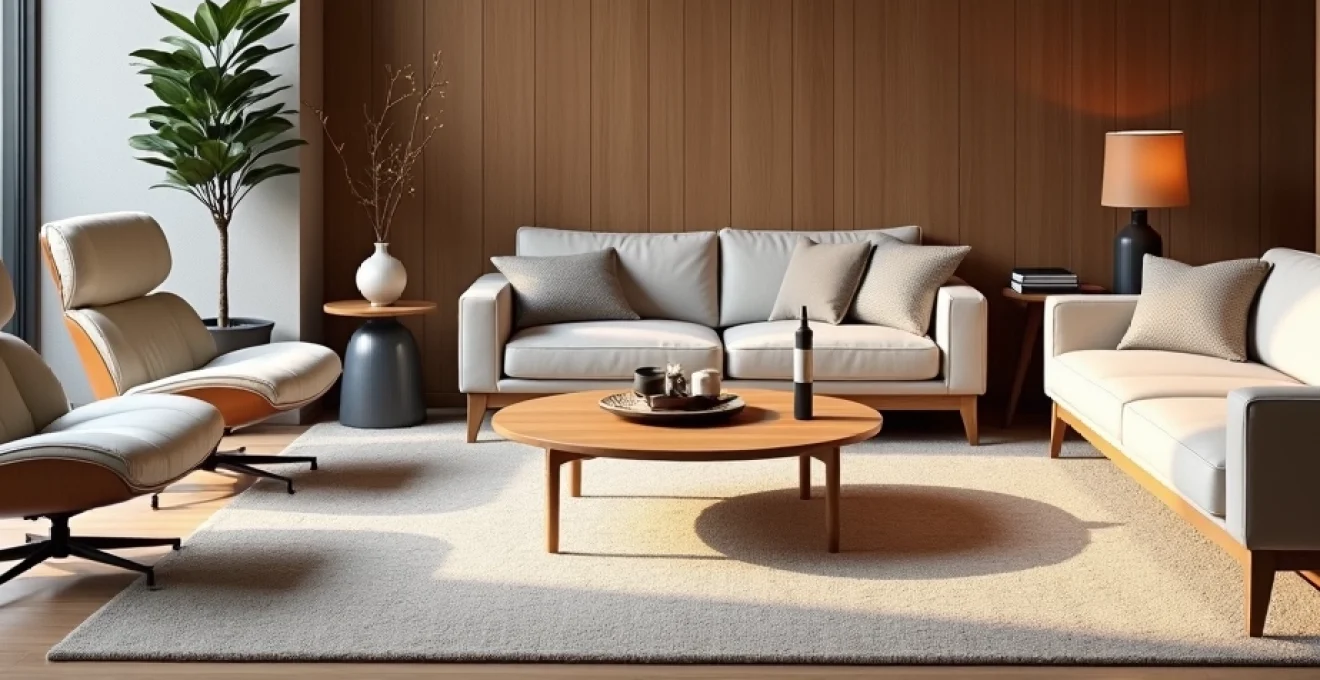
The intersection of comfort and visual harmony in designer furniture represents one of the most challenging aspects of contemporary interior design. When selecting premium furniture pieces, the decision extends far beyond aesthetic appeal to encompass ergonomic principles, material quality, and spatial integration. Modern consumers increasingly demand furniture that not only serves as a visual centrepiece but also supports their physical wellbeing and complements their living environment seamlessly.
Designer furniture today must satisfy multiple criteria simultaneously: ergonomic excellence, visual sophistication, and sustainable manufacturing practices. This multifaceted approach to furniture selection requires understanding how anthropometric measurements influence seating geometry, how proportional relationships affect spatial perception, and how premium materials contribute to both comfort and longevity. The most successful interior spaces achieve a delicate balance between these elements, creating environments that feel both luxurious and inherently comfortable.
Ergonomic design principles in contemporary designer furniture selection
Contemporary designer furniture has evolved significantly beyond mere aesthetic considerations to embrace comprehensive ergonomic principles that prioritise human comfort and wellbeing. The foundation of ergonomic design lies in understanding how the human body interacts with furniture throughout extended periods, particularly in work and relaxation environments. Modern manufacturers invest heavily in biomechanical research to develop seating solutions that support natural posture while reducing physical strain.
Anthropometric measurements and seating geometry optimisation
Anthropometric data forms the backbone of effective seating design, with manufacturers utilising extensive databases of human measurements to create furniture that accommodates diverse body types. Seat depth measurements typically range from 16 to 18 inches for optimal thigh support, while seat width must accommodate hip breadth variations across different populations. The science of seating geometry considers how these measurements interact with backrest angles, armrest positioning, and overall seat height to create comfortable experiences for users ranging from the 5th percentile female to the 95th percentile male.
Advanced seating systems incorporate adjustable parameters that allow users to customise their furniture to their specific anthropometric requirements. This personalisation extends beyond simple height adjustment to include seat pan depth modification, backrest angle variation, and armrest positioning. The most sophisticated designs feature memory settings that can accommodate multiple users, making them ideal for shared workspaces or family environments.
Lumbar support mechanisms in herman miller aeron and steelcase leap chairs
The evolution of lumbar support technology represents a significant advancement in ergonomic seating design, with leading manufacturers developing sophisticated mechanisms that adapt to individual spinal curvatures. The Herman Miller Aeron chair revolutionised the industry by introducing zonal support systems that provide targeted pressure relief while maintaining overall structural integrity. Its innovative pellicle suspension material distributes weight evenly across the seating surface, reducing pressure points that can cause discomfort during extended use.
Steelcase Leap chairs incorporate dynamic lumbar support systems that automatically adjust to the user’s movements throughout the day. This active ergonomic approach recognises that static positioning contributes to muscular fatigue and postural problems. The chair’s spine-mimicking backrest follows the natural S-curve of the human spine, providing support that adapts to different sitting positions and movements. These technological innovations demonstrate how premium furniture manufacturers prioritise user health alongside aesthetic appeal.
Material density and foam compression ratings for Long-Term comfort
The selection of cushioning materials significantly impacts both immediate comfort and long-term durability in designer seating. High-quality foam systems utilise varying density layers to provide optimal support characteristics, with firmer base layers offering structural support and softer top layers enhancing comfort. Industry-standard foam density measurements range from 1.8 to 3.0 pounds per cubic foot, with premium applications often exceeding these baseline specifications.
Compression ratings, measured through standardised testing protocols, determine how well cushioning materials maintain their shape and support characteristics over time. The most durable foams exhibit compression deflection ratings of 25% or less after 65,000 compression cycles, ensuring that seating maintains its ergonomic properties throughout years of regular use. Advanced foam technologies incorporate memory foam elements and gel infusions to enhance pressure distribution and temperature regulation.
Adjustability features and Multi-Positional framework systems
Modern designer furniture increasingly incorporates sophisticated adjustment mechanisms that allow users to customise their seating experience throughout the day. Multi-positional framework systems enable seamless transitions between active working positions and relaxed lounging configurations. These systems often feature synchronised tilt mechanisms that maintain optimal hip-to-knee angles regardless of backrest position, supporting healthy circulation and reducing muscular tension.
The most advanced adjustability features include pneumatic height adjustment systems with precise incremental control, four-dimensional armrest positioning, and seat pan angle modification. Premium manufacturers engineer these mechanisms to operate smoothly over hundreds of thousands of adjustment cycles while maintaining precise positioning capabilities. The integration of these features requires careful consideration of the overall design aesthetic to ensure that functional elements enhance rather than detract from the furniture’s visual appeal.
Visual harmony through proportional relationships and spatial planning
Creating visual harmony within interior spaces requires a sophisticated understanding of proportional relationships and their impact on human perception. The most successful designer furniture arrangements leverage mathematical principles and design theories that have guided aesthetic composition for centuries. These principles ensure that individual pieces work cohesively within their environment while maintaining their distinctive character and appeal.
Golden ratio applications in Mid-Century modern furniture layouts
The golden ratio, approximately 1.618:1, appears frequently in mid-century modern furniture design and spatial arrangements that feel naturally balanced and visually pleasing. This mathematical relationship manifests in the proportions of individual pieces, such as the relationship between seat height and backrest dimensions, as well as in the arrangement of multiple furniture elements within a room. Mid-century designers like Charles and Ray Eames intuitively incorporated these proportional relationships into their iconic pieces, creating furniture that maintains visual appeal across different contexts and time periods.
Contemporary applications of golden ratio principles extend to modular seating systems where individual components maintain proportional relationships while offering flexibility in arrangement. The ratio guides decisions about coffee table dimensions relative to sofa proportions, ensuring that functional relationships support visual harmony. Advanced design software now incorporates golden ratio calculations to assist in creating furniture layouts that feel balanced and purposeful.
Colour temperature coordination between upholstery and ambient lighting
The interaction between furniture upholstery colours and lighting systems significantly influences the perceived comfort and visual harmony of interior spaces. Colour temperature, measured in Kelvin, affects how fabric colours appear throughout different times of day and under various lighting conditions. Warm light sources (2700K-3000K) enhance the richness of earth-toned upholstery while potentially dulling cooler colour palettes. Conversely, cooler lighting (4000K-5000K) can make blues and greys appear more vibrant while washing out warmer tones.
Premium furniture manufacturers now consider lighting interaction during the design process, developing fabric collections that maintain colour integrity across different lighting conditions. Advanced textile technologies incorporate fibres that respond predictably to varying light temperatures, ensuring consistent visual appeal regardless of ambient conditions. This consideration becomes particularly important in commercial environments where lighting systems may change throughout operational hours.
Scale relationships in Open-Plan living spaces and modular seating systems
Open-plan living environments present unique challenges for furniture scaling, requiring pieces that can define functional zones while maintaining visual cohesion across larger spaces. Modular seating systems address these challenges by offering scalable solutions that can adapt to different spatial requirements without compromising design integrity. The key lies in maintaining consistent proportional relationships between individual modules while allowing for varied configurations.
Scale relationships become particularly critical when transitioning between different functional areas within open-plan spaces. A sectional sofa that feels appropriately sized for a large living area might overwhelm an adjacent dining space, requiring careful consideration of sight lines and proportional balance. Advanced modular systems incorporate transitional pieces that help bridge scale differences between major furniture groupings, creating smooth visual transitions throughout the space.
Negative space management and traffic flow optimisation
The strategic use of negative space around designer furniture pieces contributes significantly to overall visual harmony and functional efficiency. Proper negative space management ensures that premium furniture pieces can be appreciated from multiple angles while maintaining clear circulation paths throughout the interior. The general principle suggests maintaining clearances of 24-36 inches around major furniture pieces, though this can vary based on specific functional requirements and spatial constraints.
Traffic flow optimisation involves analysing how people naturally move through spaces and positioning furniture to support these movement patterns. Contemporary open-plan environments require particularly careful attention to flow patterns, as furniture placement can either facilitate or impede natural circulation. The most successful arrangements create intuitive pathways that guide movement while establishing clear functional zones for different activities. Advanced space planning software now incorporates pedestrian flow analysis to optimise furniture placement for both aesthetic and functional objectives.
Premium material selection and craftsmanship standards
The selection of premium materials represents a fundamental aspect of designer furniture that directly impacts both aesthetic appeal and long-term performance. Understanding the characteristics and performance metrics of different materials enables informed decisions that balance immediate visual impact with durability considerations. Premium manufacturers invest extensively in material research and testing to ensure their products maintain quality standards throughout years of regular use.
Full-grain leather grading systems and patina development characteristics
Full-grain leather represents the highest quality leather grade available for furniture applications, retaining the complete grain structure that provides superior durability and aging characteristics. The grading system for full-grain leather considers factors including grain tightness, surface consistency, and natural marking patterns. Premium grades exhibit minimal surface blemishes while maintaining the natural texture variations that contribute to leather’s distinctive character.
Patina development in high-quality leather occurs gradually through use and exposure, creating increasingly rich colour depth and surface character over time. This natural aging process distinguishes premium leather from corrected-grain alternatives that may crack or peel with extended use. The most desirable patina development occurs evenly across wearing surfaces, creating a lustrous finish that enhances the furniture’s visual appeal while demonstrating quality craftsmanship. Vegetable-tanned leathers typically exhibit the most attractive patina development, though they require more careful maintenance than chrome-tanned alternatives.
Hardwood species comparison: walnut, oak, and teak durability metrics
Different hardwood species offer distinct characteristics that influence both aesthetic appeal and structural performance in furniture applications. Walnut, prized for its rich chocolate-brown heartwood and attractive grain patterns, provides excellent workability and finishing characteristics. Its Janka hardness rating of approximately 1,010 pounds-force makes it suitable for most furniture applications while remaining manageable for detailed craftsmanship work.
Oak species, including white oak and red oak variants, offer superior durability with Janka ratings ranging from 1,220 to 1,360 pounds-force. This increased hardness translates to enhanced resistance to denting and surface damage, making oak ideal for high-use furniture pieces. Teak represents the premium option for luxury furniture, combining exceptional durability (Janka rating of 1,155 pounds-force) with natural oils that provide inherent moisture and insect resistance. These characteristics make teak particularly valuable for furniture pieces that may experience varying environmental conditions.
| Wood Species | Janka Hardness (lbf) | Grain Pattern | Durability Rating |
|---|---|---|---|
| Walnut | 1,010 | Rich, varied | Good |
| White Oak | 1,360 | Prominent, straight | Excellent |
| Teak | 1,155 | Straight, fine | Superior |
Upholstery fabric performance testing and martindale abrasion ratings
Martindale abrasion testing provides standardised measurements of fabric durability under simulated use conditions, with results expressed in cycles completed before visible wear occurs. Commercial-grade upholstery fabrics typically achieve ratings of 30,000-100,000 cycles, while premium residential applications may specify fabrics rated for 15,000-25,000 cycles. However, these ratings must be considered alongside other performance factors including pilling resistance, colour fastness, and dimensional stability.
Advanced fabric technologies incorporate synthetic fibres and weaving techniques that enhance durability without compromising comfort or aesthetic appeal. Solution-dyed fabrics offer superior colour retention and stain resistance, while micro-encapsulation technologies can provide antimicrobial properties and moisture management. The most premium upholstery fabrics combine natural fibres for tactile appeal with synthetic components for enhanced performance characteristics.
Joint construction methods and Load-Bearing capacity specifications
Traditional joinery techniques remain relevant in premium furniture construction, with mortise-and-tenon joints providing superior strength and durability compared to mechanical fastening systems. These time-tested methods distribute stress loads more effectively across joint interfaces, reducing the likelihood of failure under normal use conditions. Premium manufacturers often combine traditional joinery with modern adhesive technologies to create hybrid systems that maximise both strength and longevity.
Load-bearing capacity specifications for designer furniture typically exceed normal use requirements by significant safety margins, with seating designed to support static loads of 300-400 pounds and dynamic loads accounting for movement and impact forces. Advanced testing protocols simulate years of typical use through automated cycling equipment that applies repeated stress loads to identify potential failure points. Engineering analysis using finite element modelling helps optimise joint designs for maximum strength-to-weight ratios while maintaining aesthetic requirements.
Iconic designer collections and Investment-Grade pieces
Investment-grade designer furniture represents pieces that maintain or appreciate in value over time while providing exceptional functionality and aesthetic appeal. These collections typically feature limited production runs, innovative design elements, or historical significance that contributes to their long-term desirability. Understanding the characteristics that define investment-grade pieces helps collectors and design enthusiasts make informed decisions about furniture acquisitions that will remain relevant and valuable for decades.
The most successful designer collections combine innovative design concepts with exceptional craftsmanship and premium materials. Pieces from legendary design houses like Knoll, Herman Miller, and Vitra have demonstrated remarkable value retention, with certain iconic pieces appreciating significantly over their initial retail prices. Factors contributing to investment potential include designer reputation, production quality, rarity, and cultural significance within the broader design community.
The most valuable designer furniture pieces represent perfect intersections of innovative design, exceptional craftsmanship, and cultural significance that transcends temporary style trends.
Contemporary investment-grade collections increasingly emphasise sustainable manufacturing processes and innovative material applications that address modern environmental concerns. Pieces that successfully balance traditional craftsmanship with contemporary sustainability requirements often achieve enhanced market appeal among conscious consumers. Limited-edition collaborations between established manufacturers and emerging designers frequently generate significant collector interest, particularly when they introduce novel design concepts or manufacturing techniques.
Authentication and provenance documentation play crucial roles in maintaining investment-grade furniture values. Established manufacturers provide detailed documentation including production numbers, material specifications, and design history that supports long-term value retention. Secondary market performance for specific pieces can be tracked through auction results and dealer sales, providing insights into appreciation patterns and market preferences. The most astute collectors focus on pieces that demonstrate consistent demand across different market cycles while maintaining their functional relevance in contemporary interior applications.
Sustainable manufacturing processes and Eco-Conscious design innovation
Sustainable manufacturing practices in designer furniture production have evolved from niche considerations to industry-standard expectations, driven by both environmental concerns and consumer demand for responsible products. Leading manufacturers now implement comprehensive sustainability programs that address material sourcing, production processes, transportation logistics, and end-of-life product disposal. These initiatives often result in innovative design solutions that enhance both environmental performance and aesthetic appeal.
Forest Stewardship Council (FSC) certification ensures that wood materials derive from responsibly managed forests that maintain biodiversity and support local communities. Premium furniture manufacturers increasingly specify FSC-certified materials while developing relationships with suppliers who demonstrate long-term commitment to sustainable forestry practices. Advanced wood processing techniques minimise waste generation while maximising yield from each harvested tree, contributing to overall resource efficiency.
Recycled and recyclable materials play increasingly important roles in sustainable furniture design, with manufacturers developing innovative applications for post-consumer plastics, reclaimed metals, and recycled fabrics. These materials often undergo sophisticated processing to achieve aesthetic qualities comparable to virgin alternatives while reducing environmental impact. Circular economy principles influence product design decisions, with manufacturers considering how furniture components can be separated and recycled at the end of their useful life.
Energy efficiency in manufacturing facilities represents another critical aspect of sustainable production, with leading companies investing in renewable energy systems and process optimisation technologies. Advanced manufacturing equipment often consumes significantly less energy while achieving higher precision and consistency than older alternatives. Water conservation systems and waste reduction programs further
enhance environmental responsibility across the entire production cycle.
Local sourcing strategies reduce transportation-related carbon emissions while supporting regional economies and craftsmanship traditions. Many premium manufacturers establish partnerships with local artisans and suppliers, creating supply chains that minimise environmental impact while preserving traditional skills and techniques. This approach often results in unique design elements that reflect regional aesthetic sensibilities and material characteristics.
Volatile organic compound (VOC) reduction in finishing processes represents a significant advancement in sustainable furniture production. Low-VOC and water-based finishes provide excellent protection and aesthetic qualities while minimising indoor air quality impacts. Advanced spray booth systems and curing technologies enable manufacturers to achieve premium finish quality while meeting stringent environmental standards. These innovations demonstrate how sustainability requirements can drive technical improvements that benefit both environmental and product quality objectives.
Integration strategies for mixed design periods and aesthetic cohesion
Successfully integrating furniture from different design periods requires sophisticated understanding of visual relationships and stylistic bridges that create cohesive interior environments. The challenge lies in balancing distinct aesthetic languages while maintaining overall harmony and flow throughout the space. Contemporary interior design increasingly embraces eclectic approaches that combine vintage pieces with modern elements, creating layered environments that feel both curated and authentic.
Transitional design elements serve as critical bridges between different stylistic periods, helping to create visual continuity across varied furniture selections. These pieces often feature neutral colour palettes, simplified forms, or adaptable proportions that complement both traditional and contemporary aesthetics. Transitional furniture might include upholstered pieces with clean lines but traditional proportions, or wooden furniture with modern joinery techniques but classic silhouettes.
Colour palette coordination provides one of the most effective methods for unifying diverse furniture styles within a single space. Establishing a consistent colour scheme that spans different design periods creates visual connections that transcend stylistic boundaries. This approach might involve selecting a neutral base palette with carefully chosen accent colours that appear across different pieces, or identifying natural material tones that create harmony between wood, metal, and fabric elements from various eras.
Scale relationships become particularly important when mixing furniture from different periods, as proportional standards have evolved significantly over time. Mid-century modern pieces often feature lower profiles and horizontal emphasis, while traditional furniture tends toward more vertical proportions and substantial visual weight. Successful integration requires careful attention to how these different scales interact within the room, often involving strategic placement that allows each piece to maintain its character while contributing to overall balance.
Textile and material coordination provides another powerful tool for creating cohesion among mixed design periods. Contemporary upholstery fabrics can update traditional furniture forms while maintaining their essential character, while vintage textiles can add warmth and authenticity to modern pieces. The key lies in selecting materials that respect the original design intent while enhancing overall compatibility within the space.
The art of mixing design periods successfully requires understanding that harmony emerges not from matching elements, but from thoughtful relationships between contrasting yet complementary pieces that tell a cohesive design story.
Lighting design plays a crucial supporting role in integrating mixed furniture styles, with carefully selected fixtures that complement different periods while providing unified ambient conditions. Contemporary lighting systems can highlight the best features of vintage pieces while ensuring consistent illumination quality throughout the space. Advanced dimming systems and colour temperature control enable dynamic lighting scenarios that can emphasise different furniture groupings at different times, creating flexible environments that adapt to various functional and aesthetic requirements.
Spatial planning strategies for mixed-period interiors often involve creating distinct zones that allow different styles to dominate specific areas while maintaining visual connections across the entire space. This approach enables the inclusion of statement pieces from various eras without creating visual conflict, as each piece can be appreciated within its optimal context while contributing to the overall design narrative. Successful zoning requires careful attention to sight lines and traffic flow patterns that ensure smooth transitions between different stylistic areas.
The curation process for mixed-period collections requires developing an educated eye for quality, authenticity, and compatibility that transcends specific style categories. This involves understanding construction techniques, material characteristics, and design principles that remain constant across different periods while recognising how these elements can be combined to create fresh and innovative interior environments. The most successful mixed-period interiors feel intentional and considered rather than accidental, demonstrating clear design vision that celebrates both historical significance and contemporary relevance.