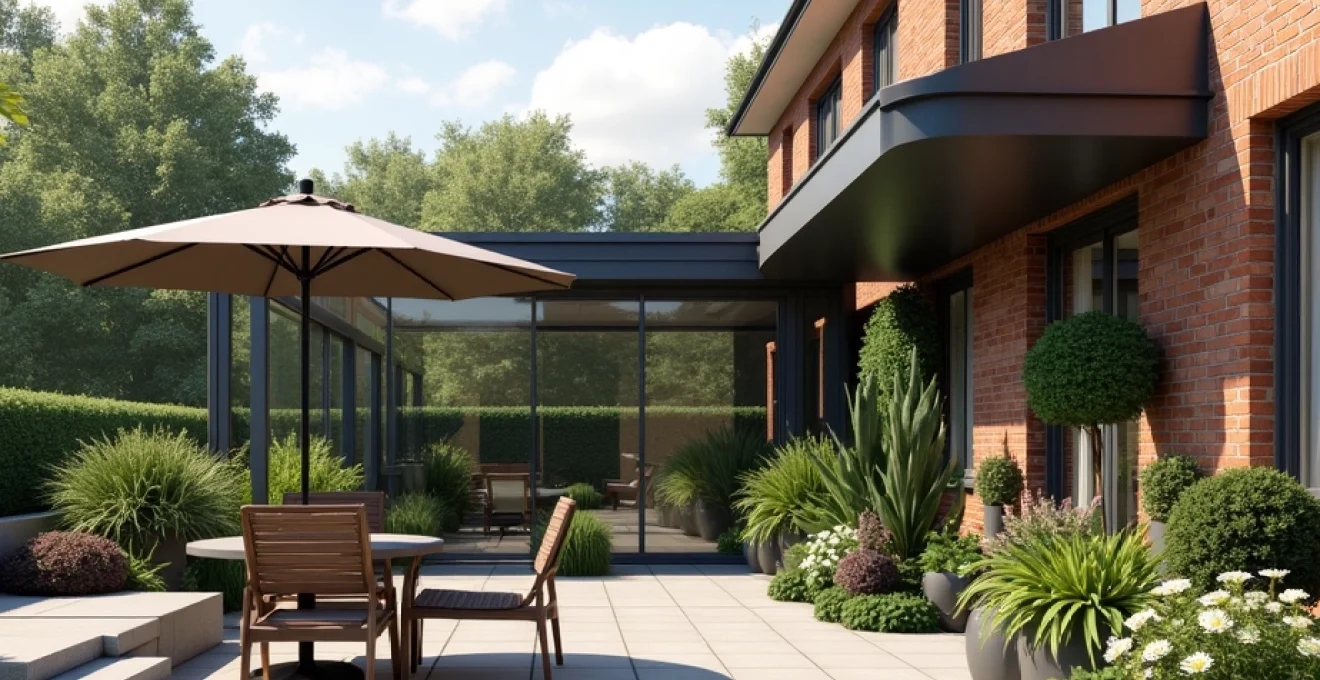
The exterior of your property serves as the first impression for visitors and passers-by, making the selection of decorative planters a crucial design decision that extends far beyond mere functionality. These architectural elements can transform a mundane entrance into a sophisticated welcome statement, enhance the visual flow between indoor and outdoor spaces, and create focal points that draw attention to your property’s finest features. Whether you’re working with a period property steeped in historical character or a contemporary build with clean minimalist lines, the right planters can elevate your exterior aesthetic whilst providing practical growing solutions for year-round displays.
The challenge lies not simply in choosing attractive containers, but in selecting pieces that harmonise with your property’s architectural language, withstand the demanding British climate, and create a cohesive design narrative that enhances rather than competes with existing features. From material selection and proportional scaling to colour coordination and drainage considerations, each decision influences both the immediate visual impact and long-term success of your exterior planting scheme.
Material analysis for Weather-Resistant exterior planters
The British climate presents unique challenges for exterior planters, with its combination of frequent rainfall, occasional frost, and variable temperatures throughout the year. Understanding how different materials perform under these conditions is essential for making informed decisions that balance aesthetic appeal with practical durability.
Terracotta and clay planter durability in british climate conditions
Traditional terracotta and clay planters offer timeless appeal and natural porosity that benefits plant root systems, but their performance in the UK climate requires careful consideration. High-quality terracotta, typically fired at temperatures exceeding 1000°C, demonstrates superior frost resistance compared to lower-grade alternatives. The natural expansion and contraction cycles caused by freeze-thaw conditions can cause cracking in cheaper clay products, particularly those with thin walls or poor firing quality.
When selecting terracotta planters for exterior use, look for pieces with frost-proof certification and wall thickness of at least 15mm. Italian and Portuguese terracotta generally offers superior durability due to traditional manufacturing methods and clay composition. However, even high-quality terracotta benefits from winter protection in areas prone to severe frost, such as moving containers to sheltered locations or wrapping them during particularly harsh weather.
Fibreglass and composite planter performance metrics
Modern fibreglass and composite planters represent perhaps the most versatile option for British exteriors, combining lightweight construction with exceptional weather resistance. These materials typically weigh 70-80% less than equivalent stone or concrete alternatives whilst maintaining comparable visual impact. High-quality fibreglass planters incorporate UV stabilisers that prevent colour fading and material degradation over extended periods of sun exposure.
The manufacturing process allows for incredibly realistic finishes that convincingly mimic natural materials including aged stone, weathered wood, and even metallic patinas. Advanced composite formulations now include recycled materials, appealing to environmentally conscious designers whilst maintaining structural integrity across temperature ranges from -30°C to +70°C. The non-porous surface prevents moisture absorption that could lead to freeze damage, making these materials particularly suitable for exposed locations.
Powder-coated steel and aluminium corrosion resistance
Metal planters bring contemporary sophistication to exterior designs, with powder-coated steel and aluminium offering distinct advantages for different applications. Marine-grade aluminium planters excel in coastal locations where salt spray would rapidly degrade other metals, whilst their natural oxidation resistance eliminates ongoing maintenance requirements. The lightweight nature of aluminium makes it ideal for roof gardens and balcony installations where structural load considerations are paramount.
Powder-coated steel provides superior strength for large installations and can support substantial soil volumes and mature plantings. The coating process creates a barrier thickness typically ranging from 60-120 microns, providing excellent protection against moisture penetration and UV degradation. Quality varies significantly between manufacturers, with automotive-grade coatings offering the best longevity. Corten steel planters deserve special mention, as their controlled rusting process creates a stable oxide layer that actually improves weather resistance over time whilst developing an attractive patina.
Natural stone planters: limestone, sandstone, and granite weathering properties
Natural stone planters represent the premium end of exterior container selection, offering unmatched authenticity and connection to traditional British garden design. Each stone type exhibits distinct weathering characteristics that influence both appearance and longevity. Yorkshire sandstone develops a beautiful patina over time, with its natural porosity allowing for gradual moisture absorption and release that benefits plant health whilst avoiding freeze damage in quality specimens.
Limestone planters, particularly those sourced from Bath or Portland quarries, offer exceptional carving detail possibilities and weather to attractive pale grey tones. However, limestone’s reactive nature means it can be affected by acid rain in urban environments, requiring periodic cleaning to maintain appearance. Granite planters provide the ultimate durability, with their dense crystalline structure resisting both physical and chemical weathering. The initial investment is significant, but properly selected granite planters can enhance properties for decades with minimal maintenance beyond occasional cleaning.
Architectural style coordination principles for planter selection
Successfully matching planters to architectural styles requires understanding the visual language and proportional relationships that define different periods and design movements. This coordination extends beyond simple aesthetic matching to encompass the underlying design principles that create harmonious exterior compositions.
Georgian and victorian era planter proportions and detailing
Georgian architecture, with its emphasis on mathematical proportion and classical restraint, demands planters that reflect these same principles of balance and refinement. The golden ratio frequently appears in Georgian design, and planters should echo this proportional relationship both in their individual dimensions and their arrangement within the overall composition. Traditional Georgian planters feature simple, elegant profiles with subtle detailing that complements rather than competes with the architecture’s refined lines.
Victorian properties, by contrast, embrace more elaborate ornamentation and varied materials, allowing for greater decorative expression in planter selection. Cast iron planters with intricate detailing perfectly complement Victorian ironwork, whilst carved stone urns echo the period’s love of classical references. The Victorian enthusiasm for exotic plants and elaborate garden displays means planters can be more substantial and decorative without appearing incongruous. Matching planter materials to existing architectural elements – such as selecting cast iron to complement railings or stone to match building materials – creates visual continuity that enhances the property’s period authenticity.
Contemporary minimalist design integration with corten steel planters
Modern minimalist architecture prioritises clean lines, material honesty, and spatial clarity, making planter selection a critical element in maintaining design integrity. Corten steel planters excel in contemporary settings due to their architectural presence and evolving appearance that adds visual interest without compromising minimalist principles. The material’s weathering process creates a living patina that changes subtly over time, providing organic variation within controlled geometric forms.
The rectangular geometries typical of Corten planters complement the linear emphasis of contemporary architecture whilst their substantial visual weight anchors outdoor spaces effectively. Careful consideration of sight lines ensures planters enhance rather than obstruct the architectural composition, with positioning that frames views and creates purposeful relationships between interior and exterior spaces. The material’s durability means minimal maintenance requirements, aligning with contemporary preferences for low-intervention design solutions.
Art deco and Mid-Century modern planter geometry
Art Deco architecture celebrates geometric patterns, streamlined forms, and luxurious materials, creating opportunities for planters that embrace bold shapes and sophisticated finishes. Circular and hexagonal planters complement Art Deco’s curved elements, whilst stepped or tiered arrangements echo the period’s characteristic ziggurat motifs. Materials should reflect the era’s technological optimism, with polished metals, glazed ceramics, and innovative composites all appropriate choices.
Mid-century modern design principles emphasise horizontal lines, integration with landscape, and innovative materials, requiring planters that support these architectural themes. Low, rectangular planters that emphasise horizontal spread complement the period’s characteristic rooflines and window arrangements. The integration of planters with architectural elements – such as built-in planters that extend from exterior walls or terracing – reflects mid-century preferences for seamless indoor-outdoor connections.
Cottage garden style: matching rustic planters with period features
Cottage-style architecture, with its informal charm and connection to vernacular building traditions, calls for planters that celebrate natural materials and traditional craftsmanship. Aged terracotta, weathered wood, and natural stone planters all complement cottage architecture’s emphasis on organic forms and time-worn beauty. The slightly irregular profiles and surface textures typical of handmade planters enhance the informal character whilst avoiding the machine-perfect appearance that would seem out of place.
Grouping strategies for cottage-style planters should embrace the apparently casual arrangements that characterise this aesthetic, whilst still maintaining underlying design principles. Varied heights, mixed materials, and asymmetrical groupings create visual interest whilst appearing naturally evolved rather than formally designed. The key lies in achieving controlled informality that supports the cottage garden’s abundant planting style.
Dimensional scaling and proportional design methodology
The relationship between planter size and architectural context determines whether containers enhance or overwhelm their setting. Professional landscape designers rely on established proportional relationships to create harmonious compositions that feel naturally integrated rather than arbitrarily placed. Understanding these scaling principles enables confident decision-making when selecting planter dimensions for different architectural contexts.
The primary consideration involves the relationship between planter height and the architectural elements they accompany. For entrance arrangements, planters should typically measure between one-third and one-half the height of adjacent doorways or windows. This proportional relationship creates visual balance without competing for attention with the architecture’s primary features. Larger properties can accommodate more substantial planters that would overwhelm smaller buildings, whilst compact urban settings require careful scaling to avoid crowding.
Width relationships prove equally critical, particularly when creating symmetrical arrangements or linear displays. The combined width of paired planters should not exceed two-thirds of the architectural feature they frame, allowing adequate visual breathing space whilst maintaining presence. For pathway plantings, individual planters should maintain proportional relationships with path width, typically measuring no more than one-quarter of the available space to ensure comfortable passage whilst creating effective visual punctuation.
Professional designers often apply the architectural principle that visual weight increases with darkness, meaning darker planters appear larger than lighter alternatives of identical dimensions.
Depth considerations become particularly important when planters are viewed from multiple angles or positioned against building facades. The visual profile should create interesting shadows and dimensional variation without protruding excessively into circulation spaces. Multi-level arrangements benefit from mathematical progressions, with each tier measuring approximately two-thirds the height of the level below, creating pleasing proportional relationships that guide the eye upward through the composition.
Colour theory application for exterior planter coordination
Colour selection for exterior planters involves complex interactions between architectural materials, seasonal plant displays, lighting conditions, and surrounding landscape elements. Unlike interior design where controlled lighting conditions allow for precise colour matching, exterior applications must account for the dramatic variations in natural light throughout the day and across seasons.
The foundational principle involves establishing whether planters should harmonise with or contrast against existing architectural colours. Harmonious approaches use colours within the same family or adjacent on the colour wheel, creating serene, unified compositions that allow plantings to provide primary colour interest. This strategy works particularly well with period properties where maintaining architectural authenticity takes precedence over bold contemporary statements.
Contrasting colour strategies can create dynamic focal points and add contemporary energy to traditional settings. However, successful contrast requires careful consideration of colour intensity and saturation levels. High-contrast combinations work best when one element remains relatively neutral, preventing visual competition that can appear chaotic. For example, charcoal grey planters against cream limestone create sophisticated contrast without overwhelming the architectural composition.
Seasonal colour considerations prove particularly relevant in the British climate where lighting conditions vary dramatically between summer and winter months. Colours that appear vibrant in summer sunlight may seem dull during winter’s reduced light levels, whilst pale colours that provide subtle accents in bright conditions can appear washed out during overcast periods. Mid-tone colours typically provide the most consistent appearance across seasonal variations, making them reliable choices for permanent installations.
The psychological impact of colour cannot be overlooked, as planters contribute to the emotional response visitors experience when approaching a property. Warm colours such as terracotta and warm greys create welcoming, approachable impressions, whilst cool colours like slate blue and steel grey project sophistication and formality. Understanding these associations allows colour selection to support the intended character and use of outdoor spaces.
Drainage system engineering and planter base requirements
Effective drainage represents perhaps the most critical technical consideration in planter selection, as poor drainage leads to root rot, freeze damage, and shortened plant lifespan regardless of how carefully other factors are considered. The British climate’s high rainfall makes robust drainage systems essential for maintaining healthy growing conditions throughout the year.
Standard drainage requirements specify minimum hole diameters of 12mm with one drainage point per 15cm of planter width. However, these basic requirements often prove insufficient for containers exposed to heavy rainfall or positioned in locations where water cannot drain freely away from the base. Professional installations frequently incorporate additional drainage layers using gravel or expanded clay pebbles to create reservoirs that prevent waterlogging whilst maintaining moisture availability during dry periods.
Elevated planter bases prevent water pooling beneath containers whilst protecting surfaces from staining and freeze damage. Purpose-made planter feet or discrete stands lift containers sufficiently to allow air circulation and drainage whilst maintaining stability. The height elevation should measure at least 15mm but can be increased for aesthetic reasons or to improve proportional relationships with surrounding elements.
Internal drainage systems become particularly sophisticated in large planters where plant health depends on consistent moisture management. Multi-layer systems incorporate coarse drainage materials at the base, separation fabrics to prevent soil migration, and moisture-retentive growing media designed for container cultivation. These engineered growing environments support healthy plant development whilst minimising maintenance requirements.
Properly designed drainage systems can reduce watering requirements by up to 40% whilst improving plant survival rates during both drought and waterlogged conditions.
Winter drainage considerations require special attention in regions prone to freezing temperatures. Containers that cannot drain completely risk freeze damage as expanding ice cracks planter materials. Incorporating winter drainage protocols, such as tilting seasonal planters slightly to encourage complete water evacuation, protects both containers and plant materials during dormant periods.
Plant-to-planter compatibility assessment for Long-Term success
The relationship between selected plants and their containers extends far beyond aesthetic coordination to encompass root space requirements, moisture management, and long-term growth accommodation. Understanding these biological requirements during planter selection prevents future problems and ensures displays remain attractive throughout their intended lifespan.
Root space calculations depend on both plant type and intended display duration. Shallow-rooted annuals require minimum depths of 20-25cm for healthy development, whilst perennial plantings need 40-60cm depth to accommodate established root systems. Tree plantings in containers require substantial volume calculations, with minimum root ball ratios of 1:3 between existing root spread and container diameter to allow for healthy growth without becoming root-bound.
Soil volume requirements often exceed initial estimates, as containers require growing media specifically formulated for container cultivation rather than garden soil. Quality potting composts provide improved drainage characteristics whilst maintaining moisture retention, but their lightweight nature means larger volumes are needed to provide equivalent growing conditions to ground-based plantings. Professional calculations typically allow for 20-30% additional volume beyond minimum requirements to accommodate root growth and maintain growing conditions.
Material compatibility between planters and growing media affects both plant health and container longevity. Certain metal containers can affect soil pH levels over time, whilst some plastic materials may leach chemicals that influence plant growth. Natural materials like terracotta and stone generally provide the most neutral growing environments, though their porosity requires adjustment of watering schedules to maintain consistent moisture levels.
Long-term growth accommodation requires selecting containers with sufficient capacity for mature plant sizes rather than current dimensions. This forward-planning approach prevents the disruption and expense of frequent repotting whilst ensuring displays improve rather than deteriorate over time. Consider the mature spread of perennial plantings when calculating container dimensions, allowing adequate space for natural growth patterns without creating initially sparse appearances that take years to develop visual impact.