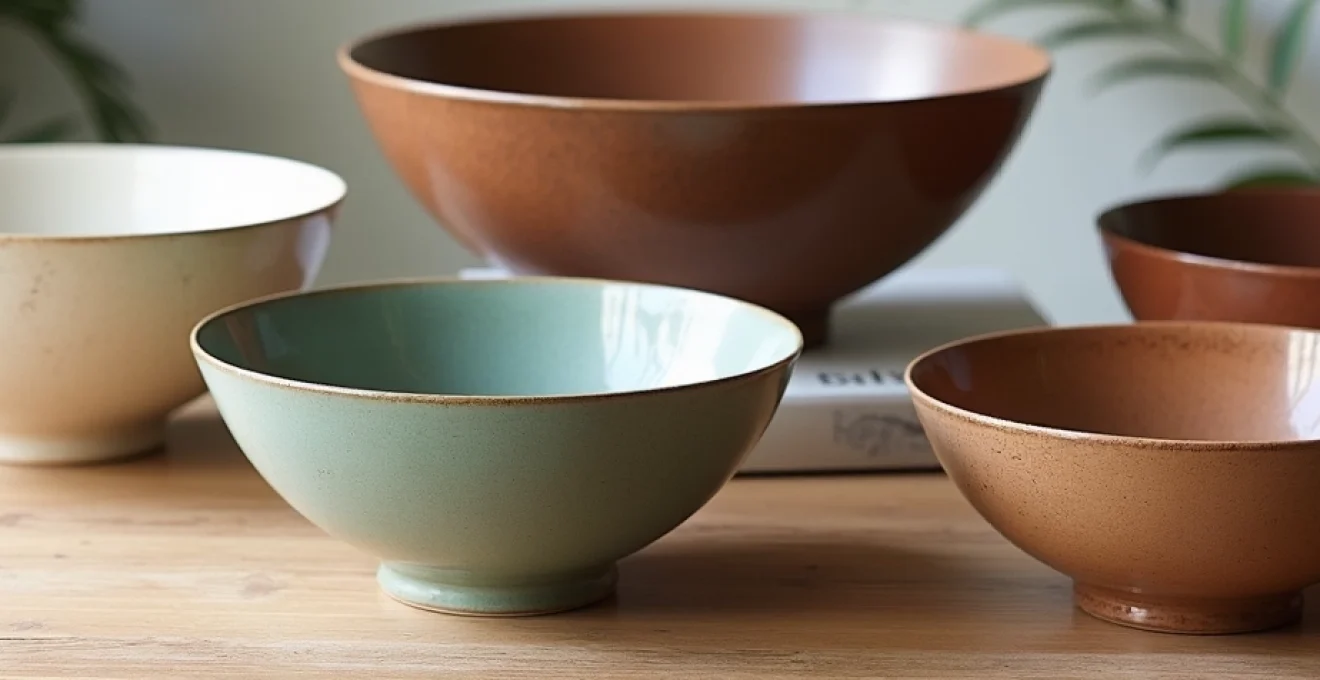
The art of interior design often lies in the details, and few decorative elements can transform a space as effortlessly as a well-chosen bowl. These versatile pieces serve as both functional objects and sculptural statements, bridging the gap between utility and aesthetic refinement. From ancient civilisations to contemporary design movements, decorative bowls have consistently represented the pinnacle of craftsmanship and artistic expression.
Modern homeowners increasingly recognise that strategic placement of decorative bowls can elevate any interior from ordinary to extraordinary. Whether positioned as a striking centrepiece on a dining table or nestled amongst books on a floating shelf, these vessels possess an inherent ability to catch light, create focal points, and establish visual harmony within a room. The key lies in understanding how different materials, proportions, and design philosophies can work together to enhance your existing décor whilst reflecting your personal style.
Today’s market offers an unprecedented variety of decorative bowls, ranging from handcrafted artisanal pieces to precision-engineered designer collections. This abundance of choice, whilst exciting, can also present challenges for discerning buyers seeking pieces that will maintain their appeal and value over time. Understanding the nuances of material properties, spatial relationships, and design provenance becomes essential for making informed selections.
Material properties and craftsmanship considerations for decorative bowl selection
The foundation of any exceptional decorative bowl lies in its material composition and the artisan’s mastery of their chosen medium. Contemporary collectors and interior designers increasingly prioritise pieces that demonstrate both technical excellence and aesthetic innovation, recognising that the inherent properties of different materials fundamentally influence how a bowl interacts with light, space, and surrounding décor elements.
Ceramic glazing techniques: from celadon to crystalline finishes
Ceramic bowls represent perhaps the most diverse category within decorative vessel collections, offering endless possibilities through varied clay bodies, firing temperatures, and glazing applications. Traditional celadon glazes, with their characteristic jade-green translucency, create pieces that seem to glow from within, particularly effective in spaces with abundant natural light. These glazes, originally developed in Chinese kilns over a millennium ago, continue to captivate contemporary designers seeking to introduce subtle colour sophistication without overwhelming existing palettes.
Crystalline glazes present a more dramatic alternative, featuring distinctive crystal formations that develop during carefully controlled cooling processes. These bowls function as conversation pieces, their surfaces revealing intricate patterns that change appearance depending on viewing angle and lighting conditions. The unpredictable nature of crystalline formation ensures each piece remains unique, appealing to collectors who value individuality over uniformity.
Hand-blown glass artistry: murano venetian vs scandinavian crystal methods
Glass bowls occupy a special position within decorative arts, offering transparency that can either showcase contents or create striking silhouettes against backlit surfaces. Murano glass traditions, centred on the Venetian island renowned for centuries of glassmaking excellence, emphasise vibrant colours and elaborate surface treatments. These pieces often incorporate gold leaf, complex cane work, or aventurine inclusions, creating bowls that serve as luminous focal points.
Scandinavian crystal approaches prioritise clarity and form over decorative embellishment, reflecting regional design philosophies that celebrate functional minimalism . Brands like Orrefors and Kosta Boda have perfected techniques that create bowls with remarkable optical properties, their surfaces capturing and refracting light to create ever-changing visual effects throughout the day.
Metallic patina applications: verdigris copper and brushed brass treatments
Metal bowls introduce industrial elegance to contemporary interiors, with surface treatments playing crucial roles in determining their visual impact and longevity. Verdigris patina on copper creates that distinctive blue-green oxidation associated with aged architectural elements, lending bowls an immediate sense of history and gravitas. This natural aging process can be accelerated through chemical treatments, allowing craftspeople to achieve consistent results whilst maintaining the authentic appearance of weathered metal.
Brushed brass finishes offer warmth and sophistication, particularly effective in spaces featuring warm wood tones or rich textile selections. The directional grain created through brushing techniques helps diffuse reflections, preventing the harsh glare sometimes associated with polished metal surfaces whilst maintaining the inherent luxury associations of brass.
Natural stone bowl formations: travertine, onyx, and marble grain patterns
Stone bowls bring geological time scales into domestic spaces, their formation stories spanning millions of years. Travertine’s porous structure and earthy coloration make it particularly suited to Mediterranean or rustic design schemes, whilst its natural variation ensures no two pieces appear identical. The material’s ability to age gracefully, developing subtle patina through handling and exposure, appeals to homeowners seeking pieces that will evolve alongside their living spaces.
Onyx bowls represent the pinnacle of translucent stone artistry, their banded structures creating dramatic visual effects when backlit. The challenge lies in balancing the stone’s inherent fragility with practical functionality, requiring careful consideration of placement and handling. Marble grain patterns offer infinite variety, from the stark drama of Carrara’s white veining to the rich complexity of Emperador dark varieties.
Sustainable hardwood species: acacia, mango wood, and reclaimed teak options
Wooden bowls satisfy contemporary desires for sustainable luxury, with species selection significantly impacting both aesthetic and environmental considerations. Acacia’s rapid growth cycle and natural antibacterial properties make it an increasingly popular choice amongst environmentally conscious consumers . The wood’s distinctive grain patterns and honey-coloured tones complement both modern and traditional settings, whilst its durability ensures longevity with proper care.
Mango wood utilises timber from trees that have completed their fruit-bearing lifecycle, representing true sustainability in decorative arts. The wood’s varied grain patterns and natural colour variations create bowls that celebrate rather than disguise their organic origins. Reclaimed teak brings the added dimension of historical provenance, with weathered surfaces and nail holes telling stories of previous incarnations as ships, buildings, or furniture.
Scale proportioning and spatial integration strategies
Understanding the relationship between bowl dimensions and surrounding spatial elements represents a crucial aspect of successful interior integration. The most beautifully crafted bowl can appear awkward or inappropriate when scale relationships haven’t been properly considered. Professional designers consistently apply mathematical principles and visual weight assessments to ensure decorative bowls enhance rather than overwhelm their intended locations.
Golden ratio applications in Bowl-to-Surface relationships
The golden ratio (1:1.618) provides a mathematical foundation for creating visually pleasing proportional relationships between decorative bowls and their supporting surfaces. When a bowl’s diameter measures approximately 62% of the table or shelf width, the resulting composition typically appears naturally balanced to the human eye. This principle applies whether positioning a single statement piece or arranging multiple bowls within a grouped display.
Contemporary research in environmental psychology supports these classical proportioning systems, suggesting that spaces adhering to golden ratio relationships promote feelings of calm and visual satisfaction. Interior designers increasingly incorporate these principles when specifying decorative elements, recognising that mathematically informed placement can significantly impact room ambiance.
Vertical height considerations for tiered display arrangements
Creating successful multi-level displays requires careful attention to height relationships and sightline management. Taller bowls naturally command attention and should be positioned to avoid blocking views of smaller pieces or important architectural features. The rule of thirds proves particularly useful when arranging bowls of varying heights, with the tallest elements occupying either the front or back third of the display area.
Professional stylists often employ the triangle composition principle, arranging three bowls of different heights to create visually dynamic groupings. This approach prevents the static appearance associated with uniform heights whilst maintaining overall compositional stability. The key lies in ensuring sufficient height variation to read as intentional rather than accidental.
Negative space utilisation in minimalist interior schemes
Minimalist design philosophies emphasise the importance of negative space, with decorative bowls serving as punctuation marks within carefully edited environments. The challenge lies in selecting pieces that justify their presence through exceptional quality or unique character, as every element must earn its place within the composition. Strategic emptiness becomes as important as the objects themselves, creating breathing room that allows individual pieces to achieve maximum visual impact.
Scandinavian design traditions demonstrate masterful negative space utilisation, with single exceptional bowls occupying positions that might accommodate multiple objects in more maximalist schemes. This approach requires confidence in the selected piece’s ability to sustain visual interest over extended periods, making quality and craftsmanship paramount considerations.
Focal point creation through strategic bowl clustering
Clustering techniques can transform modest individual pieces into compelling focal points through careful attention to material relationships, colour harmonies, and proportional balance. The most successful clusters typically combine bowls sharing common elements whilst introducing sufficient variation to maintain visual interest. Material consistency paired with size variation often produces particularly effective results, as does colour harmony combined with textural contrast.
Professional interior designers frequently employ odd-numbered groupings (three, five, or seven pieces) to create more dynamic compositions than even-numbered arrangements. This principle, rooted in classical design theory, acknowledges the human eye’s preference for asymmetrical balance over rigid symmetry. The key lies in ensuring the grouping reads as a cohesive unit rather than a collection of individual objects.
Contemporary designer collections and artisan signatures
The contemporary decorative bowl market encompasses both established luxury brands with decades of heritage and emerging artisan makers pushing creative boundaries. Understanding the distinction between mass-produced designer pieces and authentic handcrafted works becomes crucial for collectors seeking pieces that will maintain their appeal and value over time. The provenance and maker’s signature significantly influence both aesthetic and investment considerations.
Jonathan adler’s modernist ceramic bowl collections
Jonathan Adler’s ceramic bowls epitomise contemporary American maximalism, combining mid-century modern sensibilities with bold graphic patterns and saturated colours. His collections consistently feature geometric motifs rendered in high-contrast combinations that photograph beautifully for social media whilst maintaining sophistication in person. The brand’s commitment to handcrafted production methods ensures slight variations between pieces, adding character without compromising the overall design vision.
Adler’s approach to ceramic glazing emphasises vibrancy over subtlety, with pieces designed to energise neutral spaces through strategic colour injection. His bowls function particularly well in eclectic interiors where pattern mixing and bold statements are celebrated. The key to successful integration lies in treating these pieces as sculptural elements rather than background accessories.
Georg jensen’s scandinavian metal bowl heritage
Georg Jensen’s metal bowl collections represent over a century of Scandinavian silversmithing excellence, with contemporary pieces maintaining the clean lines and organic forms that established the brand’s reputation. Their commitment to traditional handcrafting techniques ensures each bowl bears the subtle irregularities that distinguish handmade luxury from mass production. The brand’s signature hammered finishes create surfaces that interact beautifully with both natural and artificial lighting.
Recent collections have expanded beyond traditional silver to include innovative alloys and surface treatments that reduce maintenance requirements whilst preserving aesthetic appeal. These developments acknowledge contemporary lifestyle demands without compromising the quality standards that have defined the brand across generations of discerning collectors.
Lalique crystal bowl craftsmanship and investment value
Lalique crystal bowls occupy the pinnacle of glass artistry, with each piece representing hours of skilled craftsmanship and decades of technical refinement. The brand’s signature frosted finishes create tactile surfaces that invite handling whilst demonstrating the glass’s exceptional clarity and weight. Investment-grade pieces often feature limited production numbers and original packaging that contribute to long-term value appreciation.
Contemporary Lalique collections balance respect for traditional techniques with modern aesthetic sensibilities, resulting in bowls that complement both classical and contemporary interiors. The brand’s commitment to archival documentation ensures pieces can be authenticated and valued accurately, important considerations for serious collectors.
Studio pottery movement: bernard leach and contemporary influences
The studio pottery movement, pioneered by Bernard Leach and continued by contemporary practitioners, emphasises the philosophical connection between maker, material, and user. These bowls celebrate the clay’s natural properties whilst showcasing individual artistic vision, resulting in pieces that function as both utilitarian objects and artistic statements. The movement’s emphasis on traditional techniques and natural materials resonates strongly with contemporary sustainability concerns.
Modern studio potters continue this tradition whilst incorporating contemporary themes and techniques, creating bowls that speak to current aesthetic sensibilities whilst maintaining connection to centuries-old ceramic traditions. These pieces often represent exceptional value for collectors seeking authentic handcrafted works from recognised makers.
Colour theory applications in decorative bowl coordination
Successful bowl selection requires sophisticated understanding of how colours interact within existing interior palettes. Professional designers consistently apply colour theory principles to ensure decorative bowls enhance rather than clash with their surroundings. The relationship between bowl colour and ambient lighting conditions significantly impacts visual perception, with natural daylight revealing colour relationships that may disappear under artificial illumination.
Complementary colour schemes create dynamic tension that energises spaces, with orange-glazed bowls providing striking contrast against blue-dominated rooms, whilst analogous combinations offer harmony through related hues. The saturation level proves equally important as hue selection, with muted tones supporting contemplative atmospheres whilst vibrant colours inject energy and personality. Seasonal colour adjustments through bowl rotation allow interiors to evolve throughout the year whilst maintaining consistent quality levels.
Neutral bowl selections provide maximum flexibility, serving as foundation elements that support changing decorative schemes. However, neutral doesn’t equate to boring – the subtle variations within seemingly simple colour families offer sophisticated alternatives to bold statements. Warm greys complement both cool and warm palettes, whilst cream tones provide softness without the starkness associated with pure white. These versatile options prove particularly valuable in rental properties or spaces requiring frequent style updates.
Metallic finishes introduce reflective properties that can dramatically alter colour perception depending on surrounding elements and lighting conditions. Brass tones warm cool colour schemes whilst silver finishes add sophistication to warm palettes. The key lies in understanding how these reflective surfaces will interact with existing materials and finishes throughout different times of day and seasonal lighting changes.
The most successful decorative bowl selections often involve pieces that subtly echo existing colour relationships rather than introducing entirely new hues, creating sophisticated layering that reveals itself gradually rather than demanding immediate attention.
Functional versatility beyond aesthetic enhancement
Modern decorative bowls transcend purely ornamental functions, offering practical solutions for contemporary lifestyle challenges whilst maintaining their aesthetic appeal. The most successful pieces combine beautiful form with thoughtful functionality, acknowledging that today’s homeowners value objects that justify their presence through multiple useful applications. This dual-purpose approach particularly appeals to urban dwellers working within space constraints where every object must earn its place.
Seasonal functionality represents a key consideration for bowl selection, with pieces adapting to serve different purposes throughout the year. Large ceramic bowls might display fresh fruit during summer months, transition to holding pine cones and seasonal foliage during autumn, then accommodate holiday decorations through winter. This adaptability ensures year-round relevance whilst justifying the investment through consistent utility and visual interest.
Storage applications offer practical benefits whilst maintaining decorative appeal, with bowls serving as attractive repositories for small items that otherwise create visual clutter. Key bowls positioned near entryways, jewellery bowls on bedroom dressers, and remote control bowls on coffee tables demonstrate how strategic functionality can enhance daily routines whilst supporting overall design schemes. The key lies in selecting pieces beautiful enough to remain permanently displayed rather than hidden away after use.
Entertainment applications showcase bowls at their most social, with pieces designed to hold snacks, serve appetisers, or display decorative elements during gatherings. Materials and finishes should consider practical requirements such as food safety, cleaning ease, and durability under handling. Wooden bowls require food-safe finishes, whilst ceramic and glass options offer greater flexibility for culinary applications.
Maintenance considerations significantly impact long-term satisfaction with decorative bowl selections. Porous materials like unglazed ceramics or certain stone types may require periodic sealing to prevent staining, whilst metallic finishes might need occasional polishing to maintain their lustre. Understanding these requirements before purchase prevents disappointment and ensures pieces continue looking their best throughout years of use.
The most cherished decorative bowls often become integral parts of daily routines, their beauty enhanced rather than diminished by regular interaction and purposeful use.
Authentication and Investment-Grade bowl acquisition
The growing market for collectible decorative bowls has inevitably attracted counterfeit products and misrepresented pieces, making authentication knowledge essential for serious collectors. Established makers typically employ consistent marking systems, with stamps, signatures, or labels that can be
verified and cross-referenced with established databases. Maker’s marks evolve over time, with subtle changes in typography, placement, or accompanying symbols indicating production periods that significantly impact valuation.
Documentation represents the cornerstone of authentication, with original certificates of authenticity, gallery receipts, or maker’s studio records providing irrefutable provenance. Reputable auction houses like Sotheby’s and Christie’s maintain extensive archives that can verify attribution and establish market values for investment-grade pieces. Professional appraisal services specialising in decorative arts offer expertise that proves invaluable when considering significant acquisitions or insurance valuations.
Market trends in decorative bowl collecting reflect broader movements within contemporary decorative arts, with studio pottery experiencing renewed appreciation whilst certain mass-produced designer pieces face value plateaus. Limited edition releases from established makers consistently outperform open-ended production lines, with scarcity driving collector interest and long-term value appreciation. Understanding these market dynamics enables informed acquisition decisions that balance aesthetic enjoyment with financial prudence.
Condition assessment requires detailed examination of surfaces, edges, and structural integrity, with even minor damage significantly impacting value for investment-grade pieces. Professional restorers can address certain issues, but restoration history must be fully disclosed and documented to maintain market credibility. The decision to restore versus accepting pieces in original condition depends on individual collecting philosophies and intended use patterns.
Storage and display considerations for valuable bowls require environmental controls that prevent damage whilst allowing appreciation of the pieces’ aesthetic qualities. Temperature fluctuations, humidity extremes, and direct sunlight can cause irreversible damage to certain materials, making climate-controlled environments essential for serious collections. Museum-quality display cases offer protection whilst maintaining visibility, though they may compromise the tactile experience that makes bowls particularly appealing decorative objects.
The most astute collectors recognise that authentication extends beyond verifying maker attribution to understanding the cultural and artistic significance that drives long-term value appreciation in decorative bowl markets.